IṢẸ́ ỌNÀ
ẸWÀ ÀTI ÌLERA
IṢẸ́ ỌWỌ́
ÀṢÀ ÀTI ÌTÀN
ÌṢERÉ
ÀYÍKÁ
OÚNJẸ ÀTI OHUN MÍMU
REVERSE ENGINEERING
SÁYẸ́ǸSÌ
ERÉ ÌDÁRAYÁ
ÌMỌ̀-Ẹ̀RỌ
ÀWỌN OHUN WÍWỌ̀
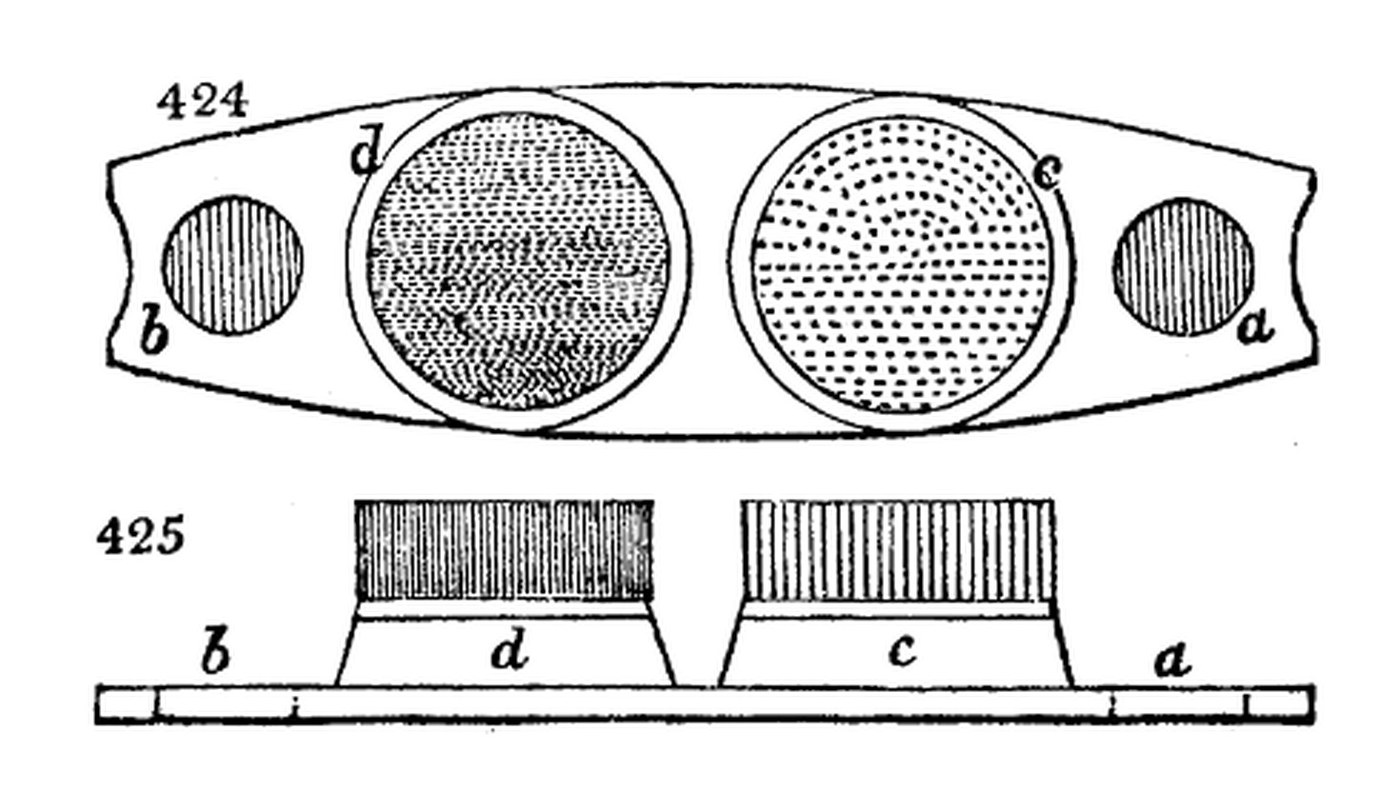


Hackle Combs: Coarse and Fine Flax Heckles on One Board (Ure, 1839)
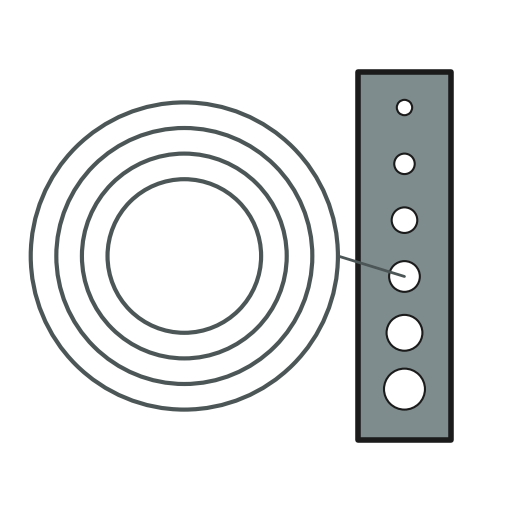
A pair of flax heckles on one oblong plank: two round wooden blocks, each faced with a drilled brass or iron plate holding upright iron teeth. Flax is drawn first through the coarse heckle, then through the fine one, splitting the fibres, combing out the short tow and laying the long fibres straight.
Coarse: teeth about 1/10 in thick and 1 1/4 in long, a centre tooth and 12 rings, the outer ring 5 3/4 in across. Fine: thinner teeth set closer, 1109 of them.
Source: Andrew Ure, Dictionary of Arts, Manufactures and Mines (1839), 'Flax'. Picture: Figs. 424-425 of the book.
Àárín
Unknown
Ìlànà
1
1
Make the board and blocks
Make the board and blocks
Cut an oblong plank (Fig. 424, a b) and two round (or square) wooden blocks, c for the coarse heckle and d for the fine, and fix the blocks on the plank (Fig. 425). The heckles can also be made on separate boards.
Àwọn ohun èlò fún ìgbésẹ̀ yìí:
 Pákó igi líle1 ẹyọ
 Ìṣù Igi Líle2 ẹyọ
 Ìṣó igi1 ẹyọ
Àwọn irinṣẹ́ tí a nílò:
 Ayùn ẹlẹ́yìn irin
 Ìlọ̀sí olójú pẹlẹbẹ
2
2
Drill the face plates
Drill the face plates
Cover the top of each block with a brass or iron plate drilled for the teeth, which gives them a firmer hold. Set the holes evenly over the whole face, in concentric circles (the German way) or parallel rows (the English way). Coarse: a centre hole and 12 rings, the outermost 5 3/4 in across. Fine: thinner holes set closer, 1109 in all.
Àwọn ohun èlò fún ìgbésẹ̀ yìí:
 Pẹlẹbẹ Bronse2 face plates
Àwọn irinṣẹ́ tí a nílò:
 Kọ́mpàsì olójú méjì
 Ìlàǹkàn irin
 Ìlù ọwọ́
3
3
Make the teeth
Make the teeth
Cut teeth of iron (sometimes steel) 1 to 2 in long. For the coarse heckle make them about 1/10 in thick and 1 1/4 in long, tapering from the middle to a very fine point; the fine heckle's teeth are thinner. File every point sharp and smooth, running evenly into the round stem like a sewing needle; square points in a rhombus shape cut the fibres apart better than round ones.
Àwọn ohun èlò fún ìgbésẹ̀ yìí:
 Wáyà irin1 teeth
Àwọn irinṣẹ́ tí a nílò:
Ìlàǹkàn irin Ìfá Irin
4
4
Set the teeth
Set the teeth
Drive each tooth through its hole in the plate into the block so it stands upright, all points at one level.
Àwọn irinṣẹ́ tí a nílò:
 Òòlù
Àwọn ohun-èlò
5- 1 ẹyọÀyè
- 2 ẹyọÀyè
- 1 ẹyọÀyè
- 2 face platesÀyè
- 1 teethÀyè
Ìtọ́nisọ́nà yìí ń ṣe


CC0 Àgbègbè Gbogbogbò
Blueprint yìí ti jáde lábẹ́ CC0. O lè ṣe àdàkọ, yí padà, pín, àti lò láìsí ìyọ̀ǹda.
Ṣàtìlẹ́yìn Olùṣẹ́dá nípa rírà àwọn ọjà nipasẹ̀ Blueprint wọn Ẹ̀san Olùṣẹ́dá tí àwọn Olùtajà gbé kalẹ̀, tàbí ṣẹ̀dá àtúnṣe tuntun ti Blueprint yìí kí o sì fi sínú Blueprint rẹ gẹ́gẹ́ bí ìsopọ̀ láti pín owó-wíwọlé.