IṢẸ́ ỌNÀ
ẸWÀ ÀTI ÌLERA
IṢẸ́ ỌWỌ́
ÀṢÀ ÀTI ÌTÀN
ÌṢERÉ
ÀYÍKÁ
OÚNJẸ ÀTI OHUN MÍMU
REVERSE ENGINEERING
SÁYẸ́ǸSÌ
ERÉ ÌDÁRAYÁ
ÌMỌ̀-Ẹ̀RỌ
ÀWỌN OHUN WÍWỌ̀
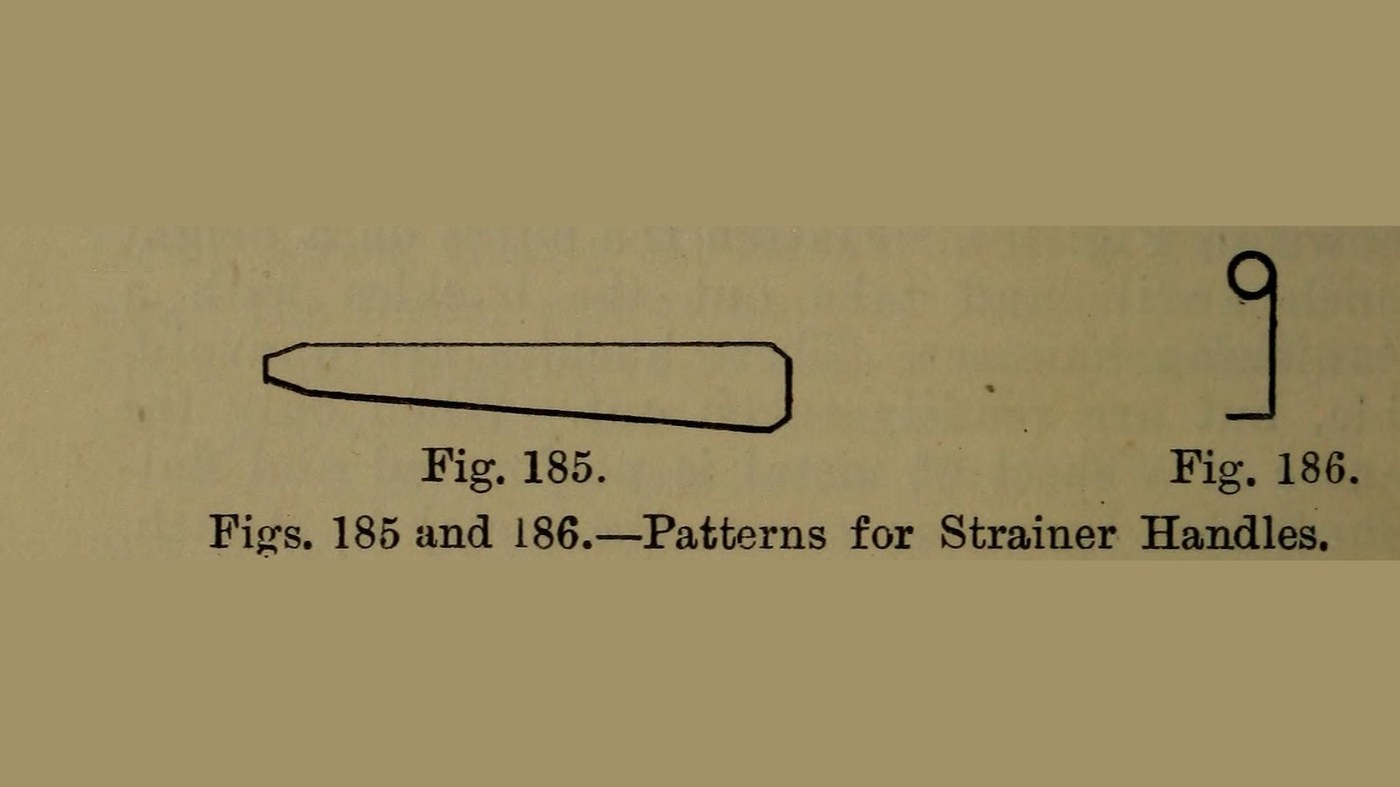


Handle: a Wired Tinplate Lifting Handle, Riveted and Soldered On (Hasluck, 1907)
A tinsmith's lifting handle is a strip of tinplate cut to a tapering pattern, stiffened with wire along its edges and bent so its narrow end curls into a ring, then riveted and soldered to the vessel.
Paul N. Hasluck's Tinplate Work (1907) gives it for the strainer of a fish kettle (Figs. 185-186). He gives no sizes for the pattern or the wire; those are unknown here.
Source: P. N. Hasluck, Tinplate Work (1907), pp. 89-90. Picture: his Figs. 185 and 186.
Olùbẹ̀rẹ̀
An hour for a pair
Ìlànà
1
1
Read Hasluck
Read Hasluck
"Having cut two to this pattern, wire the edges, and bend to the shape of Fig. 186, letting the narrow part of the pattern form the ring; then rivet and solder them to the strainer."
2
2
Cut to the pattern
Cut to the pattern
Mark out the handle on tinplate to the pattern of Fig. 185, a long strip tapering to a narrow end, and cut it out with snips; cut two for a pair. Hasluck gives no sizes (unknown).
Àwọn ohun èlò fún ìgbésẹ̀ yìí:
 Pátákó irin funfun1 two strips
Àwọn irinṣẹ́ tí a nílò:
 Abẹ́rẹ́ Ìkọ Ìlà
 Ìlàǹkàn irin
 Ìwọ̀n tí a kò mọ̀
3
3
Wire the edges
Wire the edges
Wire the edges of each strip: The gauge for the handles is not given; the strainer they are made for is wired with No. 10 B.W.G. tinned wire.
Àwọn ohun èlò fún ìgbésẹ̀ yìí:
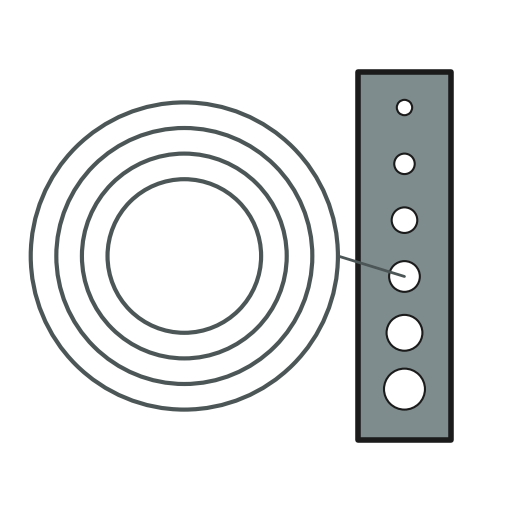 Wáyà irin1 edges
Àwọn irinṣẹ́ tí a nílò:
 Òòlù Igi
 Igi tí a gún
4
4
Bend the ring
Bend the ring
Bend the strip to the shape of Fig. 186, curling the narrow end of the pattern round into the ring you lift by.
Àwọn irinṣẹ́ tí a nílò:
Òòlù IgiIgi tí a gún5
5
Rivet and solder on
Rivet and solder on
Punch the rivet holes, rivet the flat end of the handle to the vessel, and solder it.
Àwọn ohun èlò fún ìgbésẹ̀ yìí:
 Ìṣó irin1 per handle
 Wẹ́là tìnì-lédì1 small amount
Àwọn irinṣẹ́ tí a nílò:
 Ohun èlò tí ń lu ihò sí abọ́ irin
 Òòlù ìso
 Irin Sọ́ldà Oníná Mànàmáná
 Fúlọ́ksì
6
6
History and honest limits
History and honest limits
In Hasluck this handle lifts the perforated strainer out of a fish kettle; his colander has a pair of bow handles riveted on opposite each other.
He gives the pattern by figure only, with no sizes, and does not say which wire goes in the handle edges; the tools are ours.
Àwọn ohun-èlò
4- 1 two stripsÀyè
- 1 edgesÀyè
- 1 per handleÀyè
- 1 small amountÀyè
Ìtọ́nisọ́nà yìí ń ṣe
Blueprint tó jọra
Àwọn blueprint wọ̀nyí pín ìmọ̀ — ọ̀nà, ohun-èlò tàbí ìlànà

CC0 Àgbègbè Gbogbogbò
Blueprint yìí ti jáde lábẹ́ CC0. O lè ṣe àdàkọ, yí padà, pín, àti lò láìsí ìyọ̀ǹda.
Ṣàtìlẹ́yìn Olùṣẹ́dá nípa rírà àwọn ọjà nipasẹ̀ Blueprint wọn Ẹ̀san Olùṣẹ́dá tí àwọn Olùtajà gbé kalẹ̀, tàbí ṣẹ̀dá àtúnṣe tuntun ti Blueprint yìí kí o sì fi sínú Blueprint rẹ gẹ́gẹ́ bí ìsopọ̀ láti pín owó-wíwọlé.