IṢẸ́ ỌNÀ
ẸWÀ ÀTI ÌLERA
IṢẸ́ ỌWỌ́
ÀṢÀ ÀTI ÌTÀN
ÌṢERÉ
ÀYÍKÁ
OÚNJẸ ÀTI OHUN MÍMU
REVERSE ENGINEERING
SÁYẸ́ǸSÌ
ERÉ ÌDÁRAYÁ
ÌMỌ̀-Ẹ̀RỌ
ÀWỌN OHUN WÍWỌ̀
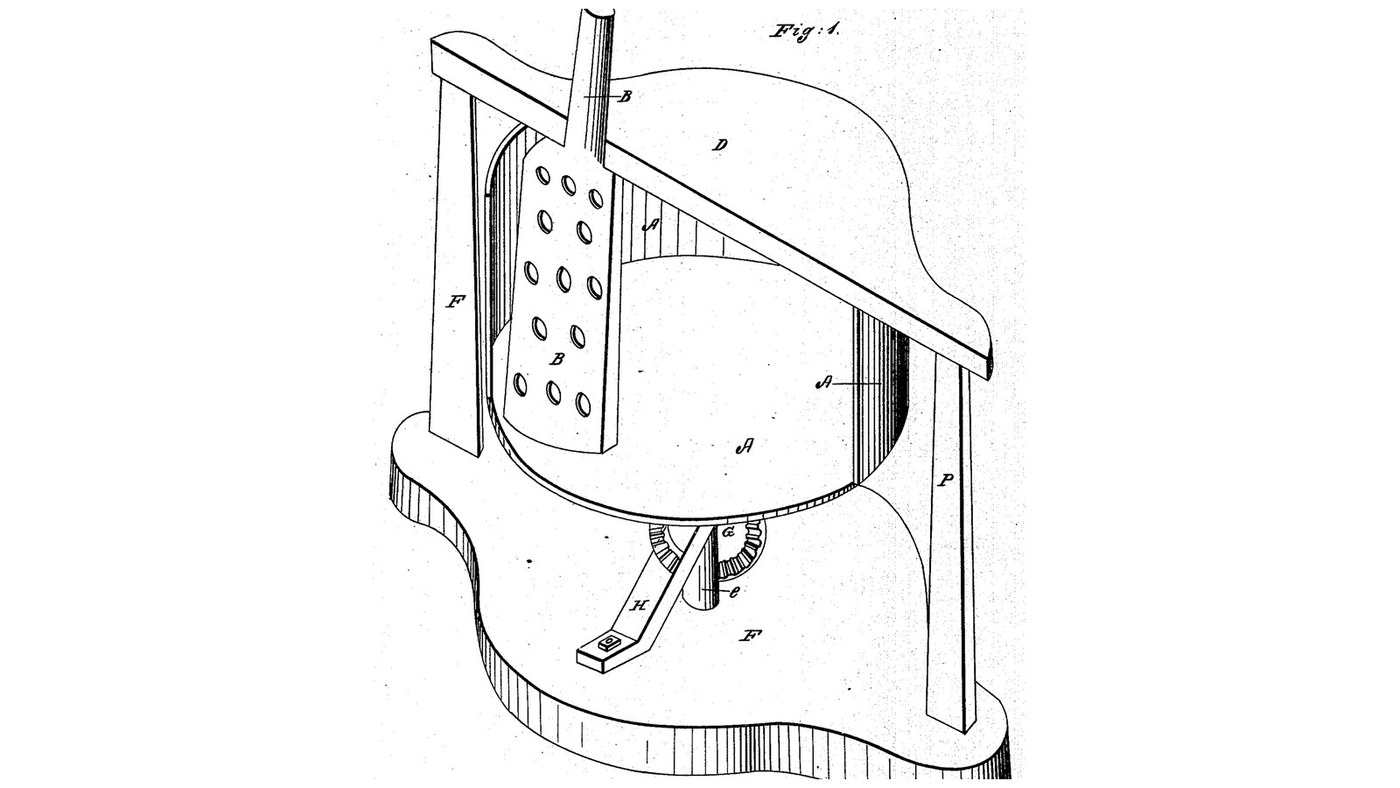

Rotating-Receiver Stationary-Break Churn: The Whole Cream Vessel Turns, a Narrow Fixed Break Churns It
Mortimer S. Harsha of Sycamore, Illinois, received US 26,459, dated 13 December 1859, for what he called the "Vertical Rotating and Stationary Break Churn". Instead of a dasher, the whole cream vessel turns on an upright shaft with a pointed foot, driven by a gear and crank below it, while one narrow perforated break, fixed to a removable top, stands still near the vessel's side. The turning cream keeps going like a balance wheel, so little effort keeps it churning.
The patent gives no sizes; every size here is ours.
Àárín
About a day, plus printing
Ìlànà
1
1
The turning cream against a still break
The turning cream against a still break
Ń ṣí ìwé Jupyter…
2
2
Fixed brakes in turning cream, three months before
Fixed brakes in turning cream, three months before
Taylor turned a dasher among fixed brakes. Harsha turns the vessel itself against a single fixed break.
3
3
Read US 26,459
Read US 26,459
"This is accomplished by said break presenting only a small resisting surface to the moving cream, while the cream being made to rapidly rotate on said vertical or upright shaft only against said break dash, becomes, along with its receiver, a receptacle of the power applied, similar to that of a balance wheel, and so by its own accumulative force, when power is once applied, puts it in motion"
4
4
Print the gear wheel G
Print the gear wheel G
Crown wheel, 36 teeth on its face, module 2, with a hub bored 12.4 mm and a cross hole for a pin. PETG, 0.2 mm layers, 40 % infill, 4 walls.
5
5
Print the pinion
Print the pinion
Spur pinion, 12 teeth, module 2, with a long hub bored 16.4 mm and a cross hole for a pin. PETG, 0.2 mm layers, 40 % infill, 4 walls.
6
6
Print the socket
Print the socket
A cup 50 mm across and 22 mm tall with a cone recess for the shaft's point. PETG, 0.2 mm layers, 40 % infill, 4 walls.
7
7
Print the flange
Print the flange
A disc 200 mm across and 15 mm thick bored 16.6 mm, to carry the receiver. Print with 100 % infill. PETG, 0.2 mm layers, 40 % infill, 4 walls.
8
8
Base E, brace H, posts F and top D
Base E, brace H, posts F and top D
Make a hardwood base 600 x 600 mm and screw the socket in its middle. Screw a brace H to it, an upright 30 x 40 mm with an arm reaching over the socket, bored 16.6 mm 25 to 55 mm up as the shaft's journal box. Tenon two posts 30 x 50 mm, 515 mm tall, into the base 490 mm apart, and make a top board 550 x 160 x 20 mm with mortises to drop onto their tenons so it lifts off. Set two chairs 44 x 30 mm, 124 mm tall, for the gear wheel's shaft.
Àwọn ohun èlò fún ìgbésẹ̀ yìí:
 Pátákó Igi Líle3 ẹyọ
 Ìdìpọ̀ Igi1 ẹyọ
 Ìṣó igi20 ẹyọ
 Okùn PETG1 ẹyọ
Àwọn irinṣẹ́ tí a nílò:
 Ẹ̀rọ ìtẹ̀ 3D oníwàyà (FDM)
 Ayùn tábìlì
 Ayùn Jígísò
 Ìṣó ihò ìdì
 Òòlù Igi
 Ẹ̀rọ Ìlùkòkò Aláìlókùn
 Àkójọ Orí Ìlùkòkò
 Ìdìmú oní-ọ̀pá
 Okùn Ìdíwọ̀n
9
9
Shaft C, receiver A and gearing
Shaft C, receiver A and gearing
File one end of a 16 mm stainless shaft 170 mm long to a point. Pin the pinion and the flange on it, stand its point in the socket through the journal box, and bolt the stockpot's bottom to the flange with stainless screws sealed with silicone. Fit the crown wheel on a 12 mm stainless shaft through the chairs, meshing under the pinion, with a crank and handle on its end.
Àwọn ohun èlò fún ìgbésẹ̀ yìí:
 Ọ̀pá irin tí kò ń yá2 ẹyọ
 Ìkòkò ńlá1 ẹyọ
 Skurú ẹ̀rọ4 ẹyọ
 Ẹ̀kù Ìdìmú Onínáílọ́ọ̀nù4 ẹyọ
 Wáṣà Pẹrẹsẹ8 ẹyọ
 Ìdílẹ̀ Silikoni1 ẹyọ
 Àwọn dowel igi líle1 ẹyọ
Àwọn irinṣẹ́ tí a nílò:
 Ayùn Irin
 Àwọn Ìfá (Ìfá Ọwọ́)Ẹ̀rọ Ìlùkòkò AláìlókùnÀkójọ Orí Ìlùkòkò
 Kọ́kọ́rọ́ tí a lè ṣàtúnṣe
 Ìṣù àwọn ohun ìyí skurú
10
10
Break dash B
Break dash B
Cut a hardwood break 60 x 15 mm long enough to reach from the top board to 25 mm above the receiver's floor, bore ten 16 mm holes through it, and fix it by a tenon through the top board so it hangs 30 mm in from the receiver's side.
Àwọn ohun èlò fún ìgbésẹ̀ yìí:
Pátákó Igi Líle1 ẹyọÌdìpọ̀ Igi1 ẹyọÀwọn irinṣẹ́ tí a nílò:
Ayùn tábìlì Àkójọ orí kànnàkànnàẸ̀rọ Ìlùkòkò AláìlókùnÌṣó ihò ìdìÒòlù Igi
 Bébà Ìfá
11
11
The build in 3D
The build in 3D
FreeCAD model of this build, the receiver cut through the middle: the base with its socket, brace and posts, the shaft with pinion and flange, the crown wheel and crank, the turning receiver and the fixed perforated break hanging from the top.
12
12
Churn
Churn
Lift the top off, pour about 9 litres of heavy cream at about 15 °C into the receiver, checked with the thermometer, and put the top back. Turn the crank steadily, timing it: once the cream is moving it keeps going with little effort. When the butter comes, lift the top and break out, take out the butter, drain the buttermilk, wash the butter in cold water until it runs clear, salt and weigh it.
Àwọn ohun èlò fún ìgbésẹ̀ yìí:
 Ọ̀rá wàrà tó nípọn9 l
 Iyọ̀ Òkun Rúkèrúdò1 ẹyọ
 Omi1 ẹyọ
Àwọn irinṣẹ́ tí a nílò:
 Ẹ̀rọ ìwọ̀n ooru oníhun tí ó dúró sí inú
 Aago Ìdúró
 Òṣùwọ̀n Díjítà Ilé Ìdáná
 Àwo ìdàpọ̀ ńlá ti irin tí kò ń yá
13
13
Troubleshooting
Troubleshooting
Rotating-receiver churn troubleshooting.
Flow
Loading...
14
14
History and honest limits
History and honest limits
**Mortimer S. Harsha** of Sycamore, DeKalb County, Illinois, assignor to himself, Rufus S. Sanborn and H. B. Jones, US 26,459, 13 December 1859, "Churn". He claimed: "An entirely stationary break dash in combination with a cream receiver, made to rotate on a vertical or upright shaft". His break is made "of such size as the relative size of the machine requires, and of any common form or shape"; the patent gives no sizes, and every size here is ours. His receiver was tin, zinc or wood; ours is a stainless stockpot.
Àwọn ohun-èlò
14- 3 ẹyọÀyè
- 2 ẹyọÀyè
- 20 ẹyọÀyè
- 1 ẹyọÀyè
- 2 ẹyọÀyè
- 1 ẹyọÀyè
- 4 ẹyọÀyè
- Àyè
- 8 ẹyọÀyè
- 1 ẹyọÀyè
- 1 ẹyọÀyè
- Àyè
- 1 ẹyọÀyè
- 1 ẹyọÀyè
Àwọn irinṣẹ́ tó nílò
19- 1 vendor sell this, none ship to you yetÀyè
- 1 vendor sell this, none ship to you yetÀyè
- Àyè
- Àyè
- 1 vendor sell this, none ship to you yetÀyè
- 1 vendor sell this, none ship to you yetÀyè
- Àyè
- Àyè
- Àyè
Àwọn fáìlì àpẹrẹ
5Ìtọ́nisọ́nà yìí ń ṣe

Blueprint tó jọra
Àwọn blueprint wọ̀nyí pín ìmọ̀ — ọ̀nà, ohun-èlò tàbí ìlànà
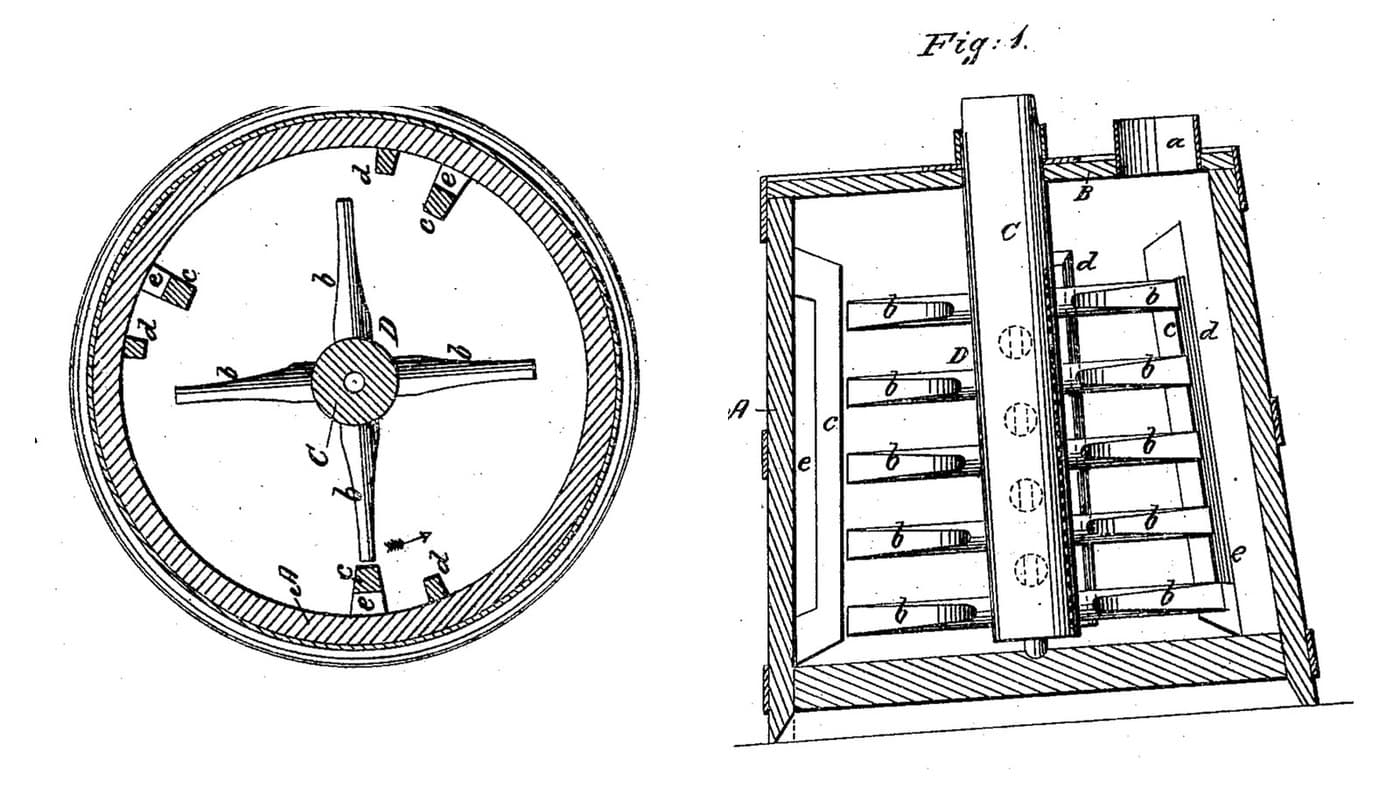
Brake-and-Ledge Bar Dasher Churn: Slotted Brakes Break the Current, Ledges Turn It Back to the Dasher
láti ọwọ́ Buttercup
Iṣẹ́ Igi
13
0
0
0
0
0
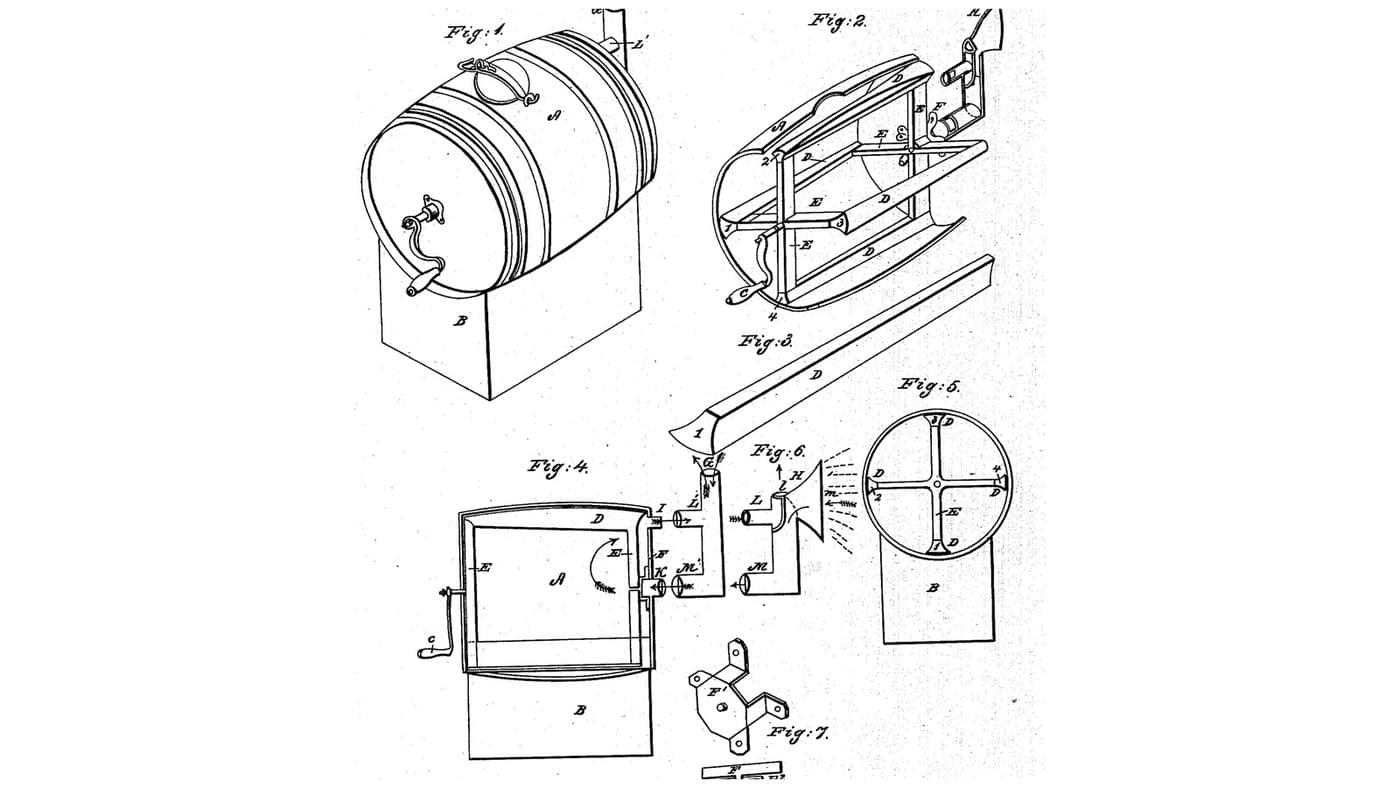
Atmospheric Barrel Churn: Reversed Concave Dashers Close to the Staves, Fresh or Warmed Air Piped to the Middle
láti ọwọ́ Buttercup
Iṣẹ́ Igi
7
0
0
0
0
0
Churning Butter from Cream — The 5,000-Year-Old Fat Separation
láti ọwọ́ TheChef
IṢẸ́ ỌWỌ́
63
0
0
0
0
0
CC0 Àgbègbè Gbogbogbò
Blueprint yìí ti jáde lábẹ́ CC0. O lè ṣe àdàkọ, yí padà, pín, àti lò láìsí ìyọ̀ǹda.
Ṣàtìlẹ́yìn Olùṣẹ́dá nípa rírà àwọn ọjà nipasẹ̀ Blueprint wọn Ẹ̀san Olùṣẹ́dá tí àwọn Olùtajà gbé kalẹ̀, tàbí ṣẹ̀dá àtúnṣe tuntun ti Blueprint yìí kí o sì fi sínú Blueprint rẹ gẹ́gẹ́ bí ìsopọ̀ láti pín owó-wíwọlé.