IṢẸ́ ỌNÀ
ẸWÀ ÀTI ÌLERA
IṢẸ́ ỌWỌ́
ÀṢÀ ÀTI ÌTÀN
ÌṢERÉ
ÀYÍKÁ
OÚNJẸ ÀTI OHUN MÍMU
REVERSE ENGINEERING
SÁYẸ́ǸSÌ
ERÉ ÌDÁRAYÁ
ÌMỌ̀-Ẹ̀RỌ
ÀWỌN OHUN WÍWỌ̀
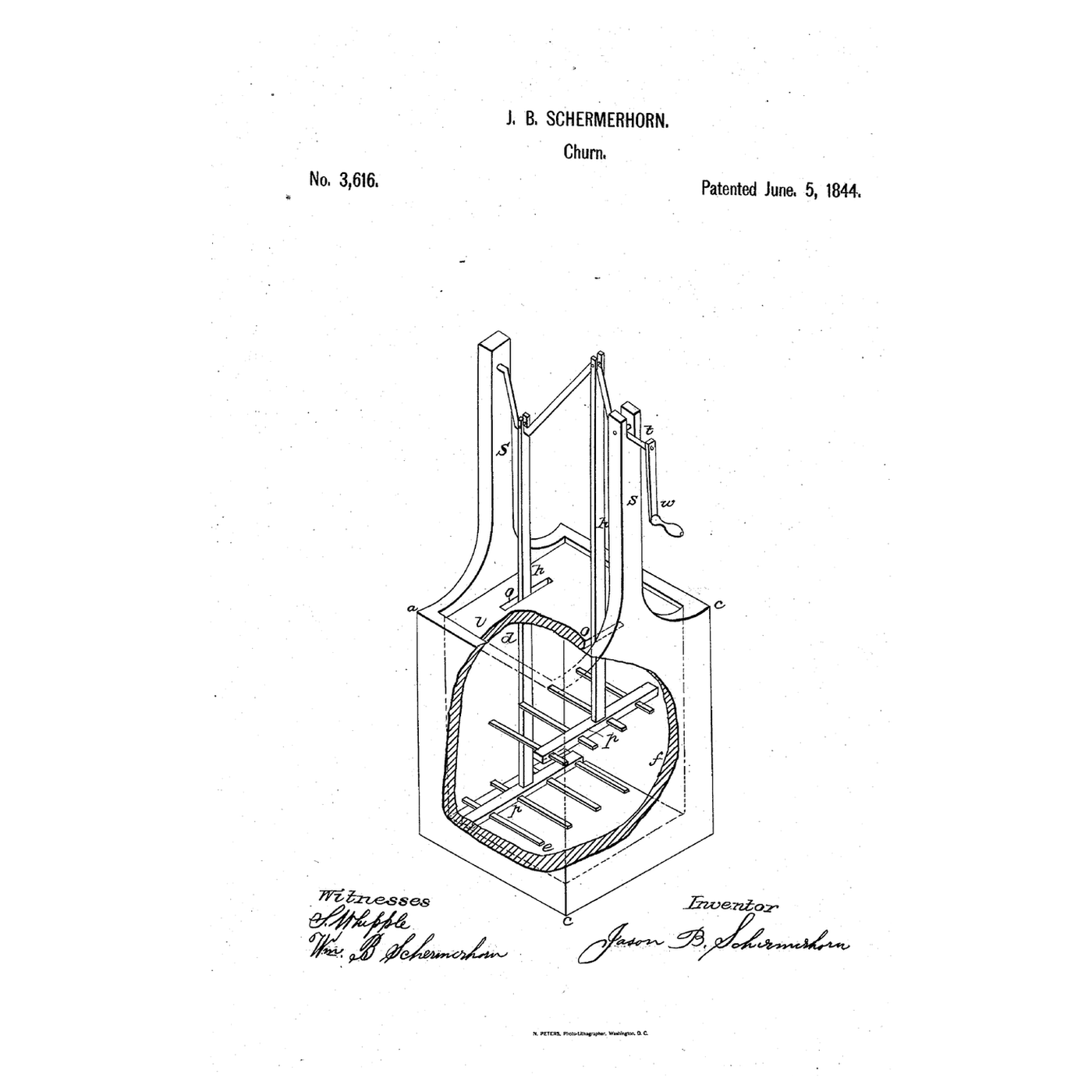

Interraking Plunger Churn: Two Rakes Worked Oppositely by a Double Crank
Schermerhorn did not claim churning with plungers, "either by hand, or by crank motion"; he claimed two of them shaped like rakes.
Jason B. Schermerhorn of Deerfield, New York, received US 3,616, dated 5 June 1844, for a dairy churn with "two rake-formed plungers with teeth interraking, and with oppositely reciprocating motions communicated to them by a cranked shaft." Standards on two sides of a square box carry the crank shaft; the teeth of one plunger pass between those of the other, "the one ascending while the other is descending," which "will produce a violent commotion in the cream."
This rung checks his proportions, then prints the rake heads, crank discs and yokes, builds the standards on a box, and makes butter.
Àárín
About 5 hours, plus printing
Ìlànà
1
1
His proportions
His proportions
Ń ṣí ìwé Jupyter…
2
2
A double crank before it
A double crank before it
The embedded blueprint uses a double crank to pull two pitmen. Schermerhorn's double crank works two plungers up and down oppositely.
3
3
Read US 3,616
Read US 3,616
"The teeth of the plunger pass through the head piece horizontally, and at right angles therewith, projecting on both sides of the head-piece, but unequally; the projection on the side next the center of the churn being twice or thrice as great as on the other side. The length of the pieces forming the teeth should be equal to about two thirds of the width of the box."
4
4
Print the parts
Print the parts
Print two identical rake heads (/uploads/blueprints/interraking-plunger-churn-rake-head.stl): their teeth are set off-centre, so one turned round passes between the other's. Print two crank discs (/uploads/blueprints/interraking-plunger-churn-crank-disc.stl) and two yokes (/uploads/blueprints/interraking-plunger-churn-yoke.stl). Print in PETG at 0.2 mm layers, 30 % infill, 4 walls; wash before first use.
Àwọn ohun èlò fún ìgbésẹ̀ yìí:
 Okùn PETG1 ẹyọ
Àwọn irinṣẹ́ tí a nílò:
 Ẹ̀rọ ìtẹ̀ 3D oníwàyà (FDM)
5
5
Box and standards
Box and standards
Take a food-safe box about 150 mm square and 200 mm deep. Screw a pine standard to each of two opposite sides, rising about 200 mm above the top, and drill both for a 10 mm square hardwood crank shaft. Cut two oblong openings in the lid for the plunger rods.
Àwọn ohun èlò fún ìgbésẹ̀ yìí:
 Àgọ́ ìtọ́jú ti ìpele oúnjẹ1 ẹyọ
 Pákó igi pine1 ẹyọ
 Ìsúrù igi #8 x 1"1 ẹyọ
Àwọn irinṣẹ́ tí a nílò:
 Ayùn Ọwọ́
 Ẹ̀rọ Ìlùkòkò Aláìlókùn
 Àkójọ Orí Ìlùkòkò
 Ayùn Kópìngì
 Ìṣù àwọn ohun ìyí skurú
6
6
Crank and plungers
Crank and plungers
Slide the crank discs onto the shaft with their pins on opposite sides, half a turn apart, and glue them 60 mm apart. Glue a rake head on each of two 12 mm dowel rods, long sides of the teeth toward the centre, and a yoke on each rod's top. Pass the rods through the lid, hang the yokes on the crank pins, and glue the crank arm and a dowel handle on the shaft's end.
Àwọn ohun èlò fún ìgbésẹ̀ yìí:
 Àwọn dowel igi líle1 ẹyọ
 Ìdìpọ̀ Igi1 ẹyọ
Àwọn irinṣẹ́ tí a nílò:
Ayùn Ọwọ́ Bébà Ìfá
7
7
The build in 3D
The build in 3D
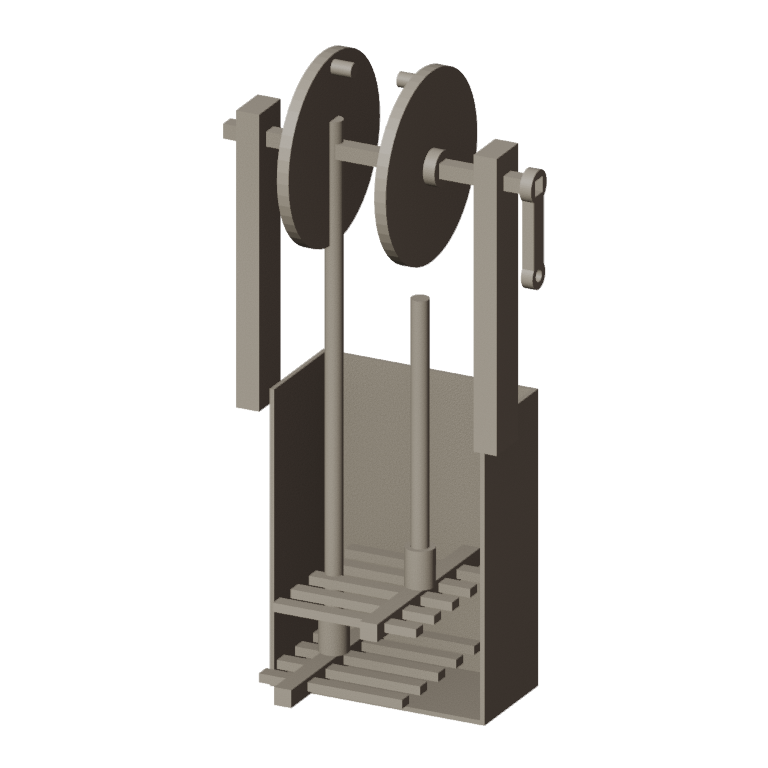
FreeCAD model of this build, not of the patent: the box cut away to show the two rake heads with their teeth interleaving, one at the bottom and one rising, their rods up to the two crank discs on the shaft between the standards, and the crank.
8
8
Crank and make butter
Crank and make butter
Let the heavy cream stand until it reaches about 15 °C, checked with the thermometer. Pour in 1 litre, fit the lid, and crank steadily; time until the butter comes. Pour off the buttermilk, add cold water, churn a little and pour off again until it runs clear; work in a pinch of salt and weigh the butter.
Àwọn ohun èlò fún ìgbésẹ̀ yìí:
 Ọ̀rá wàrà tó nípọn1000 ml
 Iyọ̀ Òkun Rúkèrúdò1 ẹyọ
 Omi1 ẹyọ
Àwọn irinṣẹ́ tí a nílò:
 Ẹ̀rọ ìwọ̀n ooru oníhun tí ó dúró sí inú
 Aago Ìdúró
 Òṣùwọ̀n Díjítà Ilé Ìdáná
 Àwo ìdàpọ̀ ńlá ti irin tí kò ń yá
9
9
Teeth that clash, rods that bind
Teeth that clash, rods that bind
Interraking plunger churn troubleshooting.
Flow
Loading...
10
10
History and honest limits
History and honest limits
**Jason B. Schermerhorn** of Deerfield, Oneida County, New York, received US 3,616, dated 5 June 1844. His crank was a round iron rod "from one half to five-eighths of an inch in diameter" bent into a double crank "somewhat like a fulling mill crank"; the handles were forked over the cranks and pinned, so the plungers could be withdrawn; the tooth pieces might be one inch wide by half an inch.
**Honest limits.** Printed crank discs on a wooden shaft stand in for his bent iron crank, and a food-safe box for his wooden one. FDM prints hold food in their layer lines, so wash well and replace when worn. Your times and weights are the result.
Àwọn ohun-èlò
9- 1 ẹyọÀyè
- Àyè
- 1 ẹyọÀyè
- 1 ẹyọÀyè
- 1 ẹyọÀyè
- 1 ẹyọÀyè
- 1000 mlÀyè
- 1 ẹyọÀyè
- 1 ẹyọÀyè
Àwọn irinṣẹ́ tó nílò
11- Àyè
- 1 vendor sell this, none ship to you yetÀyè
- Àyè
- Àyè
- Àyè
Àwọn fáìlì àpẹrẹ
1Ìtọ́nisọ́nà yìí ń ṣe

Blueprint tó jọra
Àwọn blueprint wọ̀nyí pín ìmọ̀ — ọ̀nà, ohun-èlò tàbí ìlànà
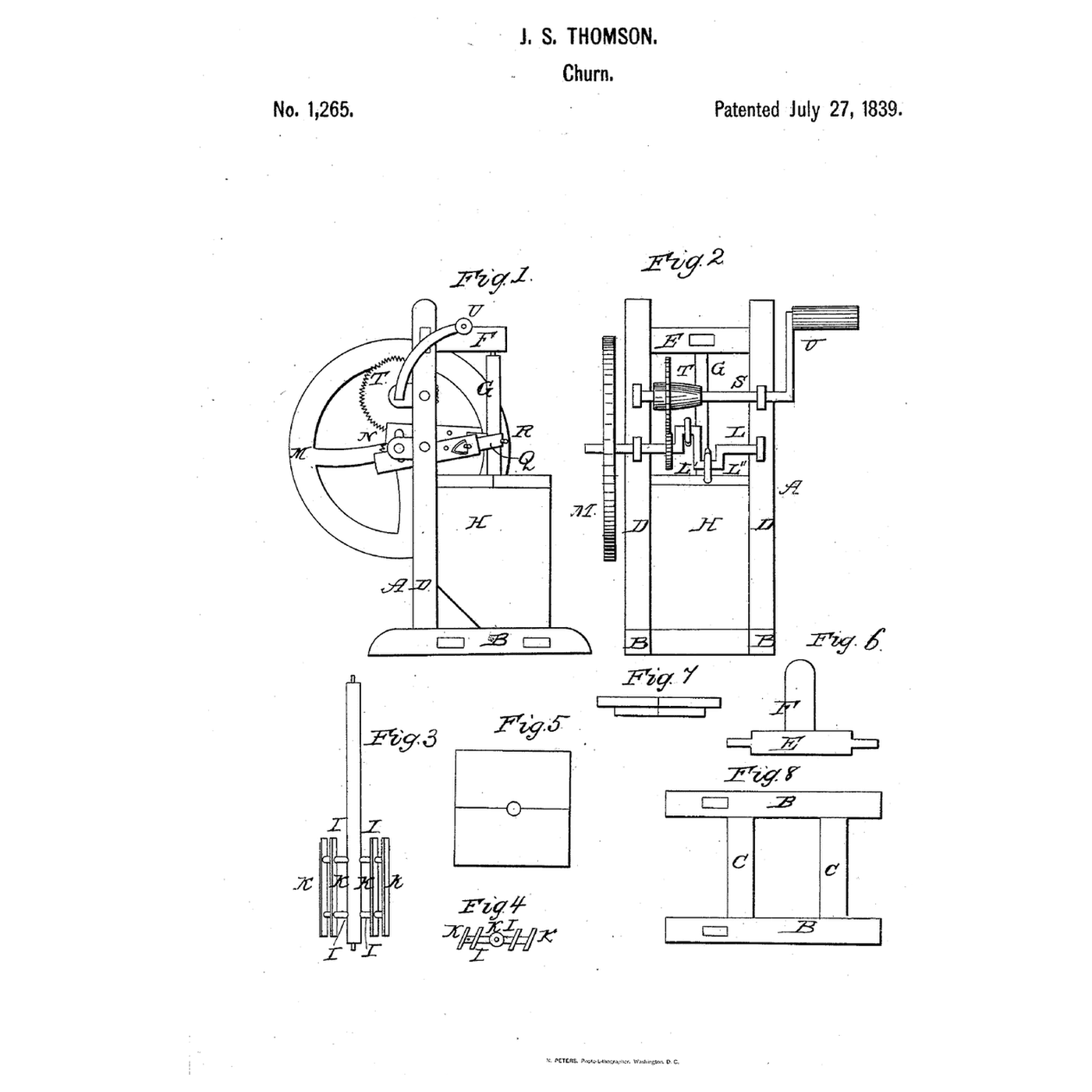
Oscillating Paddle Churn: Oblique Paddles Swung to and Fro by a Strap
láti ọwọ́ Martin
OÚNJẸ ÀTI OHUN MÍMU
23
0
0
0
0
0
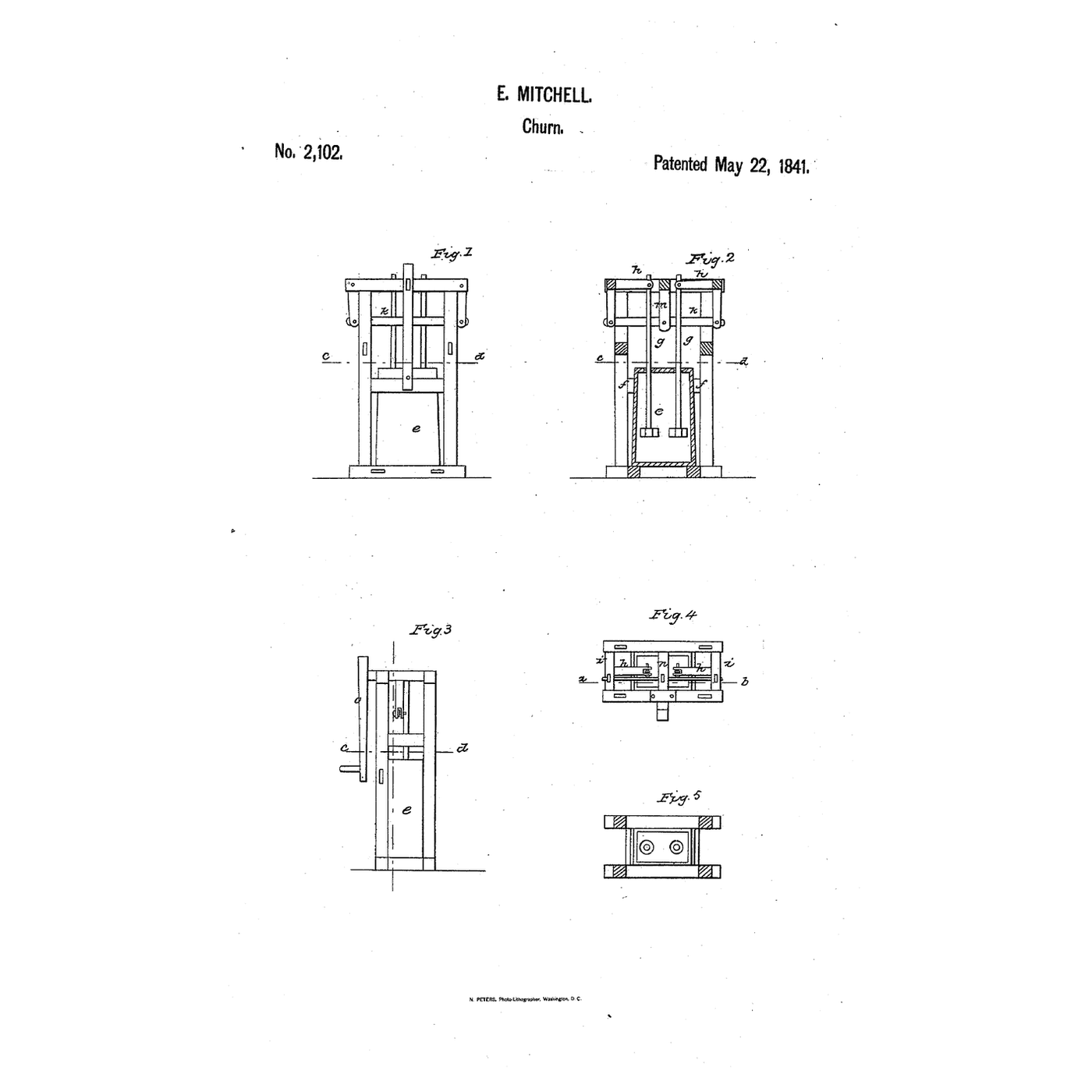
Double-Dasher Lever Churn: Swing One Lever, One Dasher Rises as the Other Falls
láti ọwọ́ Woody
Iṣẹ́ Igi
24
0
0
0
0
0

Churning Butter from Cream — The 5,000-Year-Old Fat Separation
láti ọwọ́ TheChef
IṢẸ́ ỌWỌ́
49
0
0
0
0
0
CC0 Àgbègbè Gbogbogbò
Blueprint yìí ti jáde lábẹ́ CC0. O lè ṣe àdàkọ, yí padà, pín, àti lò láìsí ìyọ̀ǹda.
Ṣàtìlẹ́yìn Olùṣẹ́dá nípa rírà àwọn ọjà nipasẹ̀ Blueprint wọn Ẹ̀san Olùṣẹ́dá tí àwọn Olùtajà gbé kalẹ̀, tàbí ṣẹ̀dá àtúnṣe tuntun ti Blueprint yìí kí o sì fi sínú Blueprint rẹ gẹ́gẹ́ bí ìsopọ̀ láti pín owó-wíwọlé.