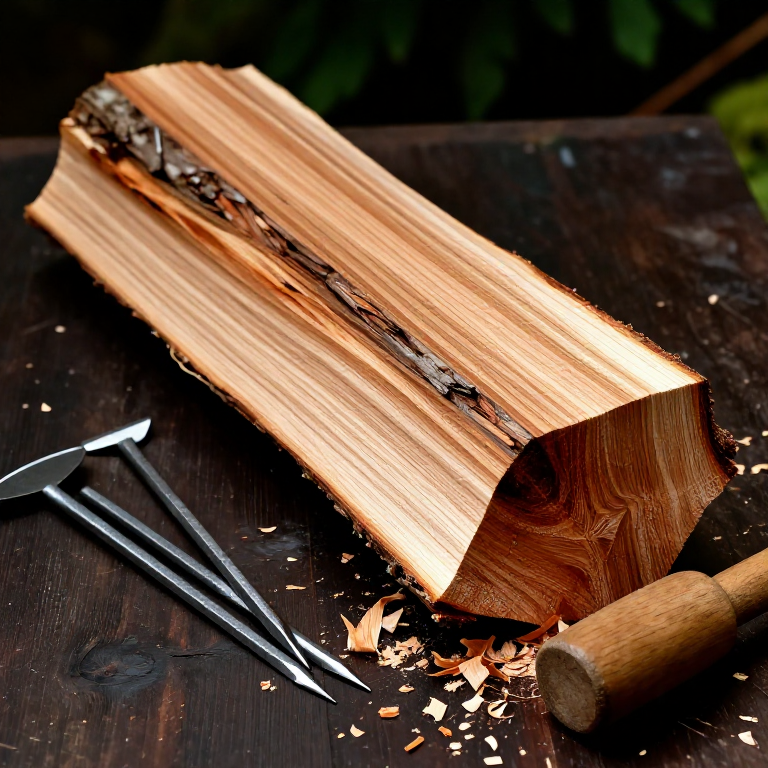


Riving Planks from a Log — Splitting Timber Along the Grain with Wedges
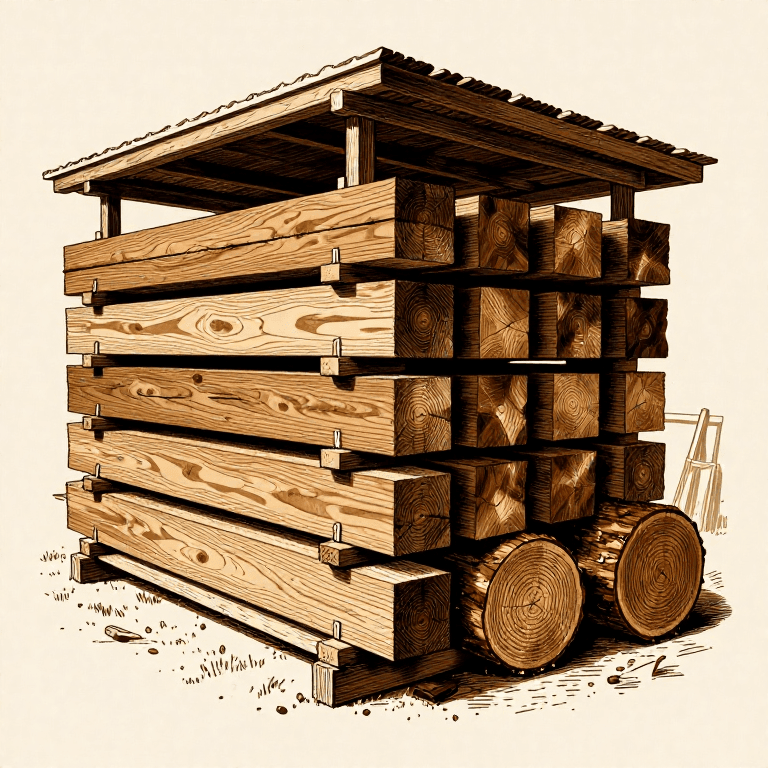
Before sawmills, every plank was riven — split from a log using wedges and mallets. Riving exploits the natural grain of the wood: a wedge driven into the end grain propagates a crack that follows the fibres, producing a plank that is stronger than any sawn board because no fibres are cut across. Every Viking longship, every medieval roof, and every Iron Age door was built from riven timber.
The technique is simple but requires reading the wood. A straight-grained log splits cleanly into halves, quarters, and eighths. Each successive split reduces the section until planks of the desired thickness are reached. Crooked grain, knots, or spiral growth cause the split to run off-line, ruining the plank. Selecting the right log is half the skill.
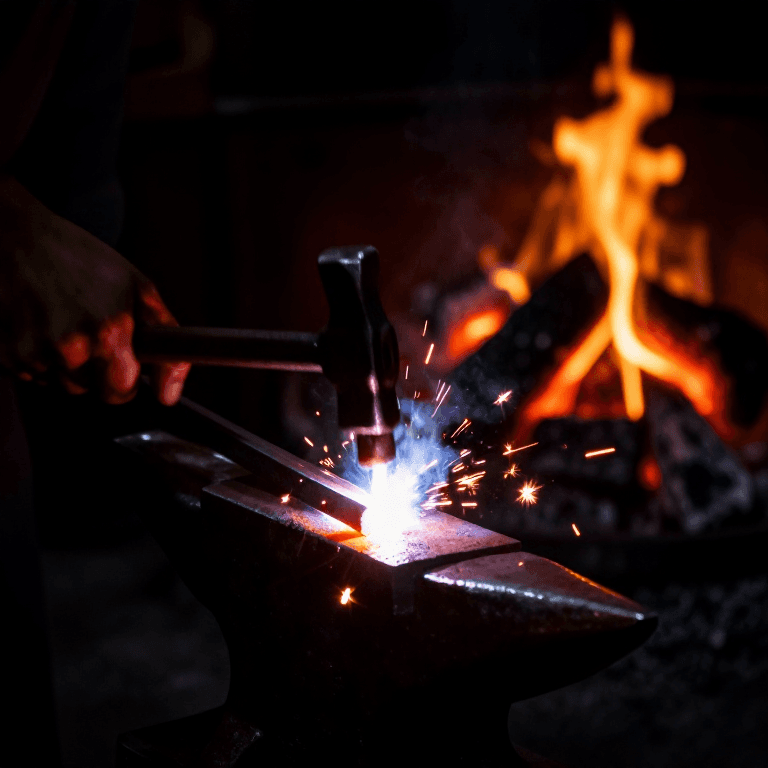
Iron wedges transformed riving from a slow stone-age process into an efficient production method. A smith's iron wedge driven by a wooden maul splits a log in minutes. Combined with an iron drawknife for smoothing, riving produces finished planks faster than pit-sawing and with superior strength.
Ìlànà
Select a straight-grained log
Select a straight-grained log
Àwọn ohun èlò fún ìgbésẹ̀ yìí:
 Igi óàkì pupa1 ẹyọ
Split the log in half
Split the log in half
Àwọn irinṣẹ́ tí a nílò:
 Òòlù Alágbẹ̀dẹ
 Ìdìpọ̀ ìlàsọ irin
 Òòlù ńlá
Quarter each half
Quarter each half
Rive planks from the quarters
Rive planks from the quarters
Àwọn irinṣẹ́ tí a nílò:
 Froe (ọ̀bẹ ìpín)
 Òòlù Igi
Correct wandering splits
Correct wandering splits
Smooth the riven surface
Smooth the riven surface
Àwọn irinṣẹ́ tí a nílò:
 Ọ̀bẹ Ìfàsẹ́yìn
 Ìjókòó ìgbẹ́
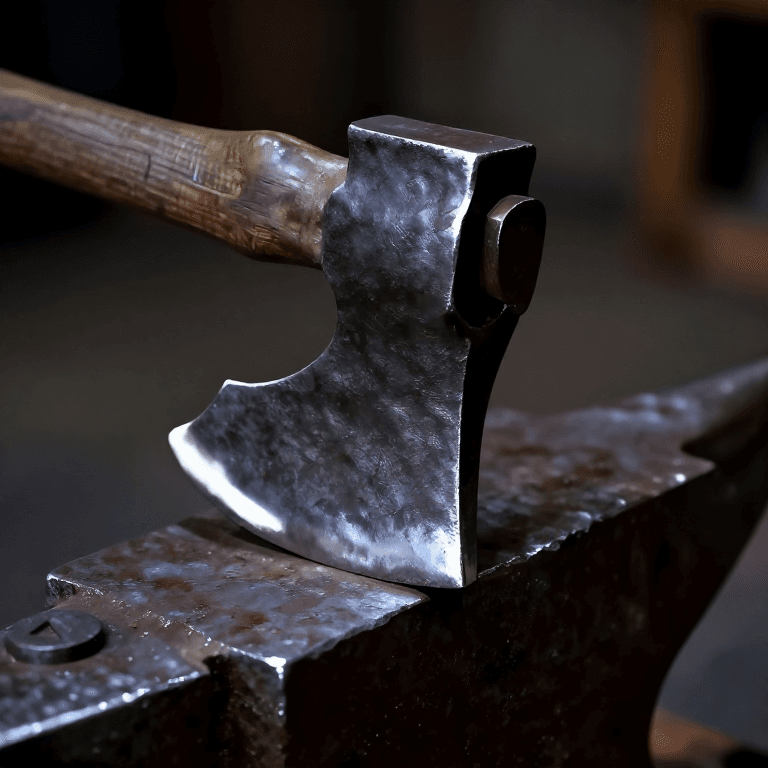
 Àáké ìṣèkó
Àwọn ohun-èlò
1- Igi óàkì pupaìdá 10%1 ẹyọÀyè
Àwọn irinṣẹ́ tó nílò
8- Àyè
- Àyè
- Àyè
- Àyè
Àwọn Ohun Èlò Ìtọ́nisọ́nà Tí A So Pọ̀
Ìtọ́nisọ́nà yìí ń ṣe
Blueprint tó jọra
Àwọn blueprint wọ̀nyí pín ìmọ̀ — ọ̀nà, ohun-èlò tàbí ìlànà
CC0 Àgbègbè Gbogbogbò
Blueprint yìí ti jáde lábẹ́ CC0. O lè ṣe àdàkọ, yí padà, pín, àti lò láìsí ìyọ̀ǹda.
Ṣàtìlẹ́yìn Olùṣẹ́dá nípa rírà àwọn ọjà nipasẹ̀ Blueprint wọn Ẹ̀san Olùṣẹ́dá tí àwọn Olùtajà gbé kalẹ̀, tàbí ṣẹ̀dá àtúnṣe tuntun ti Blueprint yìí kí o sì fi sínú Blueprint rẹ gẹ́gẹ́ bí ìsopọ̀ láti pín owó-wíwọlé.