
ART
BEAUTY & WELLNESS
CRAFT
CULTURE & HISTORY
ENTERTAINMENT
ENVIRONMENT
FOOD & DRINKS
GREEN FUTURE
REVERSE ENGINEERING
SCIENCES
SPORTS
TECHNOLOGY
WEARABLES
Forging an Iron Strap Hinge — The Joint That Opens Every Door
Forge

Created by

Forge

26. May 2026NO
11
0
0
0
0

Forging an Iron Strap Hinge — The Joint That Opens Every Door

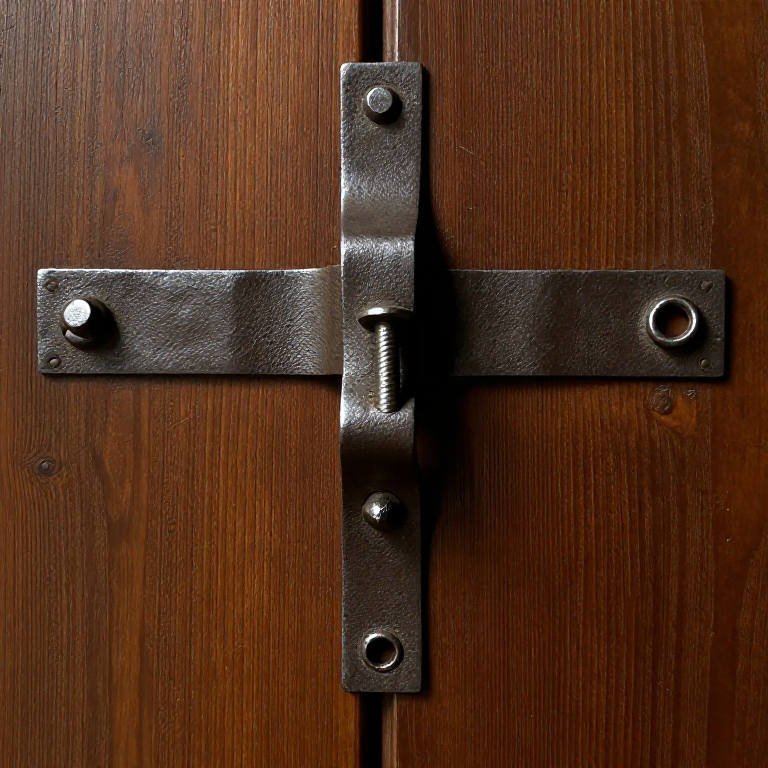
Before the iron hinge, doors were hung on leather straps or wooden pivots that wore out in months. The iron strap hinge — two flat straps joined by a pin through rolled eyes — solved this problem permanently. A well-made iron hinge lasts centuries, as demonstrated by medieval church doors still swinging on their original hinges after 800 years.

A strap hinge is forged from two flat iron bars. Each bar has one end curled into a tube (the eye) around a mandrel. A pin passes through both eyes to create the pivot. One strap is nailed to the door and the other to the frame. The hinge works because the eyes wrap around the pin with just enough clearance to rotate freely but not wobble.

This blueprint teaches three essential smithing operations: drawing flat bar, scrolling (curling metal around a mandrel), and punching nail holes. These same operations appear in gates, latches, brackets, and every other piece of architectural ironwork.

Intermediate
2-3 hours (one pair of hinges)

Instructions

1

Cut the strap blanks

Cut two pieces of wrought iron flat bar. The door strap (the long leaf) should be about 30 cm long, 4 cm wide, and 5 mm thick. The frame strap (the short leaf) should be about 15 cm long with the same width and thickness. These dimensions suit a medium door — scale up for heavy gates, down for cabinet doors.
2

Forge the eye on the door strap

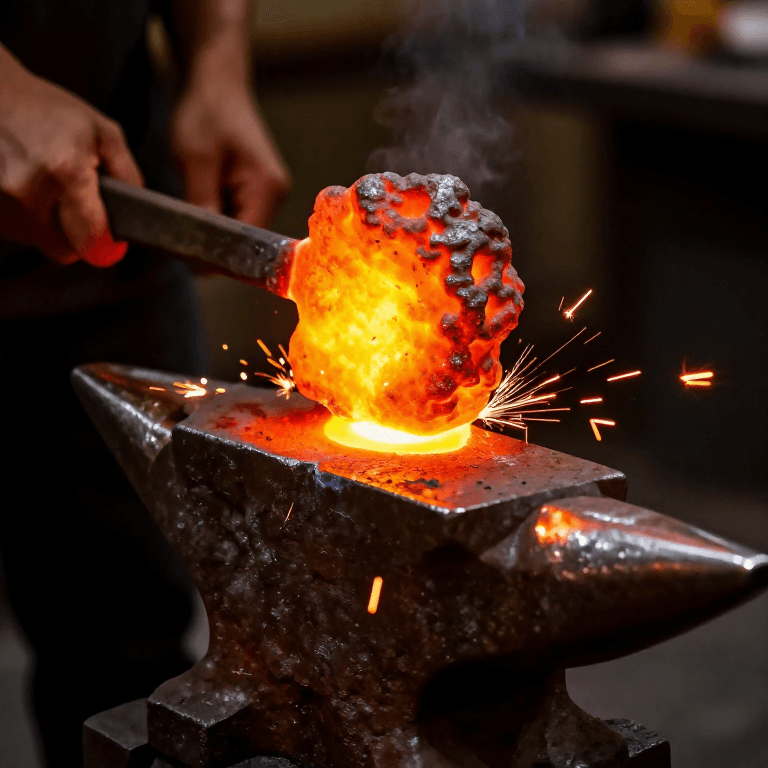
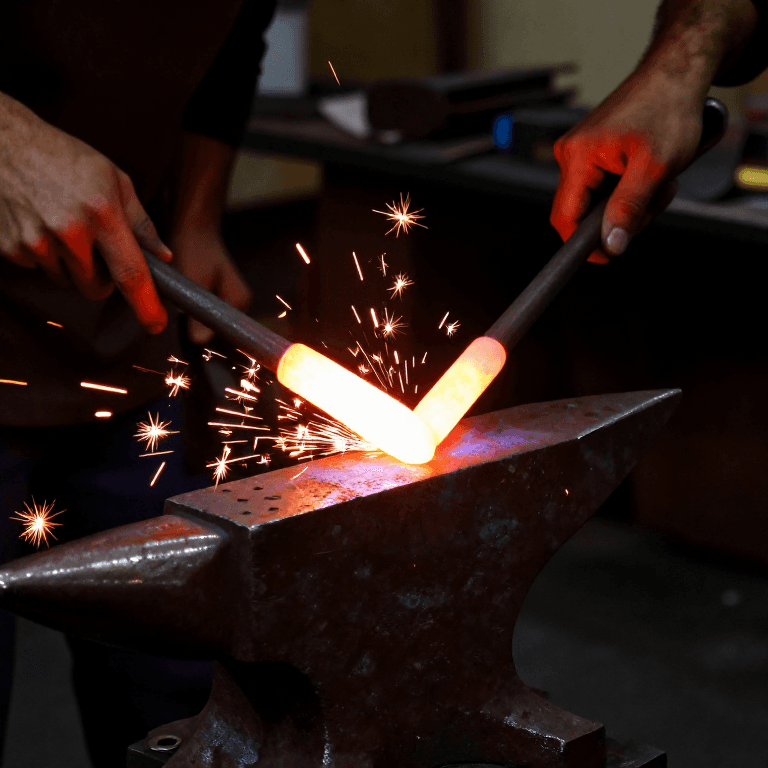
Heat the last 5-6 cm of the long strap to bright orange. Place a round mandrel (an iron rod about 10-12 mm diameter) against the end of the strap on the anvil edge. Hammer the hot end down and around the mandrel, curling the iron into a complete tube. The eye must wrap at least 270 degrees — ideally a full 360. Remove the mandrel and check that it slides freely back through the eye. If the eye is too tight, reheat and open slightly with the mandrel.

Materials for this step:

CharcoalCharcoal3 kg

Tools needed:

Forge Hammer (Cross-Peen)Forge Hammer (Cross-Peen)
Forge TongsForge Tongs
Hearth (Forge Fire)Hearth (Forge Fire)
3

Forge the eye on the frame strap

Repeat the same curling operation on the short strap. The two eyes must be the same diameter so they align on a common pin. Place both eyes side by side and check that the mandrel passes through both smoothly. If one eye is tighter or offset, reheat and adjust.
4

Punch the nail holes

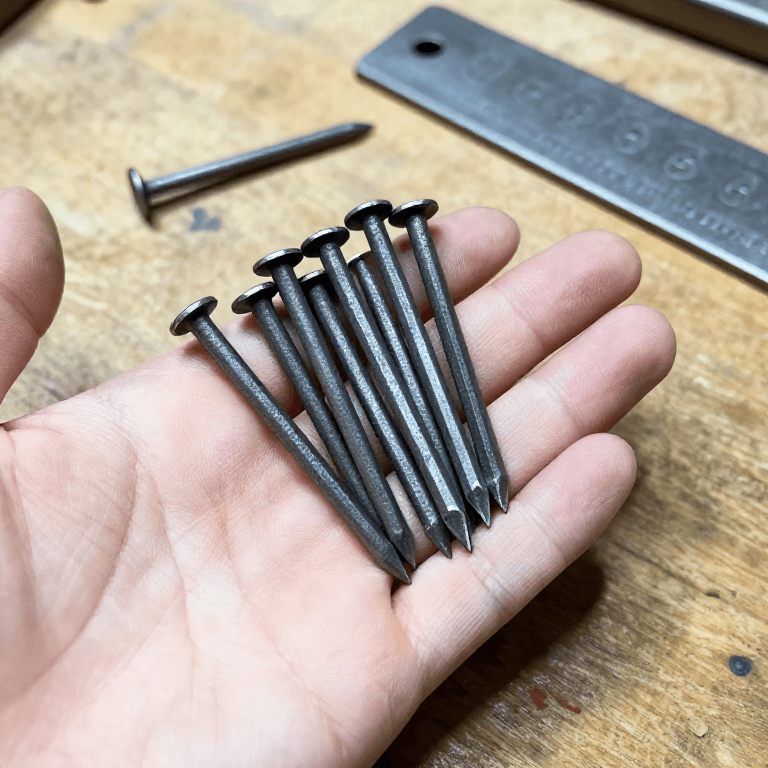
Each strap needs holes for the nails or screws that attach it to the wood. Heat a section of the strap to bright orange and drive a square punch through from one side, using the pritchel hole in the anvil to clear the slug. Space the holes evenly along the strap — three to four holes per leaf for a medium hinge. The holes should be sized to accept the hand-forged nails from your nail-making stock.
5

Decorative taper (optional)

Traditional strap hinges often have a decorative taper or point at the free end of the door strap. Heat the end and draw it to a gentle taper, or split it with a hot chisel and curl the two halves into scrolls. This serves no structural purpose but identifies the smith's work and adds beauty to the door. Many surviving medieval hinges have elaborate scroll terminals.
6

Make the hinge pin

Forge a pin from round rod stock, sized to fit snugly through both eyes. The pin should be about 2-3 cm longer than the combined width of both eyes. After inserting the pin, peen over the top end to form a small head that prevents the pin from dropping out. Leave the bottom end straight or bend it into a small hook for easy removal — a removable pin allows the door to be taken off its hinges.
7

Assemble and test the hinge

Thread the pin through both eyes — the door strap eye and the frame strap eye should interlock, with the straps extending in opposite directions. Swing the hinge open and closed to check that it pivots freely through at least 180 degrees. If it binds, the eyes are misaligned — reheat the offending eye and adjust. Apply a thin coat of tallow or grease to the pin to prevent rust and reduce friction.

Materials

1

Tools Required

3

Connected Blueprint Materials

Related Blueprints

These blueprints share knowledge with this one — techniques, materials, or principles that connect them in the learning graph.

CC0 Public Domain

This blueprint is released under CC0. You are free to copy, modify, distribute, and use this work for any purpose, without asking permission.

Support the Maker by purchasing products through their Blueprint where they earn a Maker Commission set by Vendors, or create a new iteration of this Blueprint and include it as a connection in your own Blueprint to share revenue.

Discussion

(0)

Log in to join the discussion

Loading comments...