IṢẸ́ ỌNÀ
ẸWÀ ÀTI ÌLERA
IṢẸ́ ỌWỌ́
ÀṢÀ ÀTI ÌTÀN
ÌṢERÉ
ÀYÍKÁ
OÚNJẸ ÀTI OHUN MÍMU
REVERSE ENGINEERING
SÁYẸ́ǸSÌ
ERÉ ÌDÁRAYÁ
ÌMỌ̀-Ẹ̀RỌ
ÀWỌN OHUN WÍWỌ̀
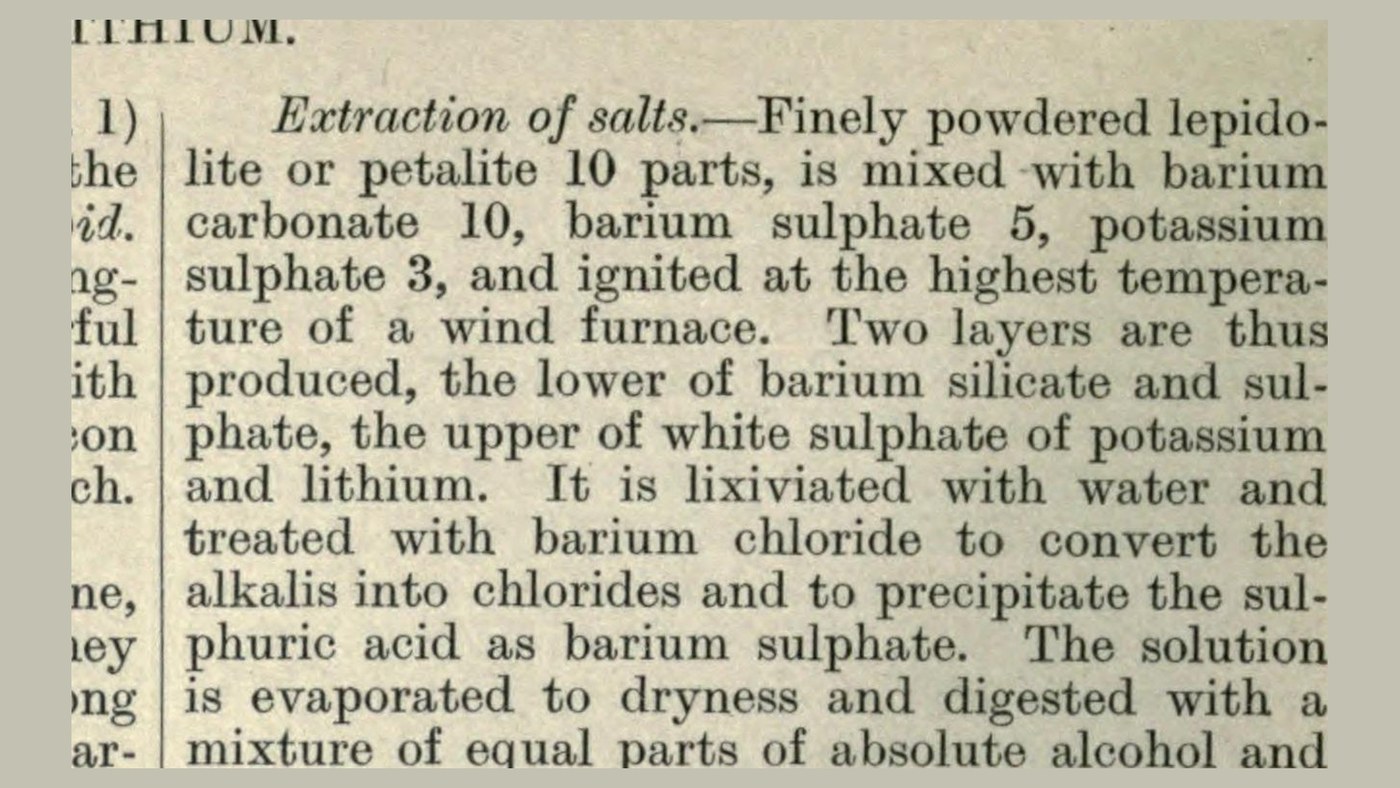

Lepidolite Lithia Residue: Troost's Barium Fusion, Lithium Chloride Taken Out (Thorpe, 1912)
Lithium salts from lepidolite by Troost's method: the powdered mineral is fused with barium carbonate, barium sulphate and potassium sulphate, the alkali sulphate layer turned into chlorides with barium chloride, and the lithium chloride dissolved out with alcohol and ether. The saline chlorides left behind are the residue in which Bunsen found rubidium.
The fusion separates into two layers: barium silicate and sulphate below, white potassium and lithium sulphate above.
Source: T. E. Thorpe, Dictionary of Applied Chemistry vol. III (1912), p. 338. Picture: the book's text.
Ilọsíwájú
Unknown
Ìlànà
1
1
Fuse with barium salts
Fuse with barium salts
Mix 10 parts finely powdered lepidolite with 10 parts barium carbonate, 5 parts barium sulphate and 3 parts potassium sulphate, and ignite at the highest heat of a wind furnace. Two layers form: barium silicate and sulphate below, white potassium and lithium sulphate above.
Àwọn ohun èlò fún ìgbésẹ̀ yìí:
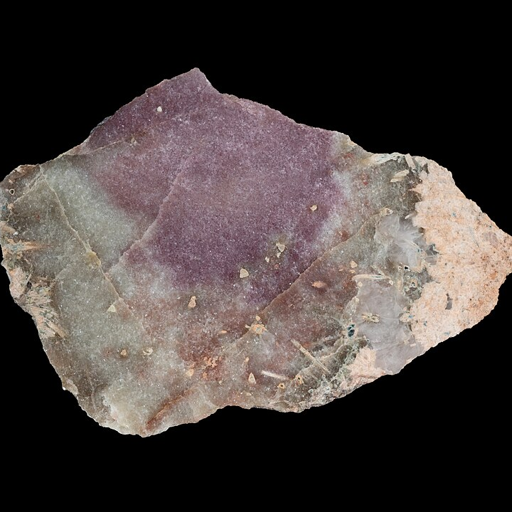 Lepidolite1 10 parts, finely powdered
 Barium carbonate (witherite)1 10 parts
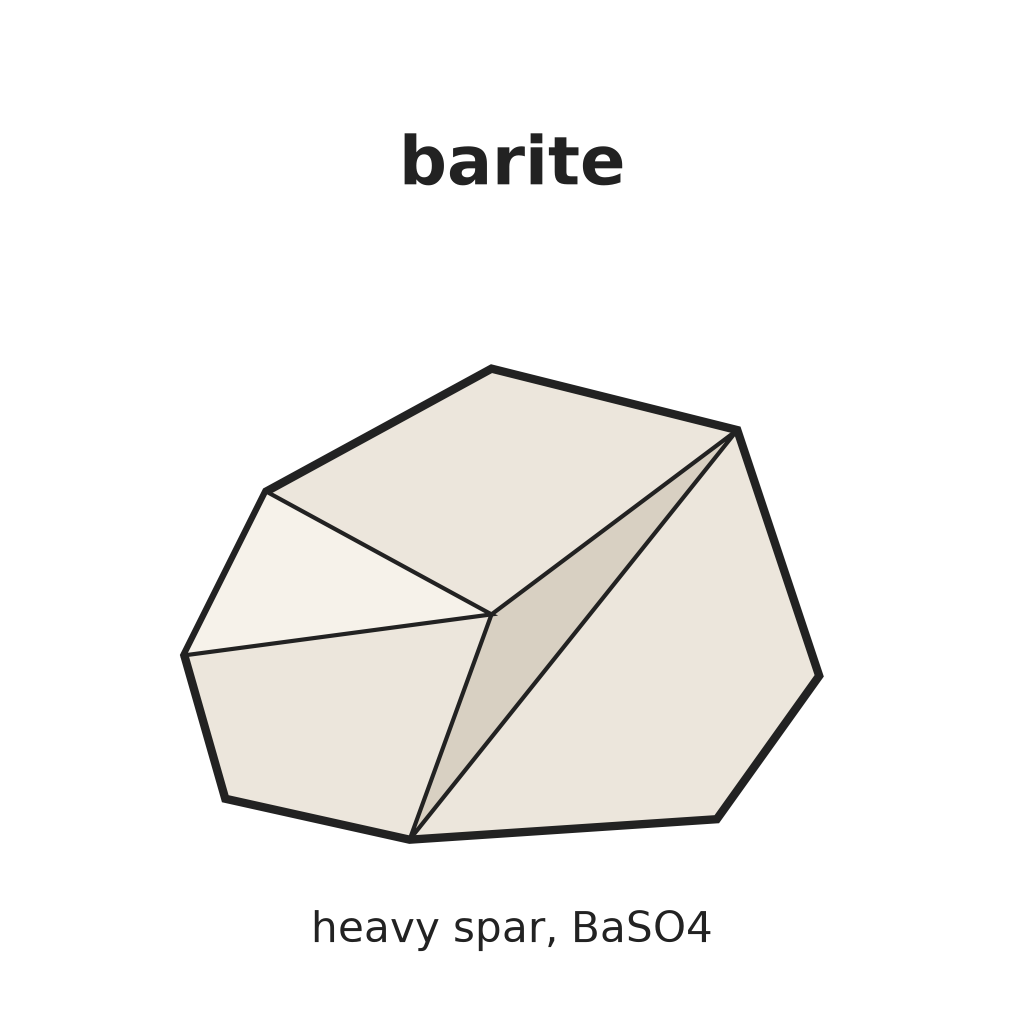 Baráìtì (Òkúta Wúwo)1 5 parts
 Potassium sulphate (iyọ̀)1 3 parts
Àwọn irinṣẹ́ tí a nílò:
 Odó àti Ọmọ Odó
 Ìkòkò ìyọ́
 Ààrò Èédú
2
2
Turn the alkalis into chlorides
Turn the alkalis into chlorides
Lixiviate the upper layer with water and treat it with barium chloride, which turns the alkalis into chlorides and throws down the sulphuric acid as barium sulphate. Filter.
Àwọn ohun èlò fún ìgbésẹ̀ yìí:
 Barium chloride1 ẹyọ
 Omi1 ẹyọ
Àwọn irinṣẹ́ tí a nílò:
 Bébà Ìsẹ́
3
3
Take out the lithium chloride
Take out the lithium chloride
Evaporate the solution to dryness and digest with equal parts of absolute alcohol and ether: the lithium chloride dissolves with only a trace of potassium and sodium chloride. What stays undissolved is the saline residue of alkali chlorides.
Àwọn irinṣẹ́ tí a nílò:
 Àwo Ìgbẹ
 Ọtí àìlómi
 Diethyl ether
Àwọn ohun-èlò
6- 1 10 parts, finely powderedÀyè
- 1 10 partsÀyè
- 1 5 partsÀyè
- 1 3 partsÀyè
- 1 ẹyọÀyè
- 1 ẹyọÀyè
Ìtọ́nisọ́nà yìí ń ṣe
CC0 Àgbègbè Gbogbogbò
Blueprint yìí ti jáde lábẹ́ CC0. O lè ṣe àdàkọ, yí padà, pín, àti lò láìsí ìyọ̀ǹda.
Ṣàtìlẹ́yìn Olùṣẹ́dá nípa rírà àwọn ọjà nipasẹ̀ Blueprint wọn Ẹ̀san Olùṣẹ́dá tí àwọn Olùtajà gbé kalẹ̀, tàbí ṣẹ̀dá àtúnṣe tuntun ti Blueprint yìí kí o sì fi sínú Blueprint rẹ gẹ́gẹ́ bí ìsopọ̀ láti pín owó-wíwọlé.