IṢẸ́ ỌNÀ
ẸWÀ ÀTI ÌLERA
IṢẸ́ ỌWỌ́
ÀṢÀ ÀTI ÌTÀN
ÌṢERÉ
ÀYÍKÁ
OÚNJẸ ÀTI OHUN MÍMU
REVERSE ENGINEERING
SÁYẸ́ǸSÌ
ERÉ ÌDÁRAYÁ
ÌMỌ̀-Ẹ̀RỌ
ÀWỌN OHUN WÍWỌ̀
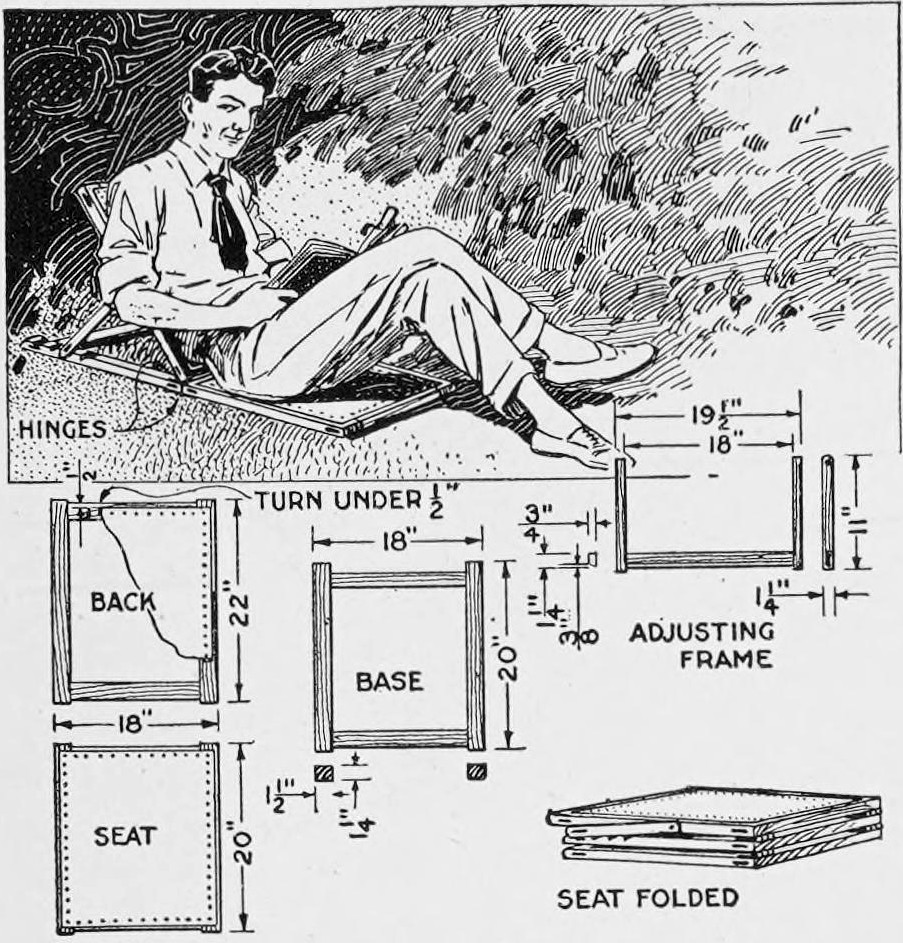


Folding Ground Seat With Adjustable Back Rest: Three Oak Frames, Duck Covers and a Notched Base (Boy Mechanic, 1919)
T. H. Linthicum's folding ground seat from The Boy Mechanic, Book 3 (1919): an 18 x 20 in duck seat and an 18 x 22 in duck back hinged to an open oak base frame, with a 19-1/2 in adjusting frame that drops into notches 2 in apart to set the back. It folds flat and also serves across a bed or trunk.
Àárín
About 1 day
Ìlànà
1
1
Frames in centimetres
Frames in centimetres
Ń ṣí ìwé Jupyter…
2
2
Read The Boy Mechanic, Book 3
Read The Boy Mechanic, Book 3
"Those who enjoy sitting or lying upon the grass while reading will find the device shown in the illustration convenient and comfortable."
3
3
Make the three frames
Make the three frames
From oak (or other common wood) make three rectangular frames with mortise-and-tenon joints, to his dimensions: the back 18 by 22 in, the seat 18 by 20 in and the base 18 by 20 in. Cut adjusting notches in the base sides 2 in apart.
Àwọn ohun èlò fún ìgbésẹ̀ yìí:
 Pátákò oak funfun3 ẹyọ
 Ìdìpọ̀ Igi1 ẹyọ
Àwọn irinṣẹ́ tí a nílò:
 Ayùn Ọwọ́
 Àwọn ìgbẹ́ igi
 Òòlù Igi
 Ohun èlò ìfárí igi (pìlánì)
 Okùn Ìdíwọ̀n
 Gègé
4
4
Make the adjusting frame
Make the adjusting frame
Make the adjusting frame 19-1/2 in wide outside and 18 in inside, 11 in high, of 1-1/4 in stock, with the end details drawn 3/4, 1/4 and 3/8 in; its foot drops into the base notches.
Àwọn ohun èlò fún ìgbésẹ̀ yìí:
Pátákò oak funfun1 ẹyọÌdìpọ̀ Igi1 ẹyọÀwọn irinṣẹ́ tí a nílò:
Ayùn Ọwọ́Àwọn ìgbẹ́ igiOhun èlò ìfárí igi (pìlánì)5
5
Cover the seat and back
Cover the seat and back
Cover the seat and back frames with heavy duck, turning it in 1/2 in at the edges (tacks are ours).
Àwọn ohun èlò fún ìgbésẹ̀ yìí:
 Aṣọ kánfásì1 ẹyọ
 Oríṣiríṣi ìṣó ìṣọ̀ṣọ́ ìjókòó1 ẹyọ
Àwọn irinṣẹ́ tí a nílò:
 Ìṣẹ́ná
 Òòlù
6
6
Hinge and assemble
Hinge and assemble
Hinge the back and the seat to the base, and fasten the adjusting frame to the back with screws so it can fold; drop its foot into a base notch to set the back's angle.
Àwọn ohun èlò fún ìgbésẹ̀ yìí:
 Ìdìmú ẹnu-ọ̀nà4 ẹyọ
 Ìṣó igi1 ẹyọ
Àwọn irinṣẹ́ tí a nílò:
 Ìlù ọwọ́
 Ìlọ̀sí olójú pẹlẹbẹ
7
7
Using it
Using it
Ground seat use.
Flow
Loading...
8
8
History and honest limits
History and honest limits
From "A Folding Ground Seat with Back Rest" by T. H. Linthicum, in **The Boy Mechanic, Book 3**, Popular Mechanics, 1919 (Project Gutenberg 71856; checked on the archive.org scan boymechanic0003unse, p. 190). He gives the frame sizes in the drawing but not every rail section or the notch depth. The tools and metric figures are ours.
Àwọn ohun-èlò
6- 3 ẹyọÀyè
- 2 ẹyọÀyè
- 1 ẹyọÀyè
- Àyè
- 4 ẹyọÀyè
- 1 ẹyọÀyè
Ìtọ́nisọ́nà yìí ń ṣe
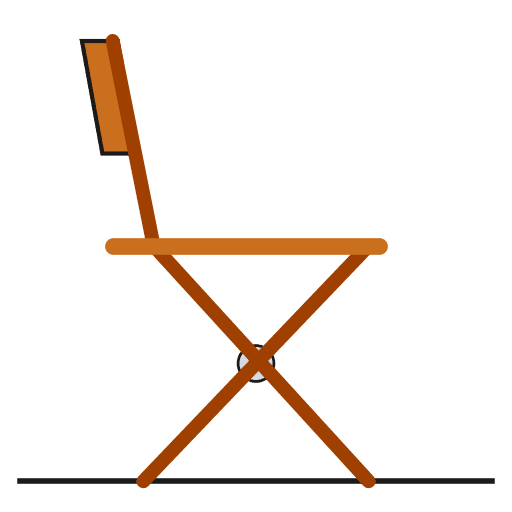
Blueprint tó jọra
Àwọn blueprint wọ̀nyí pín ìmọ̀ — ọ̀nà, ohun-èlò tàbí ìlànà
CC0 Àgbègbè Gbogbogbò
Blueprint yìí ti jáde lábẹ́ CC0. O lè ṣe àdàkọ, yí padà, pín, àti lò láìsí ìyọ̀ǹda.
Ṣàtìlẹ́yìn Olùṣẹ́dá nípa rírà àwọn ọjà nipasẹ̀ Blueprint wọn Ẹ̀san Olùṣẹ́dá tí àwọn Olùtajà gbé kalẹ̀, tàbí ṣẹ̀dá àtúnṣe tuntun ti Blueprint yìí kí o sì fi sínú Blueprint rẹ gẹ́gẹ́ bí ìsopọ̀ láti pín owó-wíwọlé.