IṢẸ́ ỌNÀ
ẸWÀ ÀTI ÌLERA
IṢẸ́ ỌWỌ́
ÀṢÀ ÀTI ÌTÀN
ÌṢERÉ
ÀYÍKÁ
OÚNJẸ ÀTI OHUN MÍMU
REVERSE ENGINEERING
SÁYẸ́ǸSÌ
ERÉ ÌDÁRAYÁ
ÌMỌ̀-Ẹ̀RỌ
ÀWỌN OHUN WÍWỌ̀
Léwu

Lithium Cobalt Oxide Cathode
Every cell before this one in the chain works by making and unmaking a compound. Lead becomes lead sulphate and comes back. Cadmium becomes cadmium hydroxide and comes back. The electrode is consumed and rebuilt on every cycle, and everything that is rebuilt eventually gets rebuilt badly.
**Intercalation is a different idea entirely.** Build a crystal with layers, park lithium ions between the layers, and pull them out and put them back without the host ever changing. Nothing is made, nothing is unmade, and in principle nothing wears out.
Stanley Whittingham had shown this worked with a sulphide, lithium titanium disulphide, but the voltage was low. John Goodenough and Koichi Mizushima's insight was to try an OXIDE instead: oxygen holds its electrons more tightly than sulphur, so pulling lithium out of a cobalt oxide costs more energy - and that energy is exactly what comes back as voltage.
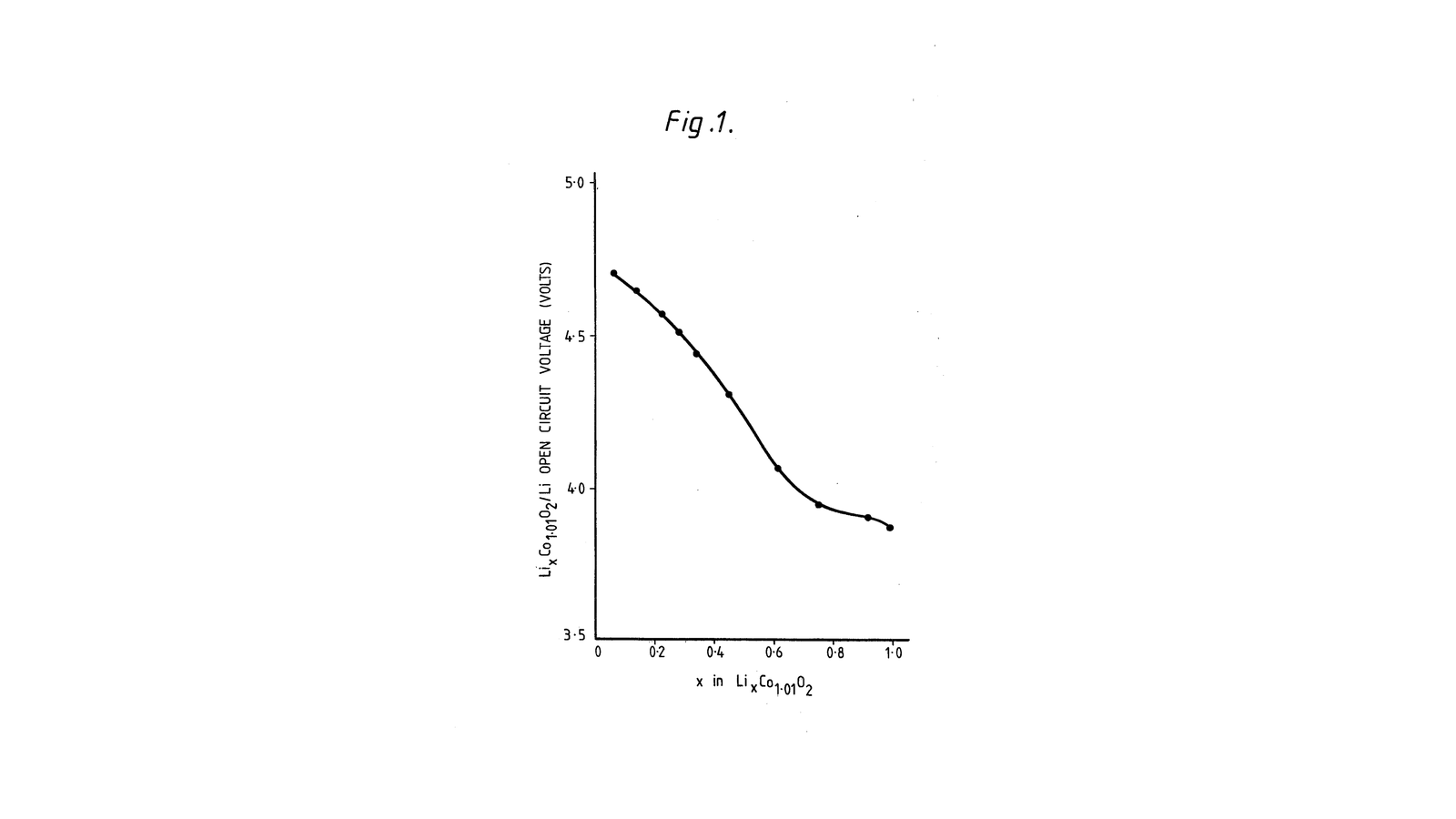
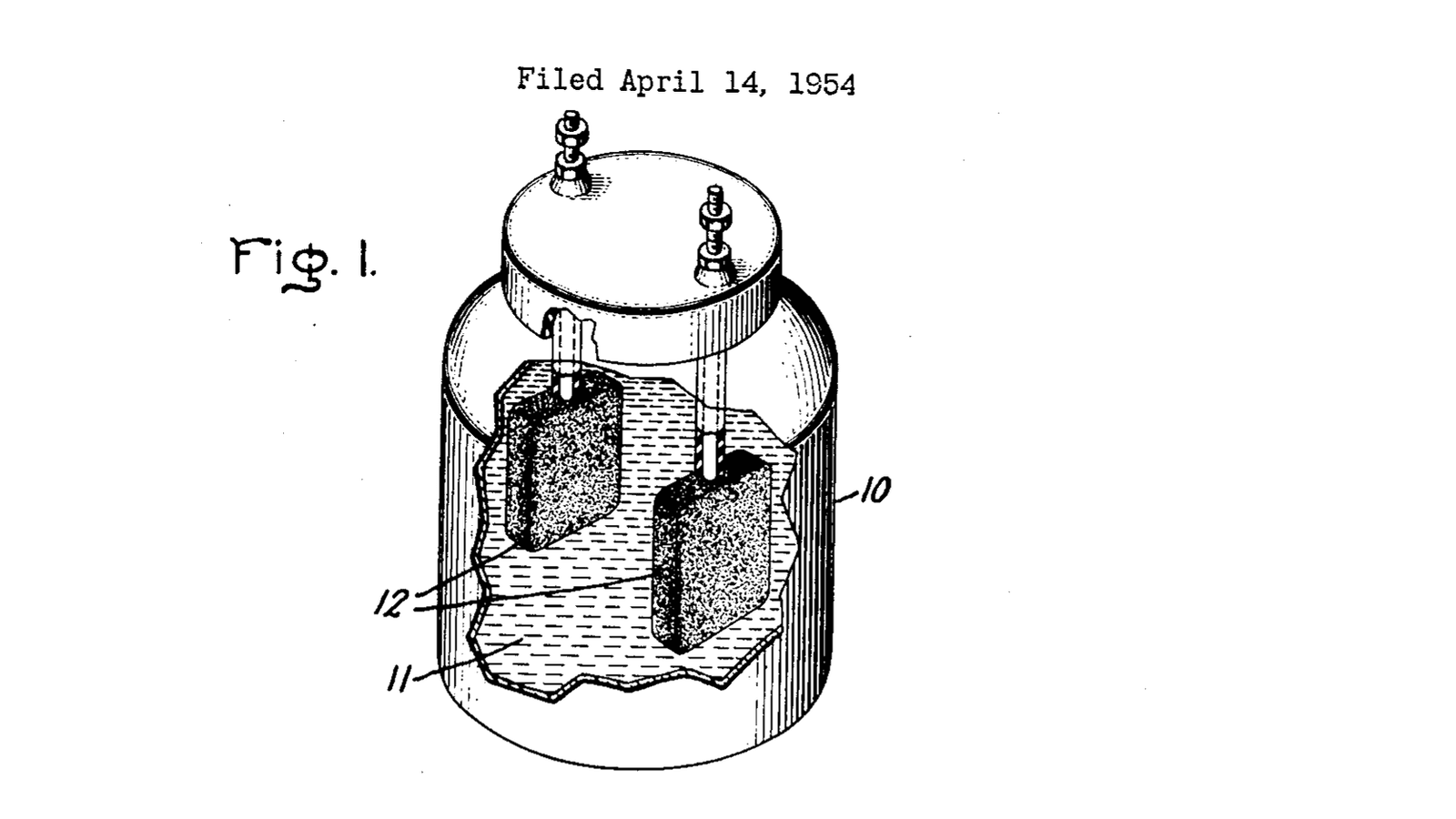
**US 4,302,518** "Electrochemical cell with new fast ion conductors", John B. Goodenough and Koichi Mizushima, priority 5. April 1979, filed 31. March 1980, granted 24. November 1981. It claims a family, *"fast ion conductors of the formula AxMyO2 where A is Li, Na or K, M is a transition metal e.g. Co or Ni"*, and the worked example is Li0.99Co1.01O2. The patent reports open-circuit voltages *"nearly twice as large as those found for the known ion conductor LixTiS2"* - and the figure on the cover of this blueprint is theirs: voltage against how much lithium is left, running from about 3.9 V up past 4.5 V.
That curve is the reason your phone exists.
**What you are making here.** The cathode powder, by solid-state synthesis, and the measurements that tell you whether you made it. You are not building a lithium cell: that needs lithium metal or a graphite anode, a dry organic electrolyte and an argon glovebox, and doing it on a bench is how people set fire to their houses. The last step says what a full cell would need and why the line is drawn where it is.
Cobalt compounds are toxic and a suspected carcinogen as dust, and this runs a furnace at 900 degrees. Gated for the first reason.
Ilọsíwájú
2 hours of work across a 12-hour firing
Àkóónú tó léwu
Blueprint yii ni awọn ilana ti o lewu. Wọle ki o mu akoonu ti o lewu ṣiṣẹ ninu awọn eto akaunti rẹ lati wo awọn itọnisọna igbesẹ-nipasẹ-igbesẹ.
Blueprint tó jọra
Àwọn blueprint wọ̀nyí pín ìmọ̀ — ọ̀nà, ohun-èlò tàbí ìlànà


CC0 Àgbègbè Gbogbogbò
Blueprint yìí ti jáde lábẹ́ CC0. O lè ṣe àdàkọ, yí padà, pín, àti lò láìsí ìyọ̀ǹda.
Ṣàtìlẹ́yìn Olùṣẹ́dá nípa rírà àwọn ọjà nipasẹ̀ Blueprint wọn Ẹ̀san Olùṣẹ́dá tí àwọn Olùtajà gbé kalẹ̀, tàbí ṣẹ̀dá àtúnṣe tuntun ti Blueprint yìí kí o sì fi sínú Blueprint rẹ gẹ́gẹ́ bí ìsopọ̀ láti pín owó-wíwọlé.