Ìfọwọ́sowọ́pọ̀
IṢẸ́ ỌNÀ
ẸWÀ ÀTI ÌLERA
IṢẸ́ ỌWỌ́
ÀṢÀ ÀTI ÌTÀN
ÌṢERÉ
ÀYÍKÁ
OÚNJẸ ÀTI OHUN MÍMU
REVERSE ENGINEERING
SÁYẸ́ǸSÌ
ERÉ ÌDÁRAYÁ
ÌMỌ̀-Ẹ̀RỌ
ÀWỌN OHUN WÍWỌ̀
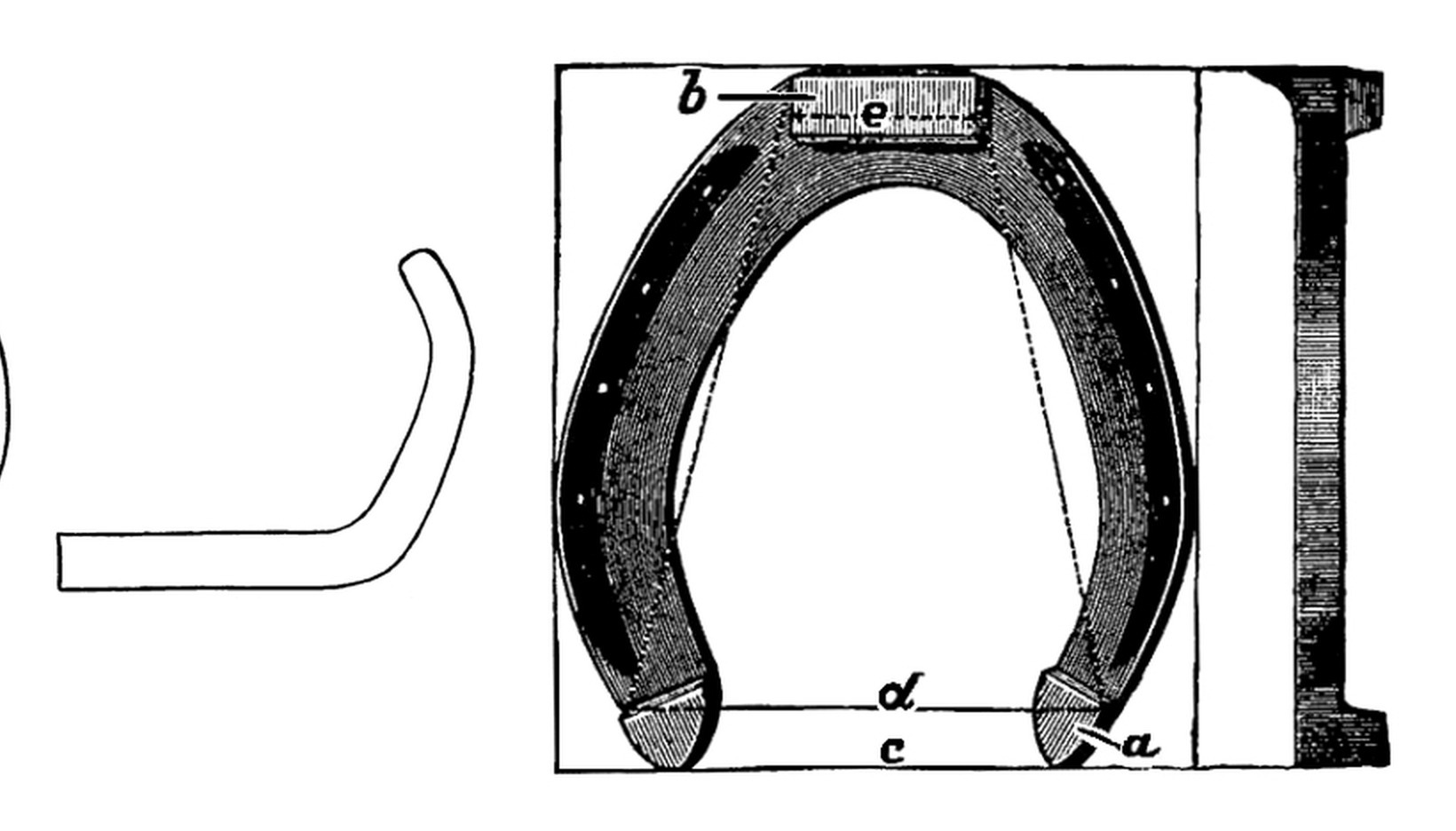


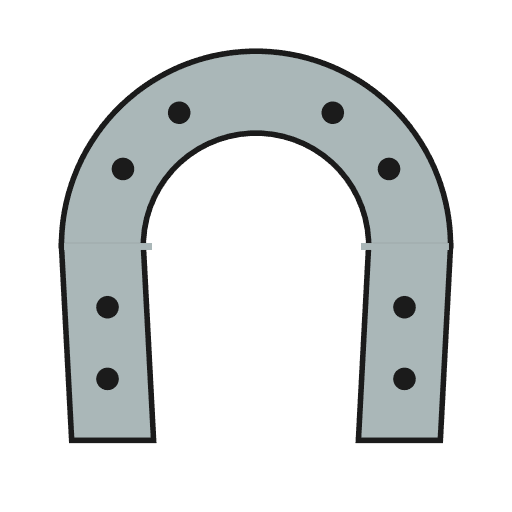
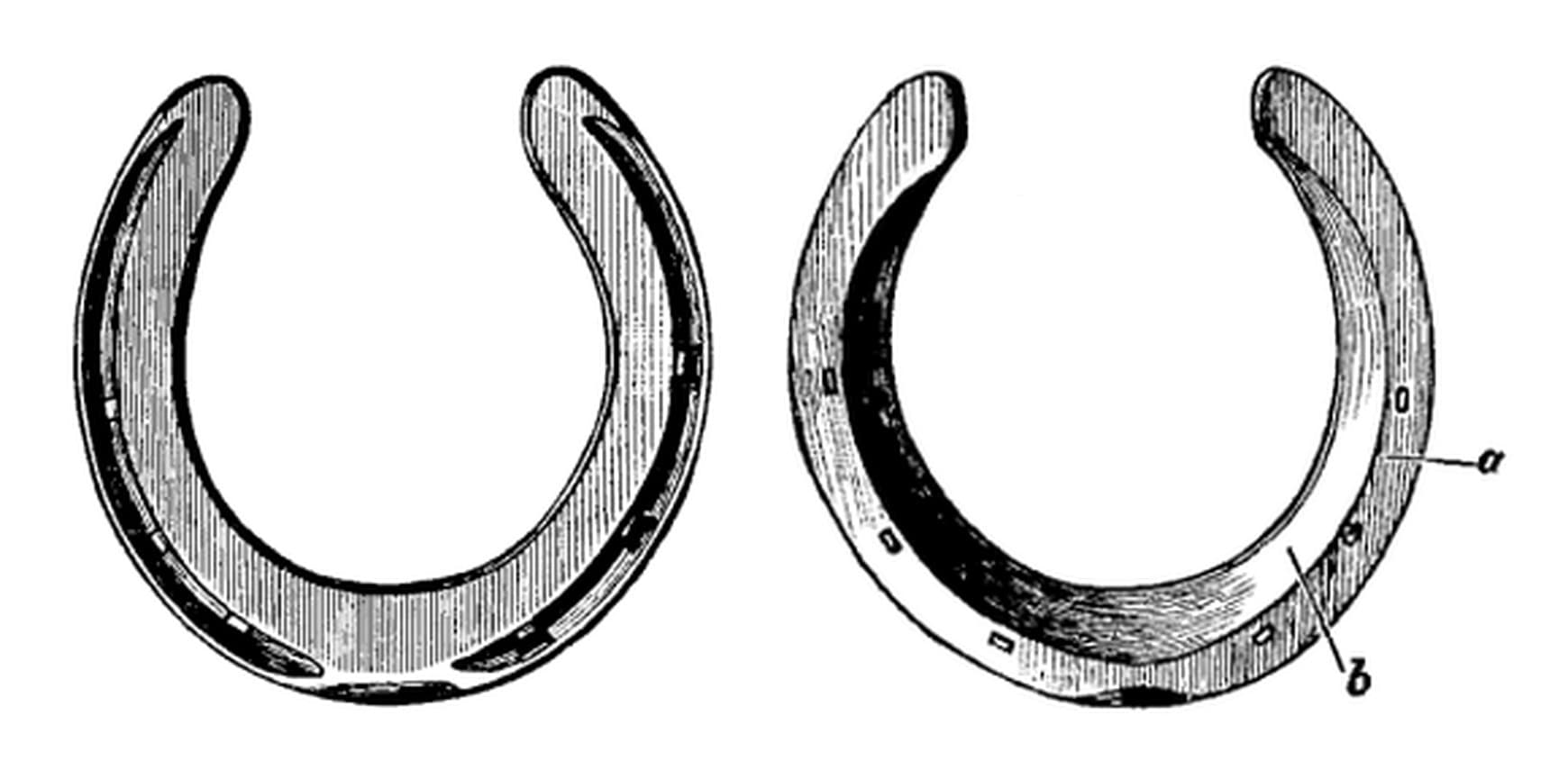
Hind Horseshoe: Round-Pointed Toe, No Seating, Nail Holes in the Front Two-Thirds (Lungwitz and Adams, Text-Book of Horseshoeing, 1913)
A flat hind horseshoe from Lungwitz and Adams, A Text-Book of Horseshoeing (1913). It is made "in like manner" as the front shoe, but the branches are bent to a different curve, giving a round-pointed toe, the hoof side is not concaved, and the nail holes run further back.
Fitting and nailing the shoe to the horse, calks and clips are not covered here.
Àárín
8-15 minutes a pair, once practised
Ìlànà
1
1
Bar length and sizes
Bar length and sizes
Ń ṣí ìwé Jupyter…
2
2
Read Lungwitz and Adams
Read Lungwitz and Adams
"The hind shoe is made in like manner, but the branches are not bent in a circle but given that form shown in Fig. 106."
3
3
Measure and cut the bar
Measure and cut the bar
Measure the hoof from the point of the toe to the buttress and its greatest width; add them for the bar length. Trace the outline on stiff paper if you want to keep it. Cut the bar.
Àwọn ohun èlò fún ìgbésẹ̀ yìí:
 Ọ̀pá irin lílù1 ẹyọ
Àwọn irinṣẹ́ tí a nílò:
 Okùn Ìdíwọ̀n
 Gègé
 Ìwé pátákó nípọn
 Ìléru alágbẹ̀dẹ
 Ọ̀bẹ ìgé lórí ìdí alágbẹ̀dẹ
 Ẹmú Alágbẹ̀dẹ
4
4
Bend the outer branch to the hind curve
Bend the outer branch to the hind curve
Heat the bar white-hot just beyond its middle and bend it over the sledge head on the anvil face with the turning hammer, as for the front shoe, but bend the branch to the flatter, angled curve of his Fig. 106, not to a circle. The outer branch is made first, the right shoe first in a pair. Draw out the end with the sledge.
Àwọn irinṣẹ́ tí a nílò:
Ìléru alágbẹ̀dẹ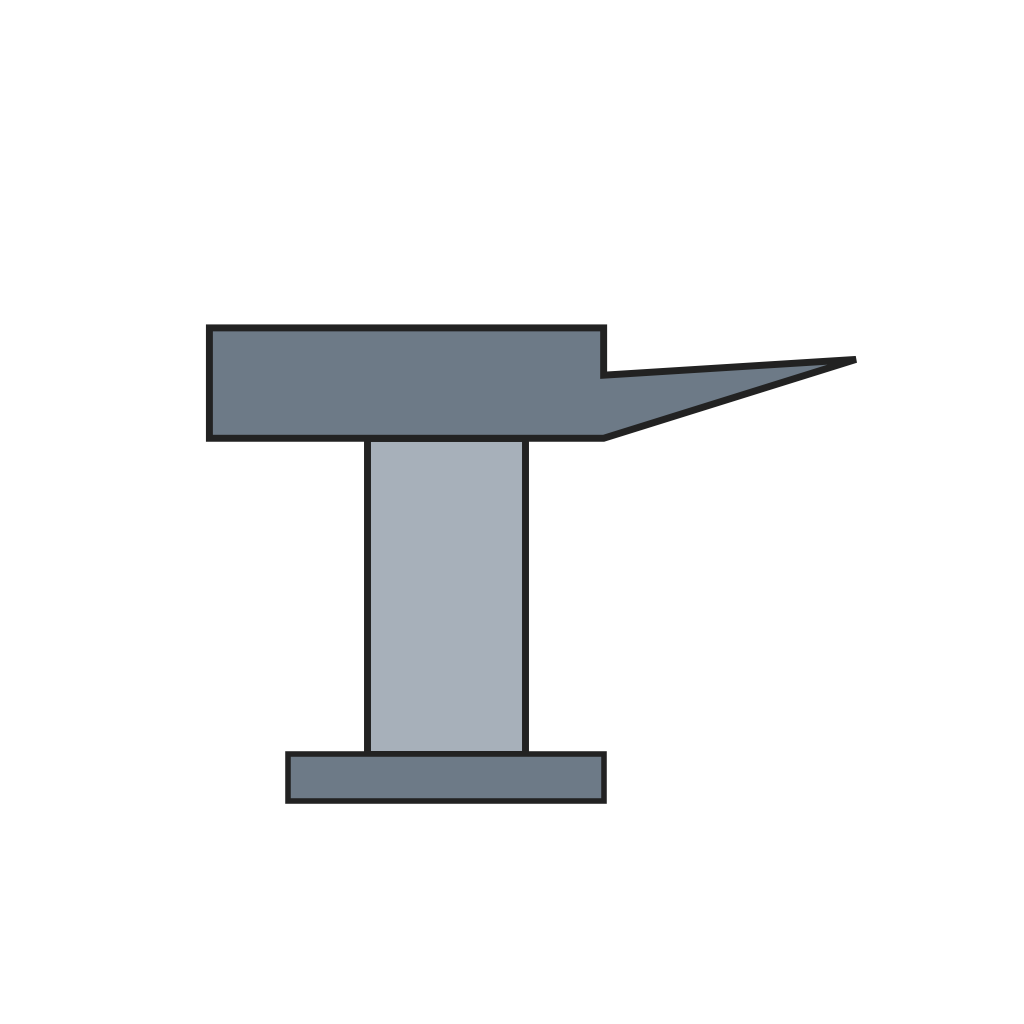 Ìdí alágbẹ̀dẹ kékeré oníkàbà
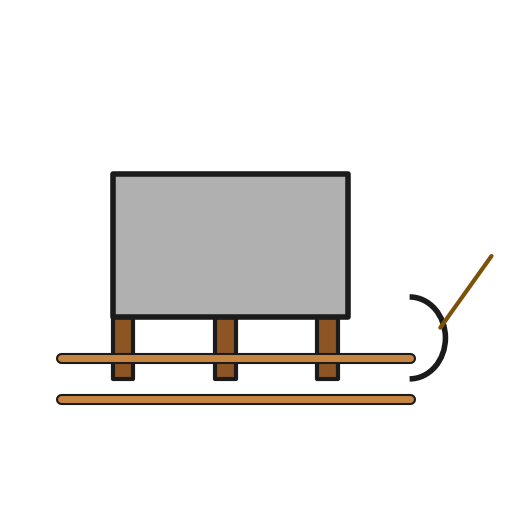 Àgbéwọ́ Ẹrù
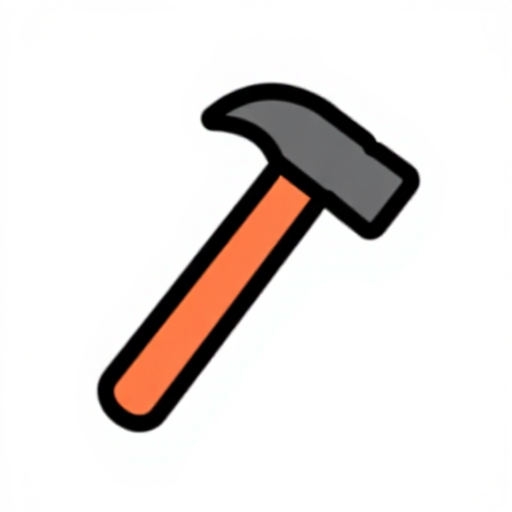 Òòlù ìyíkáẸmú Alágbẹ̀dẹ
5
5
Bevel, flatten and shape
Bevel, flatten and shape
Bevel the branch on the horn, then flatten it. Bending the toe of a hind shoe backs up the inner edge and thins the outer, so hammer the shoe smooth and even. Shape it so the toe is round-pointed, "yet not too much so", as in his Fig. 116.
Àwọn irinṣẹ́ tí a nílò:
Ìdí alágbẹ̀dẹ kékeré oníkàbàÒòlù ìyíkáẸmú Alágbẹ̀dẹ6
6
Round the inner edge and fuller
Round the inner edge and fuller
Concaving is not necessary: just round the inner edge of the web. Fuller the ground side as for the front shoe, to about two-thirds of the thickness.
Àwọn irinṣẹ́ tí a nílò:
Ìdí alágbẹ̀dẹ kékeré oníkàbà Fuller (irin ìgbẹ́ ìlà)Àgbéwọ́ ẸrùÒòlù ìyíkáẸmú Alágbẹ̀dẹ
7
7
Stamp the nail holes
Stamp the nail holes
Stamp and pritchel the nail holes in the front two-thirds of the shoe, none at the toe: usually one more than a front shoe, seldom more than eight. Set each as far from the outer edge as the wall is thick; on a hind hoof the wall is nearly as thick at the quarters as at the toe.
Àwọn irinṣẹ́ tí a nílò:
Ìdí alágbẹ̀dẹ kékeré oníkàbà Ohun ìlu ihò gbígbóná
 Ohun ìlu ihò bàtà ẹṣinÒòlù ìyíkáẸmú Alágbẹ̀dẹ
8
8
Make the second branch and finish
Make the second branch and finish
Make the inner branch the same way, turned to the left. Go over the outer edge on the horn and hammer the bearing surface smooth and level. Rough it out in two heats if you can.
Àwọn irinṣẹ́ tí a nílò:
Ìléru alágbẹ̀dẹÌdí alágbẹ̀dẹ kékeré oníkàbàÒòlù ìyíkáFuller (irin ìgbẹ́ ìlà)Ohun ìlu ihò gbígbónáOhun ìlu ihò bàtà ẹṣinẸmú Alágbẹ̀dẹ9
9
Troubleshooting
Troubleshooting
Hind shoe troubleshooting.
Flow
Loading...
10
10
History and honest limits
History and honest limits
From **A Text-Book of Horseshoeing**, by A. Lungwitz and John W. Adams, 11th edition, J. B. Lippincott, 1913 (Project Gutenberg 66786), chapter III F. His Fig. 116 shows a hind shoe with toe- and heel-calks; the calks and the toe-clip are not made here, as this chapter gives no method for forging heel-calks or drawing clips. Fitting and nailing are not covered. The metric figures are ours.
Àwọn ohun-èlò
1- 1 ẹyọÀyè
Àwọn irinṣẹ́ tó nílò
12- 1 vendor sell this, none ship to you yetÀyè
- 1 vendor sell this, none ship to you yetÀyè
- Àyè
- Àyè
Ìtọ́nisọ́nà yìí ń ṣe
Blueprint tó jọra
Àwọn blueprint wọ̀nyí pín ìmọ̀ — ọ̀nà, ohun-èlò tàbí ìlànà
CC0 Àgbègbè Gbogbogbò
Blueprint yìí ti jáde lábẹ́ CC0. O lè ṣe àdàkọ, yí padà, pín, àti lò láìsí ìyọ̀ǹda.
Ṣàtìlẹ́yìn Olùṣẹ́dá nípa rírà àwọn ọjà nipasẹ̀ Blueprint wọn Ẹ̀san Olùṣẹ́dá tí àwọn Olùtajà gbé kalẹ̀, tàbí ṣẹ̀dá àtúnṣe tuntun ti Blueprint yìí kí o sì fi sínú Blueprint rẹ gẹ́gẹ́ bí ìsopọ̀ láti pín owó-wíwọlé.