
IṢẸ́ ỌNÀ
ẸWÀ ÀTI ÌLERA
IṢẸ́ ỌWỌ́
ÀṢÀ ÀTI ÌTÀN
ÌṢERÉ
ÀYÍKÁ
OÚNJẸ ÀTI OHUN MÍMU
REVERSE ENGINEERING
SÁYẸ́ǸSÌ
ERÉ ÌDÁRAYÁ
ÌMỌ̀-Ẹ̀RỌ
ÀWỌN OHUN WÍWỌ̀
Cam-Arm Tubing Cutter: Two Swinging Arms Keep the Wheel and Rollers Evenly Round Any Tube (Lutsker, 1959)
Forge

Ṣẹ́dá nipasẹ̀

Forge

13. Oṣù Kọkànlá 2026NO
12
0
0
0
0

Cam-Arm Tubing Cutter: Two Swinging Arms Keep the Wheel and Rollers Evenly Round Any Tube (Lutsker, 1959)

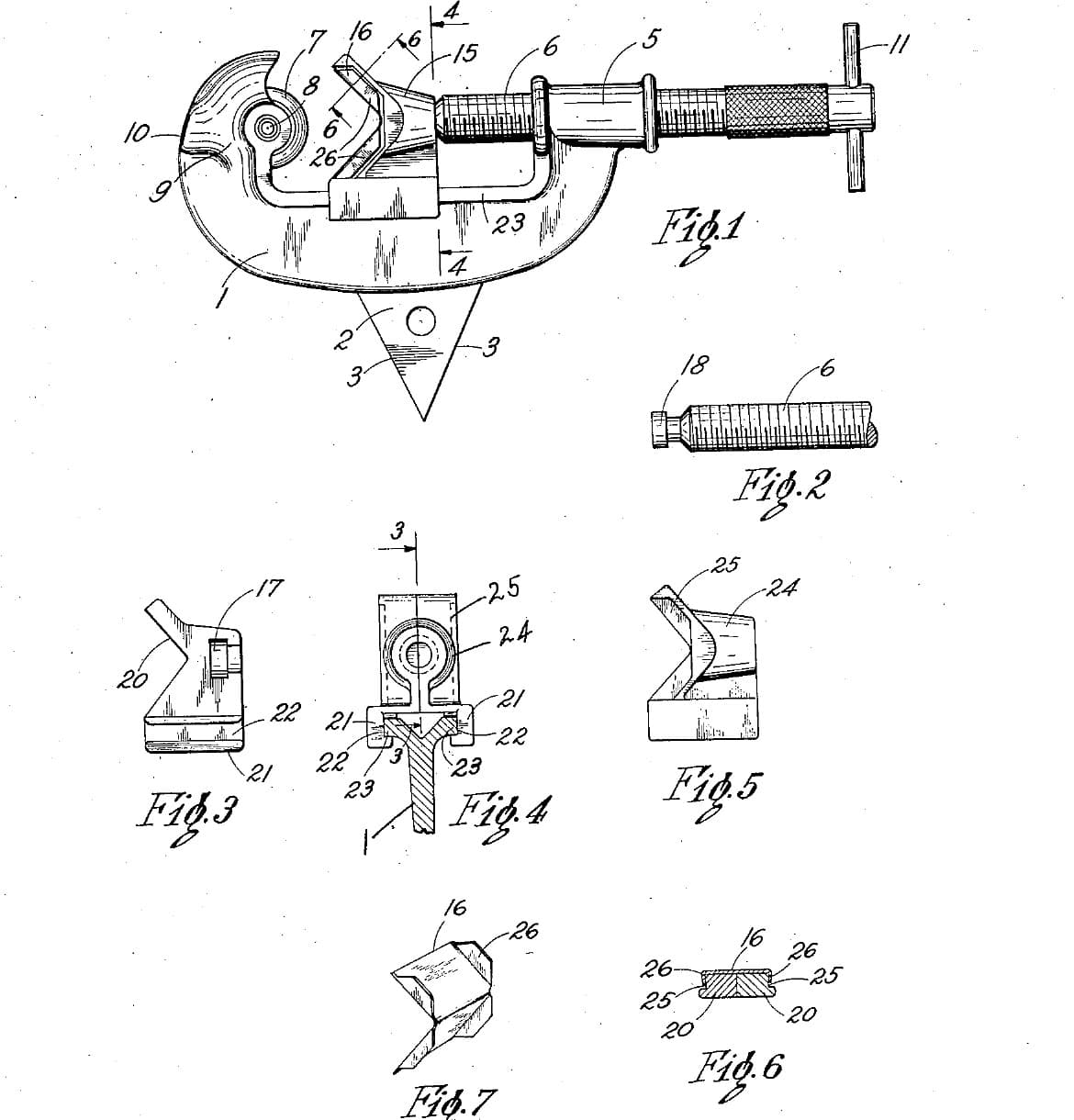
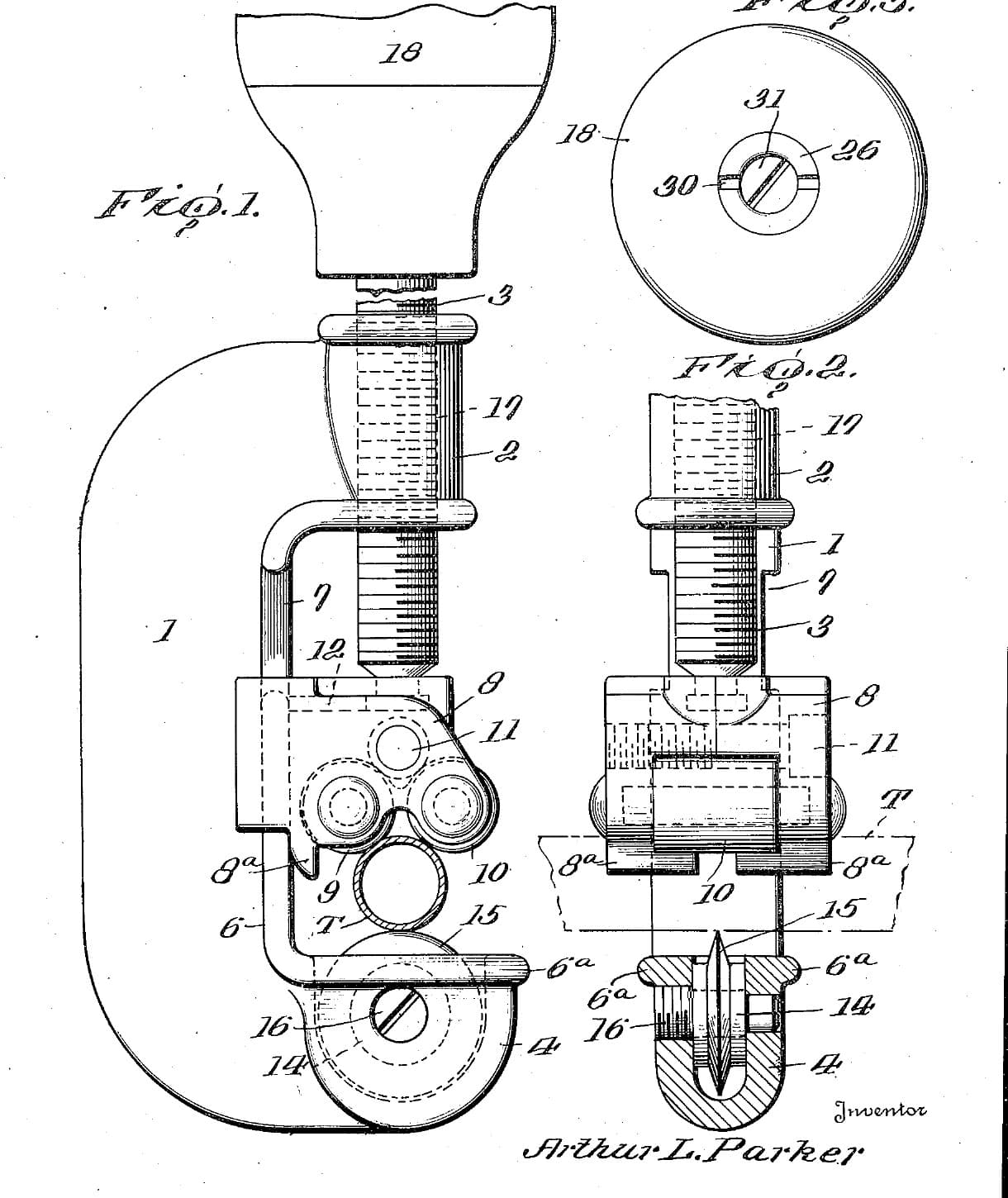
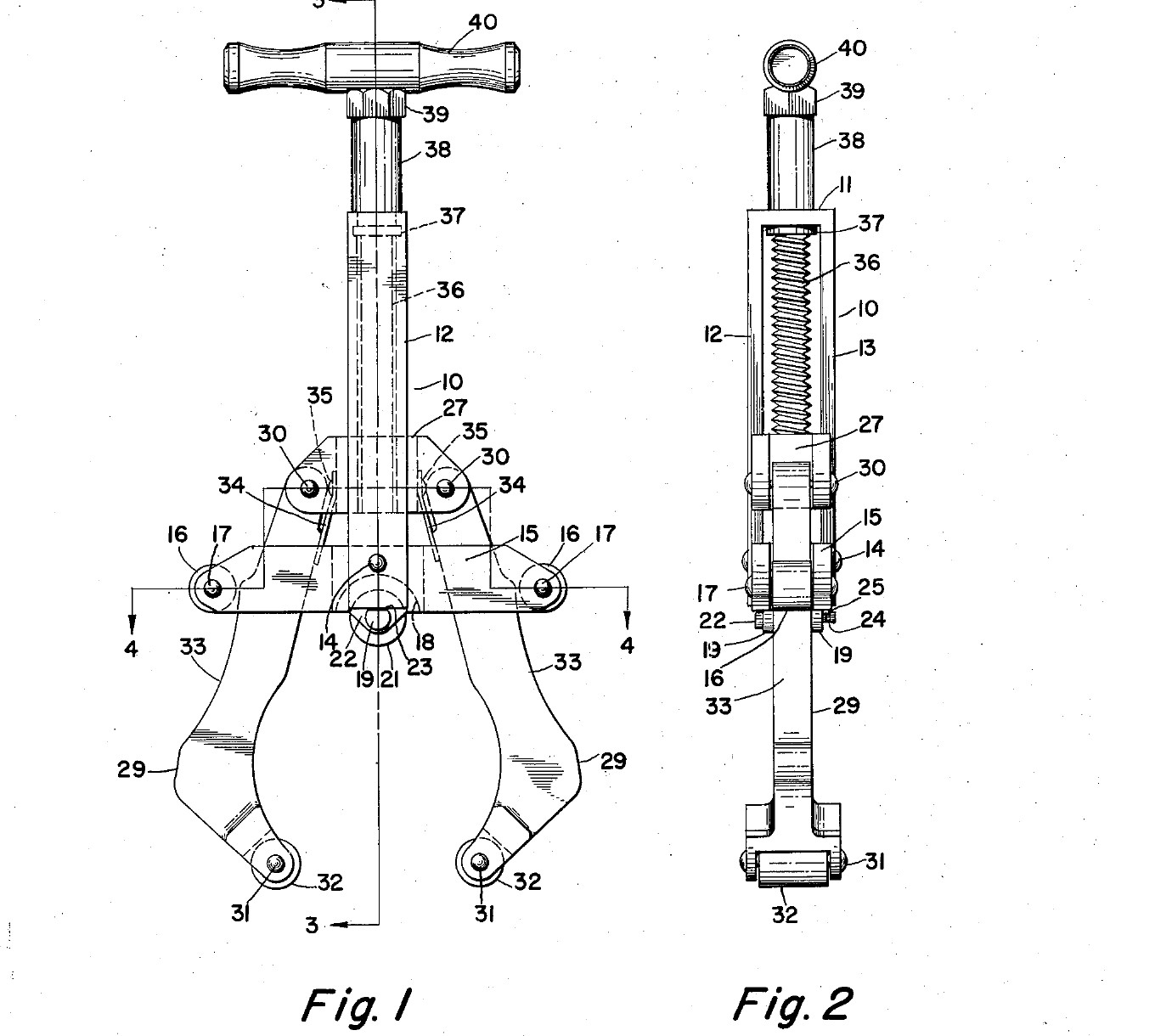
Simon Lutsker of Shaker Heights, Ohio, received US 2,870,536, dated 27 January 1959, for a tubing cutter that grips small and large tubes equally well. The wheel turns under a housing at the foot of a guide. A block slides up the guide on a screw. Two arms hang from the block, each with a roller at its lower end. Springs press the arms' curved cam edges against rollers on the housing. As the screw draws the block up, the arms swing inwards or outwards, so the wheel and the two rollers stay about evenly spaced round the tube, whatever its size. We worked out the cam so the three contacts are exactly 120 degrees apart. The curve comes out as an arc, as in his patent. All sizes are ours.
Ilọsíwájú
About 4 days

Ìlànà

1

Three points evenly round

Ń ṣí ìwé Jupyter…
2

Read US 2,870,536

"Irrespective of the size of the tubing which is being cut, the points of engagement of the cutter wheel 21 and support rollers 32 with the tubing will always be substantially equidistant from each other circumferentially of the tubing."
3

Print the template

The arm plate with its cam edge, the housing and the guide block at 1:1, with holes, slots and sizes. print at 100 % (check the 50 mm bar).
Fáìlì ÀpẹrẹPDFCC0 - Free
4

Cut the arm plates

Glue four copies of the arm outline on 3 mm steel plate. Saw and file them to the line, taking the cam edge slowly and checking it against the template. Clamp them in a stack and drill the 4 mm pivot and roller-pin holes and the two 3 mm holes through all four together.

Àwọn ohun èlò fún ìgbésẹ̀ yìí:

Pẹpẹ irin rírọ̀Pẹpẹ irin rírọ̀1 ẹyọ

Àwọn irinṣẹ́ tí a nílò:

Ayùn IrinAyùn Irin
Àkójọ ÌfáÀkójọ Ìfá
Àkójọ Ìfá KékeréÀkójọ Ìfá Kékeré
Ẹ̀rọ Ìlùkòkò OnídúróẸ̀rọ Ìlùkòkò Onídúró
Ìdìmú Ẹ̀rọÌdìmú Ẹ̀rọ
Àkójọ Orí ÌlùkòkòÀkójọ Orí Ìlùkòkò
Igi Àmì ÀárínIgi Àmì Àárín
Ìdìmú TábìlìÌdìmú Tábìlì
Òṣùwọ̀n Kálípà Díjítà Ìnṣì 6Òṣùwọ̀n Kálípà Díjítà Ìnṣì 6
5

Make the housing

From 30 x 20 flat bar, saw a block 64 mm long and file it to 28 x 18 mm, leaving the two ears below its middle. Saw the forked ends: two cuts 14.4 mm apart, 20 mm in from each end, and break out the middle. Saw and file a 7 mm slot up between the ears for the wheel. Drill the 5 mm shaft hole across the ears, the 4 mm housing-roller pins across the forks, and the 4 mm rivet hole. File a groove 20 mm wide and 3 mm deep down each face for the guide's legs.

Àwọn ohun èlò fún ìgbésẹ̀ yìí:

Ọ̀pá Pẹrẹsẹ Irin Pẹ́lẹ́Ọ̀pá Pẹrẹsẹ Irin Pẹ́lẹ́1 ẹyọ

Àwọn irinṣẹ́ tí a nílò:

Ayùn IrinAyùn Irin
Àkójọ ÌfáÀkójọ Ìfá
Ẹ̀rọ Ìlùkòkò OnídúróẸ̀rọ Ìlùkòkò Onídúró
Ìdìmú Ẹ̀rọÌdìmú Ẹ̀rọ
Àkójọ Orí ÌlùkòkòÀkójọ Orí Ìlùkòkò
Ìdìmú TábìlìÌdìmú Tábìlì
Òṣùwọ̀n Kálípà Díjítà Ìnṣì 6Òṣùwọ̀n Kálípà Díjítà Ìnṣì 6
Abẹ́rẹ́ Ìkọ ÌlàAbẹ́rẹ́ Ìkọ Ìlà
6

Make the block and the guide

Saw the guide block from the same bar, 60 x 18 x 28 mm, with forked ends from 14 mm out, the 4 mm pivot holes, the 3 mm spring-pin holes and the leg grooves. Drill 8.5 mm up its middle and tap M10. Bend a 20 x 3 mm flat bar into an inverted U with its legs 22 mm apart inside and 69 mm high, and drill a 10.5 mm hole in its top.

Àwọn ohun èlò fún ìgbésẹ̀ yìí:

Ọ̀pá Pẹrẹsẹ Irin Pẹ́lẹ́Ọ̀pá Pẹrẹsẹ Irin Pẹ́lẹ́2 ẹyọ

Àwọn irinṣẹ́ tí a nílò:

Ayùn IrinAyùn Irin
Àkójọ ÌfáÀkójọ Ìfá
Ẹ̀rọ Ìlùkòkò OnídúróẸ̀rọ Ìlùkòkò Onídúró
Ìdìmú Ẹ̀rọÌdìmú Ẹ̀rọ
Àkójọ Orí ÌlùkòkòÀkójọ Orí Ìlùkòkò
Ìtò irinṣẹ́ ìgé iháÌtò irinṣẹ́ ìgé ihá
Ìdìmú TábìlìÌdìmú Tábìlì
Òòlù olórí bọ́ọ̀lùÒòlù olórí bọ́ọ̀lù
Òṣùwọ̀n Kálípà Díjítà Ìnṣì 6Òṣùwọ̀n Kálípà Díjítà Ìnṣì 6
7

Turn the rollers and the wheel shaft

Turn two housing rollers 10 mm across and 14 mm long, and two lower rollers 12 mm across and 7.6 mm long, from mild steel bar, all bored 4.2 mm. For the wheel shaft, turn a 6 mm rod to 5 mm, leaving a 6 mm head, file a flat on the head, and turn a groove near the other end.

Àwọn ohun èlò fún ìgbésẹ̀ yìí:

Ọ̀pá rírọ irin rírọ̀Ọ̀pá rírọ irin rírọ̀1 ẹyọ
Ọ̀pá Róbótó Irin Rírọ̀Ọ̀pá Róbótó Irin Rírọ̀1 ẹyọ

Àwọn irinṣẹ́ tí a nílò:
Ẹ̀rọ Ìyí IrinẸ̀rọ Ìyí Irin
Ìmú ẹ̀rọ ìyípo oníka mẹ́taÌmú ẹ̀rọ ìyípo oníka mẹ́ta
Ohun ìgé ẹ̀rọ ìyíOhun ìgé ẹ̀rọ ìyí
Ọ̀bẹ ìgékúrò lórí ẹ̀rọ ìyíỌ̀bẹ ìgékúrò lórí ẹ̀rọ ìyí
Àkójọ Orí ÌlùkòkòÀkójọ Orí Ìlùkòkò
Àkójọ ÌfáÀkójọ Ìfá
Òṣùwọ̀n Kálípà Díjítà Ìnṣì 6Òṣùwọ̀n Kálípà Díjítà Ìnṣì 6
8

Turn the cutting wheel

Chuck a tool steel bar and face it. Turn the end to 20 mm across for 10 mm, centre drill and drill a 5 mm hole 10 mm deep, and turn the edge to a 50 degree vee, 25 degrees each side, sharp in the middle of the 6 mm width. Part it off 6 mm long and take the burr off the hole.

Àwọn ohun èlò fún ìgbésẹ̀ yìí:

Ọ̀pá irin ohun èlòỌ̀pá irin ohun èlò1 ẹyọ

Àwọn irinṣẹ́ tí a nílò:

Ẹ̀rọ Ìyí IrinẸ̀rọ Ìyí Irin
Ìmú ẹ̀rọ ìyípo oníka mẹ́taÌmú ẹ̀rọ ìyípo oníka mẹ́ta
Ohun ìgé ẹ̀rọ ìyíOhun ìgé ẹ̀rọ ìyí
Ọ̀bẹ ìgékúrò lórí ẹ̀rọ ìyíỌ̀bẹ ìgékúrò lórí ẹ̀rọ ìyí
Ìdìpọ̀ ilẹ̀kùn ààrinÌdìpọ̀ ilẹ̀kùn ààrin
Àkójọ Orí ÌlùkòkòÀkójọ Orí Ìlùkòkò
Òṣùwọ̀n Kálípà Díjítà Ìnṣì 6Òṣùwọ̀n Kálípà Díjítà Ìnṣì 6
Gíláàsì ààbòGíláàsì ààbò
9

Harden and temper

Heat the wheel to a cherry red, until a magnet no longer sticks, and quench it in water, moving it about. Rub it bright with a stone, warm it on a piece of steel plate over the fire, and quench again as soon as it turns a light straw colour.

Àwọn irinṣẹ́ tí a nílò:

Ilé Iná Alágbẹ̀dẹIlé Iná Alágbẹ̀dẹ
Ẹmú Alágbẹ̀dẹẸmú Alágbẹ̀dẹ
Magnẹ́ẹ̀tì KékeréMagnẹ́ẹ̀tì Kékeré
Àpótí ìtutùÀpótí ìtutù
OmiOmi
Òkúta Ìpọ́nÒkúta Ìpọ́n
Ìbọ̀wọ́ wẹ́lídìnÌbọ̀wọ́ wẹ́lídìn
Gíláàsì ààbòGíláàsì ààbò
10

Make the springs

From spring steel strip, cut two strips 8 mm wide and 30 mm long for the arm springs, and one 6 mm wide and 25 mm long to hold the wheel shaft. Bend each arm spring so it presses on its arm's spring pin and pushes the arm outwards. Drill a hole in the end of each for its pin or screw.

Àwọn ohun èlò fún ìgbésẹ̀ yìí:

Ọ̀pá irin orísunỌ̀pá irin orísun1 ẹyọ

Àwọn irinṣẹ́ tí a nílò:

Ayùn IrinAyùn Irin
Àkójọ ÌfáÀkójọ Ìfá
Ẹ̀rọ Ìlùkòkò OnídúróẸ̀rọ Ìlùkòkò Onídúró
Àkójọ Orí ÌlùkòkòÀkójọ Orí Ìlùkòkò
Ìdìmú TábìlìÌdìmú Tábìlì
11

Make the screw

Cut 90 mm of M10 threaded rod. Lock two nuts together 25 mm from its top as the flange. Put it up through the guide's top hole, add two washers as the spacer, then a nut locked with a second one. Drill a 6 mm hole across the top end and fit a 70 mm piece of 6 mm rod as the T-handle.

Àwọn ohun èlò fún ìgbésẹ̀ yìí:

Ọ̀pá oníṣọ̀kanỌ̀pá oníṣọ̀kan1 ẹyọ
Nọ́ọ̀tì Onígun Mẹ́fàNọ́ọ̀tì Onígun Mẹ́fà4 ẹyọ
Wáṣà PẹrẹsẹWáṣà Pẹrẹsẹ2 ẹyọ
Ọ̀pá Róbótó Irin Rírọ̀Ọ̀pá Róbótó Irin Rírọ̀1 ẹyọ

Àwọn irinṣẹ́ tí a nílò:

Kọ́kọ́rọ́ tí a lè ṣàtúnṣeKọ́kọ́rọ́ tí a lè ṣàtúnṣe
Ẹ̀rọ Ìlùkòkò OnídúróẸ̀rọ Ìlùkòkò Onídúró
Àkójọ Orí ÌlùkòkòÀkójọ Orí Ìlùkòkò
Ayùn IrinAyùn Irin
Òòlù olórí bọ́ọ̀lùÒòlù olórí bọ́ọ̀lù
12

Assemble

Pin each arm pair together with its lower roller between the plates, and with short tubes as spacers on the pivot and spacer pins. Pin the arms into the block's forked ends. Fit the housing rollers in the housing's forks and the wheel on its shaft, with the flat spring screwed to the housing and sitting in the shaft's groove. Screw the block onto the screw, feed the arms down through the housing's forks inside its rollers, and rivet the guide's legs into the housing's grooves. Pin the arm springs to the block. Oil every pin and the screw.

Àwọn ohun èlò fún ìgbésẹ̀ yìí:

Ìṣó irin ìsopọ̀Ìṣó irin ìsopọ̀8 ẹyọ
Ìṣó irinÌṣó irin1 ẹyọ
Ìṣọ Onípọ̀n Orí Sokẹ́ẹ̀tìÌṣọ Onípọ̀n Orí Sokẹ́ẹ̀tì1 ẹyọ

Àwọn irinṣẹ́ tí a nílò:

Òòlù olórí bọ́ọ̀lùÒòlù olórí bọ́ọ̀lù
Igi Àmì ÀárínIgi Àmì Àárín
Ìdìmú TábìlìÌdìmú Tábìlì
Ìdìpọ̀ kọ́kọ́rọ́ igun mẹ́fàÌdìpọ̀ kọ́kọ́rọ́ igun mẹ́fà
Òróró gígéÒróró gígé
13

Cut a copper tube

Mark a copper tube and hold it in a vice with soft jaws, or by hand for small tubes. Turn the handle to open the arms, put the cutter over the tube, and turn it back until the rollers lift the tube against the wheel. Check by eye that the wheel and rollers look evenly spaced. Turn the cutter once round, give the screw about a quarter turn, and go on until the tube parts. The wheel should run in its own groove; the end should be square and not squeezed oval. Clean the inside of the end with a deburring tool.

Àwọn ohun èlò fún ìgbésẹ̀ yìí:

Ọ̀pá bàbàỌ̀pá bàbà1 ẹyọ

Àwọn irinṣẹ́ tí a nílò:

Ìdìmú TábìlìÌdìmú Tábìlì

Ohun èlò ìmúkúrò èèpoOhun èlò ìmúkúrò èèpo
Òṣùwọ̀n Kálípà Díjítà Ìnṣì 6Òṣùwọ̀n Kálípà Díjítà Ìnṣì 6
14

Troubleshooting

Cam-arm tubing cutter troubleshooting.

Flow

Loading...
15

History and honest limits

**Simon Lutsker** of Shaker Heights, Ohio, US 2,870,536, dated 27 January 1959, filed 26 August 1957. He claimed "a guide block mounted for movement along said guide member and movable by said screw means, a pair of cammable members pivotally secured to said guide block" and the springs pressing their "arcuate cam surfaces" against the housing rollers. He said the contacts stay "substantially" equidistant; ours are set exactly 120 degrees apart. The patent gives no sizes or cam radius; all of ours are ours.

Àwọn ohun-èlò

13

Àwọn irinṣẹ́ tó nílò

29

Àwọn fáìlì àpẹrẹ

1

Ìtọ́nisọ́nà yìí ń ṣe

CC0 Àgbègbè Gbogbogbò

Blueprint yìí ti jáde lábẹ́ CC0. O lè ṣe àdàkọ, yí padà, pín, àti lò láìsí ìyọ̀ǹda.

Ṣàtìlẹ́yìn Olùṣẹ́dá nípa rírà àwọn ọjà nipasẹ̀ Blueprint wọn Ẹ̀san Olùṣẹ́dá tí àwọn Olùtajà gbé kalẹ̀, tàbí ṣẹ̀dá àtúnṣe tuntun ti Blueprint yìí kí o sì fi sínú Blueprint rẹ gẹ́gẹ́ bí ìsopọ̀ láti pín owó-wíwọlé.

Ìfọ̀rọ̀wérọ̀

(0)

Wọlé láti dara pọ̀ mọ́ ìfọ̀rọ̀wérọ̀

Ń gbé àwọn ọ̀rọ̀ wọlé...