IṢẸ́ ỌNÀ
ẸWÀ ÀTI ÌLERA
IṢẸ́ ỌWỌ́
ÀṢÀ ÀTI ÌTÀN
ÌṢERÉ
ÀYÍKÁ
OÚNJẸ ÀTI OHUN MÍMU
REVERSE ENGINEERING
SÁYẸ́ǸSÌ
ERÉ ÌDÁRAYÁ
ÌMỌ̀-Ẹ̀RỌ
ÀWỌN OHUN WÍWỌ̀
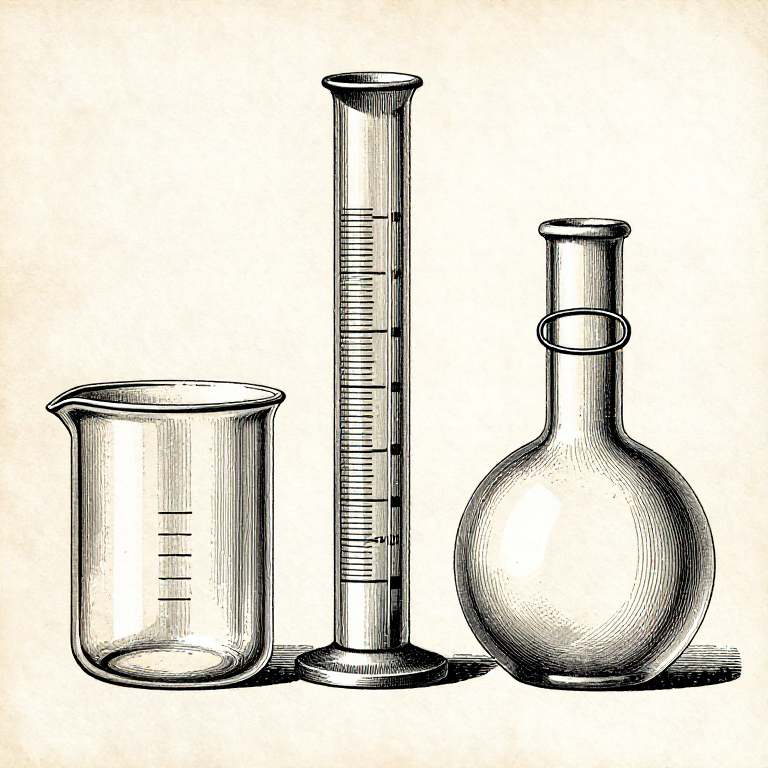


Making Up a Solution: Which Glassware Actually Measures, and Which Only Looks Like It
The graduations printed on a beaker are decoration. They are there so you can see roughly how full it is, and they are commonly 5% out — which is a hundred times worse than the flask standing next to it.
Glassware divides into two families and the difference is enormous. VOLUMETRIC glassware — volumetric flasks, bulb pipettes, burettes — is made and tested to deliver one stated volume accurately. Everything else is a container with marks on it.
Which you reach for is a decision about what the solution is FOR. Rinsing something out needs a beaker; a solution whose concentration will appear in a result needs a volumetric flask, and using the wrong one quietly poisons every number downstream.
Olùbẹ̀rẹ̀
2 hours
Ìlànà
1
1
Weigh the solid, and dissolve it somewhere else first
Weigh the solid, and dissolve it somewhere else first
Weigh the solid on a precision balance, into a weighing container rather than onto the pan, and write the ACTUAL mass down — not the mass you intended. The difference between 5.00 g and 5.03 g is the difference between a calculated concentration and a guessed one.
Dissolve it in a BEAKER with a smaller volume of solvent than the final target, not in the volumetric flask. Solids dissolve slowly, need stirring, and sometimes need warming, and a volumetric flask has a narrow neck that makes all three awkward.
Make sure it is completely dissolved before going any further. Undissolved solid transferred into the flask is solid that is not in your solution, and the concentration you calculate will be higher than the one you have.
Àwọn ohun èlò fún ìgbésẹ̀ yìí:
 Sodium chloride (iyọ̀)1 ẹyọ
 Omi Àyọ́1 lítà
Àwọn irinṣẹ́ tí a nílò:
 Òṣùwọ̀n Pípé
 Ago Gílásì
 Àwo ìyípadà
 Ọ̀pá Ìrúwé
2
2
Transfer, rinse, and rinse again
Transfer, rinse, and rinse again
Pour the dissolved solution into the volumetric flask through a funnel, then rinse the beaker with a little solvent and pour that in too. Then do it again. Rinse the stirring rod and the funnel into the flask as well.
Whatever stays behind in the beaker is solute missing from your solution. A beaker that looks empty holds a film worth a percent or more of a small quantity, and three small rinses recover nearly all of it.
A wash bottle makes this easy and precise: a thin jet reaches the walls and the rod without adding much volume. The rinsings go into the flask, never into the sink — they are part of the measurement.
Àwọn ohun èlò fún ìgbésẹ̀ yìí:
Omi Àyọ́1 lítàÀwọn irinṣẹ́ tí a nílò:
 Ìgò ìwọ̀n àyè
 Kọ́nfù Gílásì Onípọ̀n
 Ìgò ìfọ̀Ago Gílásì
3
3
Make up to the mark — and what the mark means
Make up to the mark — and what the mark means
Ń ṣí ìwé Jupyter…
Àwọn ohun èlò fún ìgbésẹ̀ yìí:
Omi Àyọ́1 lítàÀwọn irinṣẹ́ tí a nílò:
Ìgò ìwọ̀n àyè Òpó ìwọ̀nÒṣùwọ̀n Pípé
 Kọ̀ǹpútà Tábìlì
4
4
Invert to mix, then label
Invert to mix, then label
Stopper the flask and invert it completely, twenty times or so, letting the bubble travel the full length each time. Swirling does not mix a volumetric flask: the dense solution sits in the bulb and the neck stays nearly pure solvent.
This matters more than it sounds. An unmixed flask sampled from the neck gives a concentration far below the real one, and it is a mistake that produces beautifully reproducible wrong answers — the systematic error the measurement batch warns about.
Then label it: substance, concentration, solvent, date, initials. And do not STORE solutions in volumetric flasks; transfer to a proper bottle. A volumetric flask is a measuring instrument, and leaving solution to dry in the neck around the graduation is how one stops being accurate.
Àwọn ohun èlò fún ìgbésẹ̀ yìí:
 Àmì Ìdìmọ́1 ẹyọ
Àwọn irinṣẹ́ tí a nílò:
Ìgò ìwọ̀n àyè Ààmì Tí Kò Ní Parẹ́
Àwọn irinṣẹ́ tó nílò
10- Àyè
- Àyè
- Àyè
- Àyè
- Ìgò ìwọ̀n àyèìdá 10%Àyè
- Ìgò ìfọ̀ìdá 10%Àyè
- Àyè
Blueprint tó jọra
Àwọn blueprint wọ̀nyí pín ìmọ̀ — ọ̀nà, ohun-èlò tàbí ìlànà


CC0 Àgbègbè Gbogbogbò
Blueprint yìí ti jáde lábẹ́ CC0. O lè ṣe àdàkọ, yí padà, pín, àti lò láìsí ìyọ̀ǹda.
Ṣàtìlẹ́yìn Olùṣẹ́dá nípa rírà àwọn ọjà nipasẹ̀ Blueprint wọn Ẹ̀san Olùṣẹ́dá tí àwọn Olùtajà gbé kalẹ̀, tàbí ṣẹ̀dá àtúnṣe tuntun ti Blueprint yìí kí o sì fi sínú Blueprint rẹ gẹ́gẹ́ bí ìsopọ̀ láti pín owó-wíwọlé.