IṢẸ́ ỌNÀ
ẸWÀ ÀTI ÌLERA
IṢẸ́ ỌWỌ́
ÀṢÀ ÀTI ÌTÀN
ÌṢERÉ
ÀYÍKÁ
OÚNJẸ ÀTI OHUN MÍMU
REVERSE ENGINEERING
SÁYẸ́ǸSÌ
ERÉ ÌDÁRAYÁ
ÌMỌ̀-Ẹ̀RỌ
ÀWỌN OHUN WÍWỌ̀
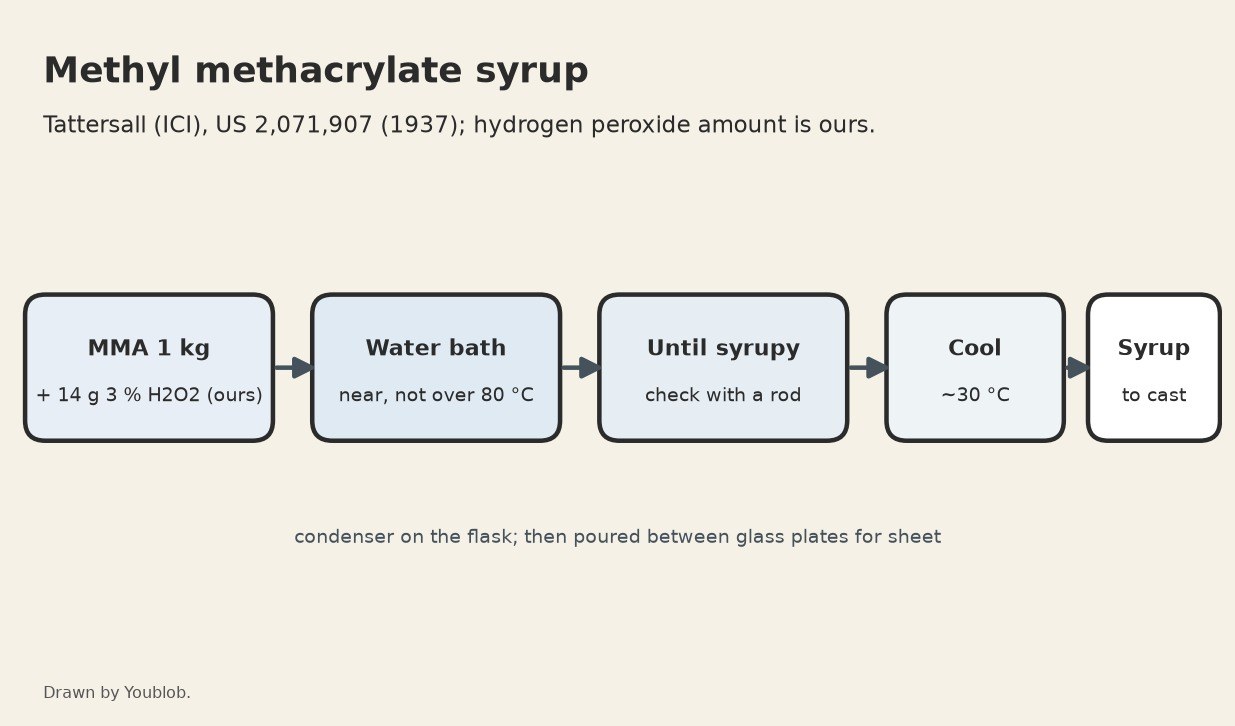


Methyl Methacrylate Syrup: Partly Polymerised below 80 °C with Hydrogen Peroxide
Methyl methacrylate syrup is the monomer partly polymerised until it is thick: the stock that is poured between glass plates to cast acrylic sheet. ICI's Tattersall (US 2,071,907, 1937) heats the liquid monomer with a little catalyst, never above 80 °C, until it is syrupy, then cools it. His example used benzoyl peroxide and he names hydrogen peroxide as an alternative but gives no amount. Our choice: 14 g of 3 % hydrogen peroxide per kg of monomer, as many peroxide molecules as his 0.3 % benzoyl peroxide. Methyl methacrylate is flammable: no open flame.
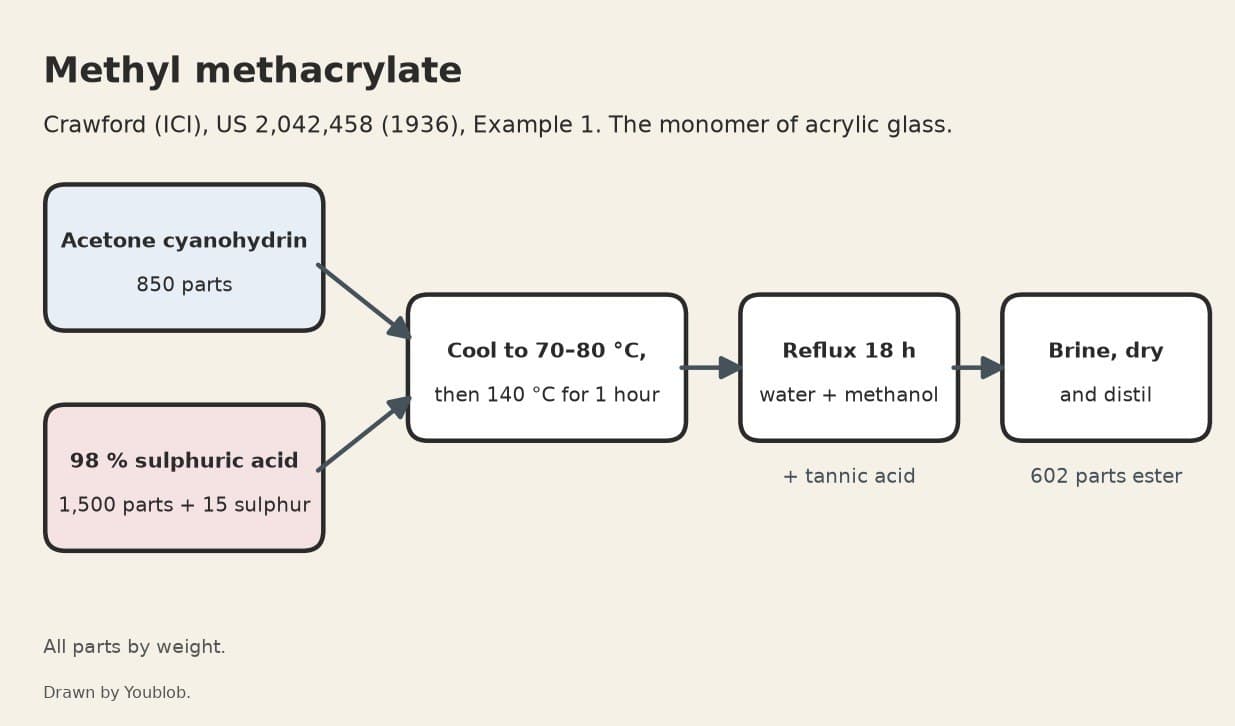
The picture: our diagram.
Àárín
Half a day
Ìlànà
1
1
Weigh monomer and peroxide
Weigh monomer and peroxide
Weigh liquid methyl methacrylate into a round-bottom flask and add 14 g of 3 % hydrogen peroxide per kg of monomer (our amount; the patent only says a relatively small amount).
Àwọn ohun èlò fún ìgbésẹ̀ yìí:
 Methyl Methacrylate1 kg
 Hydrogen peroxide (3 %)14 g
Àwọn irinṣẹ́ tí a nílò:
 Ìgò abẹ́-róbótó
 Òǹwọ̀n ìdọ́gba
 Gílásì Ààbò Fún Ìfọ́n Kẹ́míkà
 Ìbọ̀wọ́ rọ́bà
 Àpótí eérú (tí ó ní ọ̀pá ìjáde)
2
2
Heat, never above 80 °C
Heat, never above 80 °C
Fit a reflux condenser and warm the flask in a water bath to near but not above 80 °C. Above 80 °C the finished sheet is not flawless; lower temperatures work but take longer.
Àwọn irinṣẹ́ tí a nílò:
Ìgò abẹ́-róbótó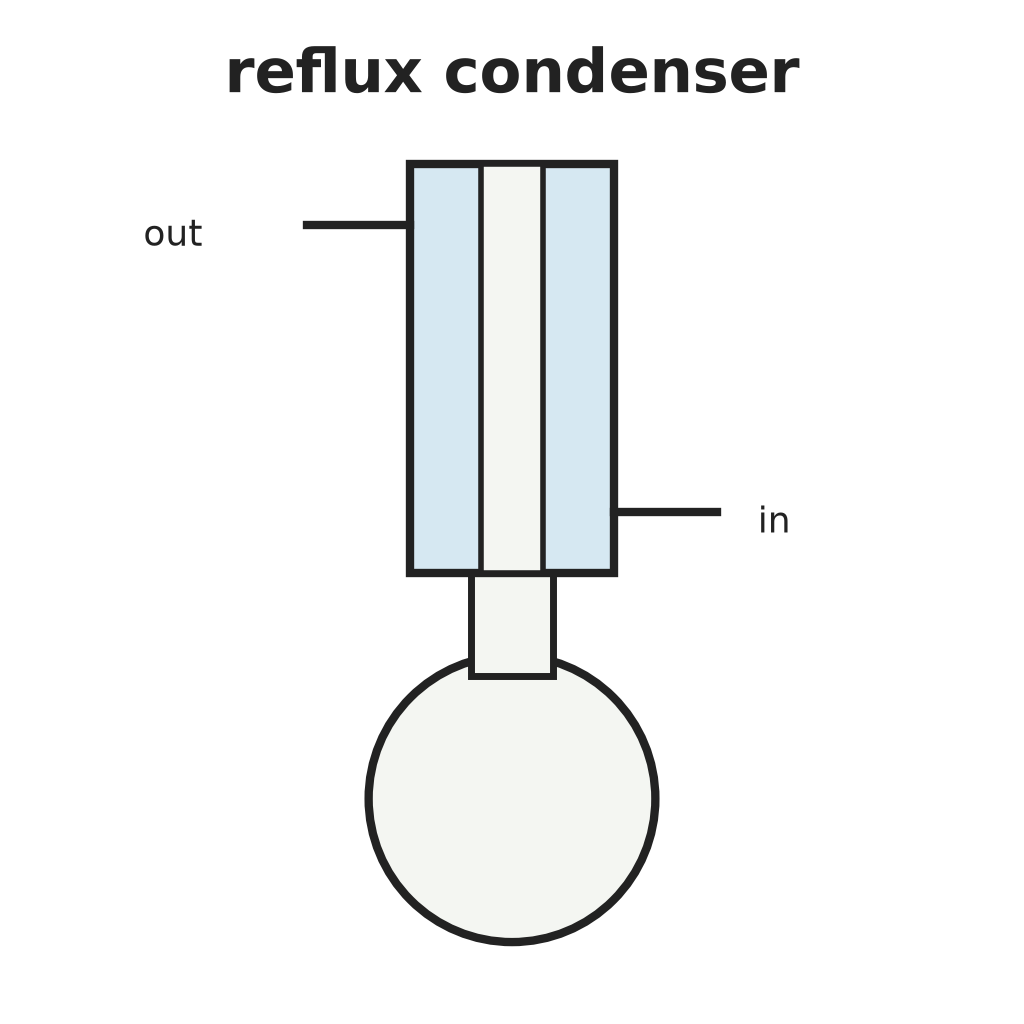 Kọ́ndẹ́nsà Ìpadàbọ̀
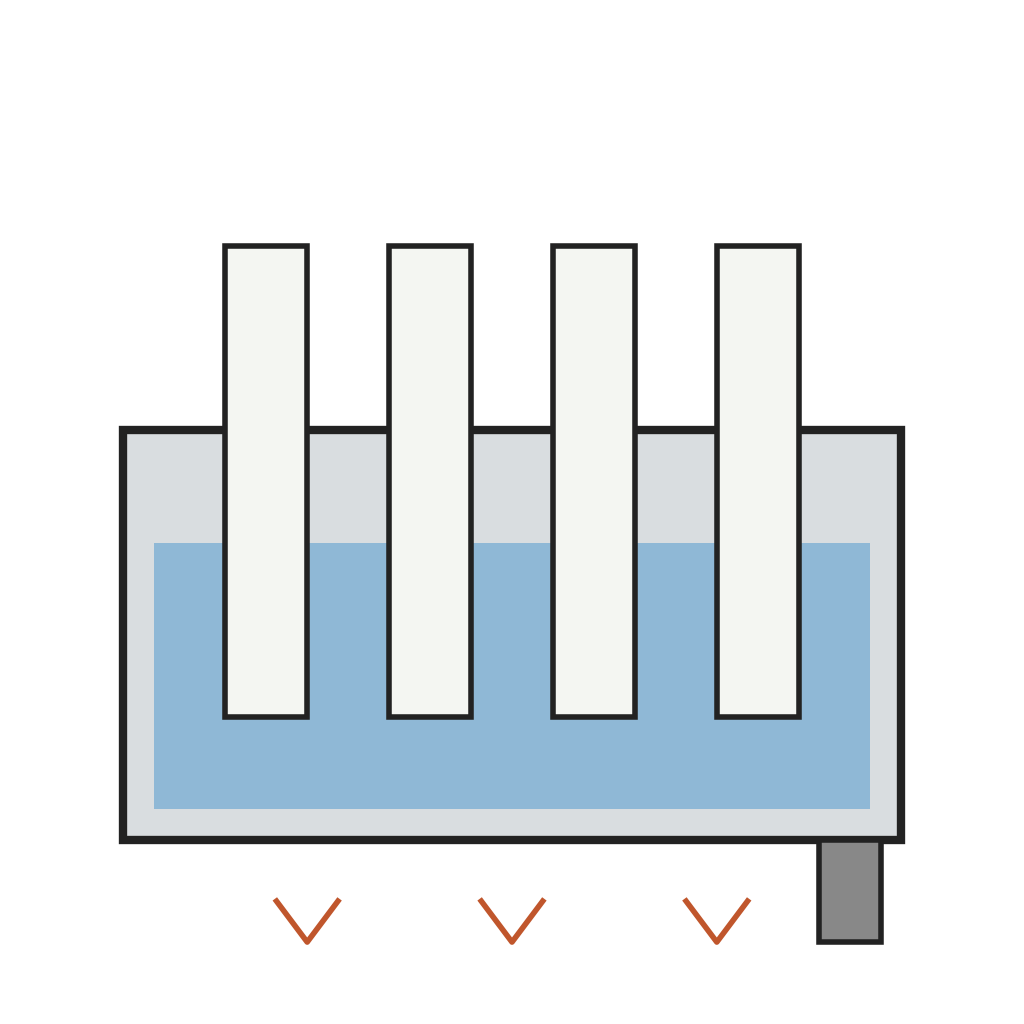 Ìwẹ̀ Omi
 Pátákó Gbígbóná
 Ẹ̀rọ Ìwọ̀n Ooru Yàrá ÌwádìíÀpótí eérú (tí ó ní ọ̀pá ìjáde)
3
3
Stop when it is syrupy
Stop when it is syrupy
Check the thickness now and then with a glass rod. Stop when the liquid has become a syrup. The patent took its example to a molecular weight of 3000, measured by viscosity, and gives no time.
Àwọn irinṣẹ́ tí a nílò:
 Ọ̀pá Ìrúwé GílásìẸ̀rọ Ìwọ̀n Ooru Yàrá Ìwádìí
4
4
Cool to room temperature
Cool to room temperature
Cool the syrup to about room temperature (30 °C in the example) in cold water. It is then ready to pour between glass plates and cast into sheet.
Àwọn irinṣẹ́ tí a nílò:
 Ìwẹ̀ ìtutù omiẸ̀rọ Ìwọ̀n Ooru Yàrá ÌwádìíÌbọ̀wọ́ rọ́bà
Àwọn ohun-èlò
2- Àyè
- Àyè
Ìtọ́nisọ́nà yìí ń ṣe
Blueprint tó jọra
Àwọn blueprint wọ̀nyí pín ìmọ̀ — ọ̀nà, ohun-èlò tàbí ìlànà
CC0 Àgbègbè Gbogbogbò
Blueprint yìí ti jáde lábẹ́ CC0. O lè ṣe àdàkọ, yí padà, pín, àti lò láìsí ìyọ̀ǹda.
Ṣàtìlẹ́yìn Olùṣẹ́dá nípa rírà àwọn ọjà nipasẹ̀ Blueprint wọn Ẹ̀san Olùṣẹ́dá tí àwọn Olùtajà gbé kalẹ̀, tàbí ṣẹ̀dá àtúnṣe tuntun ti Blueprint yìí kí o sì fi sínú Blueprint rẹ gẹ́gẹ́ bí ìsopọ̀ láti pín owó-wíwọlé.