IṢẸ́ ỌNÀ
ẸWÀ ÀTI ÌLERA
IṢẸ́ ỌWỌ́
ÀṢÀ ÀTI ÌTÀN
ÌṢERÉ
ÀYÍKÁ
OÚNJẸ ÀTI OHUN MÍMU
REVERSE ENGINEERING
SÁYẸ́ǸSÌ
ERÉ ÌDÁRAYÁ
ÌMỌ̀-Ẹ̀RỌ
ÀWỌN OHUN WÍWỌ̀
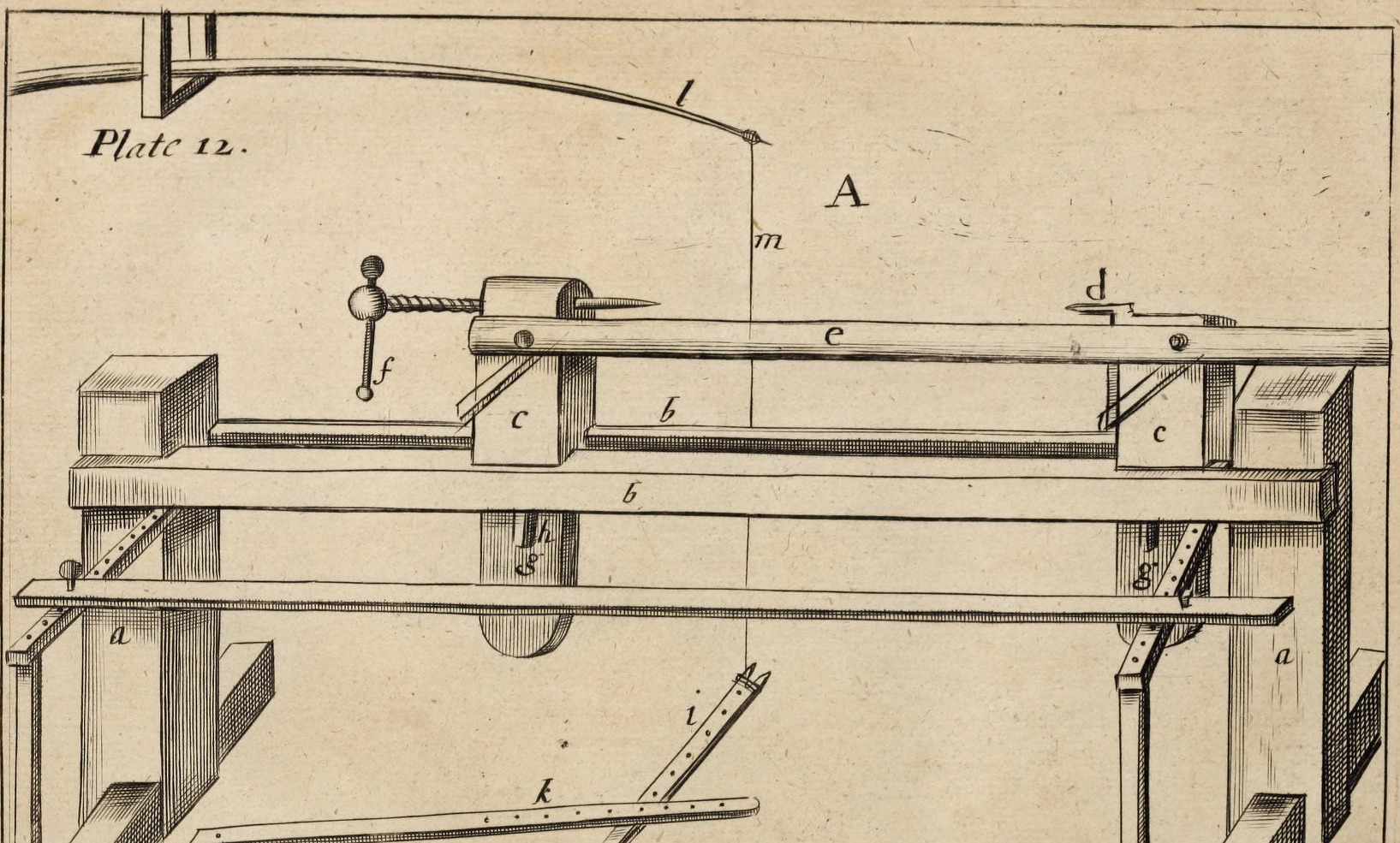


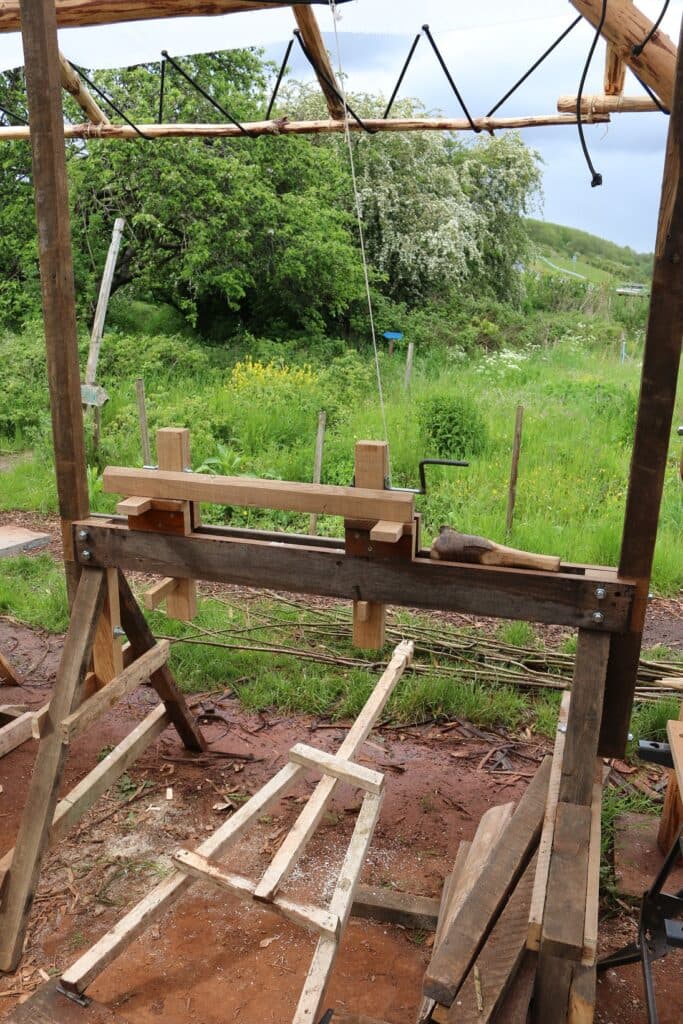
Turner's Pole Lathe with Puppets, Screw Centre and Treadle (Moxon, 1680)
The workshop pole lathe of Joseph Moxon's Mechanick Exercises: legs and twin cheeks bolted square, sliding puppets wedged through the bed, a fixed steel-pointed pike and an adjustable screw centre, a hinged treadle with a cross-treadle, and a fir pole pinned to the ceiling for the spring.
Ilọsíwájú
Two to three days
Ìlànà
1
1
His sizes
His sizes
Ń ṣí ìwé Jupyter…
2
2
Read Mechanick Exercises
Read Mechanick Exercises
"The Lathe is described in Plate 12. A. This Machine is so vulgarly known..."
3
3
Legs and cheeks
Legs and cheeks
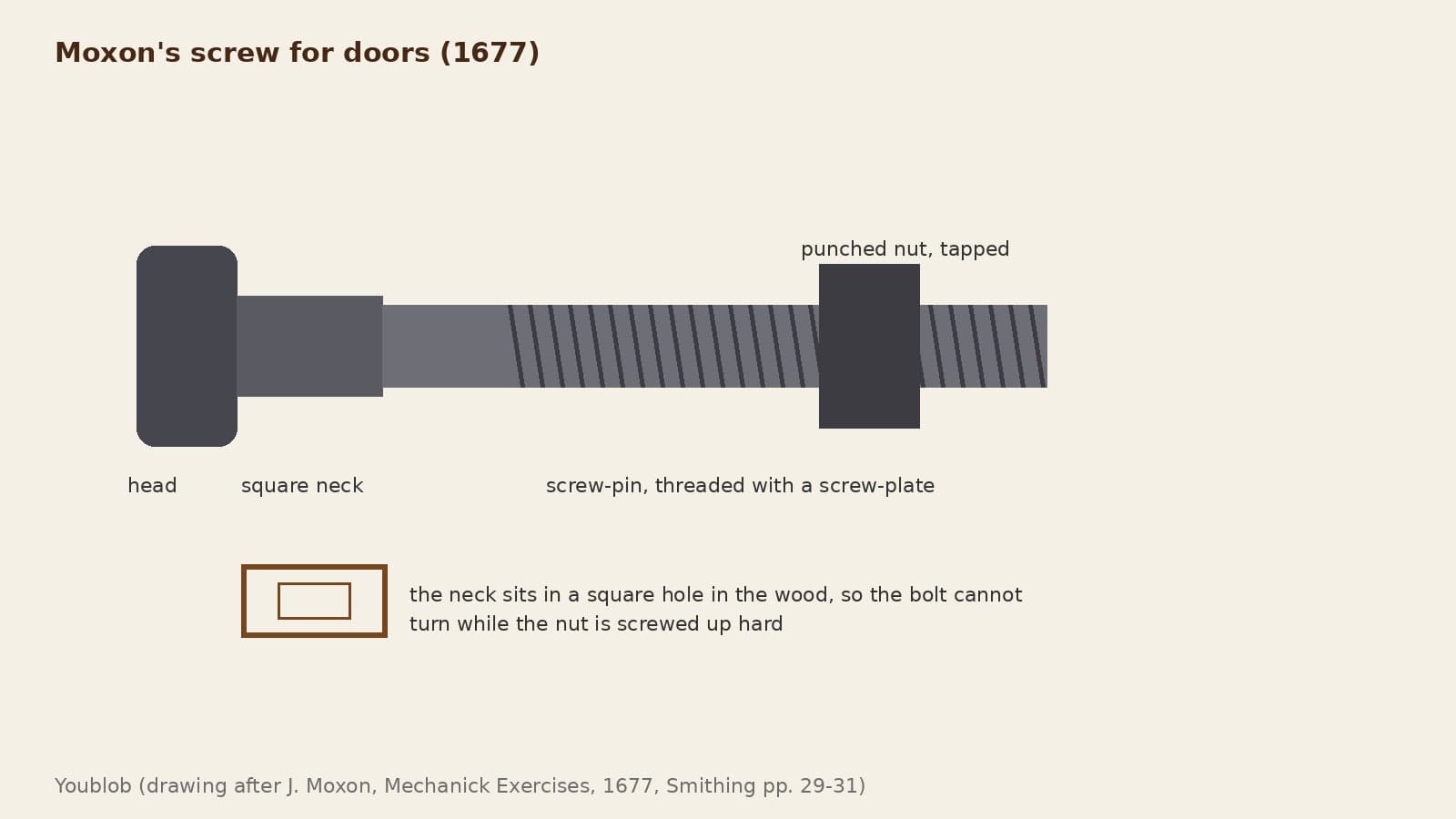
Set up two legs about 2 ft 10 in (86 cm) high, plumb, each with a tenon on top as thick as the gap you want between the two cheeks. Lay a cheek each side of the tenons, level, and fix them: pinned, or better with an iron bolt whose square neck sits in a square hole in the near cheek, drawn up by a nut. Brace legs and cheeks to the floor and walls so nothing trembles.
Àwọn ohun èlò fún ìgbésẹ̀ yìí:
 Pátákò oak funfun1 ẹyọ
 Bọ́ọ̀tù orí róbótó1 ẹyọ
Àwọn irinṣẹ́ tí a nílò:
 Ayùn Ọwọ́
 Ìṣó ihò ìdì
 Òòlù Igi
 Ìlù ọwọ́ pẹ̀lú orí
4
4
Puppets
Puppets
Make two (or two or three pairs of) square puppets, strong rather than weak and as short as your work allows: the centres must stand a little more than half the work's diameter above the cheeks. Give each a tenon at the foot that slides in the gap between the cheeks, with a mortise through it below the cheeks for a tapering wedge, driven with a mallet to clamp the puppet down.
Àwọn ohun èlò fún ìgbésẹ̀ yìí:
Pátákò oak funfun1 ẹyọ Gọ̀gọ̀ igi líle1 ẹyọ
Àwọn irinṣẹ́ tí a nílò:
Ayùn Ọwọ́Ìṣó ihò ìdìÒòlù Igi5
5
Pike and screw centre
Pike and screw centre
Near the top of one puppet fix a strong iron pike with a tempered steel point. Through the other fit an iron screw in a nut in the puppet, also with a steel point, both points in one straight line facing each other. Put an iron handle 7-8 in long with a knob at each end through the screw head. Cut the puppets to square shoulders just below the pikes to carry the rest.
Àwọn ohun èlò fún ìgbésẹ̀ yìí:
 Ọ̀pá irin lílù1 ẹyọ
 Ọ̀pá onígun mẹ́rin irin irinṣẹ́1 ẹyọ
Àwọn irinṣẹ́ tí a nílò:
 Ìléru alágbẹ̀dẹ
 Ìdí Alágbẹ̀dẹ
 Ìtò irinṣẹ́ ìgé ihá
 Àpótí ìtutù
6
6
Rest and oil horn
Rest and oil horn
Make the rest a square piece 1-1.5 in thick, 2-2.5 in broad, a little longer than the gap between the puppets. Hang a horn tip down on the outside of the right-hand puppet near the top, filled with oil, with a wooden cover and button carrying an iron wire that reaches nearly to the bottom, to oil the centre holes.
Àwọn ohun èlò fún ìgbésẹ̀ yìí:
Pátákò oak funfun1 ẹyọ Ìwo màlúù1 ẹyọ
 Wáyà irin1 ẹyọ
 Epo ẹ̀rọ1 ẹyọ
Àwọn irinṣẹ́ tí a nílò:
Ayùn Ọwọ́Ìlù ọwọ́ pẹ̀lú orí7
7
Treadle and cross-treadle
Treadle and cross-treadle
Make a treadle about 2.5 in broad, 1 in thick and 3 ft (up to 4 ft) long. Nail its back end to the floor with a piece of leather, 1-1.5 ft behind the lathe and midway between the legs, so the front reaches 1.5-2 ft past the front of the lathe. Cut a square notch 1.5 in wide and 2 in long in the far end for winding the string. Fix an iron pin about 0.5 in thick, standing 1.5-2 in up, in the middle; under the cheeks fix a cross-treadle with a row of holes 2-3 in apart to take the pin.
Àwọn ohun èlò fún ìgbésẹ̀ yìí:
Pátákò oak funfun1 ẹyọ Okùn Awọ1 ẹyọ
 Ìṣọ Irin1 ẹyọỌ̀pá irin lílù1 ẹyọ
Àwọn irinṣẹ́ tí a nílò:
Ayùn Ọwọ́ ÒòlùÌlù ọwọ́ pẹ̀lú orí
8
8
Pole and string
Pole and string
Use a fir pole, thick or thin to suit the work; if it is too stiff, thin its upper and under sides with a draw-knife. Pin the thick end to a ceiling timber with one nail so it pivots. About a foot away nail two cheeks to the joists with a batten across their foot to carry the pole. Run the string from the pole's thin end, round the work, to the treadle.
Àwọn ohun èlò fún ìgbésẹ̀ yìí:
 Òpó igi1 ẹyọ
 Okùn1 ẹyọÌṣọ Irin1 ẹyọPátákò oak funfun1 ẹyọ
Àwọn irinṣẹ́ tí a nílò:
 Ọ̀bẹ Ìfàsẹ́yìnÒòlù
9
9
Troubleshooting
Troubleshooting
Pole lathe troubleshooting.
Flow
Loading...
10
10
History and honest limits
History and honest limits
From Joseph Moxon, **Mechanick Exercises**, Numb. X, Turning (1680), pp. 176-185 and Plate 12 (checked on the archive.org scan mechanickexercis00moxo). He gives no sizes for cheeks, puppets or pole; metric and the wood choices are ours.
Àwọn ohun-èlò
12- 1 ẹyọÀyè
- 1 ẹyọÀyè
- 1 ẹyọÀyè
- 1 ẹyọÀyè
- Àyè
- 1 ẹyọÀyè
- 1 ẹyọÀyè
- 1 ẹyọÀyè
- 1 ẹyọÀyè
- 2 ẹyọÀyè
- 1 ẹyọÀyè
- 1 ẹyọÀyè
Ìtọ́nisọ́nà yìí ń ṣe

Blueprint tó jọra
Àwọn blueprint wọ̀nyí pín ìmọ̀ — ọ̀nà, ohun-èlò tàbí ìlànà
CC0 Àgbègbè Gbogbogbò
Blueprint yìí ti jáde lábẹ́ CC0. O lè ṣe àdàkọ, yí padà, pín, àti lò láìsí ìyọ̀ǹda.
Ṣàtìlẹ́yìn Olùṣẹ́dá nípa rírà àwọn ọjà nipasẹ̀ Blueprint wọn Ẹ̀san Olùṣẹ́dá tí àwọn Olùtajà gbé kalẹ̀, tàbí ṣẹ̀dá àtúnṣe tuntun ti Blueprint yìí kí o sì fi sínú Blueprint rẹ gẹ́gẹ́ bí ìsopọ̀ láti pín owó-wíwọlé.