IṢẸ́ ỌNÀ
ẸWÀ ÀTI ÌLERA
IṢẸ́ ỌWỌ́
ÀṢÀ ÀTI ÌTÀN
ÌṢERÉ
ÀYÍKÁ
OÚNJẸ ÀTI OHUN MÍMU
REVERSE ENGINEERING
SÁYẸ́ǸSÌ
ERÉ ÌDÁRAYÁ
ÌMỌ̀-Ẹ̀RỌ
ÀWỌN OHUN WÍWỌ̀
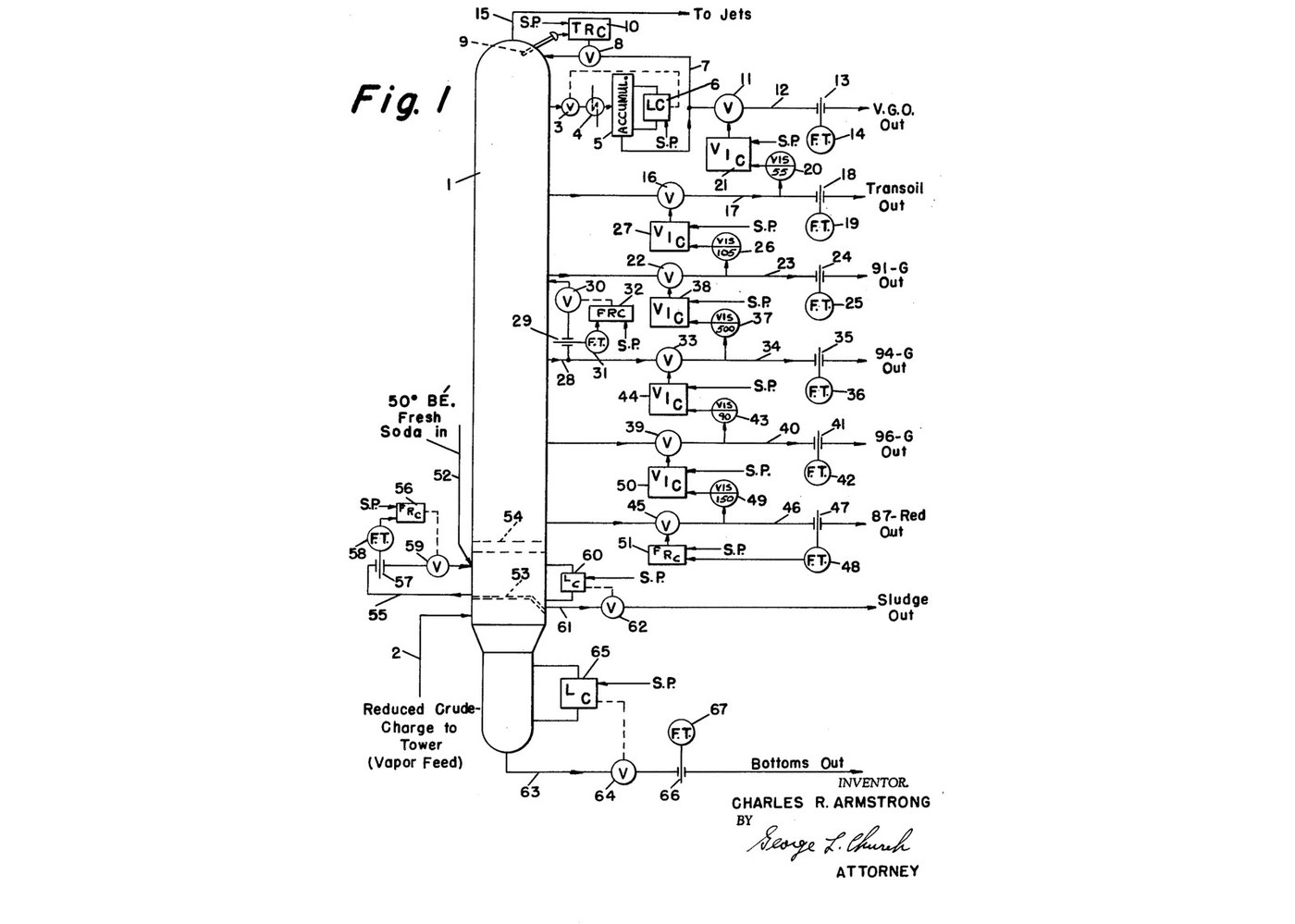


Naphthenic Distillates: Reduced Crude Cut by Viscosity in a Vacuum Tower (Armstrong 1965)
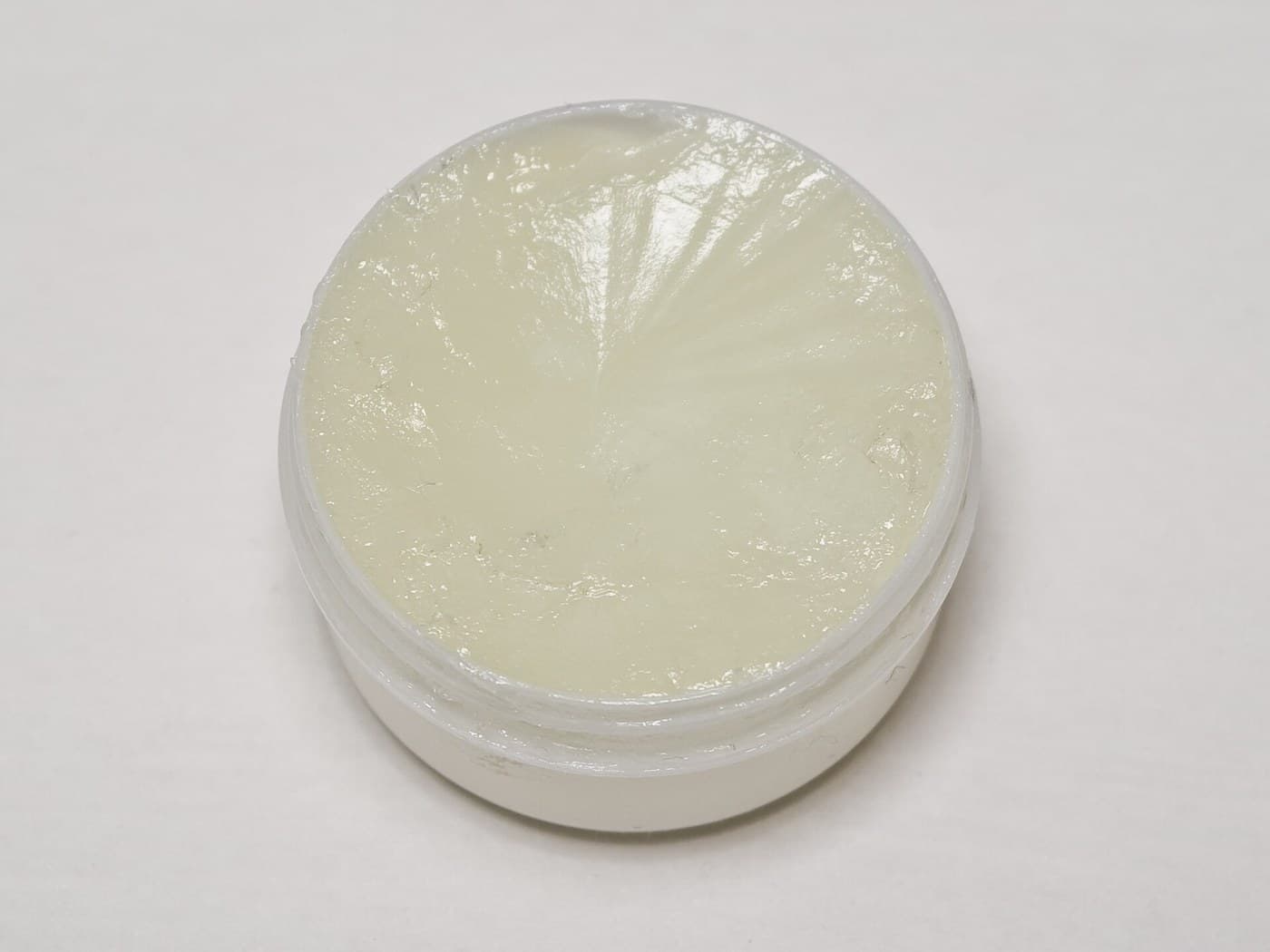
A wax-free naphthenic crude, stripped of its gasoline and naphtha, goes into a vacuum tower as hot vapour. Caustic soda near the bottom takes out its acids as a sludge. Five lubricating oils are drawn off the side of the tower, each held to its own viscosity. These are naphthenic distillates, the feed for white mineral oil.
Source: C. R. Armstrong (Sun Oil Company), US 3,184,396 (1965), a Sun Oil tower of 39 trays and 12,000 barrels a day. He does not give the crude tower's conditions, how the feed is heated or how much caustic is used. The steam boiler and hydrometer are ours. The picture: the patent's Fig. 1.
Ilọsíwájú
continuous
Ìlànà
1
1
Top the crude
Top the crude
Take a wax-free naphthenic crude. Armstrong's crudes were sorted and blended to give lubricating oils with a viscosity-gravity constant of 0.885–0.893. Strip off the low-boiling part (straight-run gasoline, naphtha) in a separate crude tower; the patent gives no conditions for it. What is left is the "reduced" crude.
Àwọn ohun èlò fún ìgbésẹ̀ yìí:
 Epo robi naftẹniki1 as required
Àwọn irinṣẹ́ tí a nílò:
 Òpó ìpọn ní ìfúnpá afẹ́fẹ́
2
2
Lay out the vacuum tower
Lay out the vacuum tower
Armstrong's tower has 39 trays, 20 ft across and 128 ft high. Take-offs, counted from the bottom: gas oil overhead at tray 35, through a condenser to an accumulator, part of it sent back as reflux to hold the top temperature; transformer oil ("Transoil") at tray 29; 91-G at tray 26; 94-G below it, partly cooled in a heat exchanger and returned as reflux; 96-G at tray 19; 87-Red at tray 16. Tray 7 is a total trap-out tray with a demister above it: between them is the caustic section.
Àwọn irinṣẹ́ tí a nílò:
 Òpó ìpọn òfo-afẹ́fẹ́
 Ìyípo ẹ̀rọ ìtutù
 Ẹ̀rọ pàṣípàrọ̀ ooru
3
3
Pull the vacuum
Pull the vacuum
Hold the top of the tower at 15–20 mm of mercury absolute with steam jet ejectors and barometric condensers. Ours: a steam boiler for the jets.
Àwọn irinṣẹ́ tí a nílò:
 Ejector oníkòkòrò ategun
 Kọndẹnsa barometiriki
 Bọ́ìlà èéfín omi
 Ẹ̀rọ Ìwọ̀n Ìtẹ̀
4
4
Feed the reduced crude as vapour
Feed the reduced crude as vapour
Charge the reduced crude near the bottom, below tray 7, at about 650 °F (343 °C), so it enters as vapour. The patent does not say how it is heated. Whatever does not vaporise runs down and is drawn off as tower bottoms, by level.
Àwọn irinṣẹ́ tí a nílò:
Òpó ìpọn òfo-afẹ́fẹ́ Thermocouple pẹ̀lú ìkà
5
5
Feed caustic soda into the caustic section
Feed caustic soda into the caustic section
Feed fresh caustic soda, 50° Baumé for example, at tray 10. It turns the acidic parts of the vapour into a sodium salt that does not boil, and this collects as a sludge on tray 7. Take some sludge off tray 7 and return it at tray 10 to stir it; leave some 87-Red in the tower to thin it so the section does not plug. Draw the sludge off by level. Ours: a hydrometer to check the Baumé.
Àwọn irinṣẹ́ tí a nílò:
 Omi sodium hydroxide
 Òǹwọ̀n ìwúwo omiÒpó ìpọn òfo-afẹ́fẹ́
6
6
Hold each side stream to its viscosity
Hold each side stream to its viscosity
Measure each side stream with a viscometer: Transoil 55 S.S.U. at 100 °F (38 °C); 91-G 105 S.S.U. at 100 °F; 94-G 500 S.S.U. at 100 °F; 96-G 90 at 210 °F (99 °C); 87-Red 150 at 210 °F. Correct a stream by the draw-off of the stream just above it: Transoil by the gas oil. If a stream runs thick, draw more from the one above, so its lighter parts come down. Set 87-Red by hand.
Àwọn irinṣẹ́ tí a nílò:
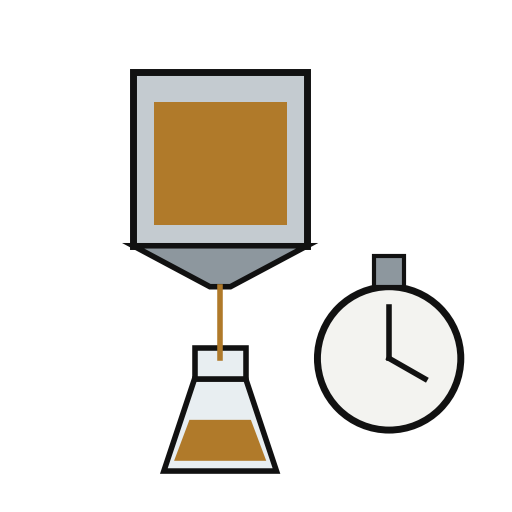 Ẹ̀rọ ìwọn ìkípọ̀Òpó ìpọn òfo-afẹ́fẹ́
7
7
Run the on-spec oils to storage
Run the on-spec oils to storage
Send only side streams that are on viscosity to storage. Each of the five lubricating oils is a naphthenic distillate. The gas oil, the sludge and the bottoms take the rest of the feed.
Àwọn irinṣẹ́ tí a nílò:
Ẹ̀rọ ìwọn ìkípọ̀Òpó ìpọn òfo-afẹ́fẹ́Àwọn ohun-èlò
1- 1 as requiredÀyè
Àwọn irinṣẹ́ tó nílò
12Ìtọ́nisọ́nà yìí ń ṣe
Blueprint tó jọra
Àwọn blueprint wọ̀nyí pín ìmọ̀ — ọ̀nà, ohun-èlò tàbí ìlànà
CC0 Àgbègbè Gbogbogbò
Blueprint yìí ti jáde lábẹ́ CC0. O lè ṣe àdàkọ, yí padà, pín, àti lò láìsí ìyọ̀ǹda.
Ṣàtìlẹ́yìn Olùṣẹ́dá nípa rírà àwọn ọjà nipasẹ̀ Blueprint wọn Ẹ̀san Olùṣẹ́dá tí àwọn Olùtajà gbé kalẹ̀, tàbí ṣẹ̀dá àtúnṣe tuntun ti Blueprint yìí kí o sì fi sínú Blueprint rẹ gẹ́gẹ́ bí ìsopọ̀ láti pín owó-wíwọlé.