IṢẸ́ ỌNÀ
ẸWÀ ÀTI ÌLERA
IṢẸ́ ỌWỌ́
ÀṢÀ ÀTI ÌTÀN
ÌṢERÉ
ÀYÍKÁ
OÚNJẸ ÀTI OHUN MÍMU
REVERSE ENGINEERING
SÁYẸ́ǸSÌ
ERÉ ÌDÁRAYÁ
ÌMỌ̀-Ẹ̀RỌ
ÀWỌN OHUN WÍWỌ̀
Youblob · CC0


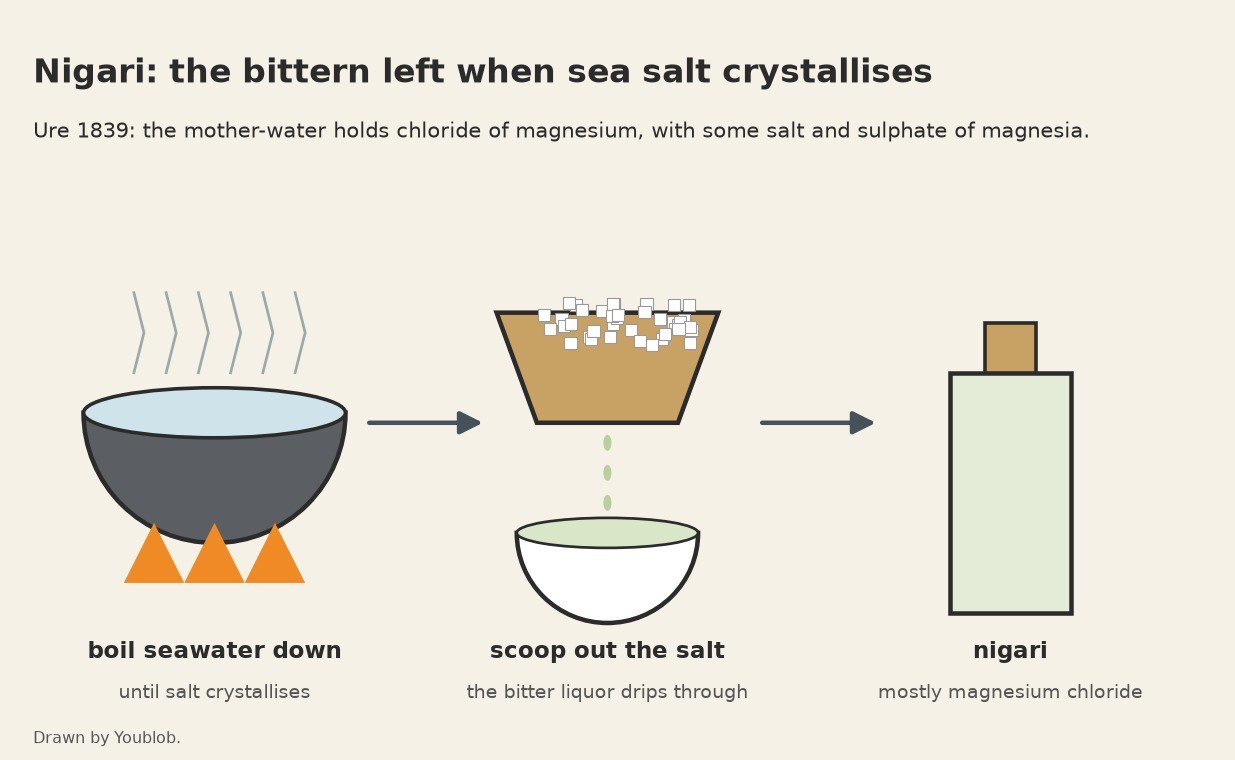
Nigari: the Bitter Liquor Left When Sea Salt Crystallises
Boil seawater down and common salt crystallises first; what stays behind is a bitter liquor, mostly magnesium chloride. Salt makers called it bittern and kept it out of the salt, Andrew Ure (1839) notes, because it spoils it. In Japan it is nigari, from the word for bitter, and it is what sets soy milk into tofu.
Olùbẹ̀rẹ̀
A day of boiling
Ìlànà
1
1
Boil the seawater down
Boil the seawater down
Boil clean seawater in an iron kettle over a wood fire, topping it up, until salt crystals start to form on the surface and fall.
Àwọn ohun èlò fún ìgbésẹ̀ yìí:
 Omi òkun20 lítà
 Igi Ìdáná1 as required
Àwọn irinṣẹ́ tí a nílò:
 Kẹ́tù Irin
 Ihò iná
2
2
Rake out the salt
Rake out the salt
Keep it simmering and scoop the salt out as it crystallises into a draining basket over a bowl. Stop before the pan runs dry: the last liquor is the bittern.
Àwọn irinṣẹ́ tí a nílò:
 Ṣíbí Igi
 Àwọn agbọ̀n ìsàn
 Abọ́Kẹ́tù Irin
3
3
Collect the drips
Collect the drips
Let the salt drain for a day or two. Pour what drips into the bowl together with the liquor left in the kettle: that is nigari.
Àwọn irinṣẹ́ tí a nílò:
Àwọn agbọ̀n ìsànAbọ́4
4
Bottle it
Bottle it
Keep the liquid nigari in a stoppered bottle. It is very bitter; it is a coagulant, not a seasoning.
Àwọn irinṣẹ́ tí a nílò:
 Àwọn ìgò dígí pẹ̀lú ìdérí
Ìtọ́nisọ́nà yìí ń ṣe
CC0 Àgbègbè Gbogbogbò
Blueprint yìí ti jáde lábẹ́ CC0. O lè ṣe àdàkọ, yí padà, pín, àti lò láìsí ìyọ̀ǹda.
Ṣàtìlẹ́yìn Olùṣẹ́dá nípa rírà àwọn ọjà nipasẹ̀ Blueprint wọn Ẹ̀san Olùṣẹ́dá tí àwọn Olùtajà gbé kalẹ̀, tàbí ṣẹ̀dá àtúnṣe tuntun ti Blueprint yìí kí o sì fi sínú Blueprint rẹ gẹ́gẹ́ bí ìsopọ̀ láti pín owó-wíwọlé.