IṢẸ́ ỌNÀ
ẸWÀ ÀTI ÌLERA
IṢẸ́ ỌWỌ́
ÀṢÀ ÀTI ÌTÀN
ÌṢERÉ
ÀYÍKÁ
OÚNJẸ ÀTI OHUN MÍMU
REVERSE ENGINEERING
SÁYẸ́ǸSÌ
ERÉ ÌDÁRAYÁ
ÌMỌ̀-Ẹ̀RỌ
ÀWỌN OHUN WÍWỌ̀
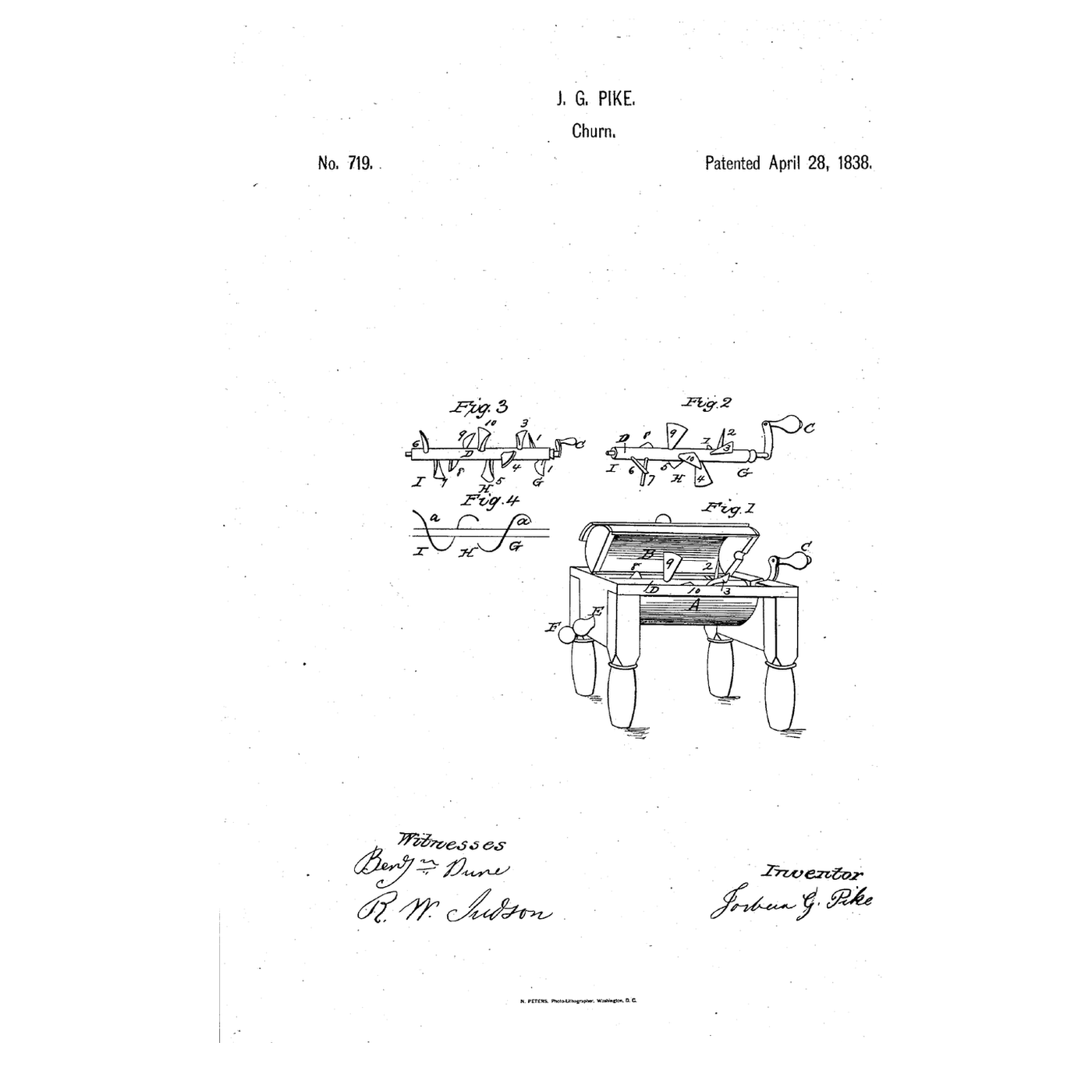

Oblique-Paddle Churn: Turn One Way to Gather the Butter, Back to Spread It
Once the butter comes, it has to be gathered from the whey, then worked and salted by hand.
Joshua G. Pike of Lisbon, New York, received US 719, dated 28 April 1838, for a machine for churning and working butter: a horizontal cylinder with paddles set obliquely round its shaft, "so arranged that by turning the shaft in one direction the butter will be collected into one place in the center of the churn and thus separated from the whey while by reversing the motion it will be again spread over the internal surface of the cylinder and prepared for salting."
This rung works out the butter a batch gives, then prints the paddle hubs, builds a tabletop cylinder churn, and makes butter.
Àárín
About 4 hours, plus printing
Ìlànà
1
1
Butter yield and paddle push
Butter yield and paddle push
Ń ṣí ìwé Jupyter…
2
2
The churning it does
The churning it does
The embedded blueprint makes butter by agitating cream. Pike sets the paddles so the same churn also gathers and works the butter.
3
3
Read US 719
Read US 719
"When formed the butter is successively struck by the paddles 1, 2, 3, 4 and 5, (see Figs. 2 and 3) in their revolution and by their oblique position moved toward the center of the churn from G to H. At the same time and by the same operation the paddles 6, 7, 8, 9 and 10 sloping in the opposite direction from those first mentioned move the butter in the opposite direction viz. from I to H."
4
4
Print the paddle hubs
Print the paddle hubs
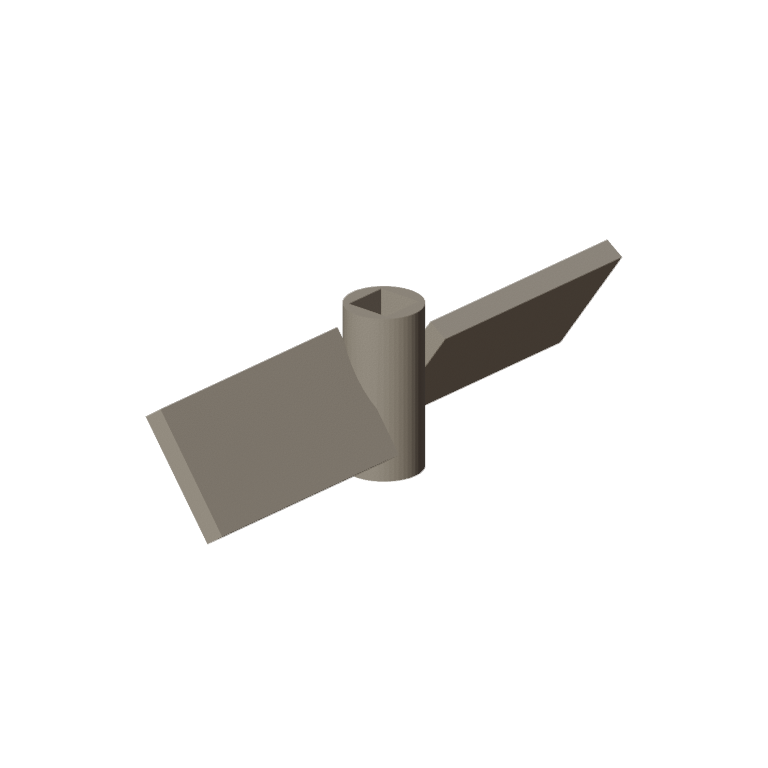
Print two right-hand hubs (/uploads/blueprints/oblique-paddle-churn-hub-right.stl) and two left-hand hubs (/uploads/blueprints/oblique-paddle-churn-hub-left.stl), plus one more of either for the middle. Print in PETG at 0.2 mm layers, 30 % infill, 4 walls; wash before first use.
Àwọn ohun èlò fún ìgbésẹ̀ yìí:
 Okùn PETG1 ẹyọ
Àwọn irinṣẹ́ tí a nílò:
 Ẹ̀rọ ìtẹ̀ 3D oníwàyà (FDM)
5
5
Make the cylinder
Make the cylinder
Cut 180 mm of 120 mm PVC pipe. Close both ends with plywood disks bedded in silicone, each drilled for the shaft. Saw the top quarter off as a lid, and drill a drain hole in the bottom with a plug.
Àwọn ohun èlò fún ìgbésẹ̀ yìí:
 Páìpù PVC1 ẹyọ
 Àwo igi tí a lẹ̀ pọ̀1 ẹyọ
 Ìdílẹ̀ Silikoni1 ẹyọ
Àwọn irinṣẹ́ tí a nílò:
 Ayùn Irin
 Ayùn Kópìngì
 Ìṣètò ayùn ihò
 Ẹ̀rọ Ìlùkòkò Aláìlókùn
 Àkójọ Orí Ìlùkòkò
6
6
Shaft and crank
Shaft and crank
Cut a square hardwood shaft 8 × 8 mm. Slide the hubs on: two right-hand toward one end, two left-hand toward the other, so both sets push toward the middle when turned forward. Fit a crank at one end and set the cylinder on legs.
Àwọn ohun èlò fún ìgbésẹ̀ yìí:
 Àwọn dowel igi líle1 ẹyọ
 Ìṣù Igi Líle1 ẹyọ
 Ìsúrù igi #8 x 1"1 ẹyọ
 Ẹpọ́ksì Ẹ̀yà Méjì1 ẹyọ
Àwọn irinṣẹ́ tí a nílò:
Ayùn IrinẸ̀rọ Ìlùkòkò AláìlókùnÀkójọ Orí Ìlùkòkò Ìṣù àwọn ohun ìyí skurú
7
7
The patent drawing
The patent drawing
US 719 drawing sheet, public domain (expired patent).
8
8
Churn, gather and spread
Churn, gather and spread
Let 500 ml of heavy cream stand until it reaches about 15 °C, checked with the thermometer. Pour it in, close the lid, and turn the crank steadily; time until the butter comes. Turn on to gather it in the middle, drain the buttermilk, then turn back to spread it. Pour off the buttermilk, add cold water, churn a few turns and pour off again until it runs clear; work in a pinch of salt and weigh the butter.
Àwọn ohun èlò fún ìgbésẹ̀ yìí:
 Ọ̀rá wàrà tó nípọn500 ml
 Iyọ̀ Òkun Rúkèrúdò1 ẹyọ
 Omi1 ẹyọ
Àwọn irinṣẹ́ tí a nílò:
 Ẹ̀rọ ìwọ̀n ooru oníhun tí ó dúró sí inú
 Aago Ìdúró
 Òṣùwọ̀n Díjítà Ilé Ìdáná
 Àwo ìdàpọ̀ ńlá ti irin tí kò ń yá
9
9
Butter that will not come, will not gather
Butter that will not come, will not gather
Oblique-paddle churn troubleshooting.
Flow
Loading...
10
10
History and honest limits
History and honest limits
**Joshua G. Pike** of Lisbon, St. Lawrence County, New York, received US 719, dated 28 April 1838. The cylinder's upper half is the cover; the whey is drawn off by a spout. After salting, turning the shaft back and forth gives the butter a horizontal and rotary motion that separates the whey and mixes in the salt, "and thus saves the labor of working and salting by any of the modes now in use." He claimed paddles directing cream and butter from each end toward the centre, or from the centre toward each end.
**Honest limits.** A PVC cylinder and printed hubs stand in for his wooden churn. FDM prints hold food in their layer lines, so wash well and replace when worn. Your times and weights are the result.
Àwọn ohun-èlò
11- 1 ẹyọÀyè
- 1 ẹyọÀyè
- 1 ẹyọÀyè
- 1 ẹyọÀyè
- 1 ẹyọÀyè
- 1 ẹyọÀyè
- 1 ẹyọÀyè
- 1 ẹyọÀyè
- 500 mlÀyè
- 1 ẹyọÀyè
- 1 ẹyọÀyè
Àwọn irinṣẹ́ tó nílò
11- Àyè
- Àyè
- 1 vendor sell this, none ship to you yetÀyè
- Àyè
Ìtọ́nisọ́nà yìí ń ṣe

Blueprint tó jọra
Àwọn blueprint wọ̀nyí pín ìmọ̀ — ọ̀nà, ohun-èlò tàbí ìlànà

Churning Butter from Cream — The 5,000-Year-Old Fat Separation
láti ọwọ́ TheChef
IṢẸ́ ỌWỌ́
48
0
0
0
0
0
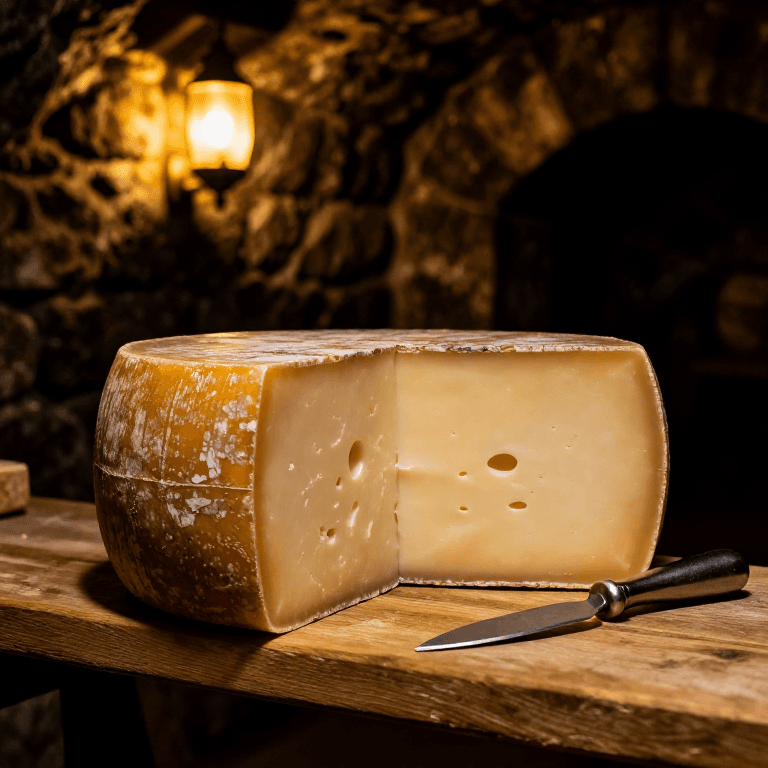
Making Aged Farmhouse Cheese in a Cheese Press — Medieval Dairy Craft
láti ọwọ́ TheChef
Oúnjẹ
73
0
0
0
0
0

Carving a Wooden Paddle from a Single Piece of Hardwood — Prehistoric Watercraft Propulsion
láti ọwọ́ Woody
Iṣẹ́ Igi
37
0
0
0
1
0
CC0 Àgbègbè Gbogbogbò
Blueprint yìí ti jáde lábẹ́ CC0. O lè ṣe àdàkọ, yí padà, pín, àti lò láìsí ìyọ̀ǹda.
Ṣàtìlẹ́yìn Olùṣẹ́dá nípa rírà àwọn ọjà nipasẹ̀ Blueprint wọn Ẹ̀san Olùṣẹ́dá tí àwọn Olùtajà gbé kalẹ̀, tàbí ṣẹ̀dá àtúnṣe tuntun ti Blueprint yìí kí o sì fi sínú Blueprint rẹ gẹ́gẹ́ bí ìsopọ̀ láti pín owó-wíwọlé.