IṢẸ́ ỌNÀ
ẸWÀ ÀTI ÌLERA
IṢẸ́ ỌWỌ́
ÀṢÀ ÀTI ÌTÀN
ÌṢERÉ
ÀYÍKÁ
OÚNJẸ ÀTI OHUN MÍMU
REVERSE ENGINEERING
SÁYẸ́ǸSÌ
ERÉ ÌDÁRAYÁ
ÌMỌ̀-Ẹ̀RỌ
ÀWỌN OHUN WÍWỌ̀
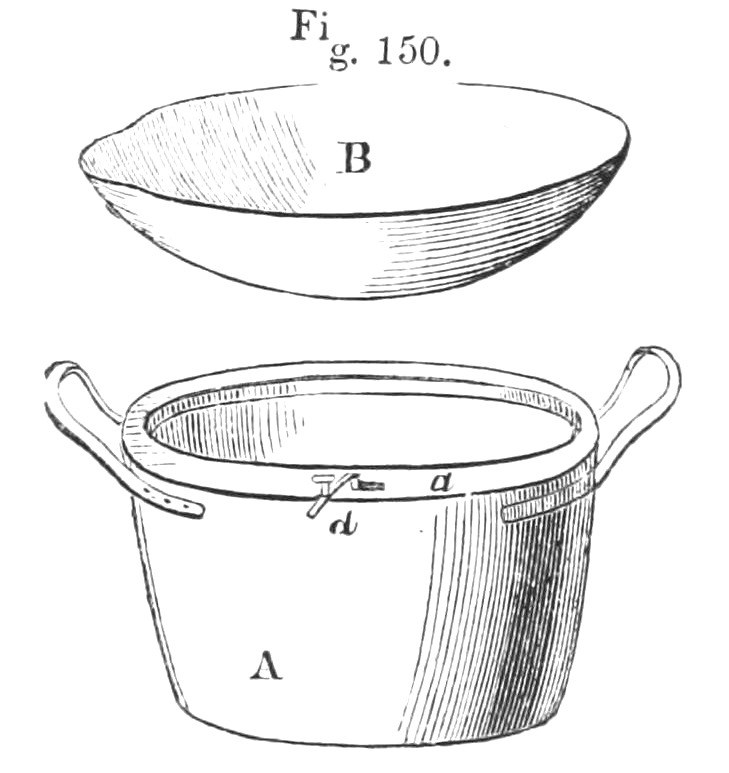


Oil Bath: a Metal Jacket of Dried Oil with a Thermometer (Morfit, 1849)
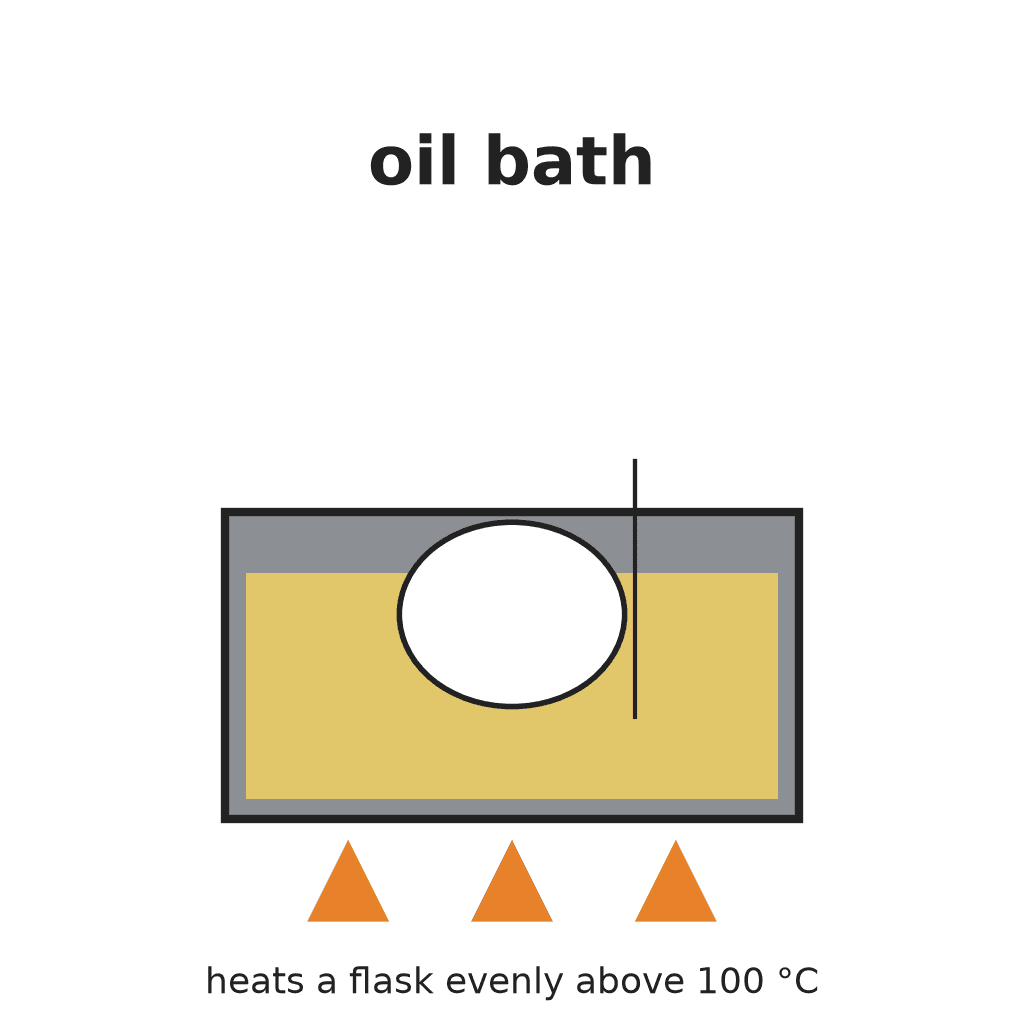
A bath of hot oil that heats a flask, dish or retort evenly at temperatures above the boiling point of water. Campbell Morfit (1849) builds it exactly like his water-bath: a metal (or porcelain-lined) vessel holding the oil, with the vessel to be heated set in it, and a thermometer in the oil to read and regulate the heat. He gives up to 570 °F (about 300 °C).
The oil is first heated for several hours in an iron capsule to drive out its moisture. Which oil, and the vessel sizes, are not given.
Source: C. Morfit, Chemical and Pharmaceutic Manipulations (1849), pp. 182-185. Picture: his water-bath, Fig. 150.
Olùbẹ̀rẹ̀
Several hours (drying the oil)
Ìlànà
1
1
Read Morfit
Read Morfit
"The oil should, before its transfer to the bath, be heated in an iron capsule for several hours, to expel moisture. The bath consists of a porcelain lined or metallic jacket, of construction exactly similar to that of the water-bath. It affords a temperature of 570° F., and the facility of determining its temperature, for which purpose a thermometer is a necessary accompaniment."
2
2
Dry the oil
Dry the oil
Heat the oil in an iron capsule for several hours to drive off its moisture. Do not heat it so far that it decomposes. Which oil is not given (unknown). Ours: a shallow metal pan for the iron capsule.
Àwọn ohun èlò fún ìgbésẹ̀ yìí:
 Ohun èlò tí a kò mọ̀1 oil
Àwọn irinṣẹ́ tí a nílò:
 Àwo irin tí kò jinlẹ̀
 Ààrò Èédú
 Ẹ̀rọ Ìwọ̀n Ooru
3
3
Set up the jacket
Set up the jacket
Take a metal vessel wide enough that the vessel to be heated sits inside with space at the bottom and sides (Fig. 150: the outer vessel A carries an inner flange a on which the dish B rests). Pour in the dried oil, set the thermometer in the oil, and heat on a charcoal furnace or gas stove. Sizes are not given (unknown). Ours: a metal pot.
Àwọn ohun èlò fún ìgbésẹ̀ yìí:
 Ìkòkò1 ẹyọ
Àwọn irinṣẹ́ tí a nílò:
Ẹ̀rọ Ìwọ̀n OoruÀàrò Èédú Ìwọ̀n tí a kò mọ̀
4
4
Use it
Use it
Set the flask, dish or retort in the oil and regulate the fire by the thermometer. Oil loses less by evaporation than water and gives temperatures above 100 °C, up to 570 °F (about 300 °C). Boiling oil throws off a very disagreeable vapour; keep the heat below the point where the oil decomposes.
Àwọn irinṣẹ́ tí a nílò:
Ẹ̀rọ Ìwọ̀n OoruÀàrò ÈédúÌtọ́nisọ́nà yìí ń ṣe
CC0 Àgbègbè Gbogbogbò
Blueprint yìí ti jáde lábẹ́ CC0. O lè ṣe àdàkọ, yí padà, pín, àti lò láìsí ìyọ̀ǹda.
Ṣàtìlẹ́yìn Olùṣẹ́dá nípa rírà àwọn ọjà nipasẹ̀ Blueprint wọn Ẹ̀san Olùṣẹ́dá tí àwọn Olùtajà gbé kalẹ̀, tàbí ṣẹ̀dá àtúnṣe tuntun ti Blueprint yìí kí o sì fi sínú Blueprint rẹ gẹ́gẹ́ bí ìsopọ̀ láti pín owó-wíwọlé.