IṢẸ́ ỌNÀ
ẸWÀ ÀTI ÌLERA
IṢẸ́ ỌWỌ́
ÀṢÀ ÀTI ÌTÀN
ÌṢERÉ
ÀYÍKÁ
OÚNJẸ ÀTI OHUN MÍMU
REVERSE ENGINEERING
SÁYẸ́ǸSÌ
ERÉ ÌDÁRAYÁ
ÌMỌ̀-Ẹ̀RỌ
ÀWỌN OHUN WÍWỌ̀
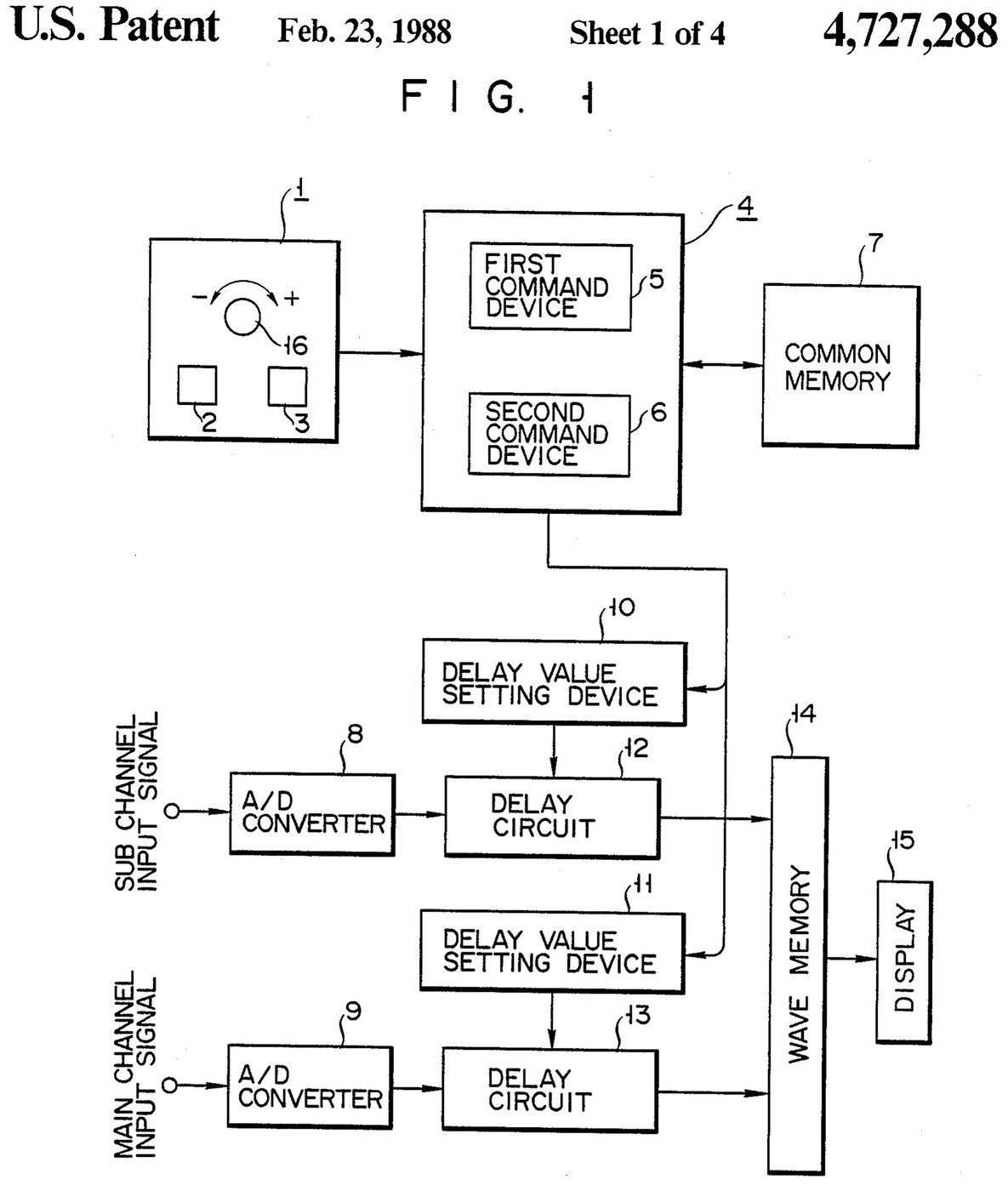

Oscilloscope: Two-Channel Digital, with a Delay per Channel and a Common Delay (Anritsu, US 4,727,288, 1988)
A two-channel digital oscilloscope. Each channel has its own converter and delay circuit. One knob, with a main and a sub button, sets the delays. The sub button shifts only the sub channel's wave, so you can line it up against the main one. The main button shifts both waves together and keeps the gap between them.
Result: a 2-channel digital oscilloscope that can move both traces along the time base without losing their phase difference.
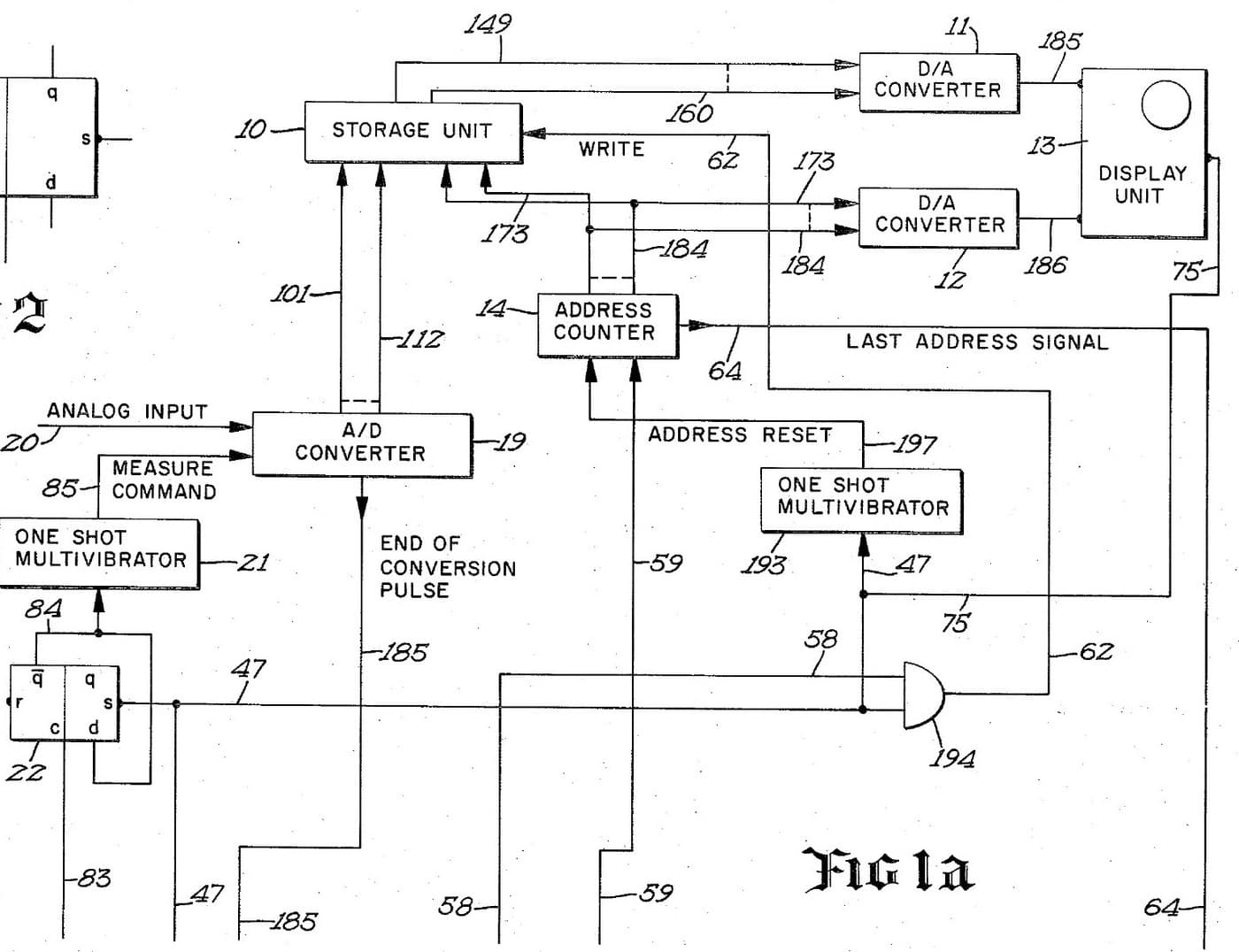
Source: K. Nakatsugawa et al. (Anritsu), US 4,727,288 (1988). Unknown: sample rate, bandwidth, memory size and the display. Picture: the patent drawing.
Ògbóǹtarìgì
Unknown
Ìlànà
1
1
Convert the two channels
Convert the two channels
Bring the main channel and the sub channel each to its own analog-to-digital converter. Ours: BNC sockets. Not given: the sample rate, the bandwidth.
Àwọn ohun èlò fún ìgbésẹ̀ yìí:
 Ẹ̀rọ Ìyípadà Ànálọ́ọ̀gì sí Díjítà2 main and sub converters
 Àkójọ ìsopọ̀ coaxial (BNC / SO-239)1 input sockets
Àwọn irinṣẹ́ tí a nílò:
 Irin ìsúdì
 Ẹ̀mú ìbóhun
2
2
Delay, store and display
Delay, store and display
Pass each channel's digital signal through its own delay circuit, whose delay is set by its own delay value setting device. Store both delayed signals in a wave memory and show them on the display. Ours: logic ICs for the delay circuits and setting devices, IC memory, and a CRT driven through D/A converters. Not given: how the delay circuits are built, the memory size, the display.
Àwọn ohun èlò fún ìgbésẹ̀ yìí:
 Onírúurú IC lóògíìkì1 delay circuits and setting devices
 Ìrántí àyíká tí a ṣọ̀kan1 wave memory
 Ẹ̀rọ àyípadà díjítà sí ànálọ́ọ̀gì2 display drive
 Ọ̀pá ìtànṣán kátódù1 display
Àwọn irinṣẹ́ tí a nílò:
Irin ìsúdìẸ̀mú ìbóhun3
3
Build the delay panel and processor
Build the delay panel and processor
Make a delay operation panel with a main switch, a sub switch and one dial, with an encoder on the dial so each turn is read as a change in its output. Connect the panel to a microprocessor with a common memory that holds the sub channel's delay S in one area and the main channel's delay M in another. Mount it all in a case with its supply. Ours: push buttons, an aluminium case, a DC supply.
Àwọn ohun èlò fún ìgbésẹ̀ yìí:
 Bọ́tìnì ìtẹ̀2 main and sub switches
 Ẹ̀rọ àkọsílẹ̀ ìyípo1 delay dial
 Ẹ̀rọ amúṣiṣẹ́ kékeré1 command devicesÌrántí àyíká tí a ṣọ̀kan1 common memory
 Àpótí aluminium1 case
Àwọn irinṣẹ́ tí a nílò:
 Orísun iná DC
 Ẹ̀rọ Ìlùkòkò OnídúróIrin ìsúdì
4
4
Program the two commands
Program the two commands
When the dial turns, read the encoder change e and which switch is held. Sub switch: add e to S, set the sum in the sub channel's setting device and store it back as the new S. Main switch: add e to both M and S, set M + e in the main channel's device and S + e in the sub channel's, and store both back. The main command so moves both channels by the same amount and keeps their relative delay.
Àwọn irinṣẹ́ tí a nílò:
Irin ìsúdì5
5
Compare two waves
Compare two waves
Feed two signals in. Hold the sub switch and turn the dial to slide the sub channel's wave against the main one. Then hold the main switch and turn the dial: both waves move along the time base together, with the phase difference between them unchanged. Test it with a known signal.
Àwọn irinṣẹ́ tí a nílò:
 Ẹ̀rọ Ìdá Ìgbì
Àwọn ohun-èlò
10- 2 main and sub convertersÀyè
- 1 input socketsÀyè
- 1 delay circuits and setting devicesÀyè
- 1 common memoryÀyè
- 2 display driveÀyè
- 1 displayÀyè
- Àyè
- Àyè
- 1 command devicesÀyè
- 1 caseÀyè
Àwọn irinṣẹ́ tó nílò
5- 2 vendors sell this, none ship to you yetÀyè
- Àyè
Ìtọ́nisọ́nà yìí ń ṣe
Blueprint tó jọra
Àwọn blueprint wọ̀nyí pín ìmọ̀ — ọ̀nà, ohun-èlò tàbí ìlànà
CC0 Àgbègbè Gbogbogbò
Blueprint yìí ti jáde lábẹ́ CC0. O lè ṣe àdàkọ, yí padà, pín, àti lò láìsí ìyọ̀ǹda.
Ṣàtìlẹ́yìn Olùṣẹ́dá nípa rírà àwọn ọjà nipasẹ̀ Blueprint wọn Ẹ̀san Olùṣẹ́dá tí àwọn Olùtajà gbé kalẹ̀, tàbí ṣẹ̀dá àtúnṣe tuntun ti Blueprint yìí kí o sì fi sínú Blueprint rẹ gẹ́gẹ́ bí ìsopọ̀ láti pín owó-wíwọlé.