IṢẸ́ ỌNÀ
ẸWÀ ÀTI ÌLERA
IṢẸ́ ỌWỌ́
ÀṢÀ ÀTI ÌTÀN
ÌṢERÉ
ÀYÍKÁ
OÚNJẸ ÀTI OHUN MÍMU
REVERSE ENGINEERING
SÁYẸ́ǸSÌ
ERÉ ÌDÁRAYÁ
ÌMỌ̀-Ẹ̀RỌ
ÀWỌN OHUN WÍWỌ̀


Para-Xylene by Three-Stage Crystallisation from Xylene
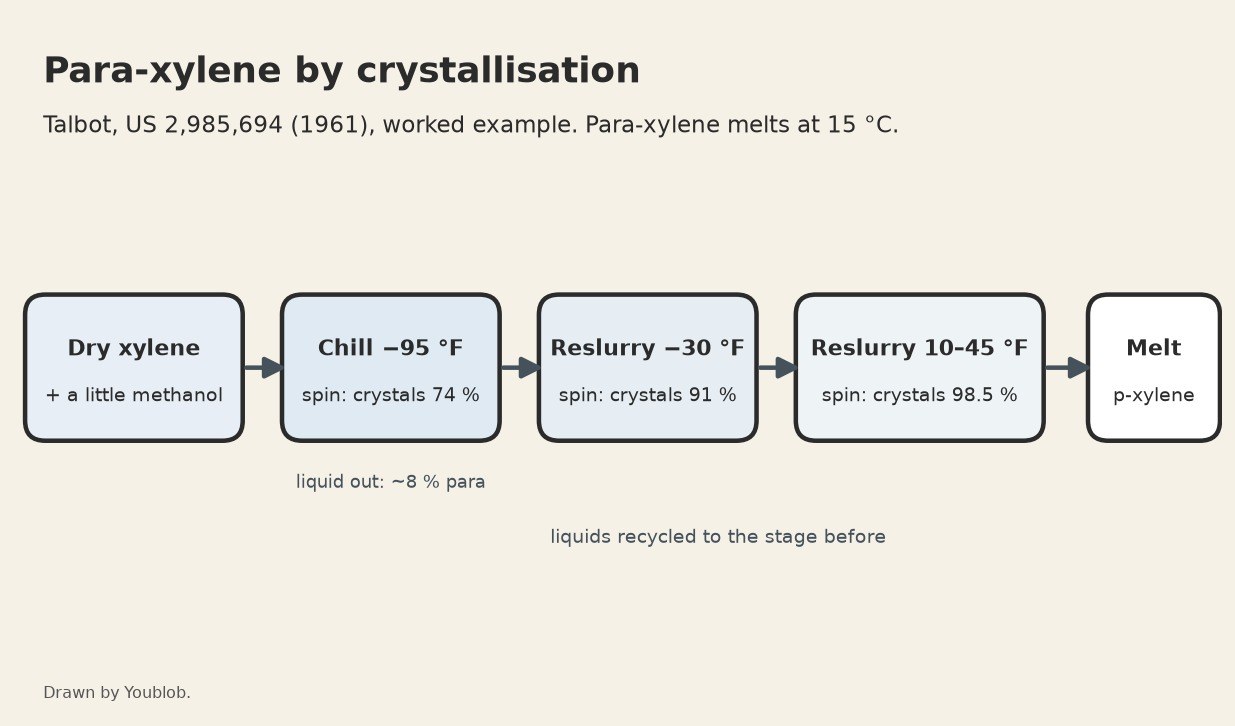
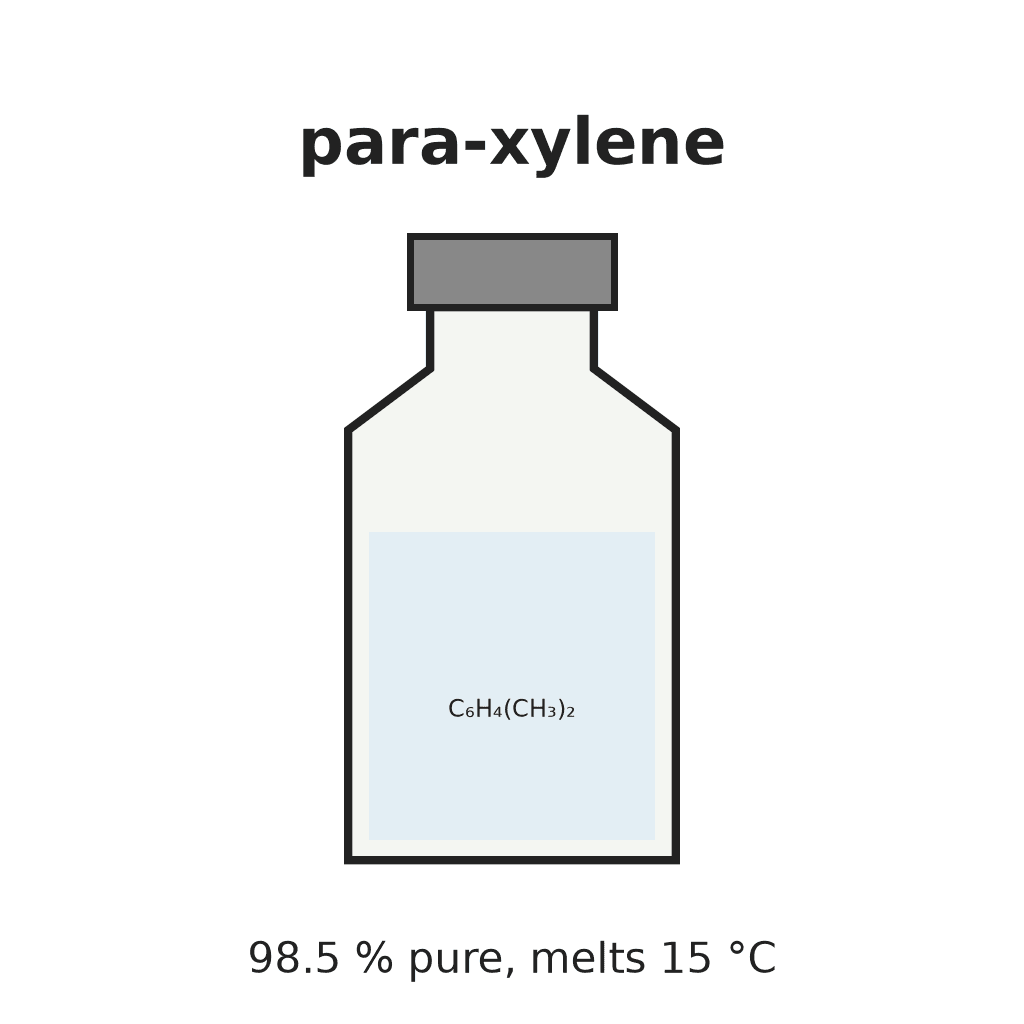
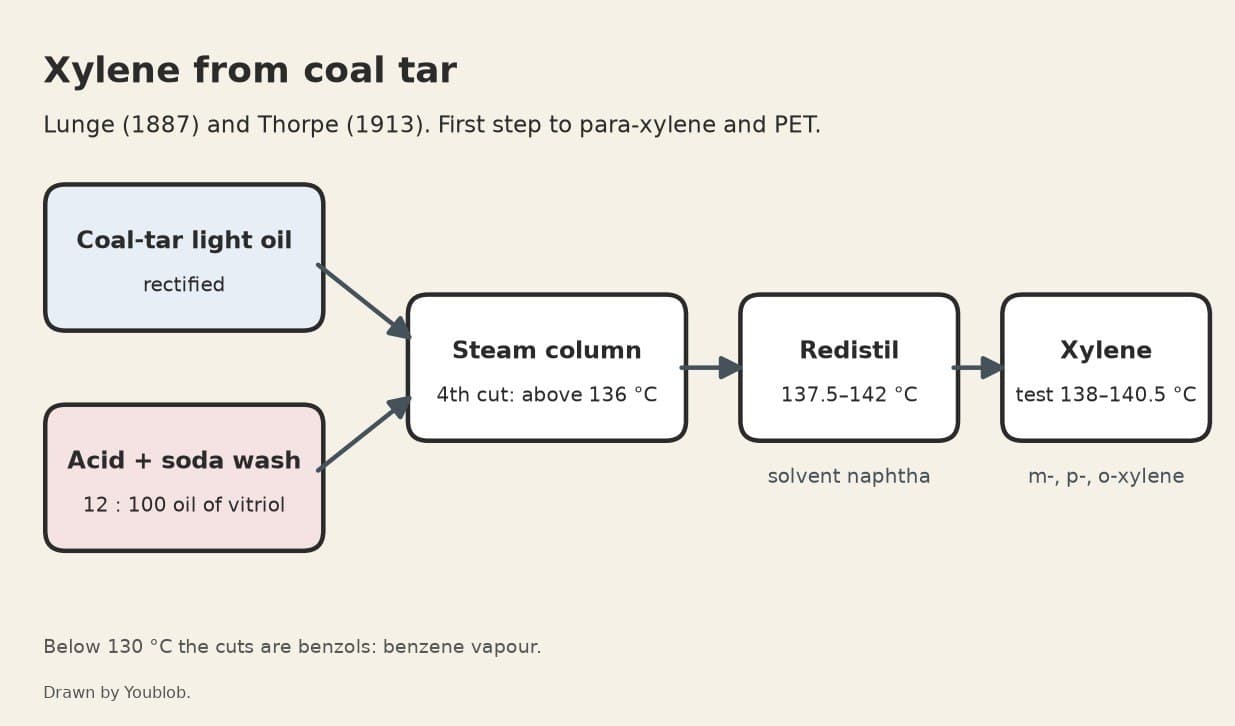
Para-xylene melts at 15 °C (Lunge, 1887), so it crystallises out of mixed xylene when this is chilled hard. This is Talbot's three-stage process (US 2,985,694, 1961): chill the dry feed to about −95 °F and spin off the crystals, then warm them in stages in their own recycled liquor and spin again, until they are 98.5 % para-xylene. Para-xylene is the raw material for terephthalic acid and so for PET.
The picture: our diagram of the three stages.
Ilọsíwájú
1 day
Ìlànà
1
1
Take out the ortho-xylene (preferred)
Take out the ortho-xylene (preferred)
If you can, first distil off ortho-xylene as the bottoms of a tall column: more than 35, better about 60, theoretical plates. The patent prefers this but does not require it.
Àwọn ohun èlò fún ìgbésẹ̀ yìí:
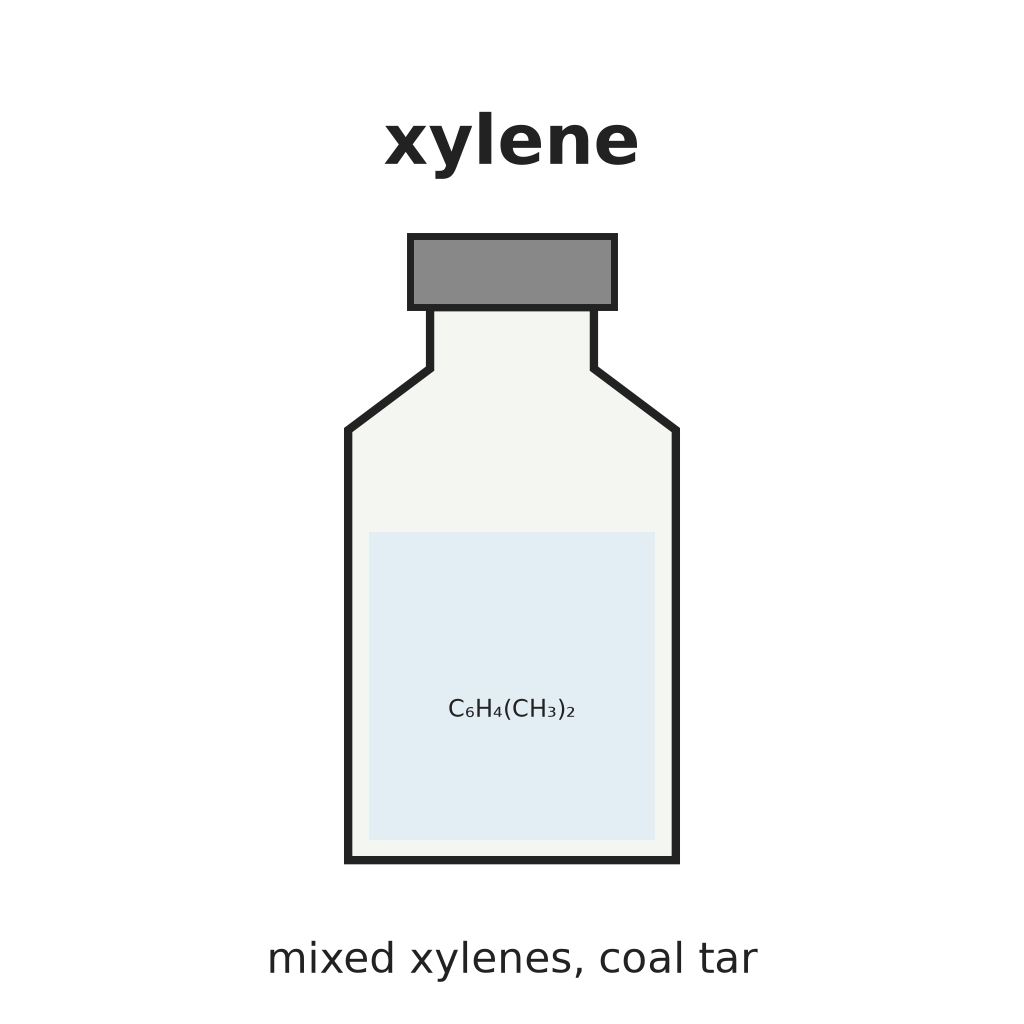 Sílẹ́ìnì1 as required
Àwọn irinṣẹ́ tí a nílò:
 Ìkópọ̀ ọ̀wọ̀n ìpọ́nti
 Bọ́ìlà èéfín omi
 Ẹ̀rọ Ìwọ̀n Ooru Yàrá Ìwádìí
2
2
Dry the feed and add a little methanol
Dry the feed and add a little methanol
Remove all water from the xylene (calcium chloride is our choice of drier). Add methanol so ice does not plug the cold equipment: the patent's example uses 49 lb methanol to 13,430 lb feed.
Àwọn irinṣẹ́ tí a nílò:
 Calcium chloride
 Methanol
 Tánkì ìdá kírísítà
3
3
Chill to about −95 °F and spin
Chill to about −95 °F and spin
Cool slowly, over about 20 minutes, to between −75 and −120 °F (−59 to −84 °C); the example uses −95 °F (−71 °C). Spin the slurry in a centrifuge: the liquid (about 8 % para) goes out, the crystals are about 74 % para-xylene.
Àwọn irinṣẹ́ tí a nílò:
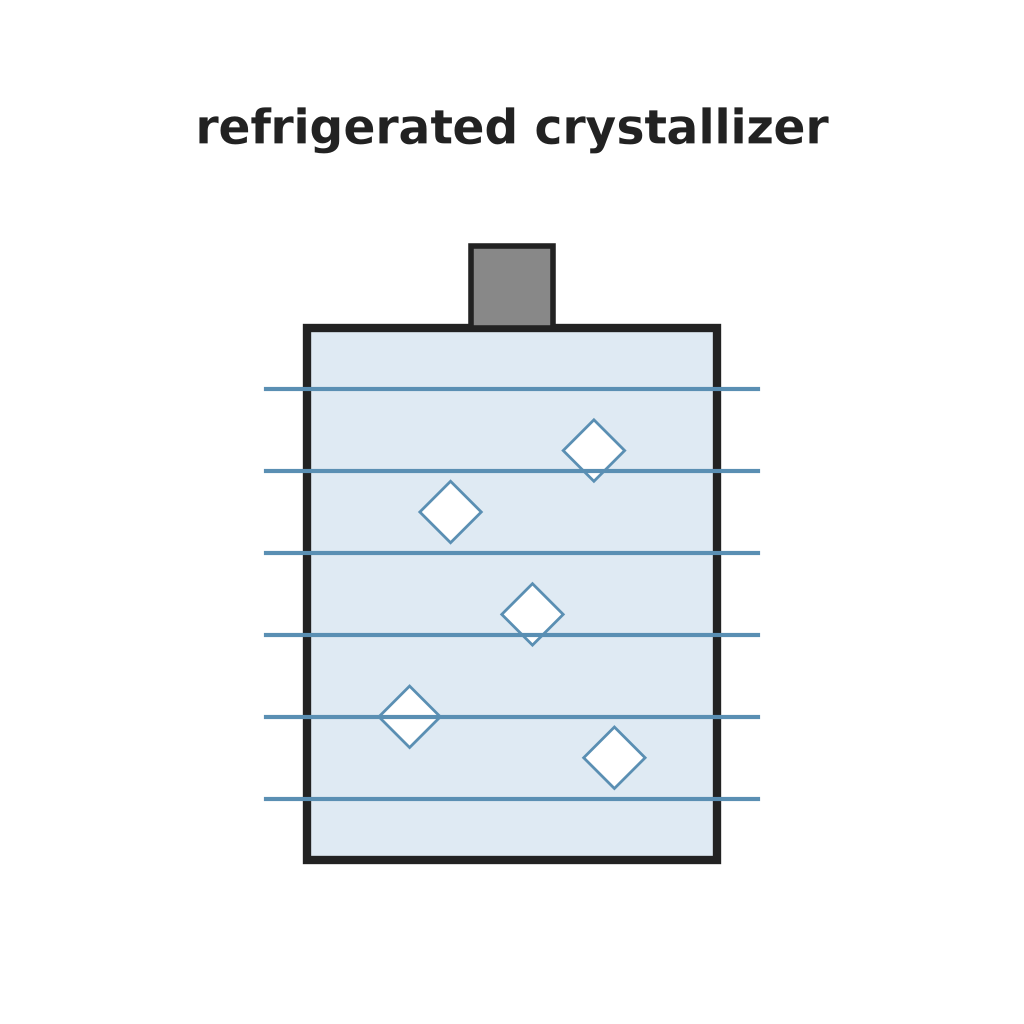 Ẹ̀rọ Kírísítálì Tútù
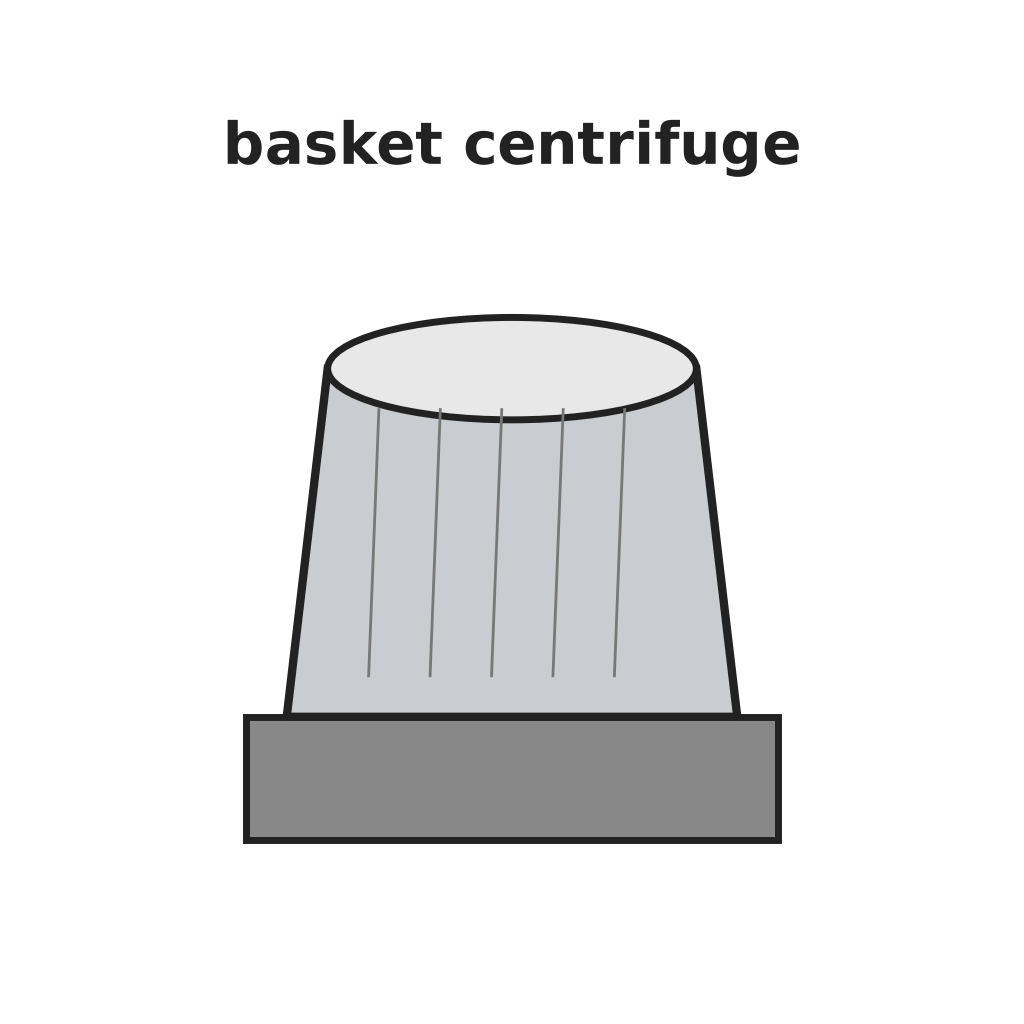 Ẹ̀rọ yíyí agbọ̀nẸ̀rọ Ìwọ̀n Ooru Yàrá Ìwádìí
 Ìbọ̀wọ́ Tí Ń Fara Da Ooru
 Gílásì Ààbò Fún Ìfọ́n Kẹ́míkà
4
4
Reslurry, bring to −30 °F, spin
Reslurry, bring to −30 °F, spin
Stir the crystals into the liquid from the next stage and bring the slurry to between 0 and −30 °F (−18 to −34 °C); the example uses −30 °F. Centrifuge again: the crystals are now about 91 % para-xylene.
Àwọn irinṣẹ́ tí a nílò:
Tánkì ìdá kírísítàẸ̀rọ Kírísítálì TútùẸ̀rọ yíyí agbọ̀nẸ̀rọ Ìwọ̀n Ooru Yàrá ÌwádìíÌbọ̀wọ́ Tí Ń Fara Da Ooru5
5
Reslurry warmer, spin and melt
Reslurry warmer, spin and melt
Stir these crystals into the liquid from the last spin and bring to 10–45 °F (−12 to 7 °C). Centrifuge: the crystals are 98.5 % para-xylene. Melt them and bottle. Return the liquids to the earlier stages.
Àwọn irinṣẹ́ tí a nílò:
Tánkì ìdá kírísítàẸ̀rọ Kírísítálì TútùẸ̀rọ yíyí agbọ̀nẸ̀rọ Ìwọ̀n Ooru Yàrá Ìwádìí Àwọn ìgò dígí pẹ̀lú ìdérí
Àwọn irinṣẹ́ tó nílò
11- Àyè
Ìtọ́nisọ́nà yìí ń ṣe
Blueprint tó jọra
Àwọn blueprint wọ̀nyí pín ìmọ̀ — ọ̀nà, ohun-èlò tàbí ìlànà
CC0 Àgbègbè Gbogbogbò
Blueprint yìí ti jáde lábẹ́ CC0. O lè ṣe àdàkọ, yí padà, pín, àti lò láìsí ìyọ̀ǹda.
Ṣàtìlẹ́yìn Olùṣẹ́dá nípa rírà àwọn ọjà nipasẹ̀ Blueprint wọn Ẹ̀san Olùṣẹ́dá tí àwọn Olùtajà gbé kalẹ̀, tàbí ṣẹ̀dá àtúnṣe tuntun ti Blueprint yìí kí o sì fi sínú Blueprint rẹ gẹ́gẹ́ bí ìsopọ̀ láti pín owó-wíwọlé.