
Penuaian Kelapa Sawit — Menuai Tandan Buah Segar dari Ladang
Ìlànà
Kenali pokok kelapa sawit (Elaeis guineensis)
Kenali pokok kelapa sawit (Elaeis guineensis)
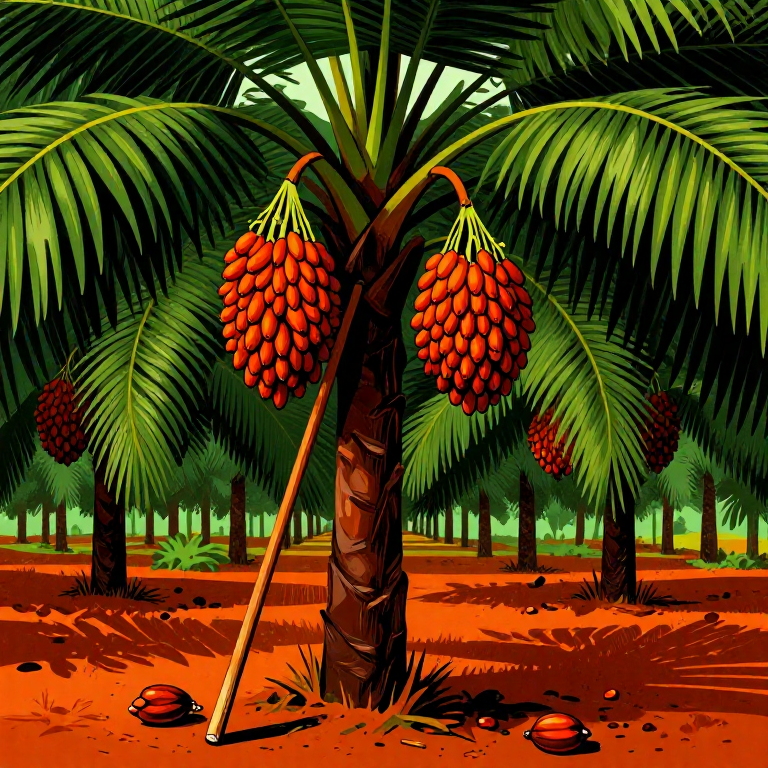
Kelapa sawit (Elaeis guineensis) berasal dari Afrika Barat dan dibawa ke Asia Tenggara pada awal abad ke-20. Malaysia kini merupakan pengeluar minyak sawit kedua terbesar dunia selepas Indonesia, dengan kira-kira 5.6 juta hektar ladang sawit. Pokok sawit mula berbuah pada umur 2.5-3 tahun selepas ditanam dan boleh dituai secara ekonomi selama 25-30 tahun. Setiap pokok menghasilkan 8-12 tandan buah segar (TBS) setahun. Setiap TBS seberat 20-30 kg dan mengandungi 1,000-3,000 buah individu. Pokok matang boleh mencapai ketinggian 15-20 meter (50-65 kaki).
Kenal pasti tandan yang masak untuk dituai
Kenal pasti tandan yang masak untuk dituai
Menentukan kematangan tandan adalah kemahiran paling penting dalam penuaian sawit. Tandan masak ditandai oleh: (1) Warna buah berubah daripada hitam kehijauan kepada jingga kemerahan, (2) Terdapat 10 atau lebih buah lerai (loose fruits) yang gugur di atas tanah di bawah pokok — ini petunjuk utama kematangan optimum, (3) 2-3 pelepah yang menyokong tandan mula melengkung ke bawah dan longgar. Tandan yang terlalu muda (under-ripe) menghasilkan minyak rendah dengan kadar asid lemak bebas (FFA) rendah tetapi hasil minyak rendah. Tandan yang terlalu masak (over-ripe) mempunyai FFA tinggi (melebihi 5%) yang menurunkan kualiti minyak. Sasaran penuaian optimum: FFA di bawah 2%.
Sediakan peralatan penuaian
Sediakan peralatan penuaian
Peralatan penuaian bergantung kepada ketinggian pokok. Untuk pokok muda (bawah 3 meter ke tandan): gunakan parang menuai (harvesting chisel) yang dilekatkan pada batang pendek. Untuk pokok sederhana tinggi (3-8 meter): gunakan sabit bergalah (sickle on pole) sepanjang 3-5 meter. Untuk pokok tinggi (8-15+ meter): gunakan galah berpisau (chisel pole) yang diperbuat daripada aluminium ringan, panjang 8-12 meter, dengan mata pisau keluli berbentuk bulan sabit (crescent-shaped) di hujung atas. Galah ini dikenali sebagai 'dodos' dalam bahasa setempat. Selain itu, sediakan beg pengumpul buah lerai, kereta sorong, dan topi keselamatan.
Àwọn irinṣẹ́ tí a nílò:
 Gbẹ́nà ìkórè
 Dòjé lórí ọ̀pá (mítà 3-5)
 Ọ̀pá aluminium oníṣáájú
 Àkéte ààbò
Potong pelepah penghalang
Potong pelepah penghalang
Sebelum memotong tandan, keluarkan 2-3 pelepah (fronds) yang menghalang akses ke tandan. Gunakan galah berpisau untuk memotong pangkal pelepah di mana ia melekat pada batang. Potong pelepah supaya ia jatuh ke arah lorong antara barisan pokok, bukan ke atas jalan penuaian. Setiap kali menuai satu tandan, biasanya 1-2 pelepah dipotong — ini juga menggalakkan pertumbuhan tandan baru. Susun pelepah yang telah dipotong secara kemas di antara barisan pokok (amalan 'frond stacking'). Pelepah yang direput akan menjadi baja organik dan menghalang pertumbuhan rumput. AMARAN: Sentiasa lihat ke atas semasa memotong — pelepah jatuh (10-15 kg) boleh menyebabkan kecederaan serius.
Àwọn irinṣẹ́ tí a nílò:
Ọ̀pá aluminium oníṣáájúÀkéte ààbòPotong tandan buah segar (TBS)
Potong tandan buah segar (TBS)
Setelah pelepah penghalang dikeluarkan, sasarkan mata pisau galah ke tangkai tandan (peduncle). Tangkai tandan melekat pada batang pokok dan berdiameter 5-8 cm. Untuk pokok muda (bawah 3 meter): ayunkan parang menuai ke pangkal tangkai dalam 2-3 hayunan tegas. Untuk pokok tinggi: julurkan galah berpisau ke atas dan potong tangkai dengan gerakan menarik atau menolak secara berulang. Pokok setinggi 12-15 meter memerlukan kemahiran tinggi untuk mengawal galah 8-12 meter yang panjang dan berat. Pastikan anda berdiri di luar jangkaan jatuh tandan — TBS yang jatuh dari ketinggian 15 meter (seberat 20-30 kg) amat berbahaya. Selepas tangkai terputus, tandan jatuh ke tanah dengan hentakan kuat.
Àwọn irinṣẹ́ tí a nílò:
Ọ̀pá aluminium oníṣáájúÀkéte ààbò Bàtà ààbò (tí ó ní ẹnu irin)
Kumpulkan buah lerai
Kumpulkan buah lerai
Apabila tandan jatuh dan semasa penuaian, buah individu (loose fruits / fruitlets) akan terlerai daripada tandan. Buah lerai ini sangat penting — setiap buah mengandungi 45-50% minyak mengikut berat dan kehilangan buah lerai bermakna kehilangan hasil minyak. Kutip semua buah lerai di sekeliling pangkal pokok menggunakan pengaut (scraper) dan masukkan ke dalam beg plastik berlubang. Periksa kawasan radius 2 meter dari pangkal pokok. Di ladang yang diurus dengan baik, buah lerai menyumbang 5-10% daripada jumlah keseluruhan hasil buah. Setiap buah lerai individu seberat 6-20 gram.
Àwọn ohun èlò fún ìgbésẹ̀ yìí:
 Àpò oníhò fún ìkójọ èso tí ó bọ́1 piece per block
Àwọn irinṣẹ́ tí a nílò:
 Ohun ìkán èso tí ó bọ́ sílẹ̀
Potong tangkai tandan pendek
Potong tangkai tandan pendek
Selepas tandan terjatuh, potong tangkai (peduncle) yang masih panjang supaya tinggal 5-8 cm sahaja dari pangkal tandan. Tangkai yang terlalu panjang menambah berat mati (dead weight) dan mengurangkan nisbah minyak berbanding berat keseluruhan TBS — kilang menghargai TBS dengan tangkai pendek kerana kandungan minyak per kilogram lebih tinggi. Gunakan parang yang tajam untuk potong tangkai. Pastikan potongan bersih dan rata.
Àwọn irinṣẹ́ tí a nílò:
Gbẹ́nà ìkórèAngkut TBS ke tepi jalan ladang
Angkut TBS ke tepi jalan ladang
Angkat TBS (20-30 kg setiap satu) ke dalam kereta sorong (wheelbarrow) dan tolak ke tepi jalan ladang yang terdekat (collection point). Untuk ladang yang luas, setiap blok mempunyai laluan pengangkutan dan tempat pengumpulan yang ditetapkan. Di ladang moden, traktor mini dengan treler digunakan untuk memungut TBS dari beberapa tempat pengumpulan. Susun TBS di atas tanah rata — jangan biarkan TBS tertimbun dalam longgokan tinggi kerana tekanan dan haba mempercepat pembentukan FFA. Tuangkan buah lerai yang telah dikutip ke dalam bakul berasingan bersebelahan TBS.
Àwọn irinṣẹ́ tí a nílò:
 Kẹ̀kẹ́ ẹrù oníkẹ̀kẹ́ kan
 Ọ̀nà ìgbé ẹrù
Periksa kualiti TBS sebelum pengangkutan
Periksa kualiti TBS sebelum pengangkutan
Sebelum TBS dimuatkan ke lori pengangkut, lakukan pemeriksaan kualiti: (1) Bilang buah lerai yang masih tertinggal di tandan — tandan masak optimum mempunyai sedikit buah lerai di permukaannya kerana kebanyakan telah digugurkan, (2) Periksa warna buah — jingga kemerahan yang sekata menunjukkan kematangan optimum, (3) Tolak TBS yang rosak teruk, busuk, atau diserang tikus, (4) Tolak tandan kosong (empty bunches) yang buahnya telah gugur semua. Grading biasa: TBS masak (ripe, 60-70% daripada penuaian), kurang masak (under-ripe, 10-20%), terlalu masak (over-ripe, 10-20%). Sasaran: lebih 80% TBS masak optimum.
Muatkan TBS ke lori pengangkut
Muatkan TBS ke lori pengangkut
Muatkan TBS ke dalam lori pengangkut (3-tan atau 5-tan) menggunakan kren mini atau secara manual. Susun TBS secara teratur di dalam badan lori — jangan longgokkan terlalu tinggi kerana TBS yang jatuh dari lori dalam perjalanan menyebabkan kehilangan hasil. Buah lerai dimasukkan dalam beg berasingan dan diletakkan di atas TBS. Catatkan bilangan TBS, anggaran berat, blok asal, dan tarikh penuaian pada borang penghantaran. Maklumat ini penting untuk sistem kebolehjejakan (traceability) dan pembayaran kepada pekebun.
Àwọn ohun èlò fún ìgbésẹ̀ yìí:
 Ìwé àkọsílẹ̀ ìfìsílẹ̀1 piece per load
Àwọn irinṣẹ́ tí a nílò:
 Ọkọ̀ ẹrù (tọ́ọ̀nù 5)
Hantar TBS ke kilang dalam tempoh 24 jam
Hantar TBS ke kilang dalam tempoh 24 jam
TBS mesti dihantar ke kilang kelapa sawit (palm oil mill) dalam tempoh 24 jam selepas dituai. Ini adalah had masa kritikal kerana enzim lipase dalam buah sawit mula memecahkan minyak kepada asid lemak bebas (FFA) sejurus buah terlerai dari tandan. Setiap jam kelewatan meningkatkan FFA sebanyak 0.1-0.5%. Kilang mengenakan potongan harga untuk TBS dengan FFA melebihi 5%. Dalam perjalanan, elakkan TBS terdedah kepada hujan — air meningkatkan kadar hidrolisis minyak. Di kilang, TBS akan ditimbang di jambatan timbang dan dihantar ke loading ramp untuk proses seterusnya (penstiman pada 140°C selama 60-90 minit).
Àwọn irinṣẹ́ tí a nílò:
Ọkọ̀ ẹrù (tọ́ọ̀nù 5)Jaga pokok dan jadual penuaian
Jaga pokok dan jadual penuaian
Penuaian kelapa sawit dilakukan secara berterusan sepanjang tahun kerana pokok sawit berbuah tanpa henti di iklim tropika. Kitaran penuaian (harvesting round) biasanya setiap 10-14 hari — setiap pokok dilawati dan diperiksa untuk tandan masak dalam tempoh ini. Terlalu kerap menuai (kurang 7 hari) menyebabkan penuaian tandan kurang masak. Terlalu jarang menuai (lebih 21 hari) menyebabkan tandan terlalu masak dan FFA tinggi. Setiap hektar mengandungi kira-kira 136-148 pokok (jarak tanam 9 meter segitiga). Seorang penuai mahir boleh menuai 200-300 pokok sehari bergantung kepada ketinggian pokok dan keadaan rupa bumi.
Penyelenggaraan peralatan penuaian
Penyelenggaraan peralatan penuaian
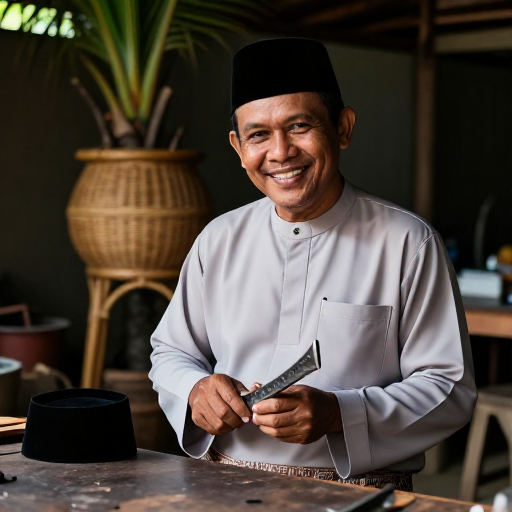
Peralatan penuaian mesti diselenggara setiap hari untuk kecekapan dan keselamatan. Asah mata pisau galah berpisau dan sabit dengan batu asah setiap pagi sebelum memulakan kerja — mata pisau yang tumpul memerlukan lebih banyak tenaga, melambatkan kerja, dan menyebabkan potongan yang tidak bersih yang merosakkan batang pokok. Periksa sambungan antara mata pisau dan galah — sambungan yang longgar merbahaya kerana mata pisau boleh terlepas dan jatuh dari ketinggian. Bersihkan sisa getah sawit (resin) dari mata pisau selepas setiap penggunaan menggunakan minyak diesel. Gantikan galah aluminium yang bengkok atau retak. Simpan semua peralatan di tempat kering dan teduh.
Àwọn ohun èlò fún ìgbésẹ̀ yìí:
 Epo diesel200 milliliter
Àwọn irinṣẹ́ tí a nílò:
 Òkúta Ìpọ́n
 Àkójọ ẹ̀rọ ìgbáradì
Keselamatan dan amalan terbaik penuaian
Keselamatan dan amalan terbaik penuaian
Keselamatan adalah keutamaan dalam kerja penuaian sawit. Bahaya utama termasuk: (1) TBS jatuh dari ketinggian — sentiasa berdiri di sisi, bukan di bawah tandan semasa memotong, (2) Duri sawit — buah dan pelepah sawit mempunyai duri tajam 2-5 cm yang boleh menembusi kulit; pakai sarung tangan tebal dan kasut but keselamatan, (3) Ular dan serangga — periksa pangkal pokok sebelum menghampiri, terutama kobra dan ular tedung senduk yang biasa di ladang, (4) Keletihan haba — bawa air minuman secukupnya, rehat setiap 2 jam, dan elakkan menuai pada pukul 12-2 petang semasa haba paling terik. Pakai topi keselamatan, sarung tangan kulit, kasut but bertapak keluli, dan baju lengan panjang sepanjang masa di ladang.
Àwọn irinṣẹ́ tí a nílò:
Àkéte ààbò Ìbọ̀wọ́ Iṣẹ́ AwọBàtà ààbò (tí ó ní ẹnu irin)
 Ìgò omi
Àwọn ohun-èlò
3- 1 piece per blockÀyè
- 1 piece per loadÀyè
- 200 milliliterÀyè
Àwọn irinṣẹ́ tó nílò
13- Àyè
- Àyè
- Àyè
- Àyè
Ìtọ́nisọ́nà yìí ń ṣe
CC0 Àgbègbè Gbogbogbò
Blueprint yìí ti jáde lábẹ́ CC0. O lè ṣe àdàkọ, yí padà, pín, àti lò láìsí ìyọ̀ǹda.
Ṣàtìlẹ́yìn Olùṣẹ́dá nípa rírà àwọn ọjà nipasẹ̀ Blueprint wọn Ẹ̀san Olùṣẹ́dá tí àwọn Olùtajà gbé kalẹ̀, tàbí ṣẹ̀dá àtúnṣe tuntun ti Blueprint yìí kí o sì fi sínú Blueprint rẹ gẹ́gẹ́ bí ìsopọ̀ láti pín owó-wíwọlé.