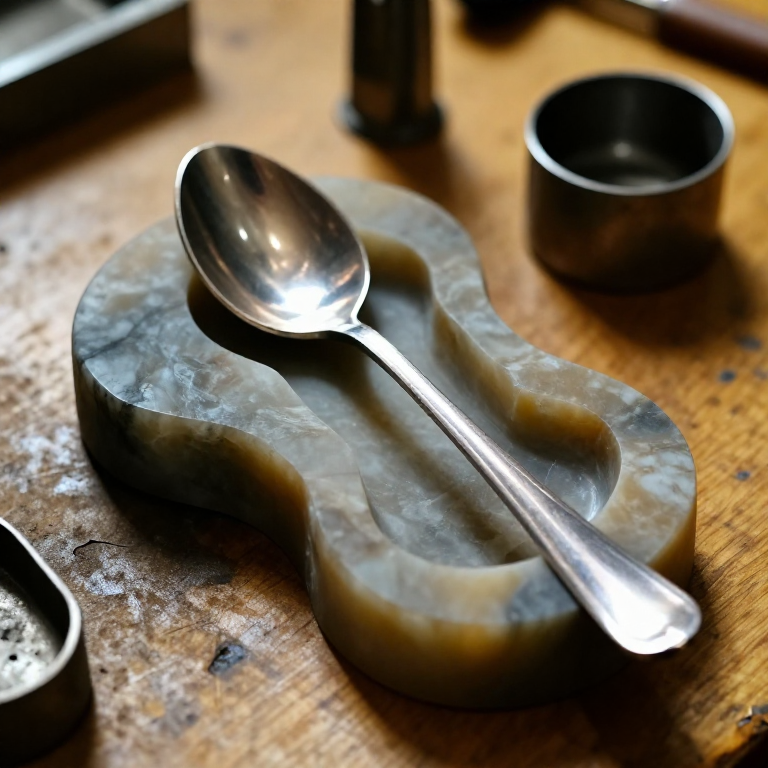


Casting a Pewter Spoon in a Soapstone Mould — Low-Temperature Metal Casting
Pewter — an alloy of roughly 92% tin with small amounts of antimony and copper — melts at just 230°C, making it the most accessible metal for casting. Medieval spoon-makers carved two-part moulds from soapstone, poured molten pewter, and finished the castings with files and burnishing. The result is a bright, food-safe utensil that lasts generations. This blueprint covers carving the soapstone mould, melting the pewter over a simple charcoal fire, casting, and finishing.
Ìlànà
Select the soapstone
Select the soapstone
Àwọn ohun èlò fún ìgbésẹ̀ yìí:
 Bulọ́ọ̀kù òkúta ọṣẹ1 ẹyọ
Flatten the mould faces
Flatten the mould faces
Draw the spoon pattern
Draw the spoon pattern
Carve the bowl cavity
Carve the bowl cavity
Àwọn irinṣẹ́ tí a nílò:
 Ìgbá igi (gouge)
 Ọ̀bẹ Sìlóìdì
Carve the matching half
Carve the matching half
Carve alignment keys and pour gate
Carve alignment keys and pour gate
Pre-heat the mould
Pre-heat the mould
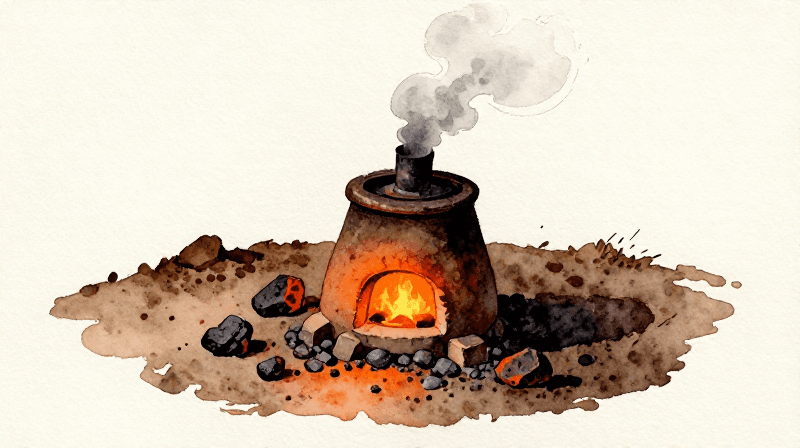
Melt the pewter
Melt the pewter
Àwọn ohun èlò fún ìgbésẹ̀ yìí:
 Ìdìwọ̀n pewutà200 g
Àwọn irinṣẹ́ tí a nílò:
 Ìkòkò ìyọ́ irin
 Ẹmú Ìkòkò Ìyọ́
Pour the casting
Pour the casting
Cool and open the mould
Cool and open the mould
Remove the gate and flash
Remove the gate and flash
Àwọn irinṣẹ́ tí a nílò:
 Àkójọ Ìfá Kékeré
Shape and refine the spoon
Shape and refine the spoon
Burnish to a bright finish
Burnish to a bright finish
Àwọn ohun-èlò
2- 1 ẹyọÀyè
- 200 gÀyè
Àwọn irinṣẹ́ tó nílò
5- Àyè
Àwọn Ohun Èlò Ìtọ́nisọ́nà Tí A So Pọ̀
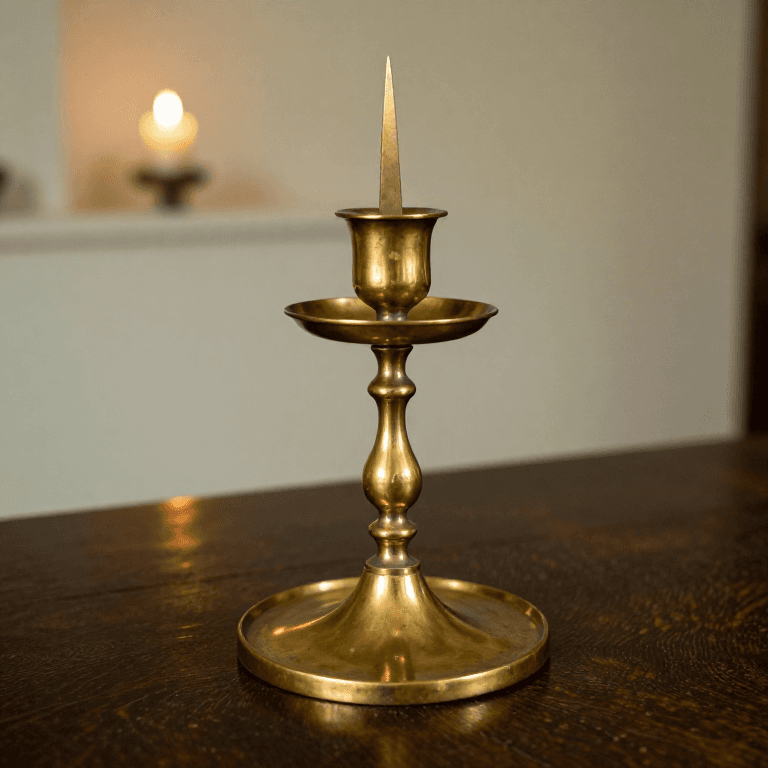
Ìtọ́nisọ́nà yìí ń ṣe

Blueprint tó jọra
Àwọn blueprint wọ̀nyí pín ìmọ̀ — ọ̀nà, ohun-èlò tàbí ìlànà

CC0 Àgbègbè Gbogbogbò
Blueprint yìí ti jáde lábẹ́ CC0. O lè ṣe àdàkọ, yí padà, pín, àti lò láìsí ìyọ̀ǹda.
Ṣàtìlẹ́yìn Olùṣẹ́dá nípa rírà àwọn ọjà nipasẹ̀ Blueprint wọn Ẹ̀san Olùṣẹ́dá tí àwọn Olùtajà gbé kalẹ̀, tàbí ṣẹ̀dá àtúnṣe tuntun ti Blueprint yìí kí o sì fi sínú Blueprint rẹ gẹ́gẹ́ bí ìsopọ̀ láti pín owó-wíwọlé.