
IṢẸ́ ỌNÀ
ẸWÀ ÀTI ÌLERA
IṢẸ́ ỌWỌ́
ÀṢÀ ÀTI ÌTÀN
ÌṢERÉ
ÀYÍKÁ
OÚNJẸ ÀTI OHUN MÍMU
REVERSE ENGINEERING
SÁYẸ́ǸSÌ
ERÉ ÌDÁRAYÁ
ÌMỌ̀-Ẹ̀RỌ
ÀWỌN OHUN WÍWỌ̀
Wishbone-Mast Ice Yacht: 16 ft Backbone, Twin-Pole Mast and Double Lateen Booms (Boy Mechanic, 1919)
Woody

Ṣẹ́dá nipasẹ̀

Woody

13. Oṣù Kọkànlá 2026NO
11
0
0
0
0

Wishbone-Mast Ice Yacht: 16 ft Backbone, Twin-Pole Mast and Double Lateen Booms (Boy Mechanic, 1919)

John F. Pjerrou's ice yacht from The Boy Mechanic, Book 3 (1919), for one or two passengers: a 16 ft spruce backbone on a 12 ft 6 in runner plank, oak runners shod with half-round iron, a mast of two 12 ft poles joined at the head, and two lateen sails on a yard and two 16 ft booms that spread into a V when running before the wind. It takes down for storage.
Ilọsíwájú
Several weeks

Ìlànà

1

Main sizes and the mast's height

Ń ṣí ìwé Jupyter…
2

Read The Boy Mechanic, Book 3

"The dimensions given are for a small yacht, and care must be taken, in adapting the design, to maintain proper proportions for stability and safety."
3

Make the backbone and runner plank

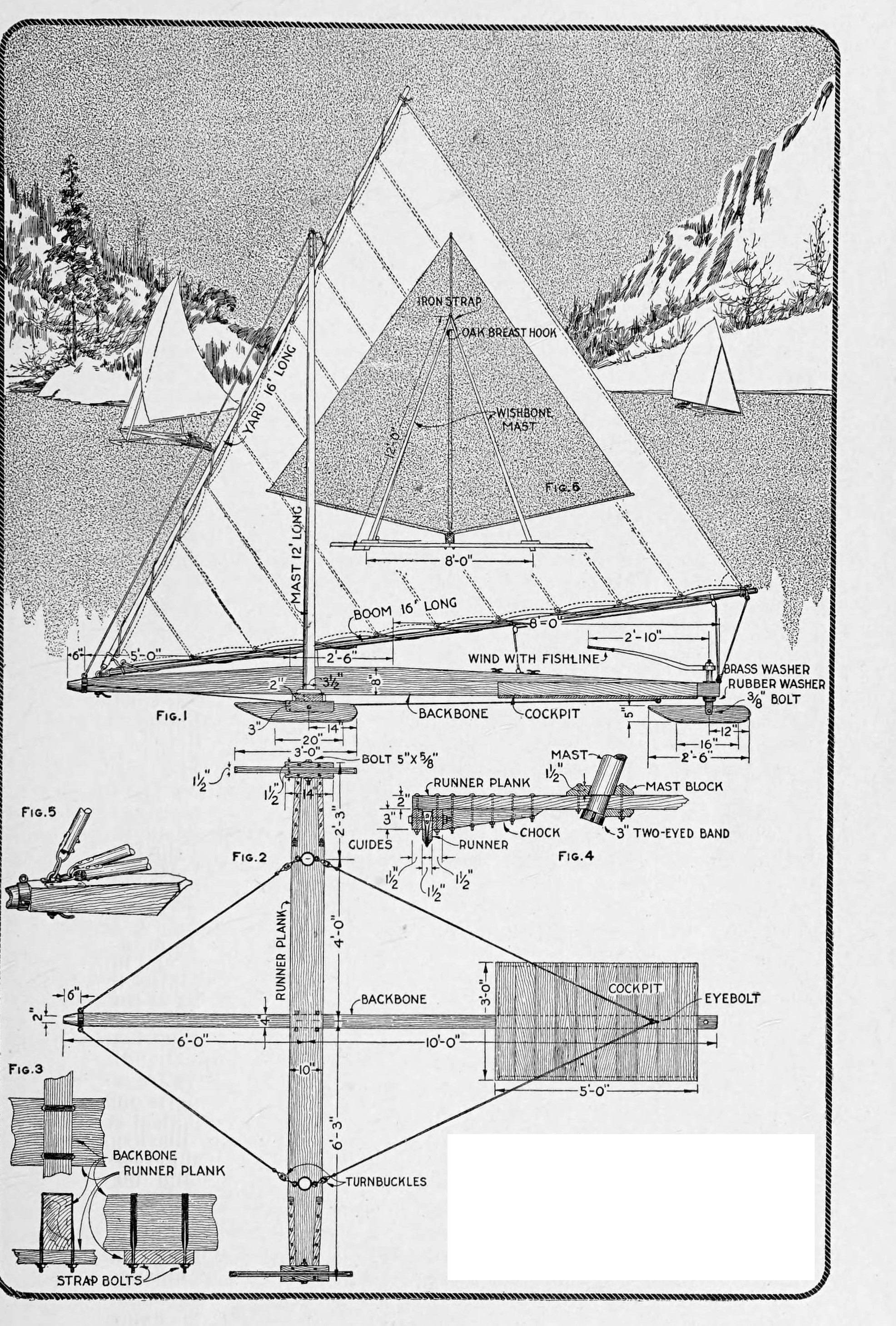
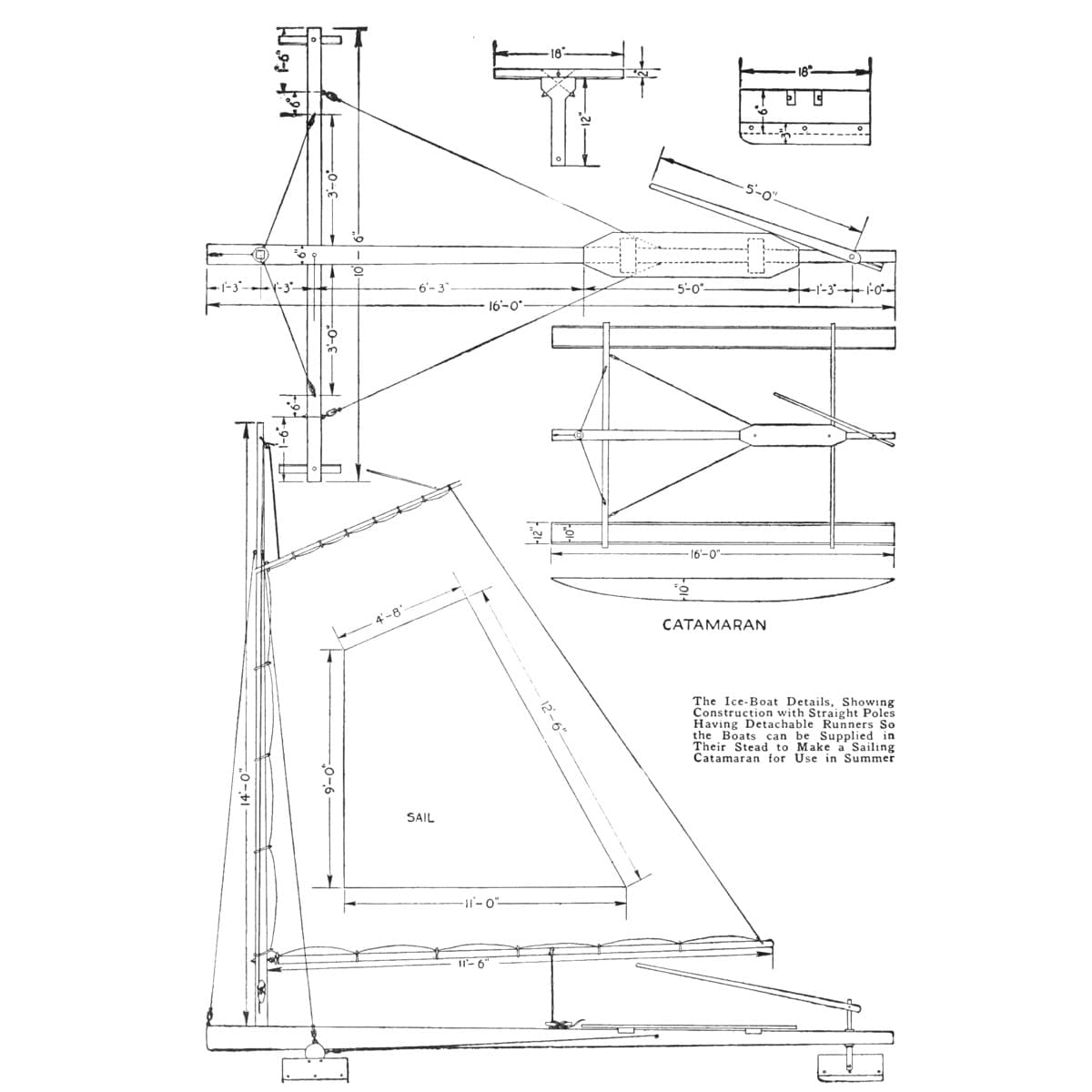
Use only the best straight-grained spruce or white pine. Backbone: 4 in thick, 16 ft long and 8 in high at the centre, with a ridge 8 in high and 2 ft 6 in long; taper it from the middle, 5 ft 6 in from the forward end, to 4 in at each end, and fit a three-eye metal ring at the bow (Figs. 1, 5). Runner plank: 2 in thick, 10 in wide, 12 ft 6 in long, tapered to 8 in at the ends. Set the backbone on the plank at right angles, 6 ft from the bow, and clamp them with two strap bolts, washers and nuts (Figs. 2, 3).

Àwọn ohun èlò fún ìgbésẹ̀ yìí:

Igi pineIgi pine2 ẹyọ
Metal RingMetal Ring1 ẹyọ
Bọ́ọ̀tù UBọ́ọ̀tù U2 ẹyọ
Wáṣà PẹrẹsẹWáṣà Pẹrẹsẹ4 ẹyọ
Nọ́ọ̀tì Onígun Mẹ́fàNọ́ọ̀tì Onígun Mẹ́fà4 ẹyọ

Àwọn irinṣẹ́ tí a nílò:

Ayùn Ọwọ́Ayùn Ọwọ́
Ohun èlò ìfárí igi (pìlánì)Ohun èlò ìfárí igi (pìlánì)
Ọ̀bẹ Ìfàsẹ́yìnỌ̀bẹ Ìfàsẹ́yìn
Ìlù ọwọ́ pẹ̀lú oríÌlù ọwọ́ pẹ̀lú orí
Kọ́kọ́rọ́ tí a lè ṣàtúnṣeKọ́kọ́rọ́ tí a lè ṣàtúnṣe
Okùn Ìdíwọ̀nOkùn Ìdíwọ̀n
GègéGègé
4

Fit the guides and forward runners

Bolt guides of straight-grained oak, 1-1/2 by 3 by 14 in, to the plank ends with 5/16 in carriage bolts, and bolt oak chocks at each tapered edge (Fig. 4). Make the forward runners of oak, 1-1/2 by 5 by 36 in, shaped at the ends as drawn, and shoe them with half-round strap iron held by screws with carefully countersunk heads. Pivot them on 5/8 in bolts (5 in long in Fig. 1), nuts to the inner side, with washers and jam nuts, or rivet the bolt ends slightly so the nuts cannot work loose.

Àwọn ohun èlò fún ìgbésẹ̀ yìí:

Pátákò oak funfunPátákò oak funfun3 ẹyọ
Bọ́ọ̀tù orí róbótóBọ́ọ̀tù orí róbótó8 ẹyọ
Half-Round Iron BarHalf-Round Iron Bar2 ẹyọ
Ìṣó igiÌṣó igi1 ẹyọ
Wáṣà PẹrẹsẹWáṣà Pẹrẹsẹ4 ẹyọ
Nọ́ọ̀tì Onígun Mẹ́fàNọ́ọ̀tì Onígun Mẹ́fà4 ẹyọ

Àwọn irinṣẹ́ tí a nílò:

Ayùn Ọwọ́Ayùn Ọwọ́
Ohun èlò ìfárí igi (pìlánì)Ohun èlò ìfárí igi (pìlánì)
Ìlù ọwọ́ pẹ̀lú oríÌlù ọwọ́ pẹ̀lú orí
Ìlù ọwọ́Ìlù ọwọ́
Àkójọ Orí Ìlù CountersinkÀkójọ Orí Ìlù Countersink
Ayùn IrinAyùn Irin
Kọ́kọ́rọ́ tí a lè ṣàtúnṣeKọ́kọ́rọ́ tí a lè ṣàtúnṣe
5

Make the stern runner and steering

Make the stern runner of oak, 1-1/2 by 5 by 30 in, shod like the others. Pivot it on a 3/8 in bolt in a hanger of heavy iron strip bent into a U and riveted to a vertical shaft. Put a heavy rubber washer, protected by a metal one, on the shaft; thread its upper end for a washer and nut, slip a section of pipe over the shaft, and clamp the steering handle (2 ft 10 in in Fig. 1) on a squared part of the shaft. The hanger may be forged, or made by a blacksmith.

Àwọn ohun èlò fún ìgbésẹ̀ yìí:

Pátákò oak funfunPátákò oak funfun1 ẹyọ
Half-Round Iron BarHalf-Round Iron Bar1 ẹyọ
Ọ̀pá Pẹrẹsẹ Irin Pẹ́lẹ́Ọ̀pá Pẹrẹsẹ Irin Pẹ́lẹ́1 ẹyọ
Ọ̀pá rírọ irin rírọ̀Ọ̀pá rírọ irin rírọ̀1 ẹyọ
Ìṣó irinÌṣó irin2 ẹyọ
Bọ́ọ̀tù orí róbótóBọ́ọ̀tù orí róbótó1 ẹyọ
Rubber WasherRubber Washer1 ẹyọ
Wáṣà PẹrẹsẹWáṣà Pẹrẹsẹ2 ẹyọ
Nọ́ọ̀tì Onígun Mẹ́fàNọ́ọ̀tì Onígun Mẹ́fà2 ẹyọ
Páìpù irin tí a fi zinc bòPáìpù irin tí a fi zinc bò1 ẹyọ

Àwọn irinṣẹ́ tí a nílò:
Ilé Iná Alágbẹ̀dẹIlé Iná Alágbẹ̀dẹ
Ìdí Alágbẹ̀dẹÌdí Alágbẹ̀dẹ
ÒòlùÒòlù
Ìdìmú TábìlìÌdìmú Tábìlì
Ayùn IrinAyùn Irin
Ìlù ọwọ́Ìlù ọwọ́
Àwọn Ìfá (Ìfá Ọwọ́)Àwọn Ìfá (Ìfá Ọwọ́)
Kọ́kọ́rọ́ tí a lè ṣàtúnṣeKọ́kọ́rọ́ tí a lè ṣàtúnṣe
6

Build the cockpit

Fix a cockpit 5 ft long and 3 ft wide, with 4 in coaming, to the lower side of the backbone toward the stern; fasten its floor to the backbone with lag screws and fasten the coaming securely. Square corners are easiest; rounded ends with steamed, bent coaming are better. Larger craft may carry it on ribs.

Àwọn ohun èlò fún ìgbésẹ̀ yìí:

Pákó igi pinePákó igi pine4 ẹyọ
Skru igi orí onígun mẹ́fà (lag)Skru igi orí onígun mẹ́fà (lag)6 ẹyọ
Ìṣó igiÌṣó igi1 ẹyọ

Àwọn irinṣẹ́ tí a nílò:

Ayùn Ọwọ́Ayùn Ọwọ́
Ìlù ọwọ́ pẹ̀lú oríÌlù ọwọ́ pẹ̀lú orí
Kọ́kọ́rọ́ tí a lè ṣàtúnṣeKọ́kọ́rọ́ tí a lè ṣàtúnṣe
Okùn Ìdíwọ̀nOkùn Ìdíwọ̀n
7

Square up and stay the frame

Line up runners, plank and backbone at right angles so the craft tracks true. Hold them with four 1/4 in wire-rope stays with turnbuckles, from eyes on the bow band and on the bands at the plank ends to an eyebolt below the cockpit (Fig. 2). Loop each rope end and clamp the eye with steel clamps made for the purpose (wire-rope clips); metal thimbles in the loops make a better finish.

Àwọn ohun èlò fún ìgbésẹ̀ yìí:

Wire RopeWire Rope1 ẹyọ
TurnbuckleTurnbuckle4 ẹyọ
Àṣíborí ìkaÀṣíborí ìka8 ẹyọ
Wire Rope ClipWire Rope Clip8 ẹyọ
Bọ́ọ̀lù oníyíkáBọ́ọ̀lù oníyíká1 ẹyọ

Àwọn irinṣẹ́ tí a nílò:

Ayùn IrinAyùn Irin
Kọ́kọ́rọ́ tí a lè ṣàtúnṣeKọ́kọ́rọ́ tí a lè ṣàtúnṣe
Okùn Ìdíwọ̀nOkùn Ìdíwọ̀n
8

Make the wishbone mast

Shape two poles of hickory or ash, 3-1/2 in thick at the base and 2 in at the top (12 ft in Fig. 6). Join them carefully at the masthead, bolt them together into an oak breast hook, and reinforce the joint with an iron strap with an eye at its upper end for the forward stay. Step the lower ends in sockets in the runner plank, about 8 ft apart, reinforced with oak mast blocks, and fit their projecting ends with 3 in two-eyed bands for the stays (Figs. 4, 6).

Àwọn ohun èlò fún ìgbésẹ̀ yìí:

Òpó igiÒpó igi2 ẹyọ
Pátákò oak funfunPátákò oak funfun1 ẹyọ
Ọ̀pá Pẹrẹsẹ Irin Pẹ́lẹ́Ọ̀pá Pẹrẹsẹ Irin Pẹ́lẹ́1 ẹyọ
Bọ́ọ̀tù orí róbótóBọ́ọ̀tù orí róbótó2 ẹyọ
Nọ́ọ̀tì Onígun Mẹ́fàNọ́ọ̀tì Onígun Mẹ́fà2 ẹyọ

Àwọn irinṣẹ́ tí a nílò:

Ọ̀bẹ Ìfàsẹ́yìnỌ̀bẹ Ìfàsẹ́yìn
Ohun èlò ìfárí igi (pìlánì)Ohun èlò ìfárí igi (pìlánì)
Ayùn Ọwọ́Ayùn Ọwọ́
Ìlù ọwọ́ pẹ̀lú oríÌlù ọwọ́ pẹ̀lú orí
Àwọn ìgbẹ́ igiÀwọn ìgbẹ́ igi
Ilé Iná Alágbẹ̀dẹIlé Iná Alágbẹ̀dẹ
Ìdí Alágbẹ̀dẹÌdí Alágbẹ̀dẹ
ÒòlùÒòlù
9

Make the yard and booms

Make the yard and two booms of hickory or ash, each 16 ft long, 2-3/4 in at the middle tapering to 1-1/2 in at the ends, with metal rings on the ends against splitting. Bolt loops to their forward ends to engage an eyebolt and ring on the backbone at the bow; set the eyebolt in a slotted plate of 3/16 in sheet iron, fastened by a lever nut (Fig. 5).

Àwọn ohun èlò fún ìgbésẹ̀ yìí:

Òpó igiÒpó igi3 ẹyọ
Metal RingMetal Ring6 ẹyọ
Bọ́ọ̀lù oníyíkáBọ́ọ̀lù oníyíká1 ẹyọ
Ìwé Irin Pẹ́lẹ́Ìwé Irin Pẹ́lẹ́1 ẹyọ
Ọ̀pá Pẹrẹsẹ Irin Pẹ́lẹ́Ọ̀pá Pẹrẹsẹ Irin Pẹ́lẹ́1 ẹyọ
Bọ́ọ̀tù orí róbótóBọ́ọ̀tù orí róbótó3 ẹyọ
Nọ́ọ̀tì Onígun Mẹ́fàNọ́ọ̀tì Onígun Mẹ́fà3 ẹyọ

Àwọn irinṣẹ́ tí a nílò:

Ọ̀bẹ Ìfàsẹ́yìnỌ̀bẹ Ìfàsẹ́yìn
Ohun èlò ìfárí igi (pìlánì)Ohun èlò ìfárí igi (pìlánì)
Ayùn IrinAyùn Irin
Ìlù ọwọ́Ìlù ọwọ́
Àwọn Ìfá (Ìfá Ọwọ́)Àwọn Ìfá (Ìfá Ọwọ́)
Ìdìmú TábìlìÌdìmú Tábìlì
10

Sew the sails

Make two lateen sails of 8-oz unbleached cotton duck: lap the breadths about 1 in and stitch along the edge (or fold 1 in and double-stitch), the seams parallel to the leech. Reinforce each corner with a triangular patch of duck and bind the edges with 1/4 in tarred rope, using a sailor's palm, a diamond-pointed needle and sail twine, well waxed (the wax is ours: beeswax). Along the yard and boom edges punch holes, set two 3/4 in brass grommet rings in each, one each side, and overcast them with buttonhole stitch. Sew in reef points of 1/8 in cotton rope, whipped at the ends.

Àwọn ohun èlò fún ìgbésẹ̀ yìí:

Aṣọ kánfásìAṣọ kánfásì1 ẹyọ
Sail TwineSail Twine1 ẹyọ
Ìdí OyinÌdí Oyin1 ẹyọ
Tarred RopeTarred Rope1 ẹyọ
Brass GrommetBrass Grommet40 ẹyọ
Okùn òwú ńláOkùn òwú ńlá1 ẹyọ

Àwọn irinṣẹ́ tí a nílò:
Sailor's PalmSailor's Palm
Sail NeedleSail Needle
Ohun èlò ìlu ihò ìwéOhun èlò ìlu ihò ìwé
Ìṣẹ́náÌṣẹ́ná
Okùn Ìdíwọ̀nOkùn Ìdíwọ̀n
11

Set up and rig

Fit the forward ring and strap bolts, the runners and steering, then step the mast, clamp the masthead and fit the bands; set the bottom stays and the masthead stay with the turnbuckles. Lace the sails to yard and booms and fix the forward ends at the bow. Run a 3/8 in halyard from the yard through a pulley at the masthead and a second on the runner plank to cleats by the cockpit, and haul up so the sails set. Lash the main sheets to the boom ends, through pulleys at the stern of the backbone and on the booms about 1 ft and 5 ft from their ends, then to cleats at the cockpit; the second boom needs a duplicate set. Taking down is the reverse.

Àwọn ohun èlò fún ìgbésẹ̀ yìí:

OkùnOkùn1 ẹyọ
Kẹ̀kẹ́ okùnKẹ̀kẹ́ okùn6 ẹyọ
CleatCleat4 ẹyọ
Ìṣó igiÌṣó igi1 ẹyọ

Àwọn irinṣẹ́ tí a nílò:

Kọ́kọ́rọ́ tí a lè ṣàtúnṣeKọ́kọ́rọ́ tí a lè ṣàtúnṣe
Ìlù ọwọ́Ìlù ọwọ́
12

Finish

Smooth the masts, yard and booms, sandpaper them lightly and give them several coats of spar varnish; paint the other woodwork. He gives the metal fittings two coats of red lead "or other good paint for use on metals exposed to the weather": red lead is a lead poison, so use the other paint.

Àwọn ohun èlò fún ìgbésẹ̀ yìí:

Bébà ÌfáBébà Ìfá1 ẹyọ
Spar VarnishSpar Varnish1 ẹyọ
Àwọ̀ olóròróÀwọ̀ olóròró1 ẹyọ

Àwọn irinṣẹ́ tí a nílò:
Búrọ́ọ̀ṣì fífẹ̀Búrọ́ọ̀ṣì fífẹ̀
13

Sailing and troubleshooting

Ice yacht sailing.

Flow

Loading...
14

History and honest limits

From "A Wishbone-Mast Ice Yacht" by John F. Pjerrou, in **The Boy Mechanic, Book 3**, Popular Mechanics, 1919 (Project Gutenberg 71856; checked on the archive.org scan boymechanic0003unse, pp. 17-20). He gives no sail outline sizes. The tools, the metric figures and the choice of the non-lead paint he allows are ours.

Àwọn ohun-èlò

35

Àwọn irinṣẹ́ tó nílò

21

Ìtọ́nisọ́nà yìí ń ṣe

Blueprint tó jọra

Àwọn blueprint wọ̀nyí pín ìmọ̀ — ọ̀nà, ohun-èlò tàbí ìlànà
CC0 Àgbègbè Gbogbogbò

Blueprint yìí ti jáde lábẹ́ CC0. O lè ṣe àdàkọ, yí padà, pín, àti lò láìsí ìyọ̀ǹda.

Ṣàtìlẹ́yìn Olùṣẹ́dá nípa rírà àwọn ọjà nipasẹ̀ Blueprint wọn Ẹ̀san Olùṣẹ́dá tí àwọn Olùtajà gbé kalẹ̀, tàbí ṣẹ̀dá àtúnṣe tuntun ti Blueprint yìí kí o sì fi sínú Blueprint rẹ gẹ́gẹ́ bí ìsopọ̀ láti pín owó-wíwọlé.

Ìfọ̀rọ̀wérọ̀

(0)

Wọlé láti dara pọ̀ mọ́ ìfọ̀rọ̀wérọ̀

Ń gbé àwọn ọ̀rọ̀ wọlé...