IṢẸ́ ỌNÀ
ẸWÀ ÀTI ÌLERA
IṢẸ́ ỌWỌ́
ÀṢÀ ÀTI ÌTÀN
ÌṢERÉ
ÀYÍKÁ
OÚNJẸ ÀTI OHUN MÍMU
REVERSE ENGINEERING
SÁYẸ́ǸSÌ
ERÉ ÌDÁRAYÁ
ÌMỌ̀-Ẹ̀RỌ
ÀWỌN OHUN WÍWỌ̀
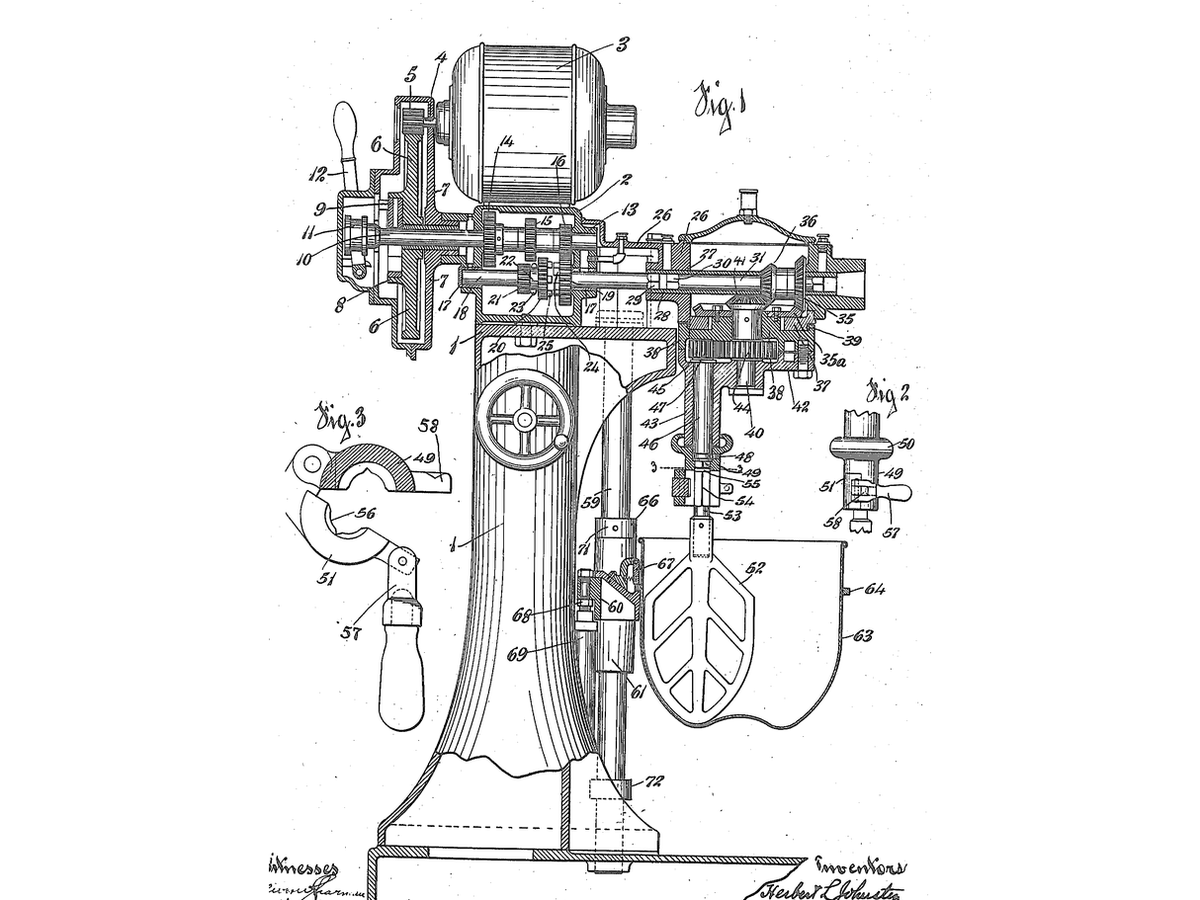


Planetary Stand Mixer
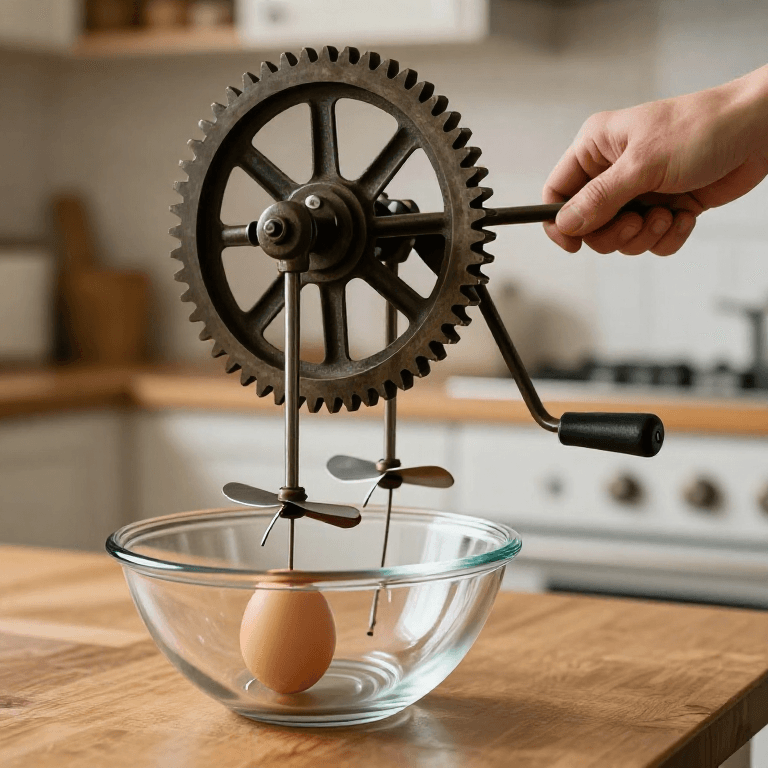
The rotary egg beater already published spins two blades on fixed axes - so the cook must keep moving it, and a stiff dough stalls it. Herbert Johnston, an engineer at Hobart, watched a baker turning dough with a spoon and built the next rung: the beater turns on its own axis while a carrier walks it round the bowl, so the blade sweeps everywhere without the bowl or the beater being moved by hand.
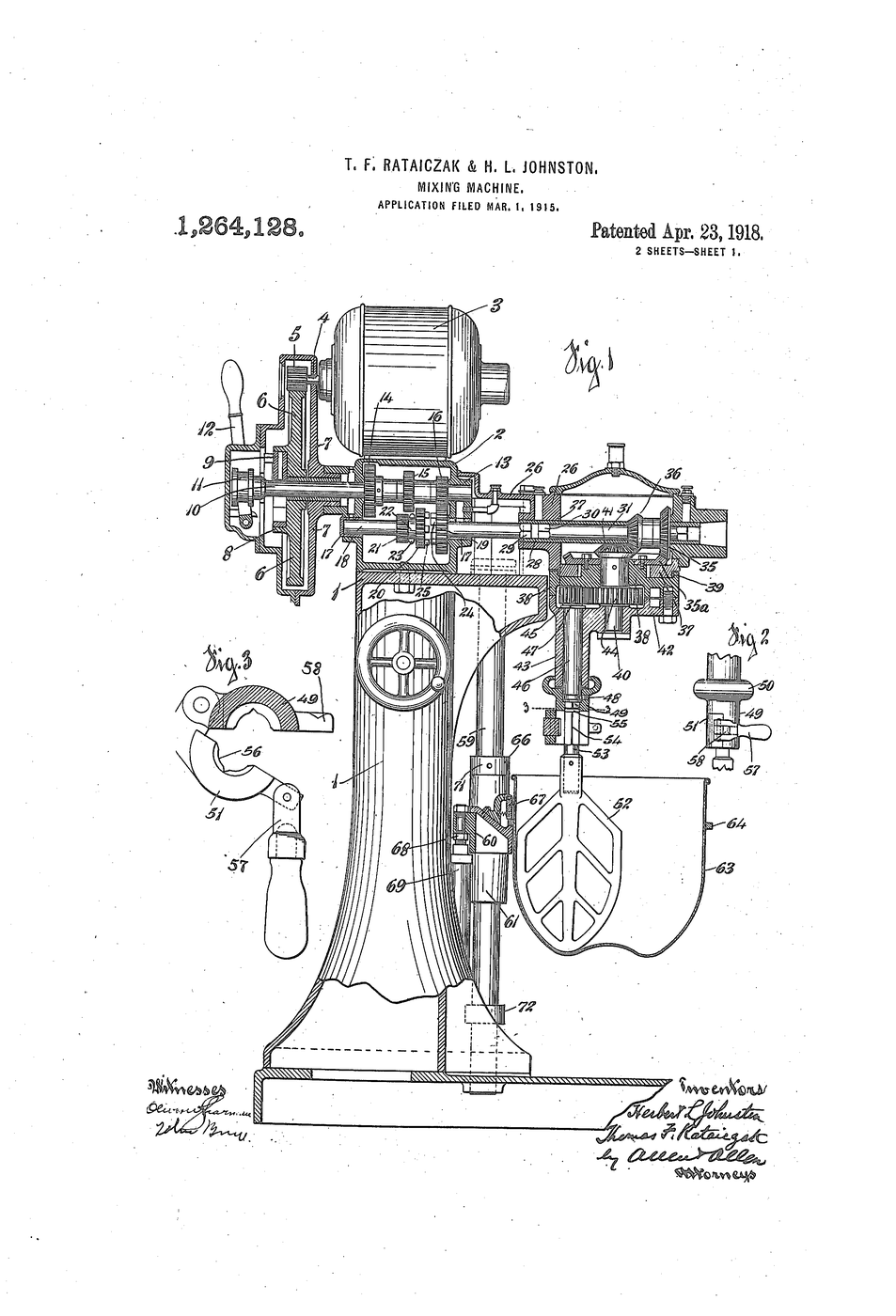
**US 1,264,128**, "Mixing-machine", Johnston and Rataiczak, assigned to Hobart Manufacturing, filed 1. March 1915, granted 23. April 1918. Hobart's big bakery machines came first; the domestic KitchenAid followed in 1919.
**You build the motion, not the appliance**: a planetary gear set with a pen for a blade, drawing its own path on paper, and a coverage measurement against a fixed-axis beater.
Àárín
3 hours
Ìlànà
1
1
Read the gear set
Read the gear set
Count the teeth on the ring and on one planet. Measure the ring's inside diameter and a planet's outside diameter with the caliper; the pitch radii are close to half of each.
Àwọn ohun èlò fún ìgbésẹ̀ yìí:
 Ìdìpọ̀ gíà pílánẹ́tì (irin)1 ìtò
Àwọn irinṣẹ́ tí a nílò:
 Òṣùwọ̀n Kálípà Díjítà Ìnṣì 6
2
2
Mount it over paper
Mount it over paper
Screw the ring gear flat to a plywood board. Tape graph paper under it, centred. Fit one planet so it rolls inside the ring.
Àwọn ohun èlò fún ìgbésẹ̀ yìí:
 Àwo igi tí a lẹ̀ pọ̀1 ẹyọ
 Bébà Àwòrán1 ewé
 Tépù ìbòmọ́lẹ̀1 ìyípo
Àwọn irinṣẹ́ tí a nílò:
 Ayùn Ọwọ́
 Ẹ̀rọ Ìlùkòkò Aláìlókùn
3
3
Give the planet a blade
Give the planet a blade
Glue a short dowel upright in a hole in the planet, four-fifths of the way out from its centre, and tape a marker to it so the tip just touches the paper.
Àwọn ohun èlò fún ìgbésẹ̀ yìí:
 Òpó Igi Dòwẹ̀lì1 ẹyọ
 Ààmì Tí Kò Ní Parẹ́1 ẹyọ
Àwọn irinṣẹ́ tí a nílò:
 Ìbọn ìlẹ̀mọ́ gbígbóná
4
4
Walk it round
Walk it round
Push the planet slowly round the inside of the ring, letting it roll rather than slide, until the drawn pattern closes on itself. Then draw, for comparison, the circle the same blade makes when the planet is held in one place and simply spun.
Àwọn irinṣẹ́ tí a nílò:
 Ìdíwọ̀n
5
5
The same in dough
The same in dough
Optional but convincing: put 200 g of flour and 120 ml of water in a bowl and stir with a fixed-axis beater without moving it. Note the untouched ring of dry flour at the wall - the reason for the carrier.
Àwọn ohun èlò fún ìgbésẹ̀ yìí:
 Ìyẹ̀fun àìlèwú200 g
Àwọn irinṣẹ́ tí a nílò:
 Àwokòtò ńlá dígí
 Òṣùwọ̀n Díjítà Ilé Ìdáná
6
6
Path, coverage and gear ratio
Path, coverage and gear ratio
Ń ṣí ìwé Jupyter…
7
7
History & Context
History & Context
**What the patent specifies:** a mixing machine in which the beater rotates about its own axis while being carried bodily around the bowl. **Modern build (derived):** a planetary gear set and a pen, which draws the path the blade takes.
The 20-gallon Hobart was standard in large bakeries by 1915; the domestic version arrived in 1919 and the layout has not changed since. Its limits: the gearbox must take dough loads, the bowl must match the beater's reach, and a blade that reaches the wall will also scrape a bowl that is out of true.
Àwọn ohun-èlò
7- Àyè
- 1 ẹyọÀyè
- 1 ewéÀyè
- 1 ìyípoÀyè
- 1 ẹyọÀyè
- 1 ẹyọÀyè
- 200 gÀyè
Àwọn irinṣẹ́ tó nílò
7- Àyè
- 1 vendor sell this, none ship to you yetÀyè
- Àyè
Blueprint tó jọra
Àwọn blueprint wọ̀nyí pín ìmọ̀ — ọ̀nà, ohun-èlò tàbí ìlànà
CC0 Àgbègbè Gbogbogbò
Blueprint yìí ti jáde lábẹ́ CC0. O lè ṣe àdàkọ, yí padà, pín, àti lò láìsí ìyọ̀ǹda.
Ṣàtìlẹ́yìn Olùṣẹ́dá nípa rírà àwọn ọjà nipasẹ̀ Blueprint wọn Ẹ̀san Olùṣẹ́dá tí àwọn Olùtajà gbé kalẹ̀, tàbí ṣẹ̀dá àtúnṣe tuntun ti Blueprint yìí kí o sì fi sínú Blueprint rẹ gẹ́gẹ́ bí ìsopọ̀ láti pín owó-wíwọlé.