IṢẸ́ ỌNÀ
ẸWÀ ÀTI ÌLERA
IṢẸ́ ỌWỌ́
ÀṢÀ ÀTI ÌTÀN
ÌṢERÉ
ÀYÍKÁ
OÚNJẸ ÀTI OHUN MÍMU
REVERSE ENGINEERING
SÁYẸ́ǸSÌ
ERÉ ÌDÁRAYÁ
ÌMỌ̀-Ẹ̀RỌ
ÀWỌN OHUN WÍWỌ̀
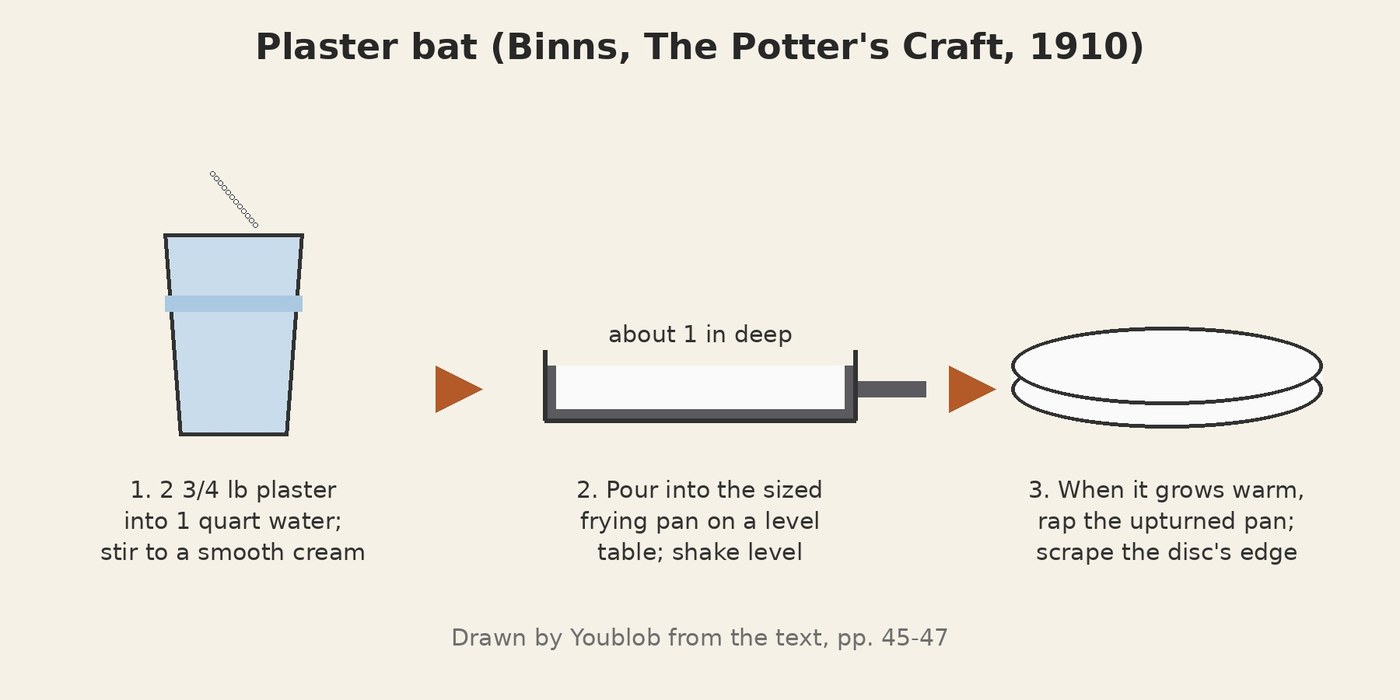


Plaster Bat: a Round Slab Poured in a Frying Pan (Binns, 1910)
A plaster bat is a round slab of plaster that potters use to hold work while making or drying it, and to stiffen wet clay. Binns makes his first one in a frying pan.
Variable: plaster per quart of water. 2 3/4 lb is his standard; less gives a softer bat, more a harder one.
Source: Charles F. Binns, The Potter's Craft (1910), pp. 43-47. Picture: drawn by Youblob from the text.
Olùbẹ̀rẹ̀
Unknown
Ìlànà
1
1
Make the size
Make the size
Put a quart of water in a kettle with a piece of soft soap the size of an egg. Simmer about an hour, until the soap has dissolved, and let it cool. Cold, it should be like maple syrup. The size keeps plaster from sticking to a surface.
Àwọn irinṣẹ́ tí a nílò:
 Omi
 Ohun èlò tí a kò mọ̀
 Ìkòkò olódi gíga
2
2
Size the frying pan
Size the frying pan
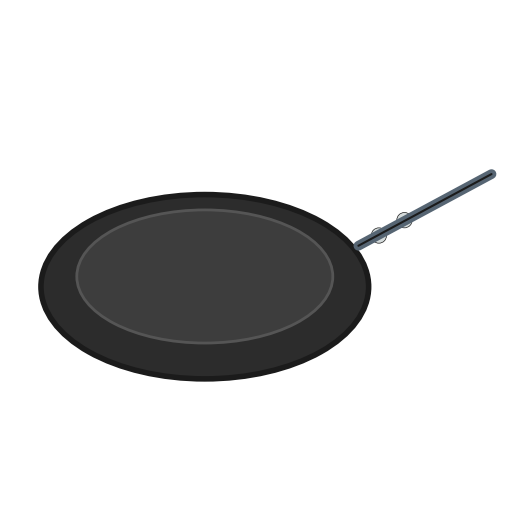
Brush size onto the inside of the pan, wipe it off with a sponge, then wash with a second sponge and clean water. On metal one coat often does; repeat until the surface rejects water like grease. On the last coat don't wash: polish with the size sponge. Set the pan on a level table.
Àwọn irinṣẹ́ tí a nílò:
 Àwo ìdín irin kábọ́ọ̀nù
 Àwọn ìfọ̀wọ́ kékeré
 Kànìnkànìn
3
3
Mix the plaster
Mix the plaster
Take as much water as fills the pan about 1 in deep; Binns supposes a quart. Weigh 2 3/4 lb of dry potters' plaster for each quart and let it trickle through your fingers into the water in a jug. After about two minutes, when it has soaked up all the water it will take, stir with your hand to a smooth cream, breaking all lumps and removing air bubbles.
Àwọn ohun èlò fún ìgbésẹ̀ yìí:
 Pilasita ti Paris2.75 lbsOmi1 quart
Àwọn irinṣẹ́ tí a nílò:
 Ìgò ìwọ̀n
 Òṣùwọ̀n
4
4
Pour at the right moment
Pour at the right moment
Keep stirring gently until the mix thickens and leaves a white coating on your hand that won't shake off. Then pour it into the pan and shake gently to level it. Poured right, it sets smooth and mat, like sugar icing. Poured too late, it is stiff and hard to level; too soon, it curdles with water on top. Wash the jug at once in a tub, never down a sink: plaster chokes the drain.
Àwọn irinṣẹ́ tí a nílò:
Àwo ìdín irin kábọ́ọ̀nù Àgbá
5
5
Turn out and scrape the bat
Turn out and scrape the bat
After about ten minutes the bat grows warm: setting is complete. Hold the pan upside down by the handle and rap its edge smartly on a brick or stone. The disc falls out. Scrape its edge and set it aside. Binns suggests making half a dozen for practice.
Àwọn irinṣẹ́ tí a nílò:
Àwo ìdín irin kábọ́ọ̀nù Ohun èlò ìhá irin
Àwọn Ohun Èlò Ìtọ́nisọ́nà Tí A So Pọ̀
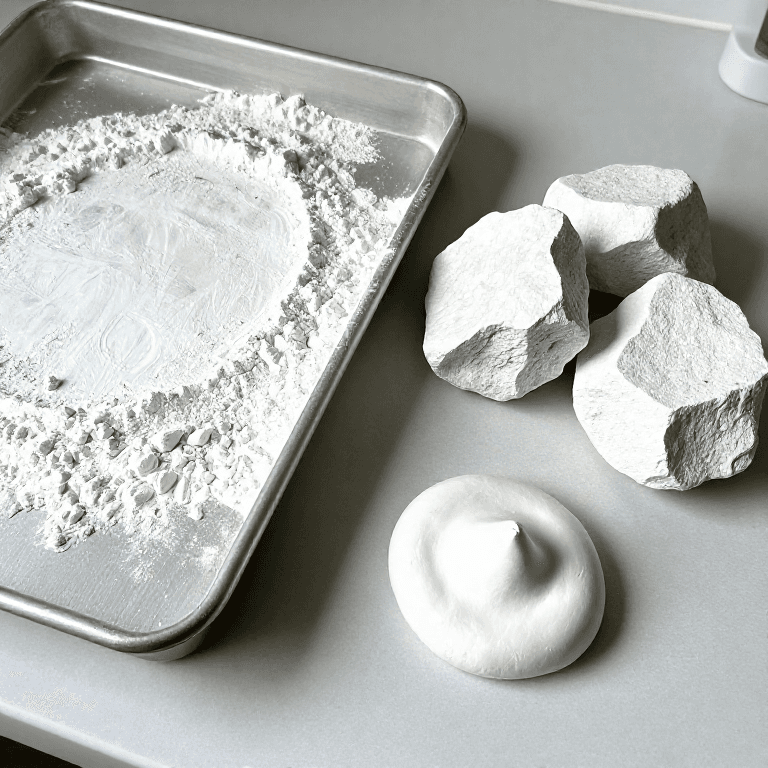

Ìtọ́nisọ́nà yìí ń ṣe
CC0 Àgbègbè Gbogbogbò
Blueprint yìí ti jáde lábẹ́ CC0. O lè ṣe àdàkọ, yí padà, pín, àti lò láìsí ìyọ̀ǹda.
Ṣàtìlẹ́yìn Olùṣẹ́dá nípa rírà àwọn ọjà nipasẹ̀ Blueprint wọn Ẹ̀san Olùṣẹ́dá tí àwọn Olùtajà gbé kalẹ̀, tàbí ṣẹ̀dá àtúnṣe tuntun ti Blueprint yìí kí o sì fi sínú Blueprint rẹ gẹ́gẹ́ bí ìsopọ̀ láti pín owó-wíwọlé.