IṢẸ́ ỌNÀ
ẸWÀ ÀTI ÌLERA
IṢẸ́ ỌWỌ́
ÀṢÀ ÀTI ÌTÀN
ÌṢERÉ
ÀYÍKÁ
OÚNJẸ ÀTI OHUN MÍMU
REVERSE ENGINEERING
SÁYẸ́ǸSÌ
ERÉ ÌDÁRAYÁ
ÌMỌ̀-Ẹ̀RỌ
ÀWỌN OHUN WÍWỌ̀
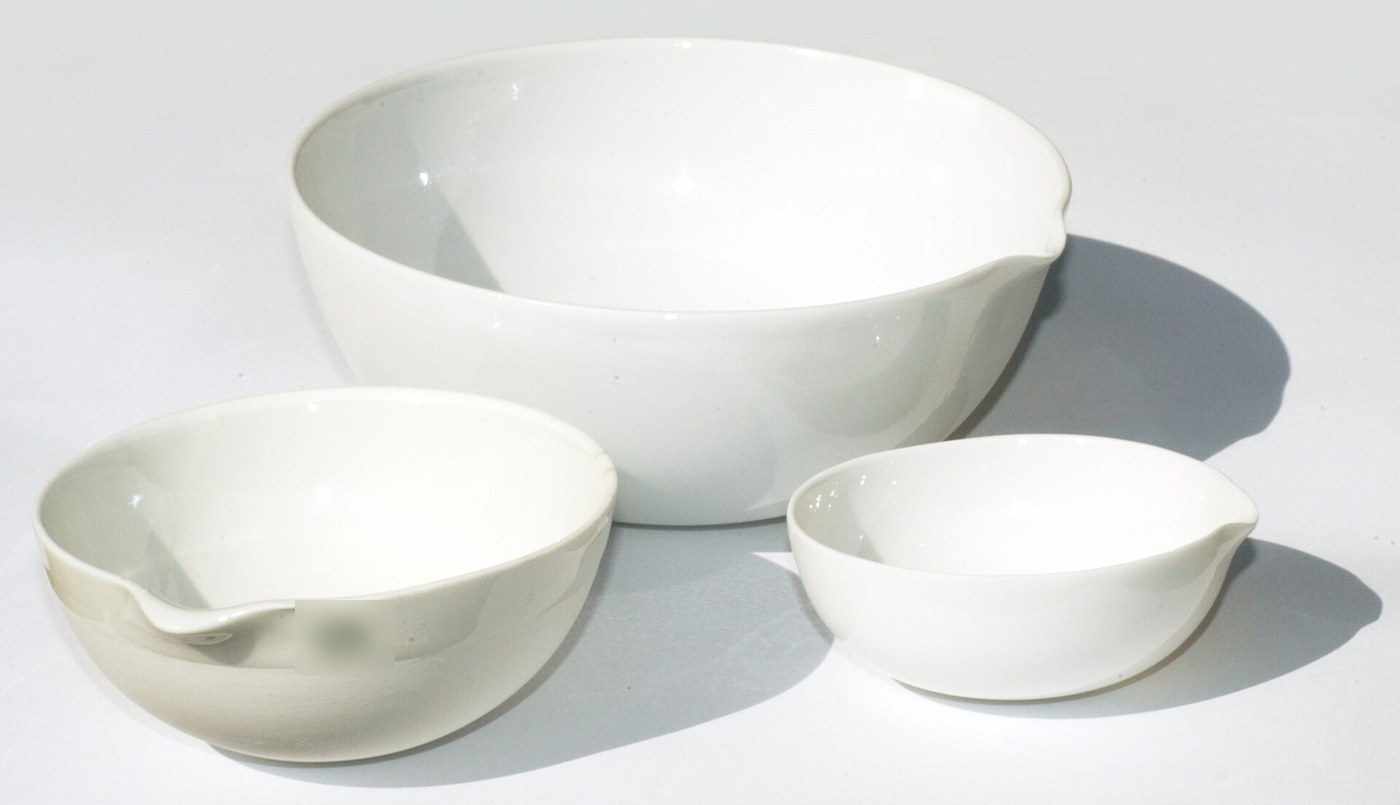

Porcelain Labware: Evaporating Dishes, Crucibles, Funnels and Streak Plates
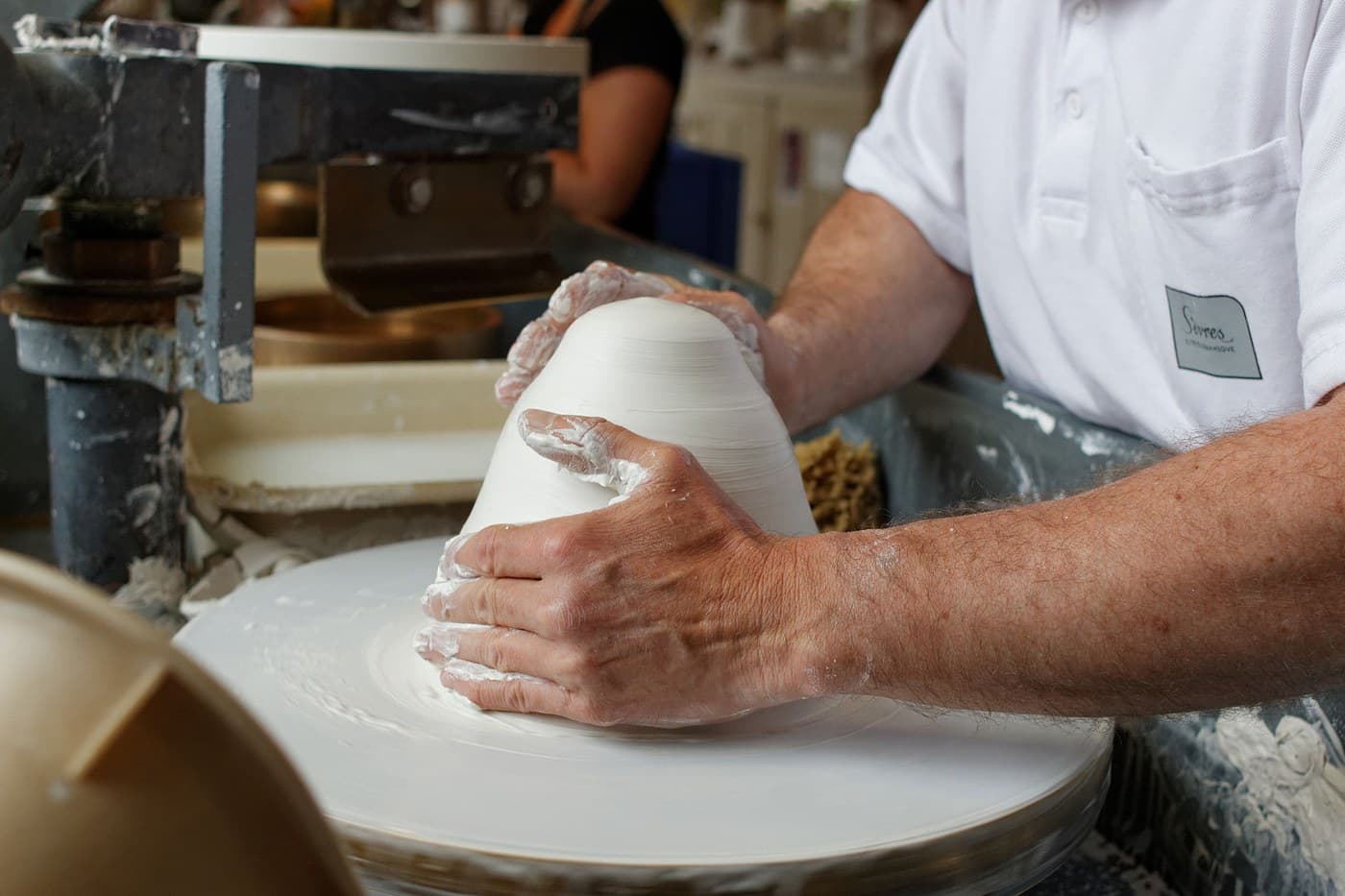
Hard porcelain stands strong heat and most chemicals, so the laboratory's dishes, crucibles and filter funnels are made of it; left unglazed, its white biscuit is the streak plate for testing minerals. Form the pieces, give them a light first firing, dip them in ground-felspar glaze, and fire them hard in saggers, as Andrew Ure (1839) describes for Sèvres.
The picture: porcelain evaporating dishes in three sizes, glazed, with pouring lips.
Ilọsíwájú
Weeks with drying and two firings
Ìlànà
1
1
Form the pieces
Form the pieces
Throw shallow round dishes with a lip and small lidded crucibles on the wheel. For a Büchner funnel throw a cylinder with a flat floor, pierce the floor with many small holes and add a stem. Roll a slab and cut it into small tiles for streak plates.
Àwọn ohun èlò fún ìgbésẹ̀ yìí:
 Amọ̀ porcelain5 kg
Àwọn irinṣẹ́ tí a nílò:
 Kẹ̀kẹ́ oníṣẹ́ ìkòkò
 Ọ̀pá ìtẹ̀ ìyẹ̀fun
 Ìdìpọ̀ ohun èlò amọ̀
 Ìdíwọ̀n
2
2
Dry very slowly
Dry very slowly
Ure: dry them very slowly; a little hurry spoils them.
3
3
Light first firing
Light first firing
Fire them gently so they keep their shape but become strong enough to handle and be dipped in water.
Àwọn ohun èlò fún ìgbésẹ̀ yìí:
 Igi Ìdáná1 as required
Àwọn irinṣẹ́ tí a nílò:
 Ìléru Ìsun
 Ìbọ̀wọ́ Tí Ń Fara Da Ooru
4
4
Felspar glaze
Felspar glaze
Grind felspar very fine, stir it with water and a little vinegar to a thin pap. Dip each dish, crucible and funnel for an instant; the porous body draws the glaze on. Wipe the glaze off the feet. Leave the streak-plate tiles unglazed.
Àwọn ohun èlò fún ìgbésẹ̀ yìí:
 Ìdì feldspar0.5 kg
 Omi2 lítà
 Ọtí kíkan0.05 lítà
Àwọn irinṣẹ́ tí a nílò:
 Ọmọ ọlọ
 Ajọ Ojú Kékeré
 Ọpọ́n igi ńlá
 Ìbòjú Eruku
5
5
Set in saggers
Set in saggers
Set every piece in its own sagger on a flat, sand-dusted base so it cannot stick or sag out of shape; small pieces may share a base if they do not touch.
Àwọn ohun èlò fún ìgbésẹ̀ yìí:
 Iyanrìn Kékeré1 kg
Àwọn irinṣẹ́ tí a nílò:
 Àpótí amọ̀-iná
6
6
The hard firing
The hard firing
Raise the fire slowly for about 15 hours to a cherry red, then fire hard until the kiln glows white inside, drawing trial pieces to judge when the glaze is smooth. Cool slowly over days.
Àwọn ohun èlò fún ìgbésẹ̀ yìí:
Igi Ìdáná1 as requiredÀwọn irinṣẹ́ tí a nílò:
Ìléru ÌsunÌbọ̀wọ́ Tí Ń Fara Da Ooru7
7
Ure's firing, hour by hour
Ure's firing, hour by hour
Ń ṣí ìwé Jupyter…
8
8
Limits
Limits
The firings, glaze and saggers are Ure's account of Sèvres; the forms of the four wares are ours. A full porcelain firing needs a kiln that reaches white heat.
Àwọn ohun-èlò
6- 5 kgÀyè
- 1 as requiredÀyè
- 0.5 kgÀyè
- 2 lítàÀyè
- 0.05 lítàÀyè
- 1 kgÀyè
Àwọn irinṣẹ́ tó nílò
11- Àyè
- Àyè
- Àyè
- Àyè
Ìtọ́nisọ́nà yìí ń ṣe
Blueprint tó jọra
Àwọn blueprint wọ̀nyí pín ìmọ̀ — ọ̀nà, ohun-èlò tàbí ìlànà
CC0 Àgbègbè Gbogbogbò
Blueprint yìí ti jáde lábẹ́ CC0. O lè ṣe àdàkọ, yí padà, pín, àti lò láìsí ìyọ̀ǹda.
Ṣàtìlẹ́yìn Olùṣẹ́dá nípa rírà àwọn ọjà nipasẹ̀ Blueprint wọn Ẹ̀san Olùṣẹ́dá tí àwọn Olùtajà gbé kalẹ̀, tàbí ṣẹ̀dá àtúnṣe tuntun ti Blueprint yìí kí o sì fi sínú Blueprint rẹ gẹ́gẹ́ bí ìsopọ̀ láti pín owó-wíwọlé.