
ART
BEAUTY & WELLNESS
CRAFT
CULTURE & HISTORY
ENTERTAINMENT
ENVIRONMENT
FOOD & DRINKS
GREEN FUTURE
REVERSE ENGINEERING
SCIENCES
SPORTS
TECHNOLOGY
WEARABLES
Building a Bark Canoe — Birch Bark Frame Watercraft
Woody

Created by

Woody

25. May 2026NO
19
0
0
0
0

Building a Bark Canoe — Birch Bark Frame Watercraft

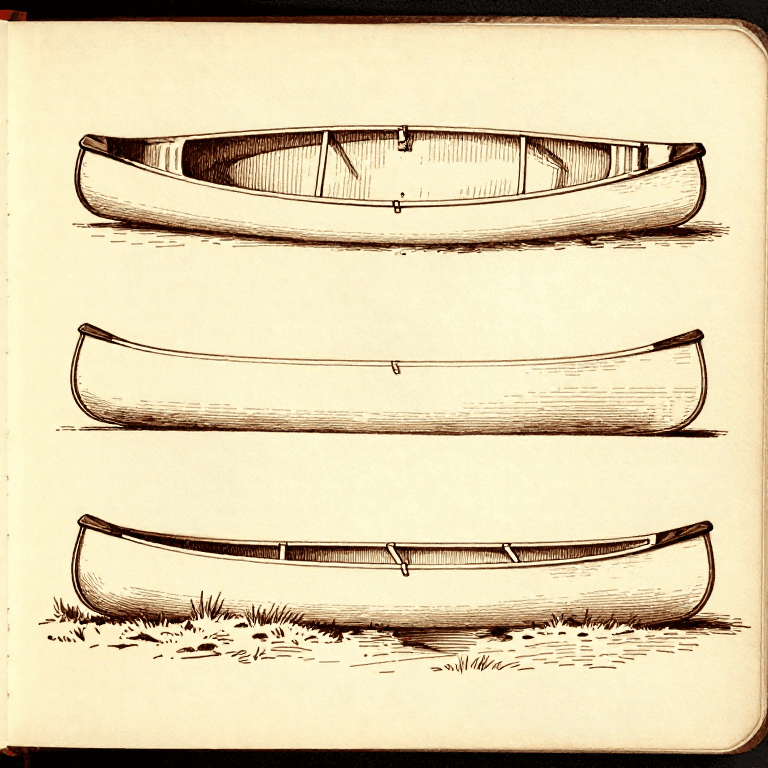
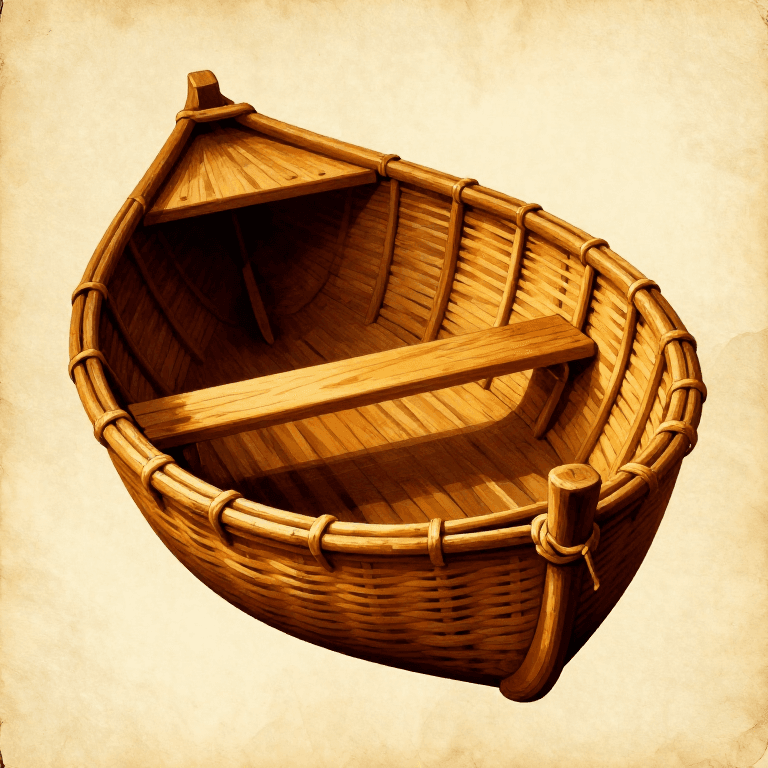
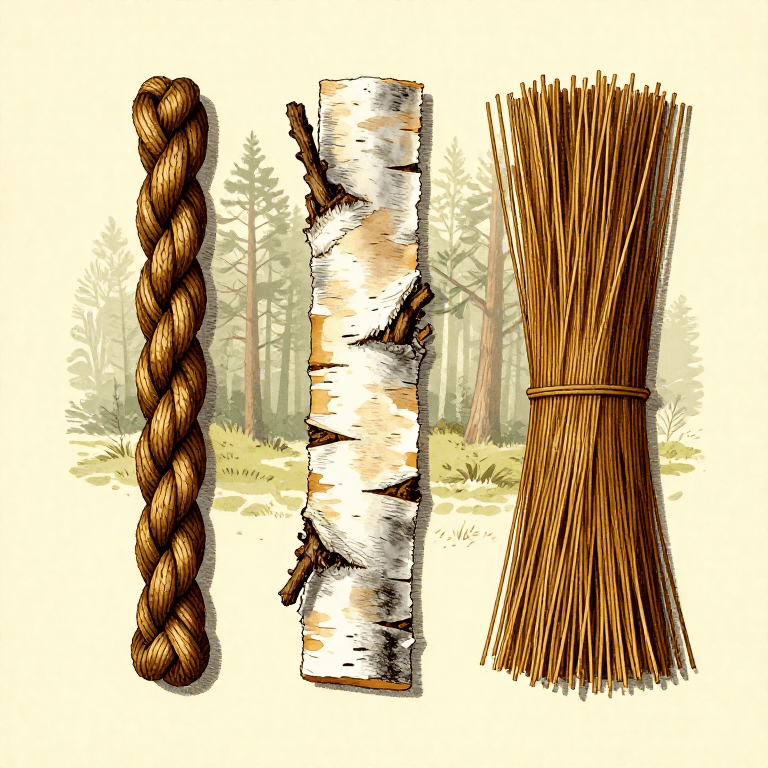
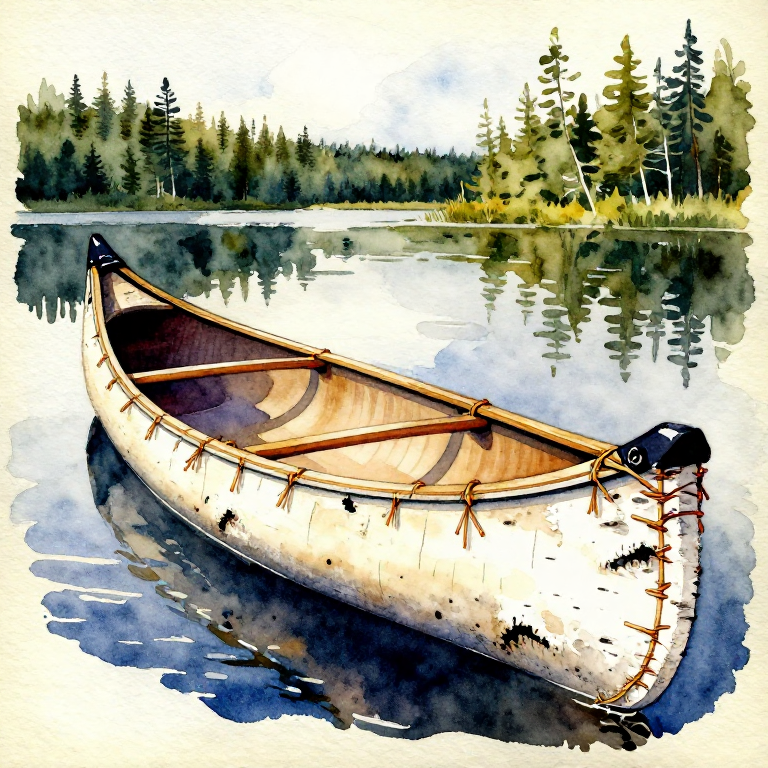
The birch bark canoe is one of the most sophisticated watercraft developed by prehistoric and indigenous peoples, combining a lightweight frame of steam-bent ribs with a continuous birch bark skin sewn and sealed with spruce root and pine pitch. Archaeological evidence of bark canoes dates to at least 2,000 years ago in North America, though the technology is almost certainly much older — birch bark decomposes quickly, leaving little trace in the archaeological record. The design reached its highest expression among the Algonquin, Ojibwe, and other northern woodland peoples, who built vessels ranging from 3-metre solo hunting canoes to 12-metre freight canoes capable of carrying 2,500 kg. The principle is elegant: a continuous envelope of waterproof birch bark forms the hull, supported internally by a skeleton of thin cedar or spruce ribs bent to shape and held in place by inwale and outwale gunnel rails. The bark is sewn together at the seams with split spruce root, and all seams are waterproofed with heated pine pitch mixed with animal fat. This blueprint teaches a small, single-person canoe approximately 3 metres long using only materials and tools available to prehistoric builders.
Advanced
40-60 hours

Instructions

1

Select and Harvest Birch Bark

Identify a mature white birch (Betula papyrifera) or silver birch (Betula pendula) with a trunk diameter of at least 30 cm and smooth, unblemished bark free of large knots or cankers. Harvest bark in late spring or early summer when the sap is running — the bark peels cleanly from the cambium layer during this period. Score a vertical line the full length needed (approximately 3.5 metres for a 3-metre canoe, allowing overlap) using a bone or flint knife, cutting only through the outer bark and never into the cambium, which would kill the tree. Peel the bark away carefully in one continuous sheet, working fingers and a flat bone spatula under the bark to separate it. You need one large sheet approximately 3.5 metres long and 1.2 metres wide, or multiple smaller sheets that will be sewn together. Roll the bark immediately with the inner (white) surface facing outward — this prevents it from curling into an unworkable tube.

Materials for this step:

Birch Bark SheetsBirch Bark Sheets4 pieces

Tools needed:

Flint KnifeFlint Knife
2

Build a Flat Building Bed and Stake the Outline

Clear a level area of ground approximately 4 metres long and 1.5 metres wide. Drive wooden stakes into the ground in the outline shape of the canoe — a long, narrow oval approximately 3 metres long and 70 cm wide at the beam (widest point), tapering symmetrically to pointed bow and stern. Space the stakes approximately 15 cm apart. These stakes will hold the bark in shape while the internal frame is installed. The building bed must be dead level — if one side is higher, the canoe will be asymmetrical and paddle with a bias to one side.

Materials for this step:

Hardwood SaplingHardwood Sapling6 pieces

Tools needed:

HammerstoneHammerstone
3

Lay the Bark Sheet Over the Building Bed

Unroll the birch bark sheet and lay it flat over the staked outline, inner (cambium) side facing up — this becomes the outside of the canoe because the inner bark surface is smoother and more waterproof. Weight the bark down with heavy stones along the centreline. The bark must extend at least 30 cm beyond the stake outline on all sides to provide material for the sides (topsides) of the hull. If using multiple bark panels, overlap them by at least 10 cm and mark where they will be sewn.
4

Raise the Bark Sides and Secure to Stakes

Carefully fold the bark upward along the stake outline, creating vertical sides approximately 30 to 35 cm tall. The bark will resist bending and may crack at tight curves — use hot water poured along the fold line to soften it. At the bow and stern, the bark must be gathered into overlapping folds or gores (pie-shaped cuts) to conform to the pointed ends. Clamp the raised bark to the outside of the stakes using lashing of split spruce root or rawhide strips tied to temporary crossbars spanning the gunnel line. The bark should now form a rough canoe shape held in place by the stakes.

Materials for this step:

CordageCordage10 metre
5

Prepare the Gunnel Rails (Inwales and Outwales)

Split two straight-grained cedar, spruce, or ash poles, each approximately 3.2 metres long, into halves to create four rails — two inwales (inside the bark) and two outwales (outside the bark), each approximately 3 cm wide and 2 cm thick. The rails must be straight and free of knots. Shave them smooth with a flint scraper or knife. These rails clamp the top edge of the bark between them, defining the sheerline (top profile) of the canoe and providing the primary longitudinal strength. Soak the rails in water overnight if they need to follow any curve.

Materials for this step:

Hardwood SaplingHardwood Sapling4 pieces

Tools needed:

Flint KnifeFlint Knife
6

Lash the Gunnels in Place

Sandwich the top edge of the bark between the inwale and outwale on each side. Bore holes through the bark and both rails at 10 cm intervals using a bone awl, then lash them together tightly with split spruce root or sinew thread, wrapping in a spiral pattern. Begin at the centre (beam) and work toward both ends simultaneously to maintain symmetry. Pull each lashing tight — any slack allows water to enter and weakens the gunnel joint. The bark should be clamped firmly with no gaps between the rails.

Materials for this step:

Sinew ThreadSinew Thread15 metre

Tools needed:

Bone AwlBone Awl
7

Sew the Bow and Stern Seams

At the bow and stern, the gathered bark folds must be sewn together to form the closed, pointed ends. Overlap the bark panels by at least 5 cm, bore holes every 1 cm with a bone awl, and sew using a tight whip stitch with split spruce root or sinew. The stitching must be close and regular — gaps become leaks. Traditional builders used a double row of stitching for strength at the ends, where water pressure is highest when the canoe moves forward. Leave no raw bark edges exposed — fold them under and stitch through the fold.

Materials for this step:

Sinew ThreadSinew Thread10 metre

Tools needed:

Bone AwlBone Awl
8

Steam-Bend and Install the Ribs

Split 15 to 20 rib blanks from green cedar, ash, or willow — each approximately 60 cm long, 4 cm wide, and 8 mm thick. Soak the ribs in water, then heat them over a fire or with hot stones until pliable (approximately 15 to 20 minutes of sustained heat). Bend each rib into a U-shape matching the cross-sectional curve of the hull bottom. Insert the ribs between the inwales, pressing them down against the bark floor of the hull. Space the ribs approximately 10 to 15 cm apart. The ribs must be tight enough to press the bark outward against the stakes, giving the hull its rigid shape. The ends of each rib tuck under the inwale and are held in place by friction and the gunnel lashing.

Materials for this step:

Hardwood SaplingHardwood Sapling10 pieces
9

Install Longitudinal Sheathing Strips

Lay thin strips of split cedar or spruce (approximately 5 cm wide and 3 mm thick) lengthwise along the inside of the hull floor between the ribs and the bark. These sheathing strips distribute the load of cargo and passengers across the bark skin, preventing punctures from concentrated pressure. Lay 5 to 8 strips side by side covering the entire floor area. They do not need to be fastened — the ribs hold them in compression against the bark. The sheathing also protects the bark from abrasion when the canoe is dragged over shallow gravel.

Materials for this step:

Hardwood SaplingHardwood Sapling5 pieces

Tools needed:

Flint KnifeFlint Knife
10

Install Thwarts for Structural Bracing

Fit 2 to 3 thwarts (cross-braces) between the gunnels, spaced evenly along the length. Each thwart is a hardwood bar approximately 60 to 70 cm long, shaped to fit snugly between the inwales. Notch the ends of each thwart to seat over the inwales, and lash them in place with sinew. The centre thwart doubles as the paddler's seat — position it slightly aft of the midpoint for proper trim. Thwarts prevent the gunnels from spreading apart under the sideways pressure of the ribs and keep the canoe's beam consistent along its length.

Materials for this step:

Hardwood SaplingHardwood Sapling3 pieces
Sinew ThreadSinew Thread5 metre

Tools needed:

Flint KnifeFlint Knife
11

Seal All Seams with Pine Pitch

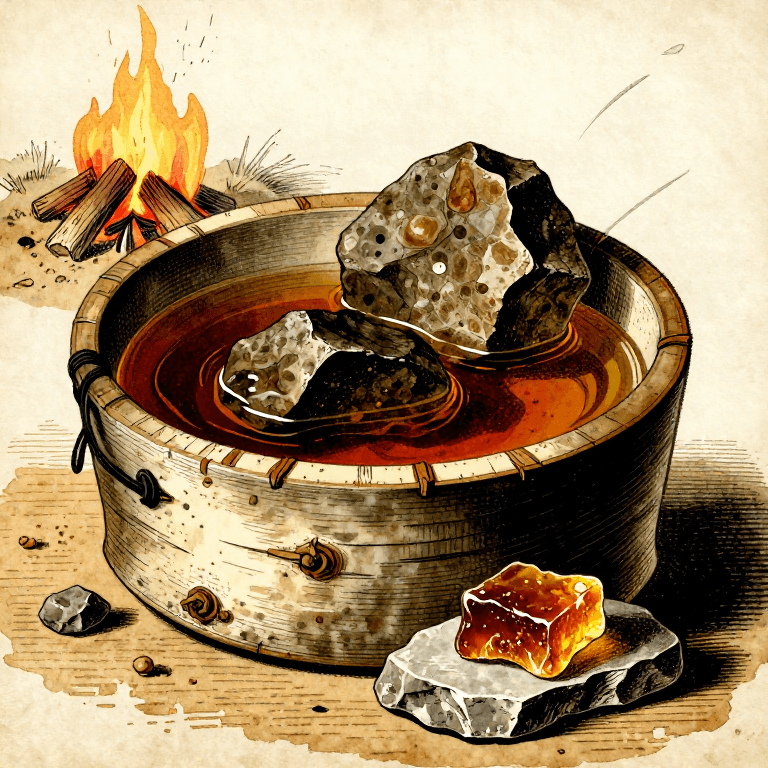
Heat pine resin in a bark container using hot stones until it liquefies (approximately 150 to 180 degrees Celsius). Mix the hot resin with powdered charcoal at a ratio of approximately 3 parts resin to 1 part charcoal — the charcoal adds body, prevents cracking, and makes the sealant more flexible. Some builders also add a small amount of rendered animal fat (about 10 percent by volume) to improve flexibility in cold water. Apply the hot pitch mixture to every seam, stitch line, and bark overlap using a flat stick, working the sealant into every gap and pinhole. Apply at least two coats, allowing the first to cool before adding the second. The pitch must cover every stitch hole completely — a single uncovered pinhole becomes a persistent leak.

Materials for this step:

Pine ResinPine Resin500 g
CharcoalCharcoal100 g
12

Remove Stakes and Launch Test

Carefully remove the building stakes and lift the canoe free from the building bed. The finished canoe should weigh approximately 15 to 25 kg for a 3-metre vessel. Carry it to calm, shallow water and set it afloat gently. Check for leaks — any water seeping through indicates missed pinholes or insufficient pitch coverage. Mark leak locations, dry the bark, and apply additional hot pitch. The canoe should float level with approximately 10 to 15 cm of freeboard (distance from waterline to gunnel) when empty. Board carefully by stepping in at the centreline and lowering yourself onto the centre thwart. A birch bark canoe is inherently stable but responds to sudden weight shifts — always move deliberately and keep your centre of gravity low.

Materials

6

Tools Required

3

Connected Blueprint Materials

CC0 Public Domain

This blueprint is released under CC0. You are free to copy, modify, distribute, and use this work for any purpose, without asking permission.

Support the Maker by purchasing products through their Blueprint where they earn a Maker Commission set by Vendors, or create a new iteration of this Blueprint and include it as a connection in your own Blueprint to share revenue.

Discussion

(0)

Log in to join the discussion

Loading comments...