IṢẸ́ ỌNÀ
ẸWÀ ÀTI ÌLERA
IṢẸ́ ỌWỌ́
ÀṢÀ ÀTI ÌTÀN
ÌṢERÉ
ÀYÍKÁ
OÚNJẸ ÀTI OHUN MÍMU
REVERSE ENGINEERING
SÁYẸ́ǸSÌ
ERÉ ÌDÁRAYÁ
ÌMỌ̀-Ẹ̀RỌ
ÀWỌN OHUN WÍWỌ̀
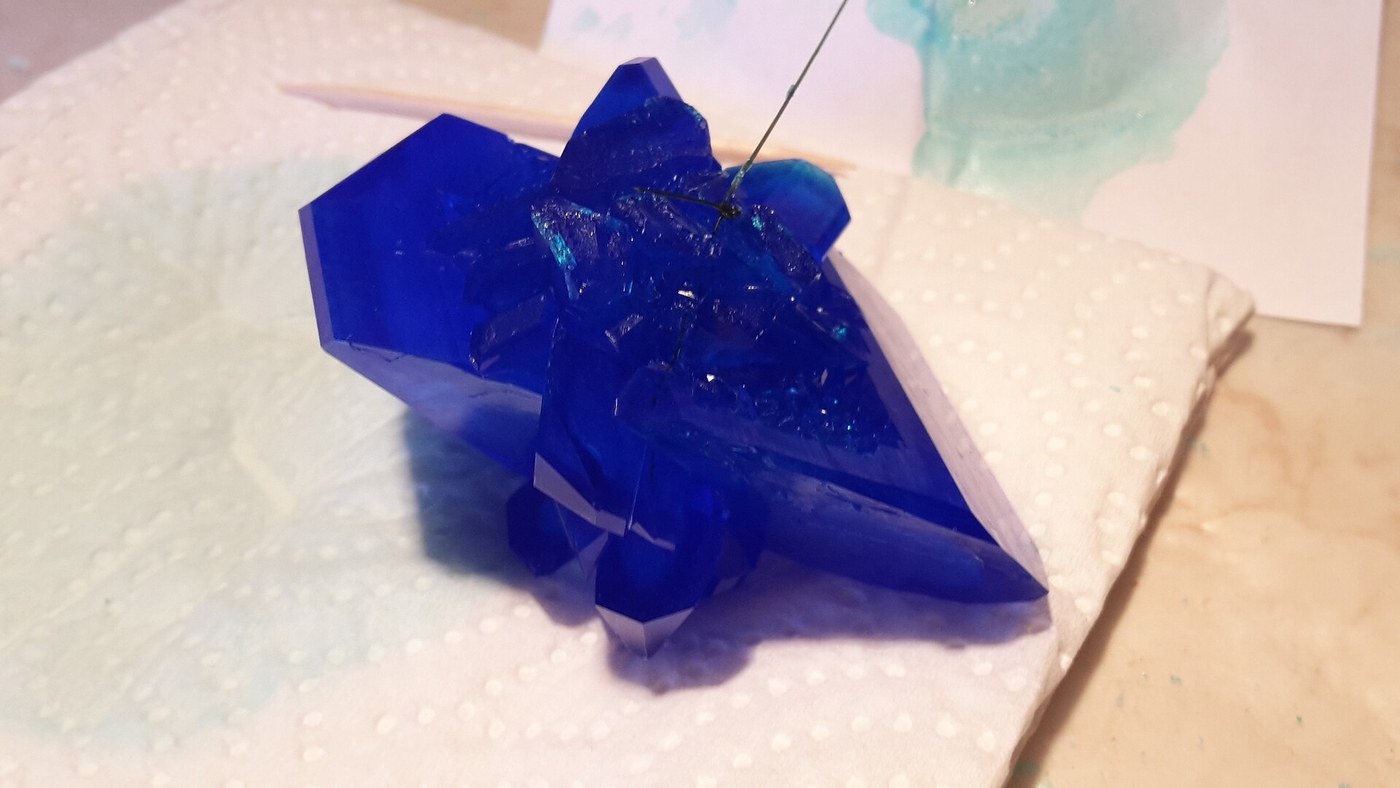


Purified Copper Sulphate: Iron Thrown Down by Fresh Copper Carbonate, Then Recrystallised
Ordinary copper sulphate usually carries a little iron sulphate. The 1907 US Dispensatory gives the cure: add freshly precipitated copper carbonate, which throws the iron down as carbonate, then filter and crystallise. The pharmacopoeia salt had to be at least 99.5 % pure copper sulphate. Making the copper carbonate from part of the same solution, and drying below 30 °C, are our choices. The source gives no quantities, so none are given here.
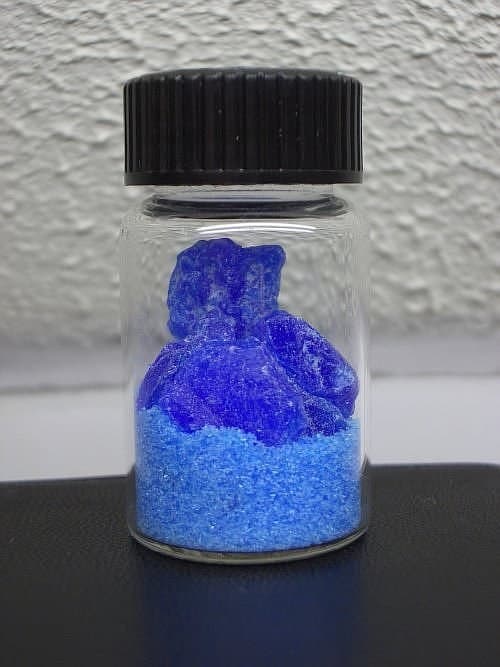
The picture: a copper sulphate crystal (Crystal Titan, Wikimedia Commons, CC BY-SA 4.0).
Àárín
Two to three days
Ìlànà
1
1
Dissolve in boiling water
Dissolve in boiling water
Dissolve the copper sulphate in boiling distilled water: it takes about half its weight of boiling water (and about 2.2 times its weight of water at 25 °C).
Àwọn ohun èlò fún ìgbésẹ̀ yìí:
 Copper sulfate pentahydrate (CuSO4·5H2O)1 as required
Àwọn irinṣẹ́ tí a nílò:
 Omi Àyọ́
 Ago Bórósílíkéètì
 Ọ̀pá Ìrúwé Gílásì
 Pátákó Gbígbóná
 Gílásì Ààbò Fún Ìfọ́n Kẹ́míkà
 Ìbọ̀wọ́ rọ́bà
2
2
Make fresh copper carbonate
Make fresh copper carbonate
Take a small part of the solution and stir in sodium carbonate solution: alkaline carbonates decompose copper sulphate and copper carbonate falls. Filter it and wash it with distilled water. Use it fresh.
Àwọn irinṣẹ́ tí a nílò:
 Kábónéètì Sódíọ̀mù (eérú sódà)Omi Àyọ́Ago BórósílíkéètìỌ̀pá Ìrúwé Gílásì
 Kọ́nfù Gílásì Onípọ̀n
 Bébà Ìsẹ́Gílásì Ààbò Fún Ìfọ́n Kẹ́míkàÌbọ̀wọ́ rọ́bà
3
3
Throw down the iron and filter
Throw down the iron and filter
Stir the fresh copper carbonate into the hot solution, in excess. The iron is deposited as carbonate. Filter the hot solution clear.
Àwọn irinṣẹ́ tí a nílò:
Ago BórósílíkéètìỌ̀pá Ìrúwé GílásìPátákó GbígbónáKọ́nfù Gílásì Onípọ̀nBébà Ìsẹ́Gílásì Ààbò Fún Ìfọ́n Kẹ́míkàÌbọ̀wọ́ rọ́bà4
4
Crystallise and dry
Crystallise and dry
Evaporate the filtrate in a dish until crystals begin to form, then let it cool. Large, transparent, deep blue crystals grow. Drain them and dry them in the air below 30 °C: at 30 °C the salt starts to lose its water of crystallisation. It slowly loses water in dry air too, so keep it in stoppered bottles.
Àwọn irinṣẹ́ tí a nílò:
 Àwo ÌgbẹPátákó Gbígbóná
 Àwọn ìgò dígí pẹ̀lú ìdéríÌbọ̀wọ́ rọ́bà
5
5
Test for iron
Test for iron
Dissolve a crystal in water in a test tube and add ammonia water drop by drop. A pale blue precipitate forms and then dissolves in more ammonia to a deep azure-blue solution. Any iron is thrown down with it and does not dissolve again in the excess, so the solution should stay clear. A salt that turns green on the surface in air still contains iron.
Àwọn irinṣẹ́ tí a nílò:
 Àwọn tube ìdánwòOmi Àyọ́
 Omi amonia - fífẹ́lẹ̀Gílásì Ààbò Fún Ìfọ́n Kẹ́míkàÌbọ̀wọ́ rọ́bà
Àwọn ohun-èlò
1- 1 as requiredÀyè
Àwọn irinṣẹ́ tó nílò
13- Àyè
- Àyè
- Àyè
Ìtọ́nisọ́nà yìí ń ṣe

Blueprint tó jọra
Àwọn blueprint wọ̀nyí pín ìmọ̀ — ọ̀nà, ohun-èlò tàbí ìlànà
CC0 Àgbègbè Gbogbogbò
Blueprint yìí ti jáde lábẹ́ CC0. O lè ṣe àdàkọ, yí padà, pín, àti lò láìsí ìyọ̀ǹda.
Ṣàtìlẹ́yìn Olùṣẹ́dá nípa rírà àwọn ọjà nipasẹ̀ Blueprint wọn Ẹ̀san Olùṣẹ́dá tí àwọn Olùtajà gbé kalẹ̀, tàbí ṣẹ̀dá àtúnṣe tuntun ti Blueprint yìí kí o sì fi sínú Blueprint rẹ gẹ́gẹ́ bí ìsopọ̀ láti pín owó-wíwọlé.