IṢẸ́ ỌNÀ
ẸWÀ ÀTI ÌLERA
IṢẸ́ ỌWỌ́
ÀṢÀ ÀTI ÌTÀN
ÌṢERÉ
ÀYÍKÁ
OÚNJẸ ÀTI OHUN MÍMU
REVERSE ENGINEERING
SÁYẸ́ǸSÌ
ERÉ ÌDÁRAYÁ
ÌMỌ̀-Ẹ̀RỌ
ÀWỌN OHUN WÍWỌ̀
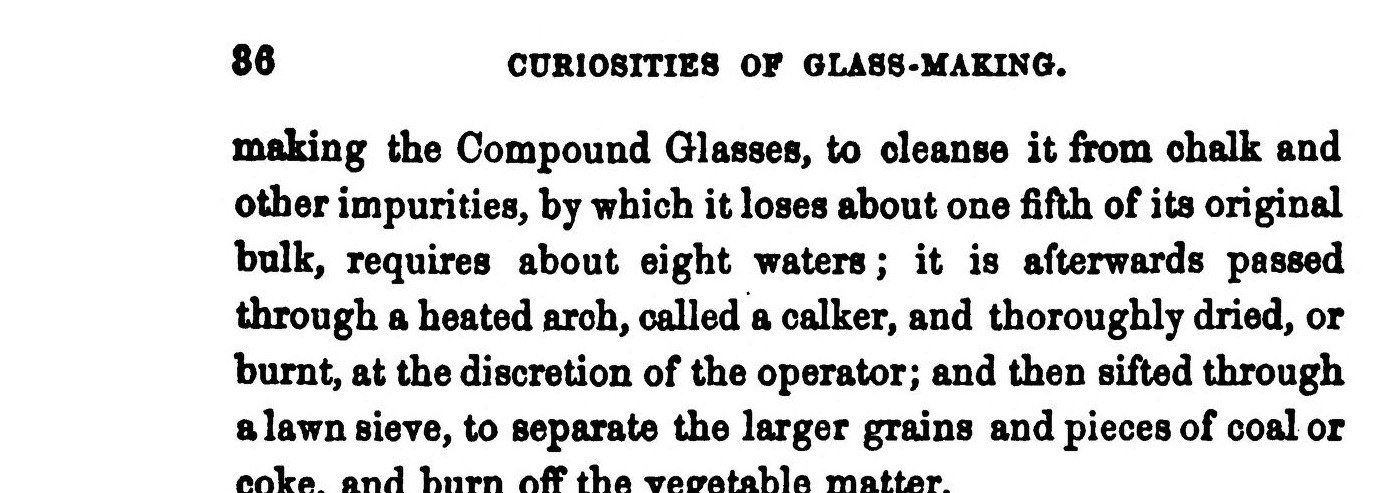


Quartz Sand: Washed and Burnt Glass Sand (Pellatt, 1849)
How an English flint-glass house made its sand fit for glass in 1849: Isle of Wight sand, low in iron, washed by hand in about eight waters to take out chalk and other impurities, dried or burnt in a heated arch called a calker, then sifted through a lawn sieve.
The washing takes away about one fifth of the sand's bulk.
Source: Apsley Pellatt, Curiosities of Glass Making (1849), pp. 35-36. Picture: the book's text.
Olùbẹ̀rẹ̀
Unknown
Ìlànà
1
1
Wash the sand
Wash the sand
Wash Isle of Wight sand by hand in about eight waters to cleanse it from chalk and other impurities. It loses about one fifth of its original bulk.
Àwọn ohun èlò fún ìgbésẹ̀ yìí:
 Iyanrìn1 Isle of Wight sand
Àwọn irinṣẹ́ tí a nílò:
 Omi
 Àwokòtò igi
2
2
Dry or burn it in the calker
Dry or burn it in the calker
Pass the washed sand through a heated arch called a calker and dry it thoroughly, or burn it, at the operator's discretion.
Àwọn irinṣẹ́ tí a nílò:
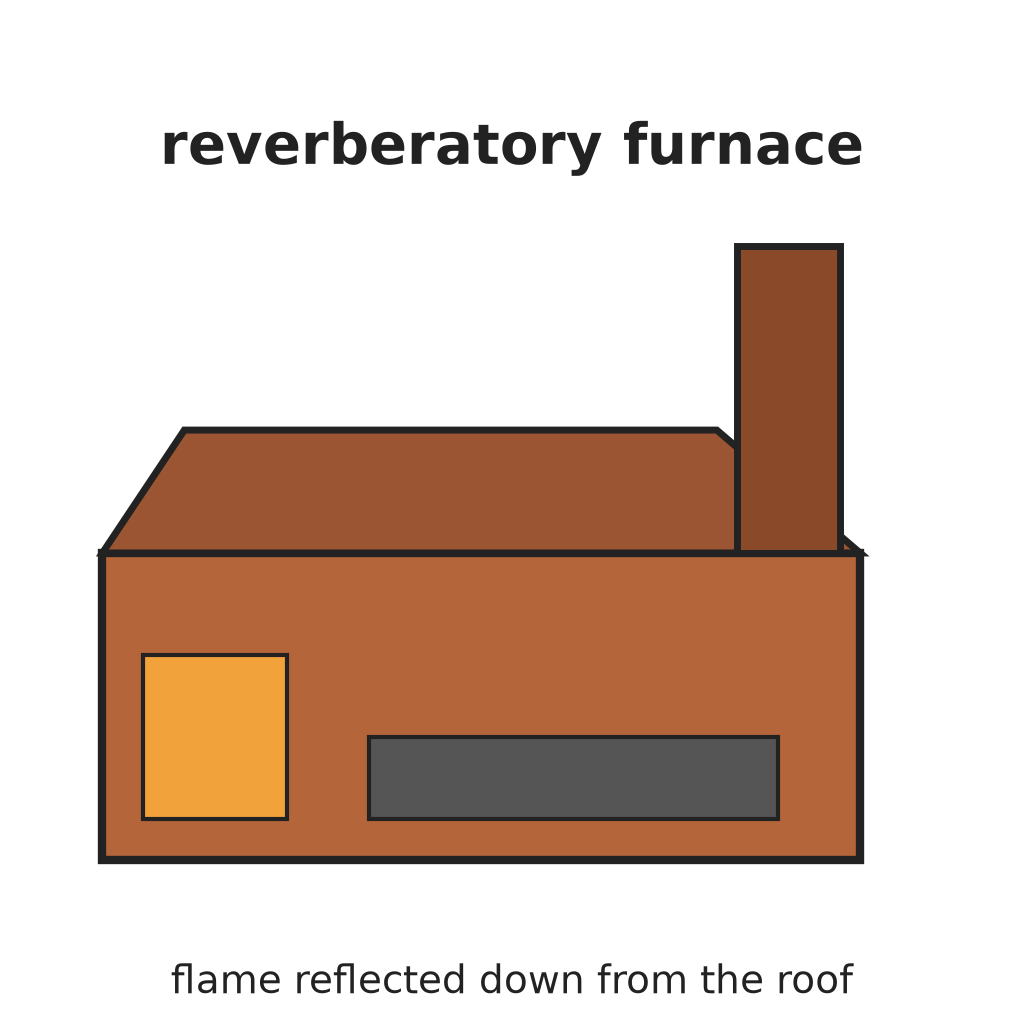 Ààrò Reverberatory
3
3
Sift through a lawn sieve
Sift through a lawn sieve
Sift the sand through a lawn sieve to separate the larger grains and pieces of coal or coke, and burn off the vegetable matter.
Àwọn irinṣẹ́ tí a nílò:
 Ajọ Ojú Kékeré
Àwọn irinṣẹ́ tó nílò
4- Àyè
- Àyè
Ìtọ́nisọ́nà yìí ń ṣe
CC0 Àgbègbè Gbogbogbò
Blueprint yìí ti jáde lábẹ́ CC0. O lè ṣe àdàkọ, yí padà, pín, àti lò láìsí ìyọ̀ǹda.
Ṣàtìlẹ́yìn Olùṣẹ́dá nípa rírà àwọn ọjà nipasẹ̀ Blueprint wọn Ẹ̀san Olùṣẹ́dá tí àwọn Olùtajà gbé kalẹ̀, tàbí ṣẹ̀dá àtúnṣe tuntun ti Blueprint yìí kí o sì fi sínú Blueprint rẹ gẹ́gẹ́ bí ìsopọ̀ láti pín owó-wíwọlé.