IṢẸ́ ỌNÀ
ẸWÀ ÀTI ÌLERA
IṢẸ́ ỌWỌ́
ÀṢÀ ÀTI ÌTÀN
ÌṢERÉ
ÀYÍKÁ
OÚNJẸ ÀTI OHUN MÍMU
REVERSE ENGINEERING
SÁYẸ́ǸSÌ
ERÉ ÌDÁRAYÁ
ÌMỌ̀-Ẹ̀RỌ
ÀWỌN OHUN WÍWỌ̀
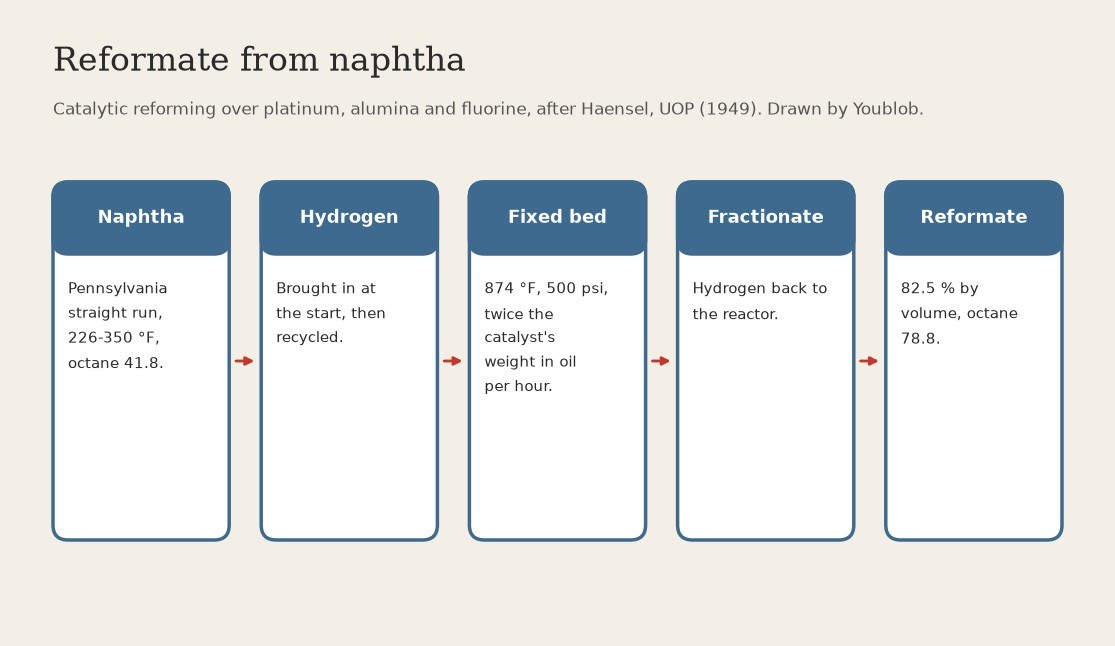


Reformate: Straight-Run Naphtha over Platinum-Alumina-Fluorine Catalyst at 874 °F and 500 psi (Haensel, UOP, US 2,479,110)
Straight-run naphtha knocks badly in an engine. Passed hot and under pressure over Haensel's platinum catalyst, its molecules are reshaped into aromatics and smaller ones, and the octane number nearly doubles.
Result (Ex. I): a Pennsylvania naphtha of octane 41.8 gave 82.5 % by volume of reformate of octane 78.8 (A.S.T.M. motor method).
Variable: reforming temperature. At 824 °F: 95.9 % by weight, octane 65.7, too cool. At 874 °F: 83.2 %, octane 78.8; more of the charge goes to gas.
Source: Haensel, US 2,479,110 (1949), Ex. I-II. Not given: reactor size, how the products are fractionated. Hot hydrogen and oil vapour under pressure: fire risk. Picture drawn by Youblob.
Ògbóǹtarìgì
1 day
Ìlànà
1
1
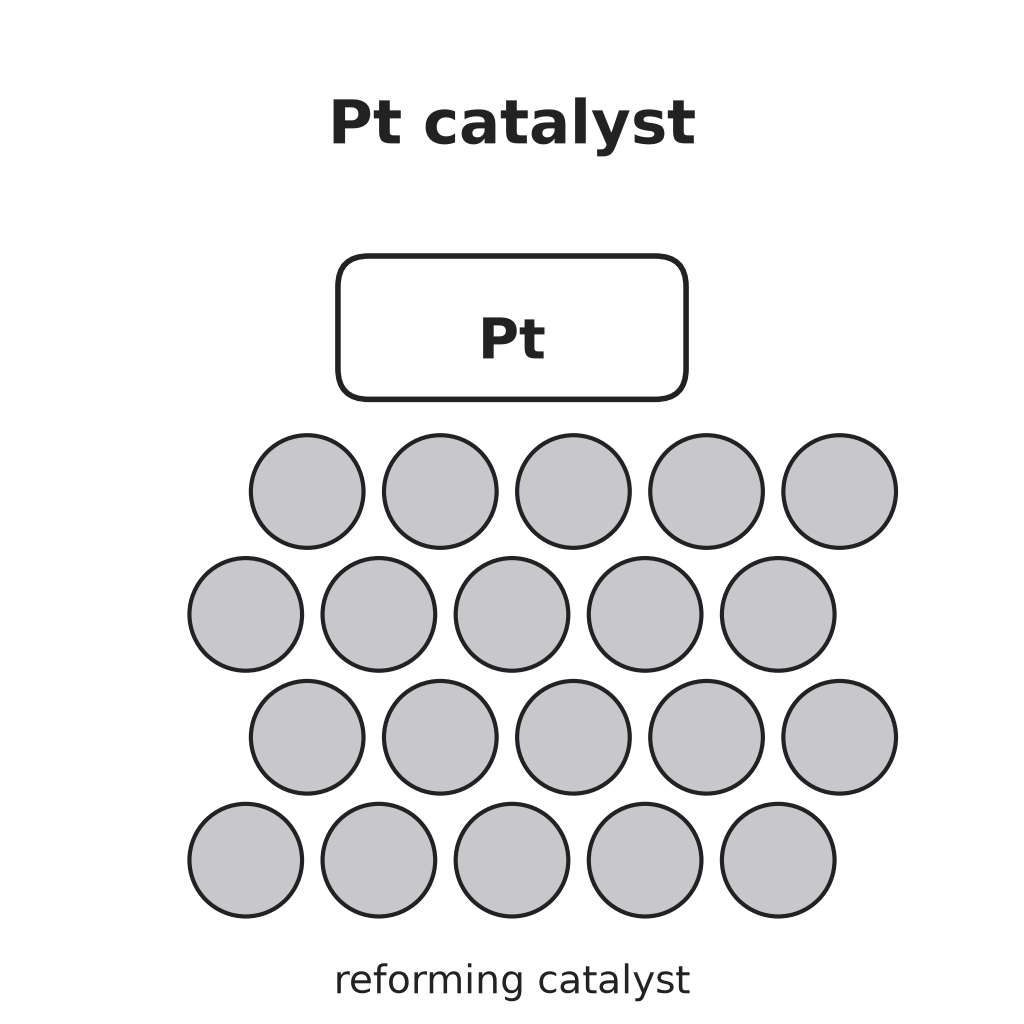
Pack the catalyst in a fixed bed
Pack the catalyst in a fixed bed
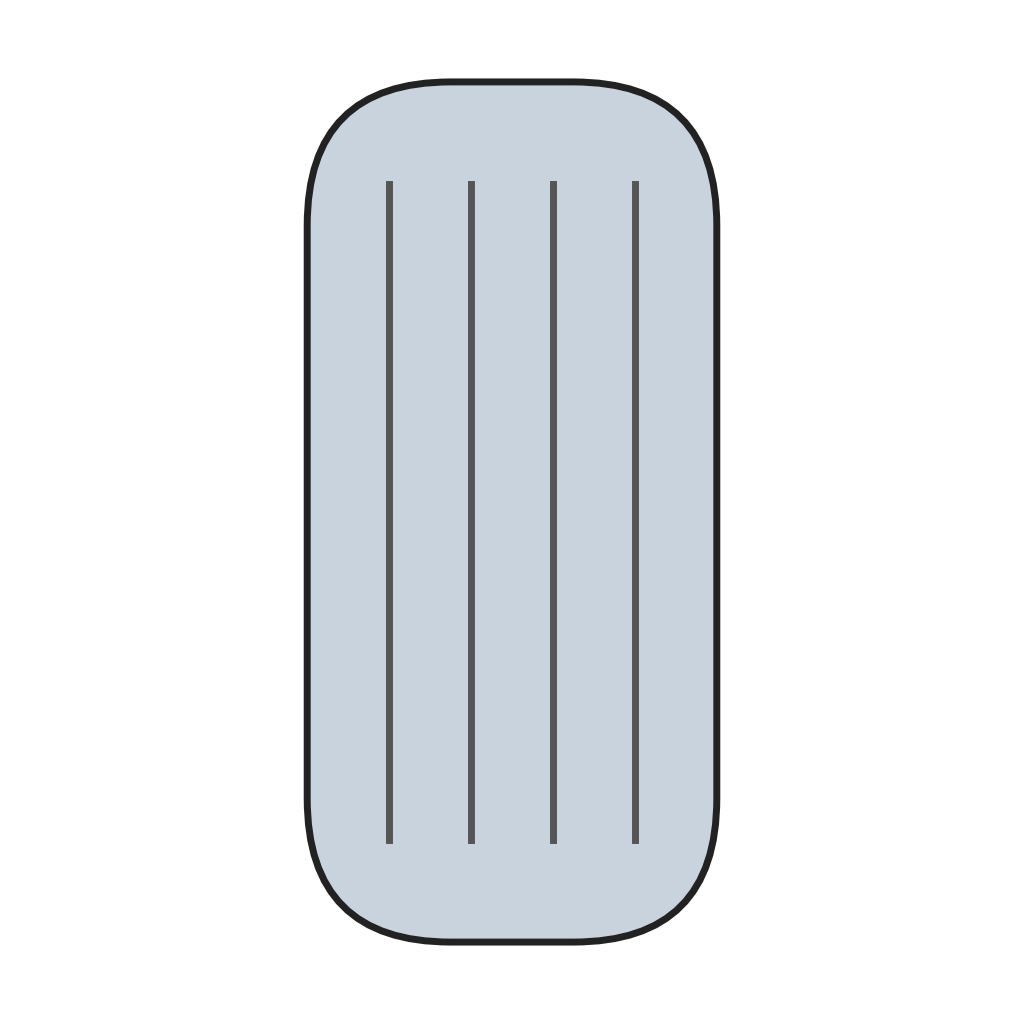
Put the platinum reforming catalyst in the reaction zone as a fixed bed. The oil is passed through it, upward or downward.
Àwọn irinṣẹ́ tí a nílò:
 Ohun Ìyára Rífọ̀mù Pílátínọ́mù
 Ìkòkò ìṣesí oníhò pẹ̀lú ibùsùn tí kò yí padà
2
2
Feed a straight-run naphtha
Feed a straight-run naphtha
Use a straight-run naphtha. Haensel's: a Pennsylvania naphtha boiling from 226 to 350 °F, with an A.S.T.M. motor octane number of 41.8.
Àwọn ohun èlò fún ìgbésẹ̀ yìí:
 Naphtha1 as required
Àwọn irinṣẹ́ tí a nílò:
 Táńkì ìtọ́jú epo
3
3
Start with hydrogen
Start with hydrogen
The reaction can make enough hydrogen for itself, but the patent prefers to bring hydrogen in from outside at the start and then recycle it, so the reaction zone always holds enough.
Àwọn irinṣẹ́ tí a nílò:
 Hydrogen
 Àgbá gáàsì tí a fi ìfúnpá kún
4
4
Reform at 874 °F, 500 psi
Reform at 874 °F, 500 psi
Pass the naphtha over the catalyst at about 874 °F and 500 pounds per square inch, at a weight hourly space velocity of about 2: twice the catalyst's weight in oil each hour.
Àwọn irinṣẹ́ tí a nílò:
Ìkòkò ìṣesí oníhò pẹ̀lú ibùsùn tí kò yí padàOhun Ìyára Rífọ̀mù Pílátínọ́mù Ẹ̀rọ Ìwọ̀n Ìtẹ̀
5
5
Fractionate off the hydrogen, collect the reformate
Fractionate off the hydrogen, collect the reformate
Fractionate the products to separate the hydrogen, which goes back into the process, and recover the reformate: 82.5 % by volume of the charge, octane 78.8. Ours: a fractionating still.
Àwọn irinṣẹ́ tí a nílò:
 Ohun ìsun tí ó pínÀgbá gáàsì tí a fi ìfúnpá kúnTáńkì ìtọ́jú epo
Ìtọ́nisọ́nà yìí ń ṣe
Blueprint tó jọra
Àwọn blueprint wọ̀nyí pín ìmọ̀ — ọ̀nà, ohun-èlò tàbí ìlànà
CC0 Àgbègbè Gbogbogbò
Blueprint yìí ti jáde lábẹ́ CC0. O lè ṣe àdàkọ, yí padà, pín, àti lò láìsí ìyọ̀ǹda.
Ṣàtìlẹ́yìn Olùṣẹ́dá nípa rírà àwọn ọjà nipasẹ̀ Blueprint wọn Ẹ̀san Olùṣẹ́dá tí àwọn Olùtajà gbé kalẹ̀, tàbí ṣẹ̀dá àtúnṣe tuntun ti Blueprint yìí kí o sì fi sínú Blueprint rẹ gẹ́gẹ́ bí ìsopọ̀ láti pín owó-wíwọlé.