
IṢẸ́ ỌNÀ
ẸWÀ ÀTI ÌLERA
IṢẸ́ ỌWỌ́
ÀṢÀ ÀTI ÌTÀN
ÌṢERÉ
ÀYÍKÁ
OÚNJẸ ÀTI OHUN MÍMU
REVERSE ENGINEERING
SÁYẸ́ǸSÌ
ERÉ ÌDÁRAYÁ
ÌMỌ̀-Ẹ̀RỌ
ÀWỌN OHUN WÍWỌ̀
Small Series-Wound Electric Motor with Laminated Field and 12-Slot Ring Armature (Robertson, Boy Mechanic 1913)
Volt

Ṣẹ́dá nipasẹ̀

Volt

14. Oṣù Kọkànlá 2026SE
13
0
0
0
0

Small Series-Wound Electric Motor with Laminated Field and 12-Slot Ring Armature (Robertson, Boy Mechanic 1913)

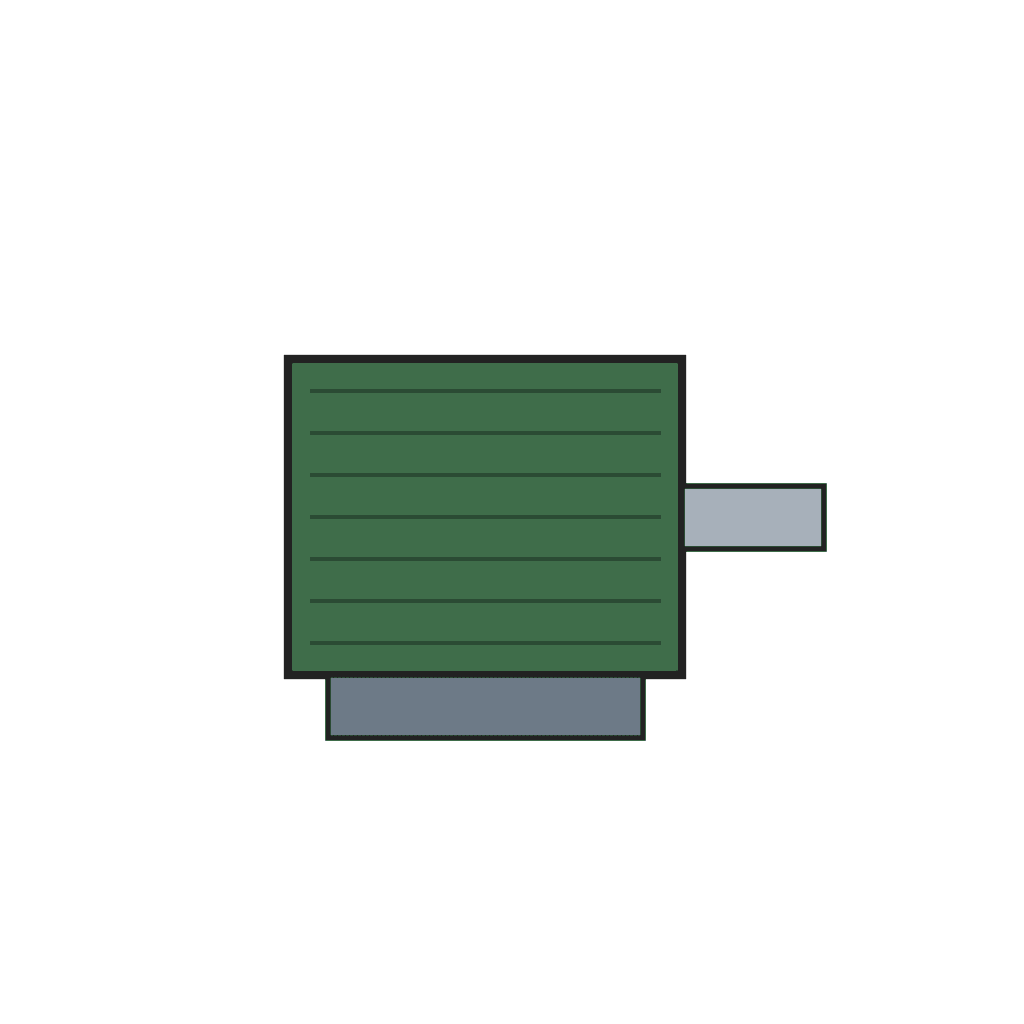
A real workshop-built DC motor: a field of riveted sheet-iron plates bored to 2-3/4 in, a 12-slot laminated ring armature on a brass spider, a 12-segment brass commutator insulated with mica, gauze brushes, and series windings of cotton-covered magnet wire.
Ilọsíwájú
Several weekends

Ìlànà

1

Read the Boy Mechanic

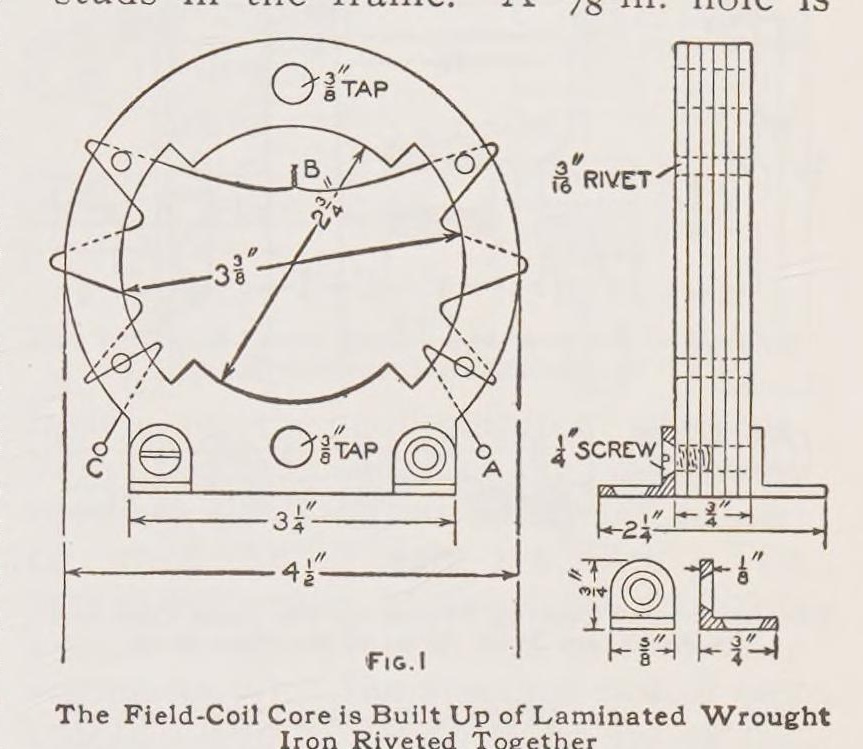
"The field frame of the motor, Fig. 1, is composed of wrought sheet iron."
2

Field frame

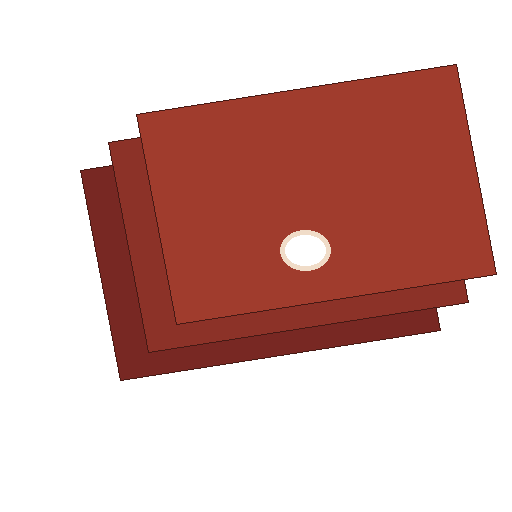
Mark a template 1/16 in larger than Fig. 1, cut enough sheet-iron plates to make 3/4 in, drill four rivet holes and rivet them. Mark the bore with dividers set at 1/8 in, drill 1/4 in holes round it and file to shape. Bore to 2-3/4 in on a lathe; mark the field core at 3-3/8 in and the outside at 4-1/2 in and finish to the marks.

Àwọn ohun èlò fún ìgbésẹ̀ yìí:

Ìwé Irin Pẹ́lẹ́Ìwé Irin Pẹ́lẹ́1 ẹyọ
Ìṣó irinÌṣó irin1 ẹyọ

Àwọn irinṣẹ́ tí a nílò:

Abẹ́rẹ́ Ìkọ ÌlàAbẹ́rẹ́ Ìkọ Ìlà
Kọ́mpàsì olójú méjìKọ́mpàsì olójú méjì
Ìlù ọwọ́Ìlù ọwọ́
Àwọn Ìfá (Ìfá Ọwọ́)Àwọn Ìfá (Ìfá Ọwọ́)
Ẹ̀rọ Ìyí IrinẸ̀rọ Ìyí Irin
ÒòlùÒòlù
3

Studs, lugs and bearings

Drill and tap two 3/8 in holes 3-5/8 in apart for the bearing studs (Fig. 2) and 1/4 in holes for feet bent from 1/8 in brass or iron. Make the bearing supports from 1/8 in brass with a 5/8 in hole and a 5/8 in brass rod soldered in and drilled for the shaft. Fit them after the armature is made: wrap paper round the armature, set it in the field, slip the bearings on and solder them, then check it turns freely.

Àwọn ohun èlò fún ìgbésẹ̀ yìí:

Pẹlẹbẹ BronsePẹlẹbẹ Bronse1 ẹyọ
Ọ̀pá Bàbà OfeefeeỌ̀pá Bàbà Ofeefee1 ẹyọ
Ọ̀pá rírọ irin rírọ̀Ọ̀pá rírọ irin rírọ̀1 ẹyọ
Wẹ́là tìnì-lédìWẹ́là tìnì-lédì1 ẹyọ

Àwọn irinṣẹ́ tí a nílò:
Ìtò irinṣẹ́ ìgé iháÌtò irinṣẹ́ ìgé ihá
Ẹ̀rọ Ìyí IrinẸ̀rọ Ìyí Irin
Irin ìsúdìIrin ìsúdì
Ìlù ọwọ́Ìlù ọwọ́
4

Armature core

Cut two 1/8 in wrought-iron outer plates and enough No. 24 sheet iron to make over 3/4 in (Fig. 5), drill six 1/8 in holes and rivet. Anneal at cherry red and cool in ashes. Bore to 1-11/16 in, fit a brass spider turned from 3/4 in brass on the machine-steel shaft with a setscrew, solder, turn the outside and face it to 3/4 in. File 12 slots 1/4 in deep and 7/16 in wide.

Àwọn ohun èlò fún ìgbésẹ̀ yìí:

Ìwé Irin Pẹ́lẹ́Ìwé Irin Pẹ́lẹ́1 ẹyọ
Ìṣó irinÌṣó irin1 ẹyọ
Ọ̀pá Bàbà OfeefeeỌ̀pá Bàbà Ofeefee1 ẹyọ
Ọ̀pá rírọ irin rírọ̀Ọ̀pá rírọ irin rírọ̀1 ẹyọ

Àwọn irinṣẹ́ tí a nílò:

Ìléru alágbẹ̀dẹÌléru alágbẹ̀dẹ
Ẹ̀rọ Ìyí IrinẸ̀rọ Ìyí Irin
Àwọn Ìfá (Ìfá Ọwọ́)Àwọn Ìfá (Ìfá Ọwọ́)
Ìlù ọwọ́Ìlù ọwọ́
5

Commutator

Turn a piece of 3/4 in i.d. brass pipe to 3/4 in long, chamfer both ends at 60 deg, divide into 12, drill and tap a 1/8 in hole in each segment for a brass pin, turn the pins to 1-1/4 in outside and slit them for the wires. Saw it into 12 bars, fit them on turned fibre ends with 12 mica strips between, clamp with the nut and true up.

Àwọn ohun èlò fún ìgbésẹ̀ yìí:

Ọ̀pá idẹỌ̀pá idẹ1 ẹyọ
Ọ̀pá Bàbà OfeefeeỌ̀pá Bàbà Ofeefee1 ẹyọ
Vulcanized Fibre SheetVulcanized Fibre Sheet1 ẹyọ
Pẹpẹ micaPẹpẹ mica1 ẹyọ

Àwọn irinṣẹ́ tí a nílò:

Ẹ̀rọ Ìyí IrinẸ̀rọ Ìyí Irin
Ìtò irinṣẹ́ ìgé iháÌtò irinṣẹ́ ìgé ihá
Ayùn IrinAyùn Irin
6

Brushes

Make the brush holder of fibre (Fig. 8) and studs of 5/16 in brass rod (Fig. 9). Roll brass or copper wire gauze and flatten it to 1/8 x 1/4 in, solder one end, and fit the holder on the bearing with a setscrew.

Àwọn ohun èlò fún ìgbésẹ̀ yìí:

Vulcanized Fibre SheetVulcanized Fibre Sheet1 ẹyọ
Ọ̀pá Bàbà OfeefeeỌ̀pá Bàbà Ofeefee1 ẹyọ
Àwọ̀n okùn irinÀwọ̀n okùn irin1 ẹyọ
Wẹ́là tìnì-lédìWẹ́là tìnì-lédì1 ẹyọ

Àwọn irinṣẹ́ tí a nílò:

Irin ìsúdìIrin ìsúdì
Àwọn Ìfá (Ìfá Ọwọ́)Àwọn Ìfá (Ìfá Ọwọ́)
7

Wind the field

Insulate the field cores with 1/64 in fibre and end washers 1-1/8 x 1-1/2 in (softened in warm water, then glued). Wind each side with four layers (about 50 ft) of No. 18 double-cotton-covered wire, A to B and C to B, and join the ends at B.

Àwọn ohun èlò fún ìgbésẹ̀ yìí:

Vulcanized Fibre SheetVulcanized Fibre Sheet1 ẹyọ
Okùn Bàbà Tí A Fi Enamẹ́là BòOkùn Bàbà Tí A Fi Enamẹ́là Bò1 ẹyọ
Ìdìpọ̀ IgiÌdìpọ̀ Igi1 ẹyọ
8

Wind the armature

Line the ring and spider with 1/16 in fibre and the slots with 1/64 in fibre channels. Wind each slot with about 12 ft of No. 21 wire, 40 turns in four layers of 10, shellacking each layer, leaving 2 in ends. Join each coil's start to the next coil's finish and solder the joints to the commutator pins.

Àwọn ohun èlò fún ìgbésẹ̀ yìí:

Vulcanized Fibre SheetVulcanized Fibre Sheet1 ẹyọ
Okùn Bàbà Tí A Fi Enamẹ́là BòOkùn Bàbà Tí A Fi Enamẹ́là Bò1 ẹyọ
Fánníṣì sẹ́làkìFánníṣì sẹ́làkì1 ẹyọ
Wẹ́là tìnì-lédìWẹ́là tìnì-lédì1 ẹyọ

Àwọn irinṣẹ́ tí a nílò:

Irin ìsúdìIrin ìsúdì
9

Mount and wire

Screw the motor to a wood base 8 x 6 x 1 in with two terminals and a switch. Wire it in series: field end A to a terminal, field end C to one brush stud, the other brush through the switch to the other terminal.

Àwọn ohun èlò fún ìgbésẹ̀ yìí:

Pátákó Igi LílePátákó Igi Líle1 ẹyọ
Òpó ìsopọ̀Òpó ìsopọ̀1 ẹyọ
Àwọ̀n oníhànhánÀwọ̀n oníhànhán1 ẹyọ
Ìṣó igiÌṣó igi1 ẹyọ

Àwọn irinṣẹ́ tí a nílò:

Ìlù ọwọ́ pẹ̀lú oríÌlù ọwọ́ pẹ̀lú orí
10

Troubleshooting

Motor troubleshooting.

Flow

Loading...
11

History and honest limits

From W. A. Robertson in **The Boy Mechanic, Book 1** (Popular Mechanics, 1913), pp. 345-347 (checked on the archive.org scan boymechanic0000unse_n5a8). Sizes not in the text are in his Figs. 1-9; enamelled wire for cotton-covered and the low-voltage advice are ours.

Àwọn ohun-èlò

17

Àwọn irinṣẹ́ tó nílò

11

Ìtọ́nisọ́nà yìí ń ṣe

Blueprint tó jọra

Àwọn blueprint wọ̀nyí pín ìmọ̀ — ọ̀nà, ohun-èlò tàbí ìlànà
CC0 Àgbègbè Gbogbogbò

Blueprint yìí ti jáde lábẹ́ CC0. O lè ṣe àdàkọ, yí padà, pín, àti lò láìsí ìyọ̀ǹda.

Ṣàtìlẹ́yìn Olùṣẹ́dá nípa rírà àwọn ọjà nipasẹ̀ Blueprint wọn Ẹ̀san Olùṣẹ́dá tí àwọn Olùtajà gbé kalẹ̀, tàbí ṣẹ̀dá àtúnṣe tuntun ti Blueprint yìí kí o sì fi sínú Blueprint rẹ gẹ́gẹ́ bí ìsopọ̀ láti pín owó-wíwọlé.

Ìfọ̀rọ̀wérọ̀

(0)

Wọlé láti dara pọ̀ mọ́ ìfọ̀rọ̀wérọ̀

Ń gbé àwọn ọ̀rọ̀ wọlé...