IṢẸ́ ỌNÀ
ẸWÀ ÀTI ÌLERA
IṢẸ́ ỌWỌ́
ÀṢÀ ÀTI ÌTÀN
ÌṢERÉ
ÀYÍKÁ
OÚNJẸ ÀTI OHUN MÍMU
REVERSE ENGINEERING
SÁYẸ́ǸSÌ
ERÉ ÌDÁRAYÁ
ÌMỌ̀-Ẹ̀RỌ
ÀWỌN OHUN WÍWỌ̀
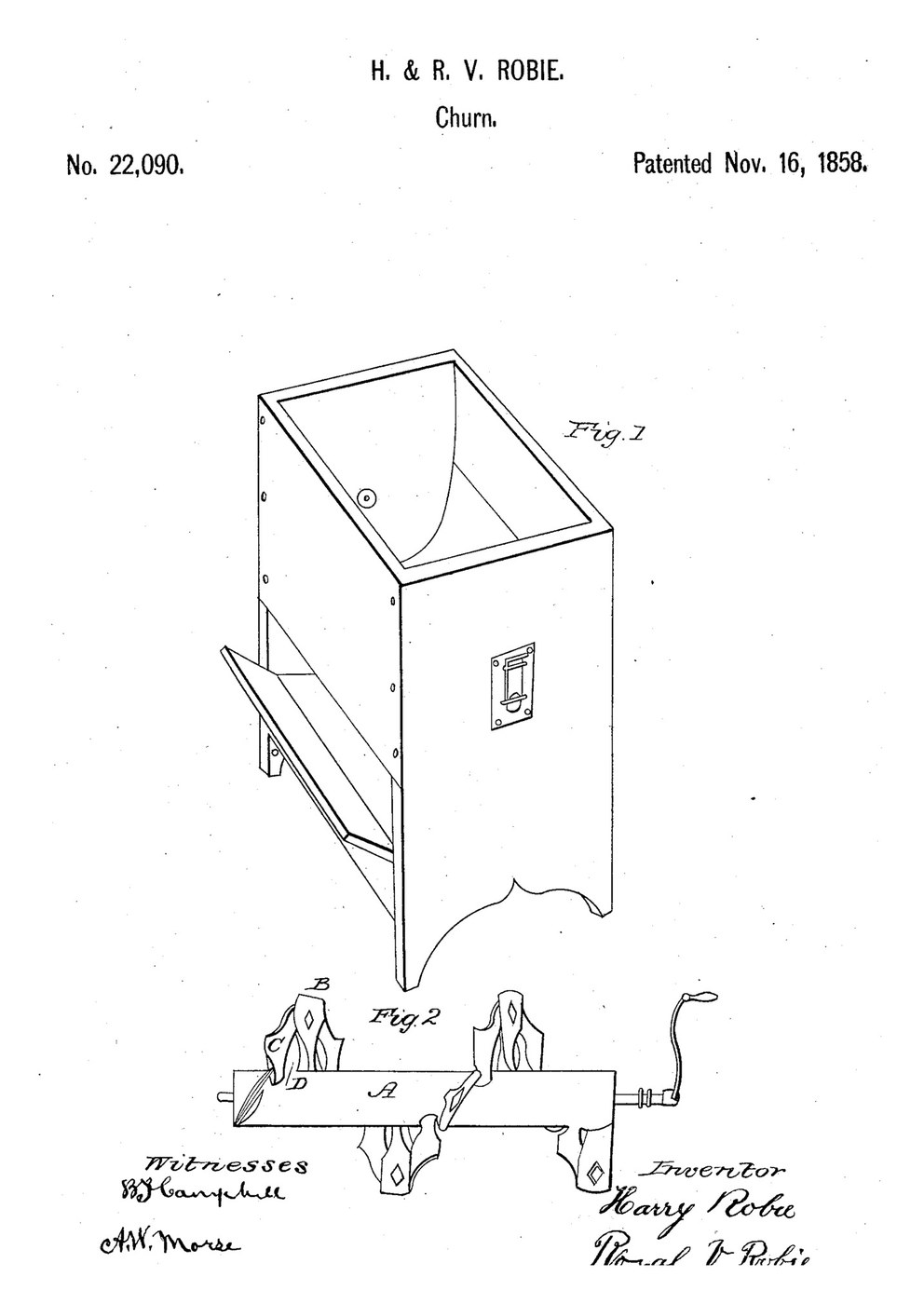


Spiral-Beater Box Churn: Diamond-Holed and Hollow-Ended Beaters Drive the Cream End to End
Harry and Royal V. Robie of Eaton, New York, received US 22,090, dated 16 November 1858, for a box churn with beaters set spirally on a level crank shaft. Every other beater has a diamond hole; the rest have a hollow (concave) end. All are narrow where they join the shaft, so the cream passes between them, and they drive it from one end of the box to the other. A chamber under the box, with a hinged door, holds something cold or warm to bring the cream to temperature.
This rung builds it with a food-grade container in a pine body and printed beaters.
Àárín
About 6 hours, plus printing
Ìlànà
1
1
Beaters, spacing and fill
Beaters, spacing and fill
Ń ṣí ìwé Jupyter…
2
2
Pierced dashers, before it
Pierced dashers, before it
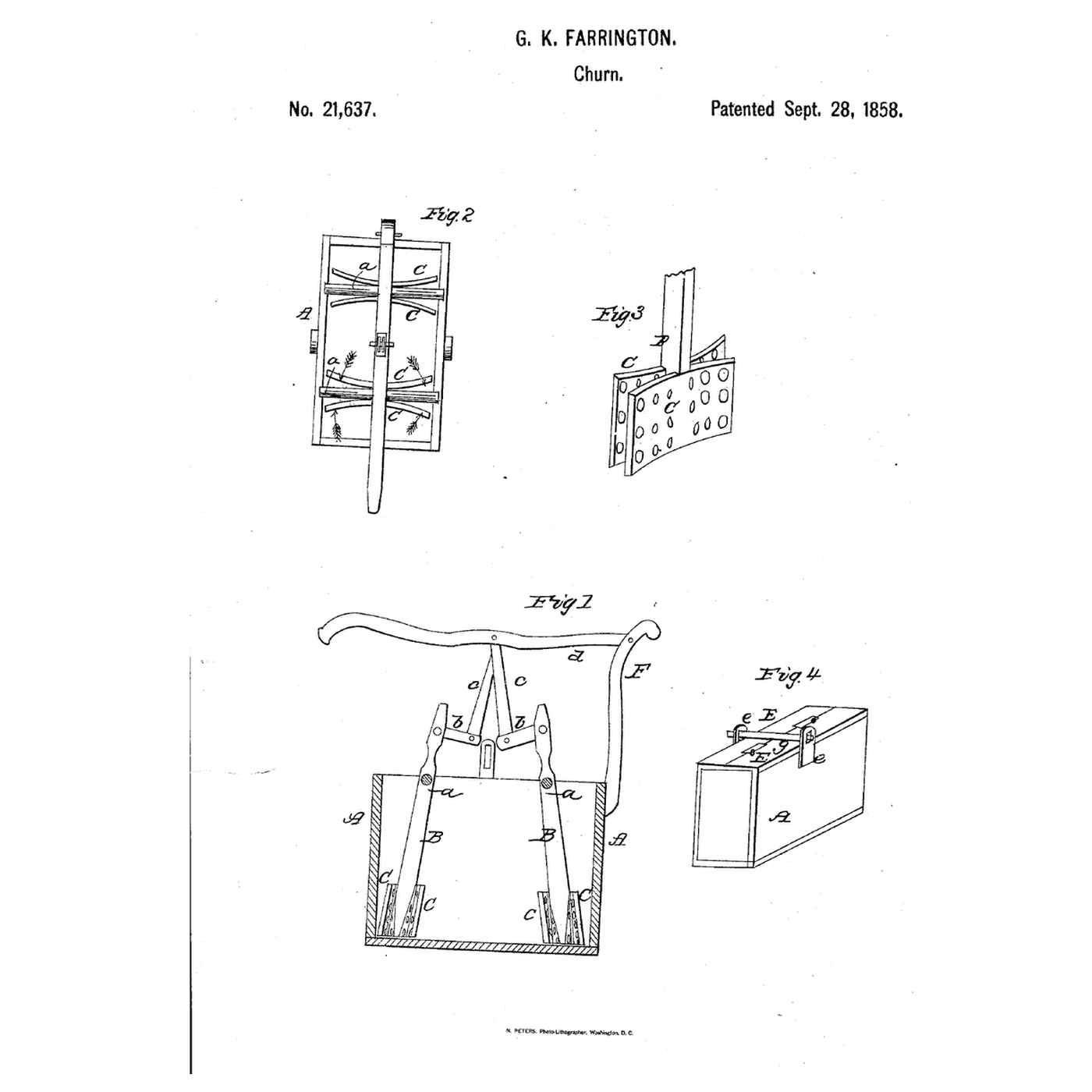
Farrington broke the cream on the holes of swinging dashers. The Robies pierce every other beater on a turning shaft.
3
3
Read US 22,090
Read US 22,090
"... the base of said beaters being made small and narrow where they enter the shaft in order to form an opening for the passage of the cream, between each of the beaters, while the holes in each alternate beater form another passage".
4
4
Print the beater B
Print the beater B
Beater B, with the diamond hole. Print four. PETG, 0.2 mm layers, 30 % infill, 4 walls, with supports under the turned blade; wash before first use.
5
5
Print the beater C
Print the beater C
Beater C, with the hollow end. Print three. PETG, 0.2 mm layers, 30 % infill, 4 walls, with supports under the turned blade; wash before first use.
6
6
Print the crank
Print the crank
The crank arm. PETG, 0.2 mm layers, 30 % infill, 4 walls, with supports under the turned blade; wash before first use.
7
7
Print the collar
Print the collar
The collar that holds the shaft's far end. PETG, 0.2 mm layers, 30 % infill, 4 walls, with supports under the turned blade; wash before first use.
8
8
Body and chamber
Body and chamber
Use a food-grade container 400 x 280 mm inside and 250 mm deep, with a rim. From 18 mm pine cut two ends 362 x 750 mm with a 120 mm arch at the foot, two sides 444 x 630 mm, two rails 444 x 40 mm and a shelf 444 x 326 mm. Screw the sides between the ends, the rails inside the sides 3 mm below the top, and the shelf 200 mm up. Cut a 360 x 272 mm opening in the front side above the shelf and hang a 356 x 268 mm pine door in it on two butt hinges along its bottom edge.
Àwọn ohun èlò fún ìgbésẹ̀ yìí:
 Pákó igi pine3 ẹyọ
 Ìdìpọ̀ Igi1 ẹyọ
 Ìṣó igi40 ẹyọ
 Ìdìmú ẹnu-ọ̀nà2 ẹyọ
 Ìsúrù igi #8 x 1"8 ẹyọ
Àwọn irinṣẹ́ tí a nílò:
 Ayùn Ọwọ́
 Ayùn Jígísò
 Ẹ̀rọ Ìlùkòkò Aláìlókùn
 Àkójọ Orí Ìlùkòkò
 Àwọn clamp
 Bébà Ìfá
 Ìṣù àwọn ohun ìyí skurú
 Okùn Ìdíwọ̀n
9
9
Shaft A and beaters
Shaft A and beaters
Hang the container by its rim on the rails. Drill a 17 mm hole through both pine ends and both container ends, 150 mm above the container's inside floor. Cut the stainless tube (16 mm) to 574 mm and push it through. Slide on the seven beaters, B, C, B, C, B, C, B, 50 mm apart from the middle out, each a quarter turn round from the last, all blades turned the same way, and fix each with an M4 screw across hub and shaft. Fit the collar on the far end and the crank on the near end with M4 screws, and glue a 12 mm dowel 114 mm long into the crank as the handle.
Àwọn ohun èlò fún ìgbésẹ̀ yìí:
 Àgọ́ ìtọ́jú ti ìpele oúnjẹ1 ẹyọ
 Okùn PETG1 ẹyọ
 Tọ́ọ̀bù irin tí kò ń yá1 ẹyọ
 Skurú ẹ̀rọ9 ẹyọ
 Ẹ̀kù Ìdìmú Onínáílọ́ọ̀nù9 ẹyọ
 Àwọn dowel igi líle1 ẹyọÌdìpọ̀ Igi1 ẹyọ
Àwọn irinṣẹ́ tí a nílò:
 Ẹ̀rọ ìtẹ̀ 3D oníwàyà (FDM)Ẹ̀rọ Ìlùkòkò AláìlókùnÀkójọ Orí Ìlùkòkò
 Ohun èlò ìgé òpó
 Àwọn Ìfá (Ìfá Ọwọ́)Ìṣù àwọn ohun ìyí skurú
 Kọ́kọ́rọ́ tí a lè ṣàtúnṣe
10
10
The build in 3D
The build in 3D
FreeCAD model of this build: the pine body with its arched ends, the chamber door, the container on its rails, the shaft with seven spiral beaters, the collar and the crank.
11
11
Churn
Churn
Bring the cream to about 15 °C: in warm weather set a tray of ice in the chamber under the box, in cold weather a tray of warm water, and shut the door. Pour in about 12 litres of heavy cream, keeping it 20 mm below the shaft, and check it with the thermometer. Turn the crank steadily and time it. When the butter comes, lift the container out, pour off the buttermilk, wash the butter in cold water until it runs clear, work in a pinch of salt and weigh it.
Àwọn ohun èlò fún ìgbésẹ̀ yìí:
 Ọ̀rá wàrà tó nípọn12 l
 Yìnyín tí a gún2 kg
 Iyọ̀ Òkun Rúkèrúdò1 ẹyọ
 Omi1 ẹyọ
Àwọn irinṣẹ́ tí a nílò:
 Ẹ̀rọ ìwọ̀n ooru oníhun tí ó dúró sí inú
 Aago Ìdúró
 Òṣùwọ̀n Díjítà Ilé Ìdáná
 Àwo ìdàpọ̀ ńlá ti irin tí kò ń yá
12
12
Troubleshooting
Troubleshooting
Spiral-beater churn troubleshooting.
Flow
Loading...
13
13
History and honest limits
History and honest limits
**Harry Robie** and **Royal V. Robie** of Eaton, Madison County, New York, US 22,090, 16 November 1858, "Churn". They knew beaters set spirally round a level shaft were old, and claimed only the diamond-holed beater B with the hollow-ended beater C and the passage under their narrow bases. They gave no sizes or materials and no number of beaters: ours are seven at 50 mm and a quarter turn apart, blades turned 30 degrees. Their box (Fig. 1) has a rounded floor; our container is flat.
Àwọn ohun-èlò
15- 3 ẹyọÀyè
- 2 ẹyọÀyè
- 40 ẹyọÀyè
- 2 ẹyọÀyè
- 8 ẹyọÀyè
- Àyè
- 1 ẹyọÀyè
- Àyè
- 9 ẹyọÀyè
- Àyè
- 1 ẹyọÀyè
- Àyè
- 2 kgÀyè
- 1 ẹyọÀyè
- 1 ẹyọÀyè
Àwọn irinṣẹ́ tó nílò
16- Àyè
- 1 vendor sell this, none ship to you yetÀyè
- 1 vendor sell this, none ship to you yetÀyè
- Àyè
- Àyè
- 1 vendor sell this, none ship to you yetÀyè
- Àyè
Àwọn fáìlì àpẹrẹ
5Ìtọ́nisọ́nà yìí ń ṣe

Blueprint tó jọra
Àwọn blueprint wọ̀nyí pín ìmọ̀ — ọ̀nà, ohun-èlò tàbí ìlànà


CC0 Àgbègbè Gbogbogbò
Blueprint yìí ti jáde lábẹ́ CC0. O lè ṣe àdàkọ, yí padà, pín, àti lò láìsí ìyọ̀ǹda.
Ṣàtìlẹ́yìn Olùṣẹ́dá nípa rírà àwọn ọjà nipasẹ̀ Blueprint wọn Ẹ̀san Olùṣẹ́dá tí àwọn Olùtajà gbé kalẹ̀, tàbí ṣẹ̀dá àtúnṣe tuntun ti Blueprint yìí kí o sì fi sínú Blueprint rẹ gẹ́gẹ́ bí ìsopọ̀ láti pín owó-wíwọlé.