IṢẸ́ ỌNÀ
ẸWÀ ÀTI ÌLERA
IṢẸ́ ỌWỌ́
ÀṢÀ ÀTI ÌTÀN
ÌṢERÉ
ÀYÍKÁ
OÚNJẸ ÀTI OHUN MÍMU
REVERSE ENGINEERING
SÁYẸ́ǸSÌ
ERÉ ÌDÁRAYÁ
ÌMỌ̀-Ẹ̀RỌ
ÀWỌN OHUN WÍWỌ̀
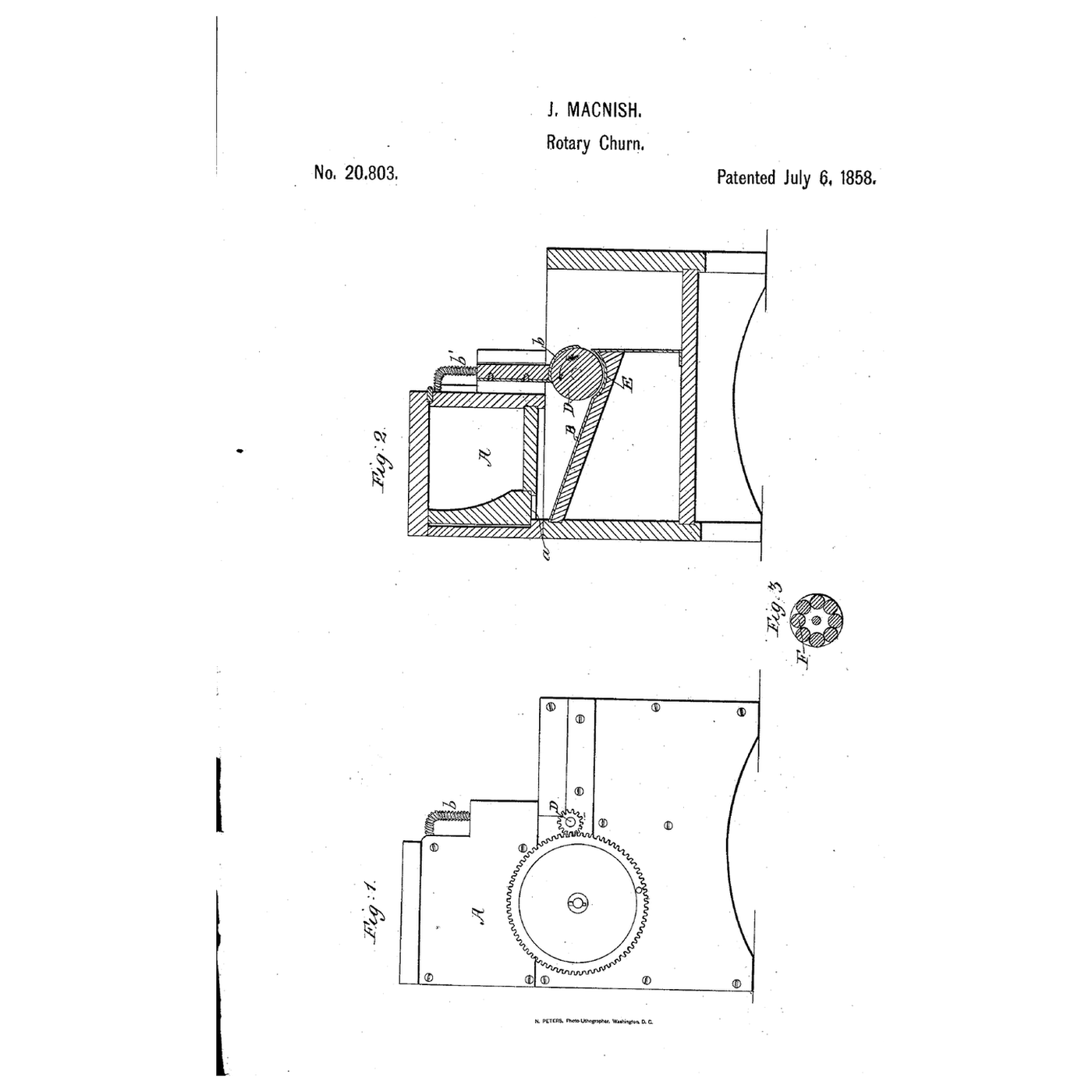


Roller-and-Concave Friction Churn: Cream Runs Once Between a Sprung Roller and a Fixed Concave
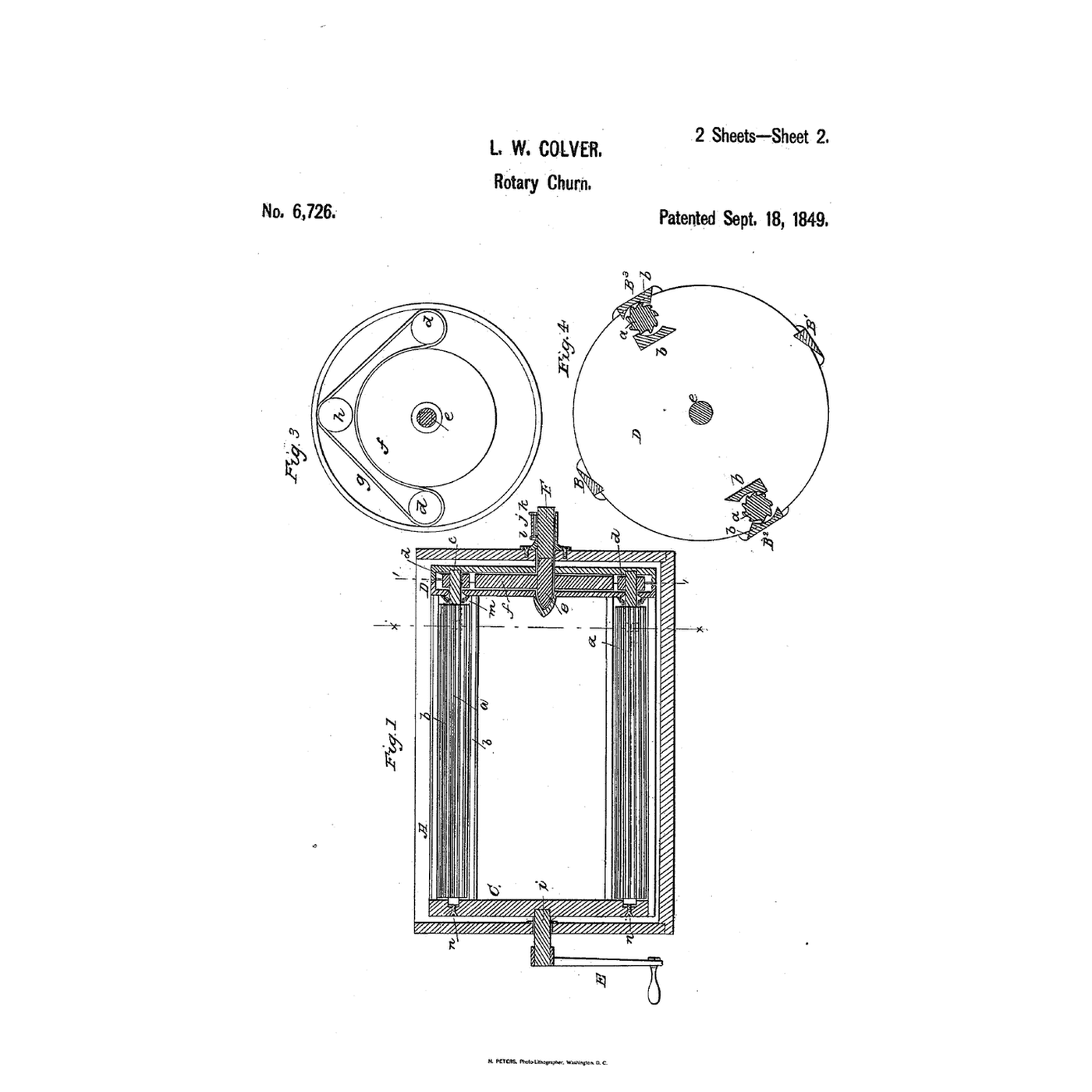
James MacNish of Berlin, Wisconsin, received US 20,803, dated 6 July 1858, for a churn that breaks the cream's fat globules by compression and friction: the cream runs down an apron into a fixed concave, where a roller held down by a sprung plate presses it through, and the plate scrapes the butter off the roller.
This rung prints the hopper, apron, concave, roller and gearing at tabletop scale, over a storage container.
Ilọsíwájú
About 5 hours, plus printing
Ìlànà
1
1
Gearing and the roller's surface
Gearing and the roller's surface
Ń ṣí ìwé Jupyter…
2
2
Churns with turning rollers, before it
Churns with turning rollers, before it
Those rollers worked inside a churn of cream; MacNish passes the cream once between a roller and a fixed concave.
3
3
Read US 20,803
Read US 20,803
"The cream only requires to pass between the roller and the concave once in order to produce butter."
4
4
Print the parts
Print the parts
Print the frame (/uploads/blueprints/roller-and-concave-friction-churn-frame.stl) lying on its cheek, the front cheek (/uploads/blueprints/roller-and-concave-friction-churn-cheek.stl), the roller (/uploads/blueprints/roller-and-concave-friction-churn-roller.stl), the shoe (/uploads/blueprints/roller-and-concave-friction-churn-shoe.stl), the pinion (/uploads/blueprints/roller-and-concave-friction-churn-pinion.stl), the wheel with its crank (/uploads/blueprints/roller-and-concave-friction-churn-wheel.stl) and the base (/uploads/blueprints/roller-and-concave-friction-churn-base.stl). The frame, cheek and base need a 240 mm print bed. Print in PETG at 0.2 mm layers, 30 % infill, 4 walls; wash before first use.
Àwọn ohun èlò fún ìgbésẹ̀ yìí:
 Okùn PETG1 ẹyọ
Àwọn irinṣẹ́ tí a nílò:
 Ẹ̀rọ ìtẹ̀ 3D oníwàyà (FDM)
5
5
Roller, shoe and cheek
Roller, shoe and cheek
Cut a 10 mm dowel 148 mm long as the axle and push it through the roller. Lay the roller in the concave with the axle in the back cheek's slot, and screw the front cheek on with five M4 screws. Lay the shoe over the roller, put a spring on each of two M4 screws, and screw them down through the bridge into the shoe until the springs press the roller into the concave.
Àwọn ohun èlò fún ìgbésẹ̀ yìí:
 Àwọn dowel igi líle1 ẹyọ
 Skurú ẹ̀rọ1 ẹyọ
 Àkójọ Ìsúnkì Ìtẹ̀1 ẹyọ
Àwọn irinṣẹ́ tí a nílò:
 Ayùn Ọwọ́
 Bébà Ìfá
 Ìṣù àwọn ohun ìyí skurú
6
6
Gears and base
Gears and base
Fix the pinion on the axle behind the back cheek with an M3 screw drilled through the dowel. Glue a 10 mm dowel 19 mm long into the back cheek's stud hole, put the wheel on it meshing the pinion, and hold it with an M3 screw and washer through its crank arm into the stud's end. Screw the frame onto the base with four M4 screws and set the base on the container, its opening over the container.
Àwọn ohun èlò fún ìgbésẹ̀ yìí:
Àwọn dowel igi líle1 ẹyọ Ìdìpọ̀ Igi1 ẹyọSkurú ẹ̀rọ1 ẹyọ
 Wáṣà Pẹrẹsẹ1 ẹyọ
 Àgọ́ ìtọ́jú ti ìpele oúnjẹ1 ẹyọ
Àwọn irinṣẹ́ tí a nílò:
Ayùn Ọwọ́ Ìlù ọwọ́Ìṣù àwọn ohun ìyí skurú
7
7
The build in 3D
The build in 3D
FreeCAD model of this build: the base on the container, the frame with hopper A, the gap a, apron B and concave E, the roller with the sprung shoe over it, the bridge, and the wheel and pinion behind the back cheek. The front cheek is left off to show the inside.
8
8
Churn
Churn
Pour 0.5 litre of heavy cream at about 15 °C, checked with the thermometer, into the hopper and turn the crank steadily, timing it with the stopwatch. The cream runs out under the hopper's front wall, down the apron and between the roller and the concave, and falls with the scraped butter into the container. Gather the butter into a lump with the spatula, pour off the buttermilk, wash the butter in cold water until it runs clear, work in a pinch of salt and weigh it.
Àwọn ohun èlò fún ìgbésẹ̀ yìí:
 Ọ̀rá wàrà tó nípọn0.5 l
 Iyọ̀ Òkun Rúkèrúdò1 ẹyọ
 Omi1 ẹyọ
Àwọn irinṣẹ́ tí a nílò:
 Ẹ̀rọ ìwọ̀n ooru oníhun tí ó dúró sí inú
 Aago Ìdúró
 Àwo ìyípadà
 Òṣùwọ̀n Díjítà Ilé Ìdáná
 Àwo ìdàpọ̀ ńlá ti irin tí kò ń yá
9
9
Troubleshooting
Troubleshooting
Roller-and-concave churn troubleshooting.
Flow
Loading...
10
10
History and honest limits
History and honest limits
**James MacNish** of Berlin, Marquette County, Wisconsin, US 20,803, 6 July 1858. His spring plate ran from end to end of the roller, partly encircling it, made yielding by spiral springs, and also scraped the butter off it. He showed a second roller (Fig. 3) and suggested placing it in an ordinary churn box with a concave bottom. His receptacle C had a faucet to let off the buttermilk. He claimed breaking the globules by compression and friction with a roller revolving in, and touching, a stationary concave. Our printed shoe, sizes, gearing and container are ours. FDM prints hold food in their layer lines, so wash well and replace when worn.
Àwọn ohun-èlò
10- 1 ẹyọÀyè
- 1 ẹyọÀyè
- 2 ẹyọÀyè
- 1 ẹyọÀyè
- 1 ẹyọÀyè
- 1 ẹyọÀyè
- Àyè
- 0.5 lÀyè
- 1 ẹyọÀyè
- 1 ẹyọÀyè
Àwọn irinṣẹ́ tó nílò
10- Àyè
- Àyè
- Àyè
- Àyè
- Àyè
Àwọn fáìlì àpẹrẹ
1Ìtọ́nisọ́nà yìí ń ṣe

Blueprint tó jọra
Àwọn blueprint wọ̀nyí pín ìmọ̀ — ọ̀nà, ohun-èlò tàbí ìlànà



CC0 Àgbègbè Gbogbogbò
Blueprint yìí ti jáde lábẹ́ CC0. O lè ṣe àdàkọ, yí padà, pín, àti lò láìsí ìyọ̀ǹda.
Ṣàtìlẹ́yìn Olùṣẹ́dá nípa rírà àwọn ọjà nipasẹ̀ Blueprint wọn Ẹ̀san Olùṣẹ́dá tí àwọn Olùtajà gbé kalẹ̀, tàbí ṣẹ̀dá àtúnṣe tuntun ti Blueprint yìí kí o sì fi sínú Blueprint rẹ gẹ́gẹ́ bí ìsopọ̀ láti pín owó-wíwọlé.