IṢẸ́ ỌNÀ
ẸWÀ ÀTI ÌLERA
IṢẸ́ ỌWỌ́
ÀṢÀ ÀTI ÌTÀN
ÌṢERÉ
ÀYÍKÁ
OÚNJẸ ÀTI OHUN MÍMU
REVERSE ENGINEERING
SÁYẸ́ǸSÌ
ERÉ ÌDÁRAYÁ
ÌMỌ̀-Ẹ̀RỌ
ÀWỌN OHUN WÍWỌ̀
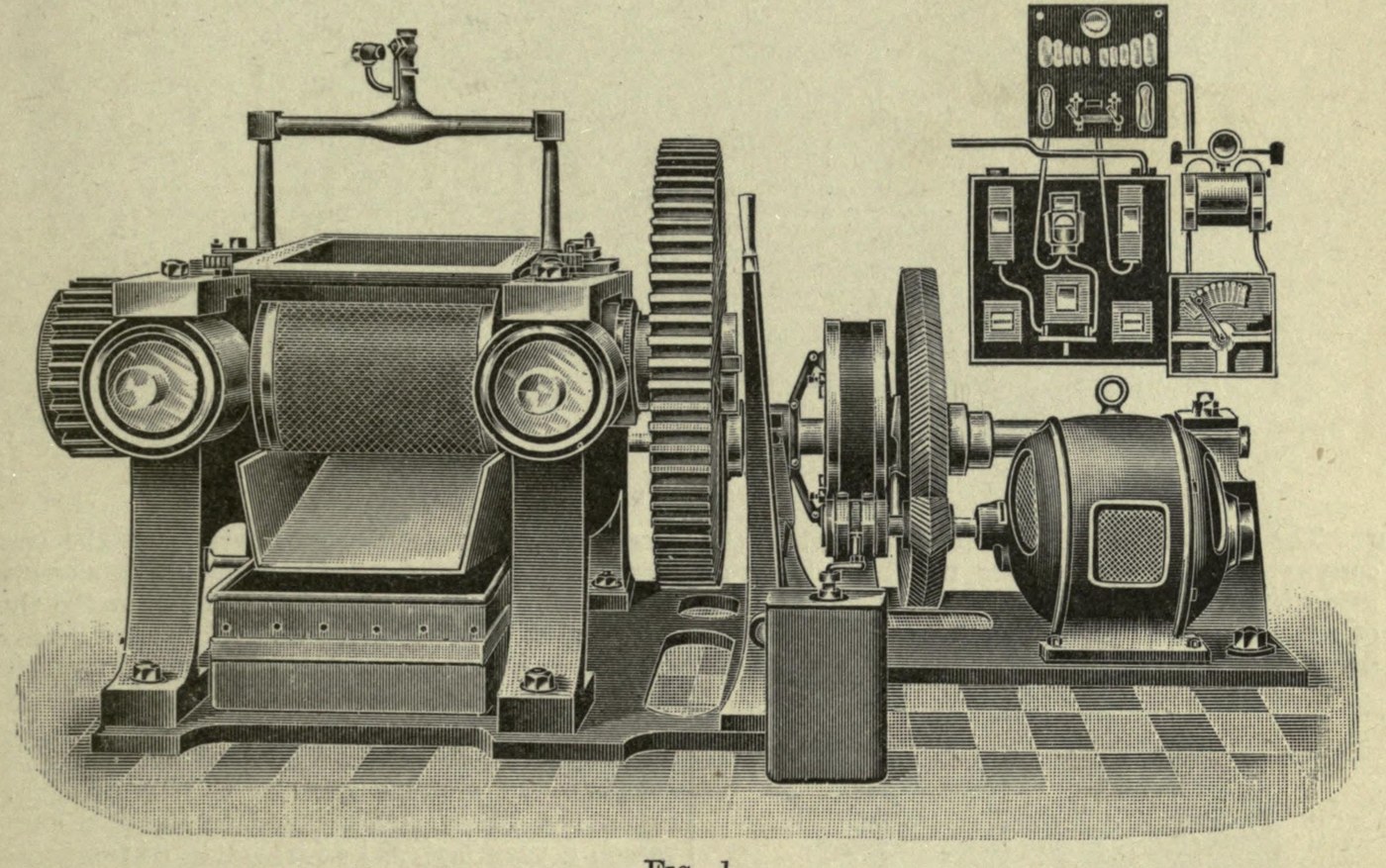


Rubber Compound: Raw Rubber Washed, Dried and Mixed with Sulphur on Hot Rolls (Thorpe, 1913)
How a rubber works of 1913 turned raw rubber into a 'mixing' ready for shaping and curing: the rubber is washed between corrugated rolls under running water, dried on racks, broken down on hot smooth rolls until plastic, and then worked together with fillers and finally sulphur into an even dough.
Very few goods were made of rubber and sulphur alone: pure mixings cost too much and are too soft for most uses.
Unknown: which fillers, and how much of them and of sulphur. Thorpe names the kinds of materials but gives no mixing.
Source: T. E. Thorpe, Dictionary of Applied Chemistry vol. IV (1913), pp. 586-587. Picture: Fig. 1, a washing machine.
Àárín
3-4 days drying
Ìlànà
1
1
Steep and wash the rubber
Steep and wash the rubber
Cut the raw rubber into lumps or slabs and steep them for some hours in warm water. Pass them again and again through corrugated, diamond-cut or fluted rolls running at a speed difference of 6 : 4 down to one tooth, with a stream of water on the rubber, until the rough crepe-like sheet is clean and thin.
Àwọn ohun èlò fún ìgbésẹ̀ yìí:
 Àwo rọ́bà tí a fi èéfín gbẹ1 raw rubber
 Omi1 warm, then running
Àwọn irinṣẹ́ tí a nílò:
 Ẹ̀rọ rọ́bà olórólà méjì
2
2
Dry on racks
Dry on racks
Hang the sheet on racks in a drying room until it holds only about 0.25-0.5 per cent moisture: about 3-4 days at about 80°F with good ventilation. Cooler, drier air is better, as warm rubber turns soft and tacky.
Àwọn irinṣẹ́ tí a nílò:
 Àká Ìgbẹ
3
3
Break it down
Break it down
Pass the dry rubber repeatedly through the steam-heated smooth rolls of the mixing machine, which run at different speeds, tightening the rolls gradually until the rubber is thoroughly plastic.
Àwọn irinṣẹ́ tí a nílò:
Ẹ̀rọ rọ́bà olórólà méjì4
4
Mix in the fillers and sulphur
Mix in the fillers and sulphur
Add the other materials gradually: reclaimed rubber, ground waste, 'substitute' and other organic fillers first, then the minerals and the sulphur last. Work it into a thoroughly even dough without overworking ('tiring') the rubber.
Àwọn ohun èlò fún ìgbésẹ̀ yìí:
 Ohun èlò tí a kò mọ̀1 fillers and minerals; not given
 Ìyẹ̀fun sulfur1 amount not given
Àwọn irinṣẹ́ tí a nílò:
Ẹ̀rọ rọ́bà olórólà méjìÀwọn ohun-èlò
4- 1 raw rubberÀyè
- 1 warm, then runningÀyè
- 1 fillers and minerals; not givenÀyè
- 1 amount not givenÀyè
Ìtọ́nisọ́nà yìí ń ṣe
CC0 Àgbègbè Gbogbogbò
Blueprint yìí ti jáde lábẹ́ CC0. O lè ṣe àdàkọ, yí padà, pín, àti lò láìsí ìyọ̀ǹda.
Ṣàtìlẹ́yìn Olùṣẹ́dá nípa rírà àwọn ọjà nipasẹ̀ Blueprint wọn Ẹ̀san Olùṣẹ́dá tí àwọn Olùtajà gbé kalẹ̀, tàbí ṣẹ̀dá àtúnṣe tuntun ti Blueprint yìí kí o sì fi sínú Blueprint rẹ gẹ́gẹ́ bí ìsopọ̀ láti pín owó-wíwọlé.