IṢẸ́ ỌNÀ
ẸWÀ ÀTI ÌLERA
IṢẸ́ ỌWỌ́
ÀṢÀ ÀTI ÌTÀN
ÌṢERÉ
ÀYÍKÁ
OÚNJẸ ÀTI OHUN MÍMU
REVERSE ENGINEERING
SÁYẸ́ǸSÌ
ERÉ ÌDÁRAYÁ
ÌMỌ̀-Ẹ̀RỌ
ÀWỌN OHUN WÍWỌ̀
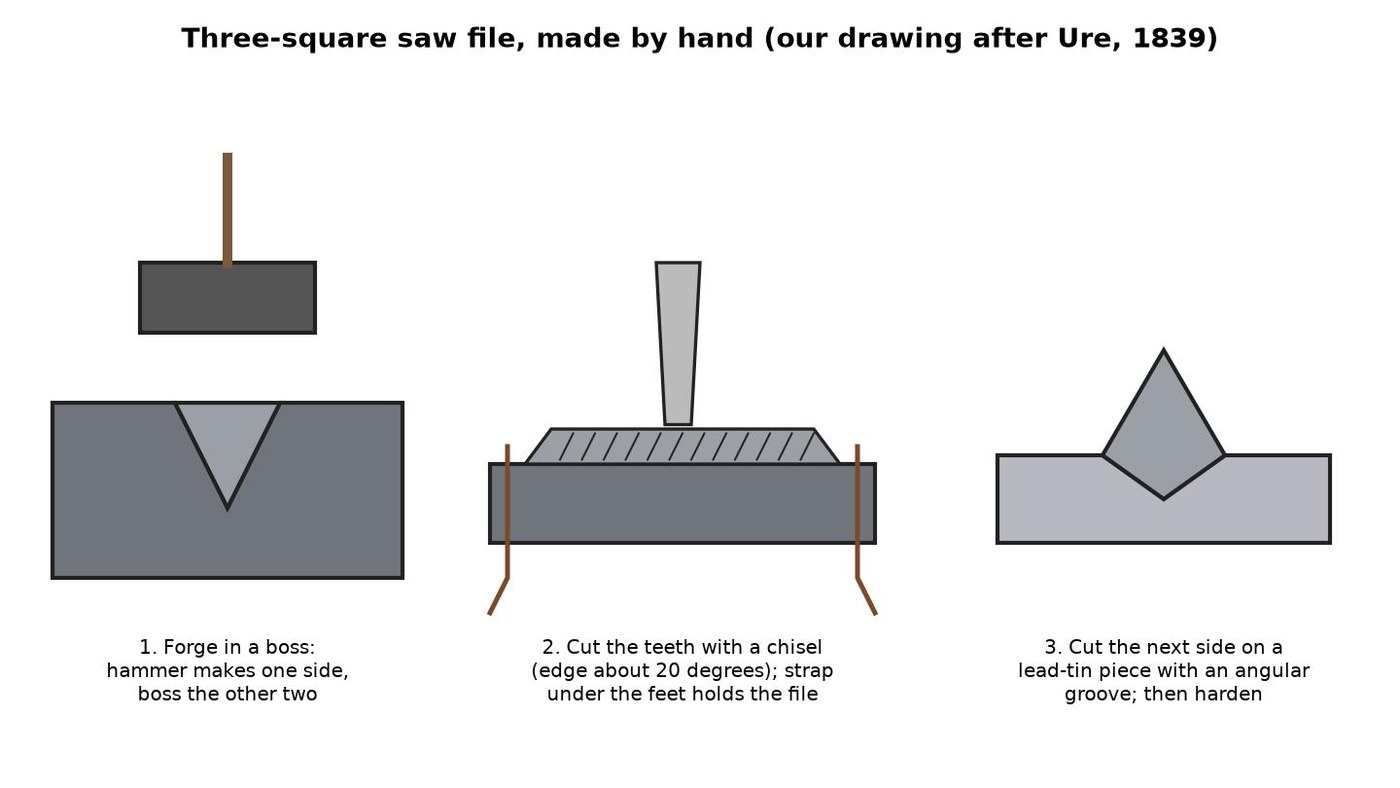


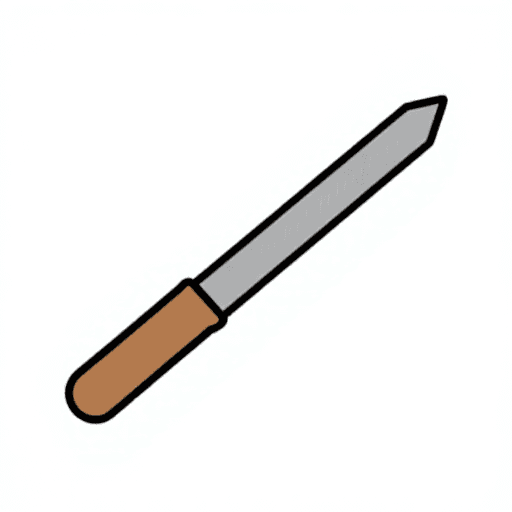
Saw File: Three-Square, Forged in a Boss, Cut by Hand and Hardened (Ure, 1839)
The file for sharpening saw teeth as Sheffield made it by hand: a three-square (triangular) bar of cast steel, not tapering, forged in a V-shaped boss, its teeth cut one by one with a chisel and hammer, then hardened under a coat of animal carbon and salt and quenched in cold spring water.
Ure says saw files in particular should be hardened with the carbon mixture, so they will cut iron and steel.
Not given: sizes and teeth per inch.
Source: A. Ure, Dictionary of Arts, Manufactures, and Mines (1839), File. Picture: our drawing.
Ilọsíwájú
Unknown
Ìlànà
1
1
Forge the blank
Forge the blank
Draw cast steel out square at the forge, then lay it with one angle down in a boss whose recess has two sides meeting at an angle, so the hammer forms one side and the boss the other two. Keep it the same size along its length (saw files are not tapered).
Àwọn ohun èlò fún ìgbésẹ̀ yìí:
 Irin líle tí a yọ́ nínú ìkòkò1 cast steel bar
 Ìwọ̀n tí a kò mọ̀1 ẹyọ
Àwọn irinṣẹ́ tí a nílò:
 Ìléru alágbẹ̀dẹ
 Ẹmú Alágbẹ̀dẹ
 Àwòṣe ìsàlẹ̀ ìyíká
 Òòlù
 Òòlù ńlá
2
2
Cut the teeth
Cut the teeth
On an anvil with a flat, even face, hold the file down with a leather strap over each end, the workman's feet in the straps like stirrups. Cut the teeth with a chisel a little broader than the file, sharpened to about 20 degrees, struck with a hammer of 1 to 6 lb. For single cut, run a fine file lightly over the teeth to take off the roughness; for double cut, cut a second set nearly at right angles to the first.
Àwọn irinṣẹ́ tí a nílò:
 Ìdí Alágbẹ̀dẹ Irin
 Okùn Awọ
 Àyà irin tútùÒòlù
 Ìfá Irin
3
3
Cut the other sides
Cut the other sides
To cut the next side, lay the file in a piece of lead-tin alloy with an angular groove, so the teeth already cut are not spoiled on the anvil.
Àwọn irinṣẹ́ tí a nílò:
 Wẹ́là tìnì-lédìÌdí Alágbẹ̀dẹ IrinÀyà irin tútùÒòlù
4
4
Coat for hardening
Coat for hardening
Distil shoemakers' and curriers' leather refuse in an iron still and powder the bright coal left. Grind about equal parts by bulk of this carbon and salt to the consistence of cream with water and cover the file with it.
Àwọn irinṣẹ́ tí a nílò:
 Ohun ìbíra irin
 Iyọ̀
 Omi
5
5
Harden
Harden
Hold the file by the tang in a fire of very small cokes, drawing it out often, until it is an even cherry red from tang to point. Plunge it straight down, quickly, into clear spring water as cold as possible.
Àwọn irinṣẹ́ tí a nílò:
Ìléru alágbẹ̀dẹ Èédú metalurgiẸmú Alágbẹ̀dẹOmi
6
6
Clean and oil
Clean and oil
Brush the file with water and powdered cokes until clean and metallic, wash it in two or three waters to take off all the salt, dip it in lime-water, dry it quickly before the fire and oil it while warm with olive oil containing a little oil of turpentine.
Àwọn irinṣẹ́ tí a nílò:
Èédú metalurgiOmi Omi ẹfun
 Òróró òlífì
 Tọ́pẹ́ńtáìnì
Àwọn ohun-èlò
2- 1 cast steel barÀyè
- 1 ẹyọÀyè
Àwọn irinṣẹ́ tó nílò
17- Àyè
- Àyè
- Àyè
- Àyè
- Àyè
- Àyè
- Àyè
- Àyè
- Àyè
Ìtọ́nisọ́nà yìí ń ṣe
CC0 Àgbègbè Gbogbogbò
Blueprint yìí ti jáde lábẹ́ CC0. O lè ṣe àdàkọ, yí padà, pín, àti lò láìsí ìyọ̀ǹda.
Ṣàtìlẹ́yìn Olùṣẹ́dá nípa rírà àwọn ọjà nipasẹ̀ Blueprint wọn Ẹ̀san Olùṣẹ́dá tí àwọn Olùtajà gbé kalẹ̀, tàbí ṣẹ̀dá àtúnṣe tuntun ti Blueprint yìí kí o sì fi sínú Blueprint rẹ gẹ́gẹ́ bí ìsopọ̀ láti pín owó-wíwọlé.