IṢẸ́ ỌNÀ
ẸWÀ ÀTI ÌLERA
IṢẸ́ ỌWỌ́
ÀṢÀ ÀTI ÌTÀN
ÌṢERÉ
ÀYÍKÁ
OÚNJẸ ÀTI OHUN MÍMU
REVERSE ENGINEERING
SÁYẸ́ǸSÌ
ERÉ ÌDÁRAYÁ
ÌMỌ̀-Ẹ̀RỌ
ÀWỌN OHUN WÍWỌ̀
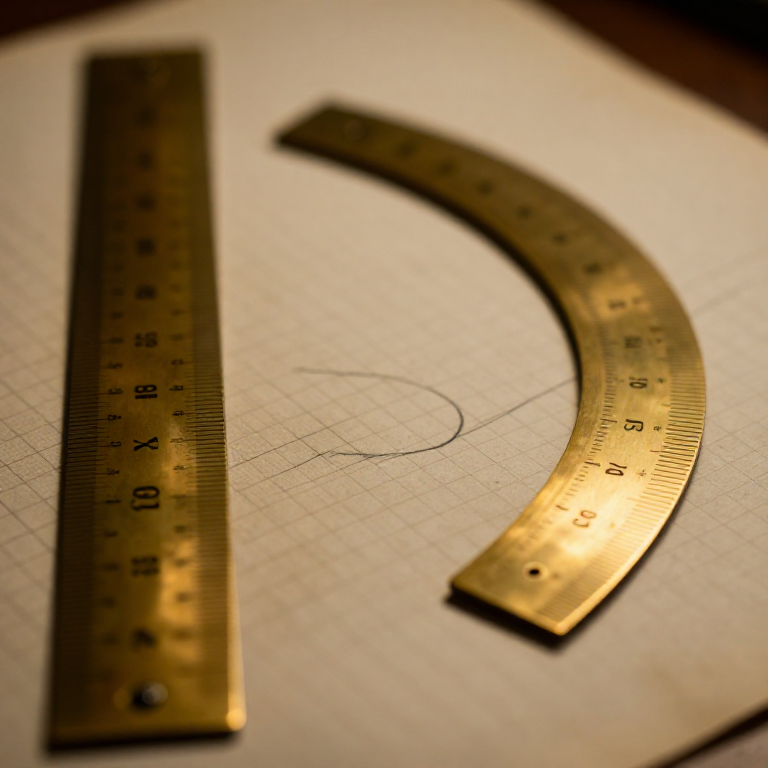


Newton's Method — Chase a Root Down Tangent Lines You Draw
A hands-on maths project: plot a curve on grid paper, draw the tangent line where it starts, slide down it to the axis, and repeat -- watching your guesses march onto the solution. This is Newton's method; a Python cell checks your root, and a compendium shows its power and its pitfalls.
Olùbẹ̀rẹ̀
30 minutes
Ìlànà
1
1
Following the slope to the answer
Following the slope to the answer
How do you solve an equation with no tidy formula? Around 1669 Isaac Newton gave an answer: guess, draw the tangent line to the curve there, and follow it down to where it crosses zero -- that landing point is a much better guess. Repeat, and you zoom in. You will do it with a ruler.
2
2
Plot the curve
Plot the curve
Rule a grid on card (your graph paper). Plot the curve y = x-cubed minus 2x minus 5 for x from 1.5 to 3 by working out a few points and joining them smoothly. It crosses the x-axis somewhere near x = 2 -- that crossing is the solution you are hunting.
Àwọn ohun èlò fún ìgbésẹ̀ yìí:
 Àkópọ̀ Bébà Líle Aláwọ̀1 ẹyọ
Àwọn irinṣẹ́ tí a nílò:
 Ìdíwọ̀n
 Àkójọ Pénsùlù Gíráfáìtì
3
3
Slide down the tangents
Slide down the tangents
Start at x = 2. Lay your ruler along the curve there to draw the tangent line, and mark where that straight line crosses the x-axis -- read off the new x. Move to that x on the curve, draw the new tangent, and mark where IT crosses. After just two or three tangents your marks pile up on the root, near x = 2.095.
Àwọn irinṣẹ́ tí a nílò:
 Ẹ̀rọ Ìṣirò
4
4
Check the root
Check the root
Ń ṣí ìwé Jupyter…
Àwọn irinṣẹ́ tí a nílò:
 Kọ̀ǹpútà TábìlìẸ̀rọ Ìṣirò
5
5
Compendium: fast, but handle with care
Compendium: fast, but handle with care
What your tangents teach. (1) Each step replaces the guess with x minus f(x) divided by the slope f'(x); near the root the accuracy doubles every step, dazzlingly fast. (2) Heron's ancient square-root trick is just Newton's method applied to 'x squared minus S'. (3) It needs a derivative (the slope) and a reasonable starting guess -- start in a bad spot, or near a flat part of the curve, and the tangents can fly AWAY from the root instead of toward it. (4) Given a good start, it is the default way computers solve equations in engineering, physics, computer graphics and the training of machine-learning models.
Àwọn ohun-èlò
2- Àyè
- 1 ewéÀyè
Àwọn irinṣẹ́ tó nílò
4- Àyè
- Àyè
Blueprint tó jọra
Àwọn blueprint wọ̀nyí pín ìmọ̀ — ọ̀nà, ohun-èlò tàbí ìlànà

CC0 Àgbègbè Gbogbogbò
Blueprint yìí ti jáde lábẹ́ CC0. O lè ṣe àdàkọ, yí padà, pín, àti lò láìsí ìyọ̀ǹda.
Ṣàtìlẹ́yìn Olùṣẹ́dá nípa rírà àwọn ọjà nipasẹ̀ Blueprint wọn Ẹ̀san Olùṣẹ́dá tí àwọn Olùtajà gbé kalẹ̀, tàbí ṣẹ̀dá àtúnṣe tuntun ti Blueprint yìí kí o sì fi sínú Blueprint rẹ gẹ́gẹ́ bí ìsopọ̀ láti pín owó-wíwọlé.