IṢẸ́ ỌNÀ
ẸWÀ ÀTI ÌLERA
IṢẸ́ ỌWỌ́
ÀṢÀ ÀTI ÌTÀN
ÌṢERÉ
ÀYÍKÁ
OÚNJẸ ÀTI OHUN MÍMU
REVERSE ENGINEERING
SÁYẸ́ǸSÌ
ERÉ ÌDÁRAYÁ
ÌMỌ̀-Ẹ̀RỌ
ÀWỌN OHUN WÍWỌ̀
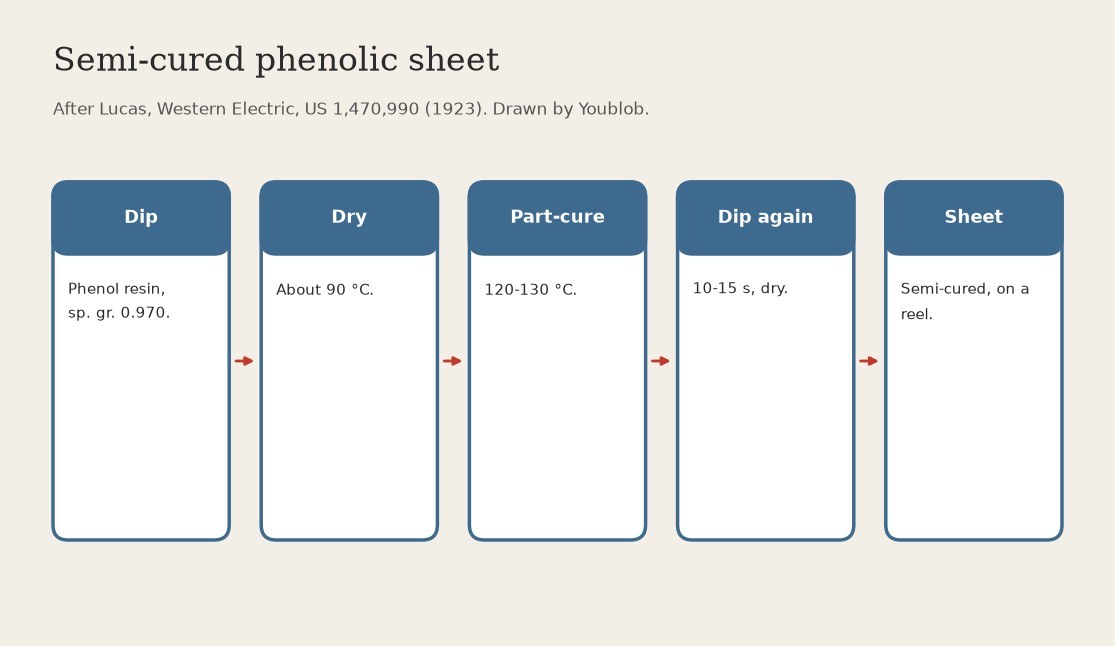


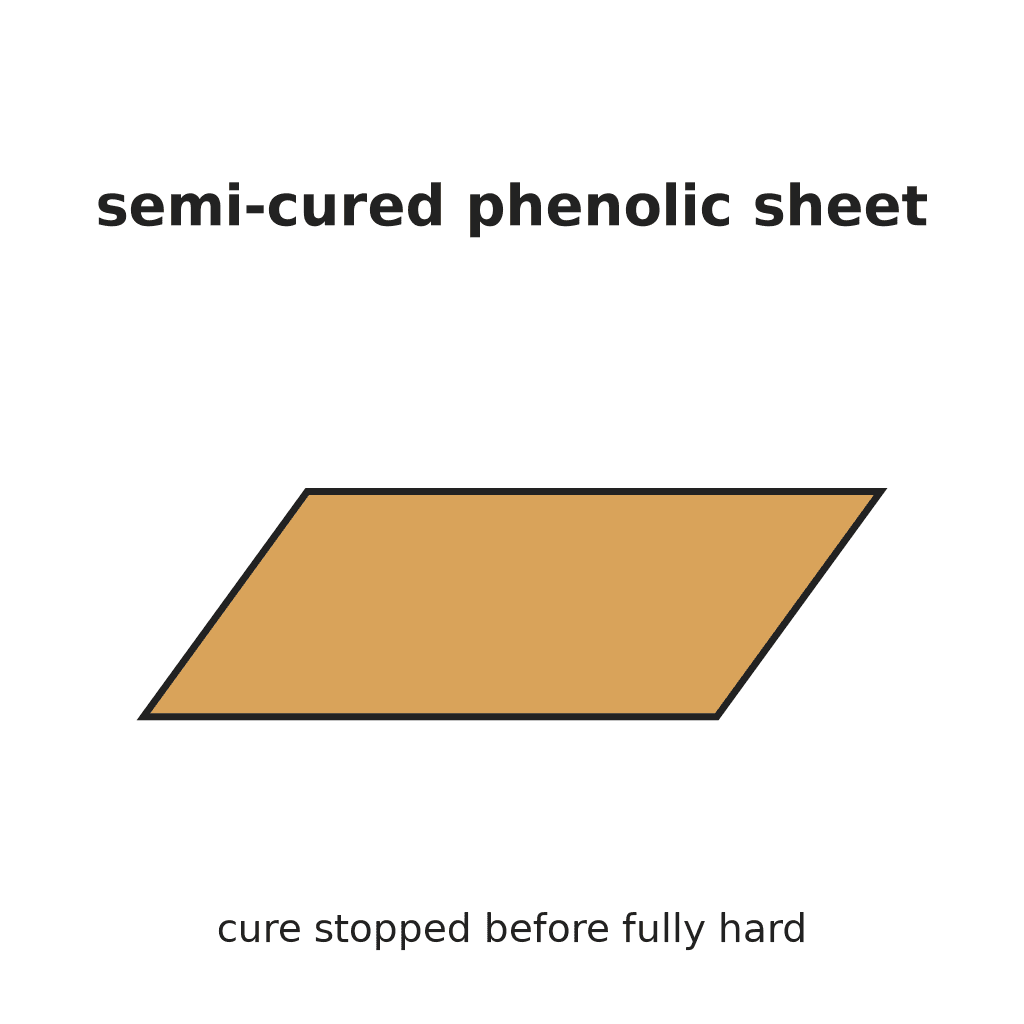
Semi-Cured Phenolic Sheet: Paper Dipped in Phenol Resin and Part-Cured at 120-130 °C (Lucas, Western Electric, US 1,470,990)
Paper soaked in phenol resin is dried, then cured only part of the way, so the resin is stiff but not yet hard. Lucas did this before the final hot press so the press would not squeeze the resin out of the fibres.
Result: a dry, partly cured phenolic sheet that a later coat of phenolic resin can still bond into.
Source: Lucas, US 1,470,990 (Western Electric, 1923). Stopping before his final hot press is ours. Not given: the solvent in his resin, paper grade, mercerising strengths. Picture drawn by Youblob.
Àárín
1 hour
Ìlànà
1
1
Dip the paper in phenol resin
Dip the paper in phenol resin
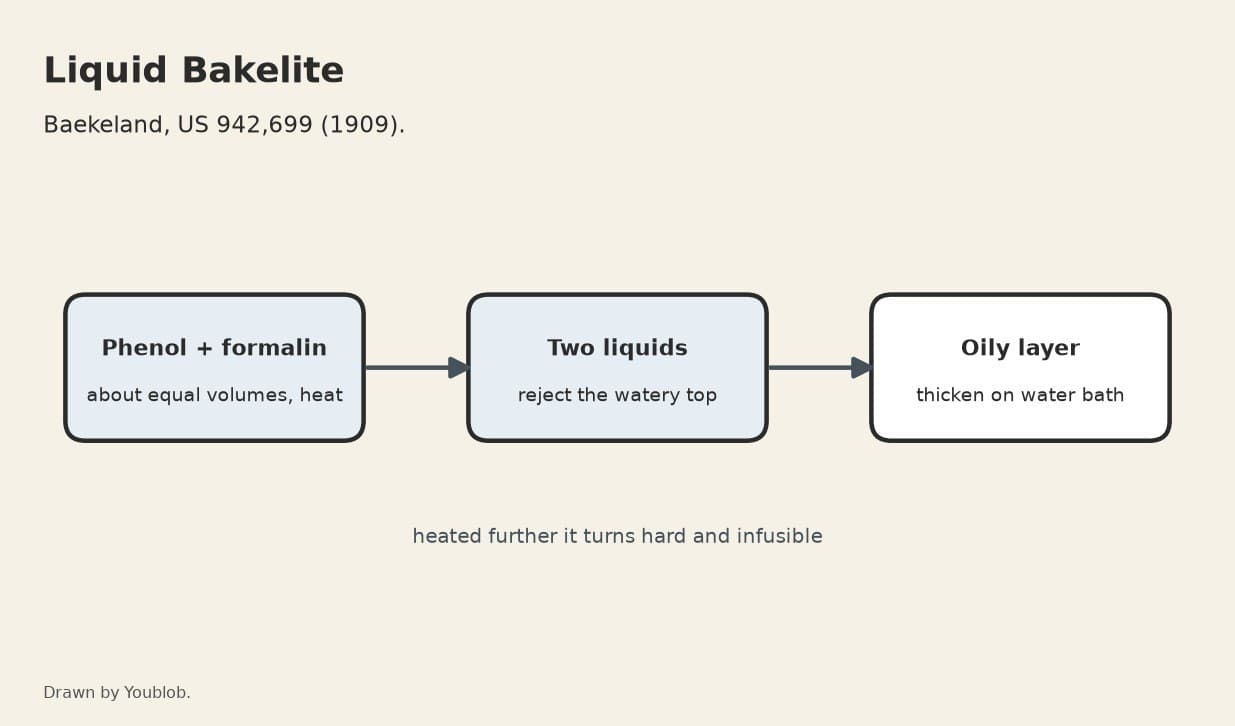
Run the paper through a bath of phenol resin of specific gravity about 0.970: about 2 minutes for plain paper, 1 minute or less if mercerised first. Ours: Liquid Bakelite as the resin; Lucas does not say how it was thinned.
Àwọn ohun èlò fún ìgbésẹ̀ yìí:
 Bébà1 as required
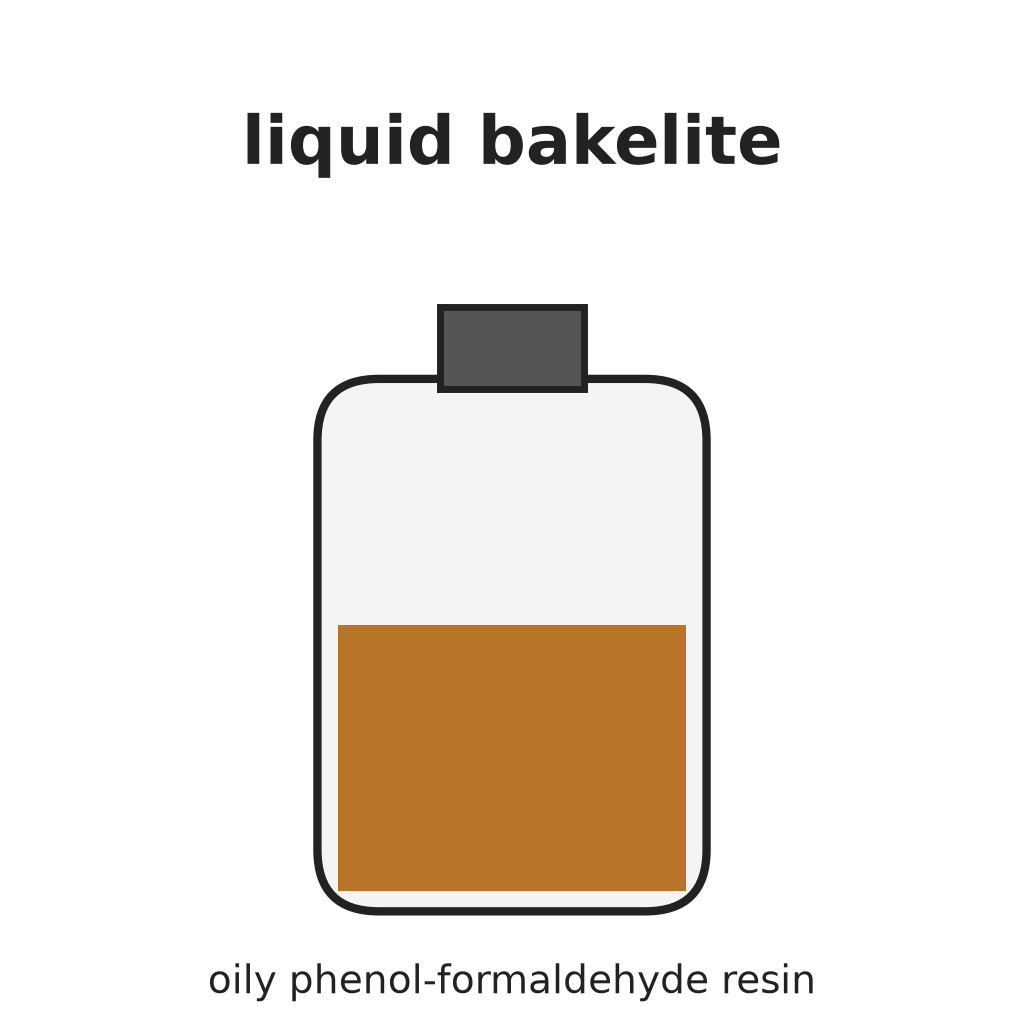 Bakelite olómi (èsì ìdàpọ̀ fénólì àti fọ́málídáháìdì)1 as required
Àwọn irinṣẹ́ tí a nílò:
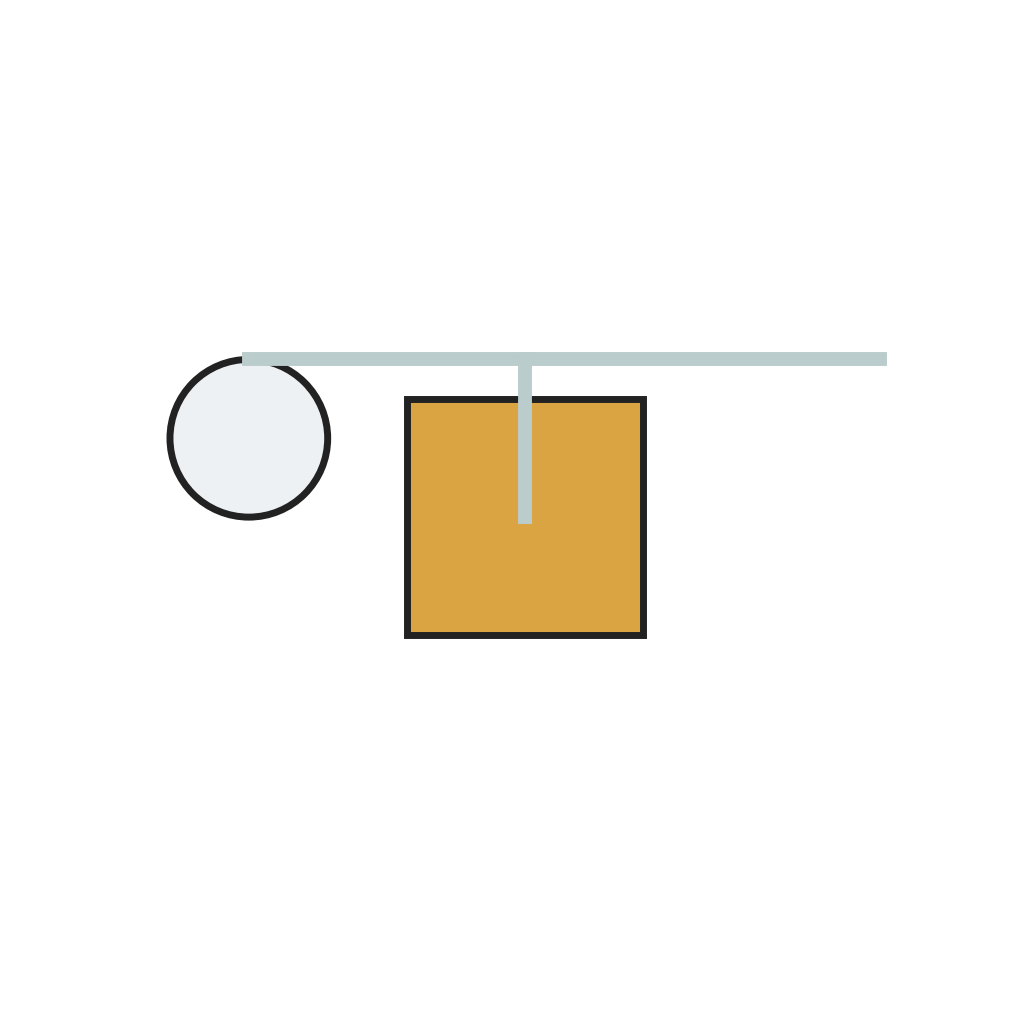 Ìlà ìrinmọ́ pre-preg
 Òǹwọ̀n ìwúwo omi
2
2
Optional: mercerise the paper first
Optional: mercerise the paper first
For faster, fuller soaking, first pass the paper through caustic soda, squeeze, wash in water, neutralise in an acid, wash again and dry. Strengths and the acid: not given.
Àwọn irinṣẹ́ tí a nílò:
 Ẹ̀fun onídìí (sodium hydroxide)Ìlà ìrinmọ́ pre-preg
3
3
Dry at about 90 °C
Dry at about 90 °C
Dry the soaked paper in an oven at about 90 °C, just long enough to dry it.
Àwọn irinṣẹ́ tí a nílò:
 Ààrò ìgbẹ̀
4
4
Part-cure at 120-130 °C
Part-cure at 120-130 °C
Pass the dry paper through a curing oven at 120-130 °C for about 10 minutes (Lucas's description; his claim 4 says 125 °C for about 10 seconds). The resin sets as stiff as the fibres, but does not harden through.
Àwọn irinṣẹ́ tí a nílò:
 Ààrò ìjinná
5
5
Dip again for 10-15 seconds and dry
Dip again for 10-15 seconds and dry
Dip the part-cured paper in phenol resin again for 10-15 seconds, then dry at about 90 °C until it can be wound on a reel. Stop here: the sheet is semi-cured. Lucas's next step, stacking and hot pressing, cures it fully.
Àwọn ohun èlò fún ìgbésẹ̀ yìí:
Bakelite olómi (èsì ìdàpọ̀ fénólì àti fọ́málídáháìdì)1 as requiredÀwọn irinṣẹ́ tí a nílò:
Ìlà ìrinmọ́ pre-pregÀàrò ìgbẹ̀Àwọn ohun-èlò
2- 1 as requiredÀyè
- Àyè
Àwọn irinṣẹ́ tó nílò
5- Àyè
- Àyè
Ìtọ́nisọ́nà yìí ń ṣe
Blueprint tó jọra
Àwọn blueprint wọ̀nyí pín ìmọ̀ — ọ̀nà, ohun-èlò tàbí ìlànà
CC0 Àgbègbè Gbogbogbò
Blueprint yìí ti jáde lábẹ́ CC0. O lè ṣe àdàkọ, yí padà, pín, àti lò láìsí ìyọ̀ǹda.
Ṣàtìlẹ́yìn Olùṣẹ́dá nípa rírà àwọn ọjà nipasẹ̀ Blueprint wọn Ẹ̀san Olùṣẹ́dá tí àwọn Olùtajà gbé kalẹ̀, tàbí ṣẹ̀dá àtúnṣe tuntun ti Blueprint yìí kí o sì fi sínú Blueprint rẹ gẹ́gẹ́ bí ìsopọ̀ láti pín owó-wíwọlé.