IṢẸ́ ỌNÀ
ẸWÀ ÀTI ÌLERA
IṢẸ́ ỌWỌ́
ÀṢÀ ÀTI ÌTÀN
ÌṢERÉ
ÀYÍKÁ
OÚNJẸ ÀTI OHUN MÍMU
REVERSE ENGINEERING
SÁYẸ́ǸSÌ
ERÉ ÌDÁRAYÁ
ÌMỌ̀-Ẹ̀RỌ
ÀWỌN OHUN WÍWỌ̀
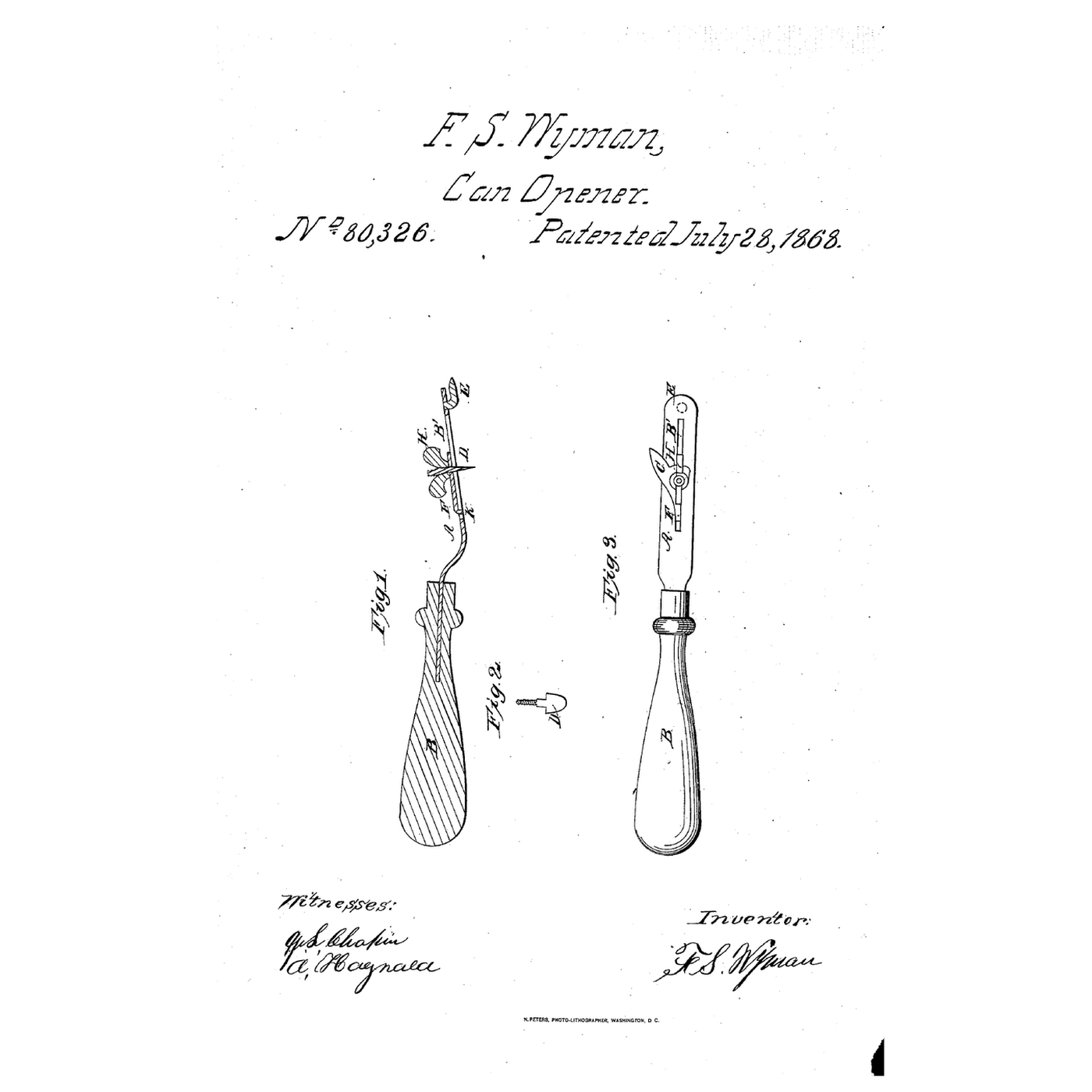

Side-Knife Can Opener: Round Holes and Long Ones With One Tool
A circular opener makes round holes only, too small for a flat sardine box.
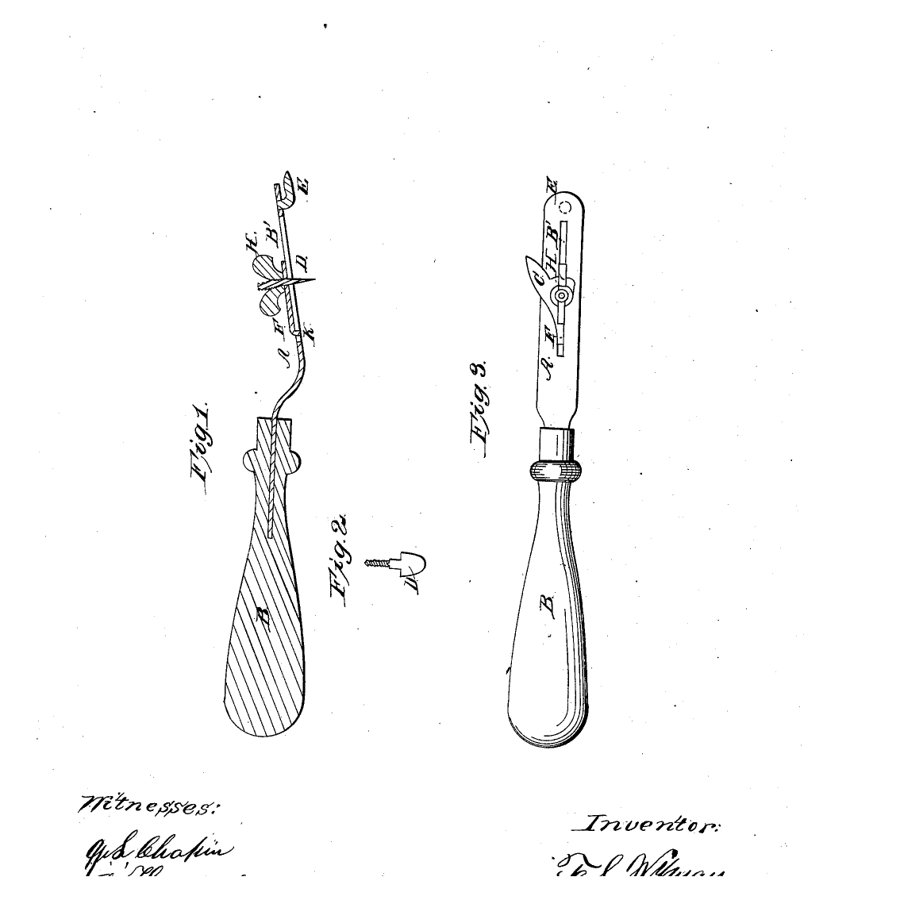
F. S. Wyman of Chicago received US 80,326, dated 28 July 1868, for a side knife rigidly attached to the adjustable plate of a circular can opener, "by means of which square and longitudinal openings may be made in fruit-cans with the same tool which is used to make round holes": a slotted plate with a pointed pivot, and a plate sliding in the slot carrying both the circular knife and the side knife, fixed by a set screw.
This rung compares round and long openings, then builds the plate, pivot and both knives and cuts each kind.
Àárín
About 3 hours
Ìlànà
1
1
Round against long
Round against long
Ń ṣí ìwé Jupyter…
2
2
A circular opener before it
A circular opener before it
The embedded blueprint cuts round holes about a spike. Wyman adds a side knife to the sliding plate for straight cuts.
3
3
Read US 80,326
Read US 80,326
"A represents a slotted plate, fitted in a handle, B, and having a pointed pivot, E, used as an axis for the knife D, the same as in the patent of S. D. Lecompte, of September 19, 1865, and has a plate, F, arranged to run in the slot B' and support the knife D, held in place by a set-screw, H, when moved in said slot to suit the semi-diameter of the opening to be made."
4
4
Make the slotted plate
Make the slotted plate
Cut 120 mm of 25 × 3 mm flat bar. Saw and file a 5 mm slot 70 mm long in it, starting 20 mm from one end.
Àwọn ohun èlò fún ìgbésẹ̀ yìí:
 Ọ̀pá Pẹrẹsẹ Irin Pẹ́lẹ́1 ẹyọ
Àwọn irinṣẹ́ tí a nílò:
 Ayùn Irin
 Ìdìmú Tábìlì
 Ẹ̀rọ Ìlùkòkò Aláìlókùn
 Àkójọ Orí Ìlùkòkò
 Àkójọ Ìfá Kékeré
 Ìdíwọ̀n
5
5
Fit the pivot
Fit the pivot
Drill the plate's end 5 mm. File an M5 screw to a sharp point and fix it there with a nut, point down.
Àwọn ohun èlò fún ìgbésẹ̀ yìí:
 Skurú ẹ̀rọ1 ẹyọ
 Nọ́ọ̀tì Onígun Mẹ́fà1 ẹyọ
Àwọn irinṣẹ́ tí a nílò:
Ẹ̀rọ Ìlùkòkò AláìlókùnÀkójọ Orí Ìlùkòkò Àwọn Ìfá (Ìfá Ọwọ́)
 Kọ́kọ́rọ́ tí a lè ṣàtúnṣe
6
6
Make the sliding plate and knives
Make the sliding plate and knives
Cut a 30 × 22 mm plate of flat bar. Cut a pointed circular knife and a straight side knife from 1 mm sheet; epoxy the first under its centre and the second along its side so it lies close to the slotted plate's edge.
Àwọn ohun èlò fún ìgbésẹ̀ yìí:
Ọ̀pá Pẹrẹsẹ Irin Pẹ́lẹ́1 ẹyọ Ìwé Irin Pẹ́lẹ́1 ẹyọ
 Ẹpọ́ksì Ẹ̀yà Méjì1 ẹyọ
Àwọn irinṣẹ́ tí a nílò:
Ayùn Irin Ìlàǹkàn irinÀwọn Ìfá (Ìfá Ọwọ́)
 Òkúta ìpọ́n
 Gílásì Ààbò Tí Ó Mọ́
7
7
Set screw and handle
Set screw and handle
Drill the sliding plate for an M5 screw through the slot with a washer and nut. Fit a hardwood handle with epoxy.
Àwọn ohun èlò fún ìgbésẹ̀ yìí:
Skurú ẹ̀rọ1 ẹyọ Wáṣà Pẹrẹsẹ1 ẹyọNọ́ọ̀tì Onígun Mẹ́fà1 ẹyọ
 Àwọn dowel igi líle1 ẹyọẸpọ́ksì Ẹ̀yà Méjì1 ẹyọ
Àwọn irinṣẹ́ tí a nílò:
Ẹ̀rọ Ìlùkòkò AláìlókùnÀkójọ Orí ÌlùkòkòKọ́kọ́rọ́ tí a lè ṣàtúnṣe8
8
The patent drawing
The patent drawing
US 80,326 drawing sheet, public domain (expired patent).
9
9
Cut a round and a long opening
Cut a round and a long opening
Cut a round hole in one sealed can about the pivot. On a second, cut four straight sides with the side knife, rocking the handle along each; time both and measure the openings.
Àwọn ohun èlò fún ìgbésẹ̀ yìí:
 Ìgò irin1 ẹyọ
Àwọn irinṣẹ́ tí a nílò:
 Aago Ìdúró
 Òṣùwọ̀n Kálípà Díjítà Ìnṣì 6
 Ìbọ̀wọ́ Iṣẹ́ Awọ
10
10
Knives that slip, bind or wander
Knives that slip, bind or wander
Side-knife can opener troubleshooting.
Flow
Loading...
11
11
History and honest limits
History and honest limits
**F. S. Wyman** of Chicago received US 80,326, dated 28 July 1868. The plate and side knife should be one piece of steel, with a nib guiding it in the slot, the knife tempered to hold an edge. He did not claim the circular opener, patented by S. D. Lecompte on 19 September 1865, nor the side knife broadly, a similar device having been patented by S. P. Chapin on 17 July 1866; he claimed the side knife rigidly attached to the adjustable plate.
**Honest limits.** Epoxy stands in for his one-piece steel plate and knife, and nothing is tempered. Your times are the result.
Àwọn ohun-èlò
8- Àyè
- 2 ẹyọÀyè
- 2 ẹyọÀyè
- 1 ẹyọÀyè
- 2 ẹyọÀyè
- 1 ẹyọÀyè
- 1 ẹyọÀyè
- 1 ẹyọÀyè
Àwọn irinṣẹ́ tó nílò
14- Àyè
- Àyè
- 1 vendor sell this, none ship to you yetÀyè
- Àyè
- Àyè
- Àyè
- Àyè
Ìtọ́nisọ́nà yìí ń ṣe
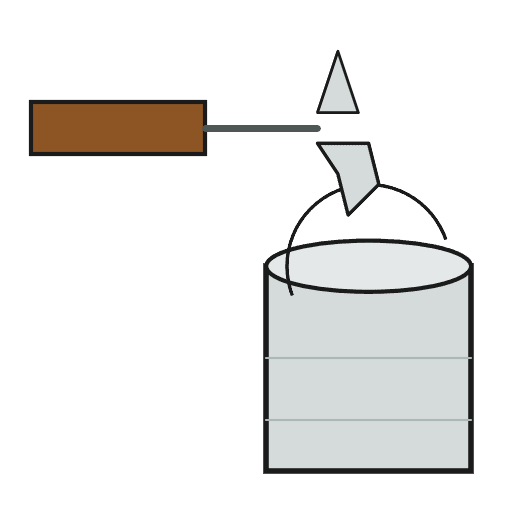
Blueprint tó jọra
Àwọn blueprint wọ̀nyí pín ìmọ̀ — ọ̀nà, ohun-èlò tàbí ìlànà
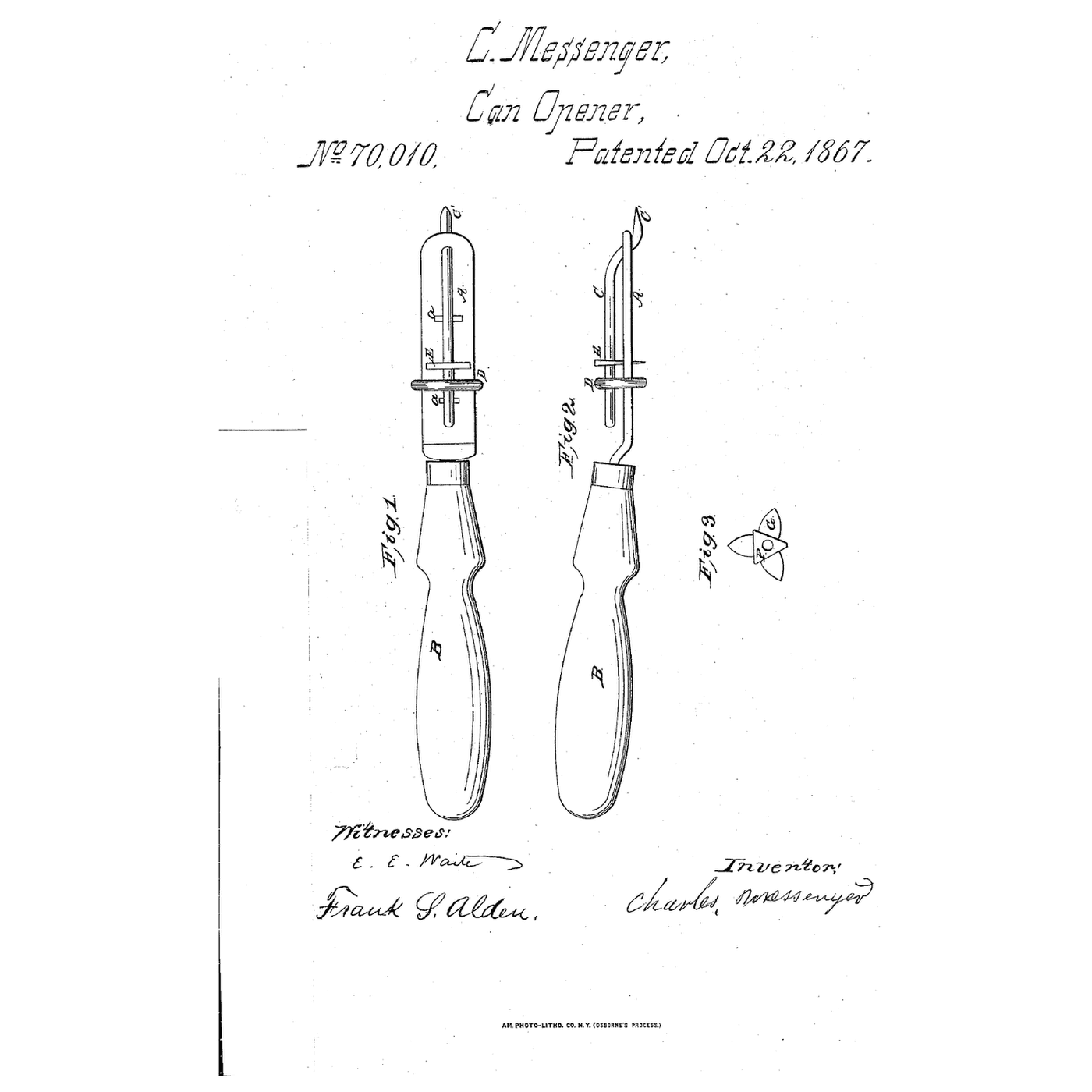
The Pivot-Point Can Opener: A Spike at the Centre, a Blade Set to the Size
láti ọwọ́ Martin
OÚNJẸ ÀTI OHUN MÍMU
26
0
0
0
0
0
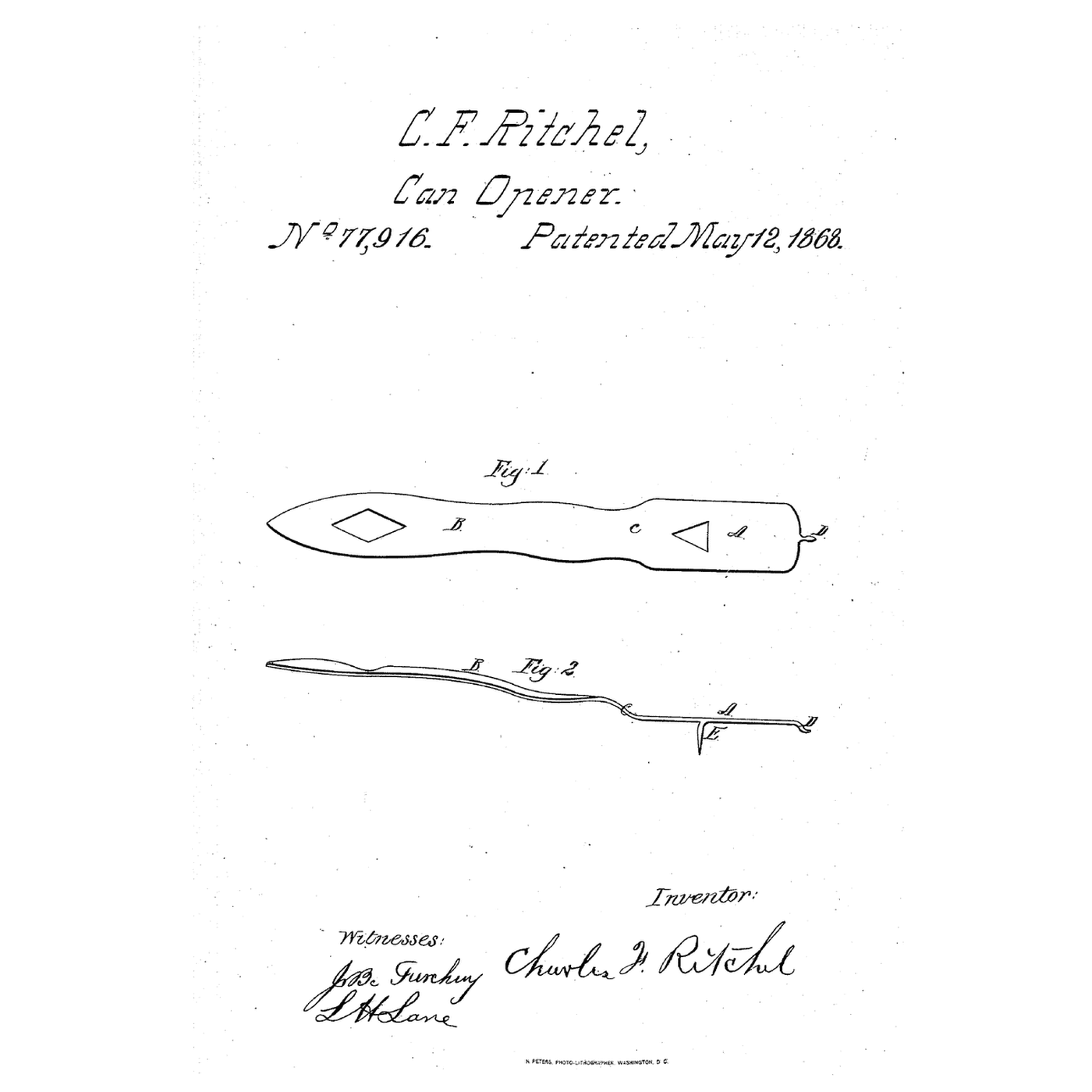
The One-Piece Sheet Can Opener: Point and Blade Struck From the Blank
láti ọwọ́ Mary
OÚNJẸ ÀTI OHUN MÍMU
26
0
0
0
0
0
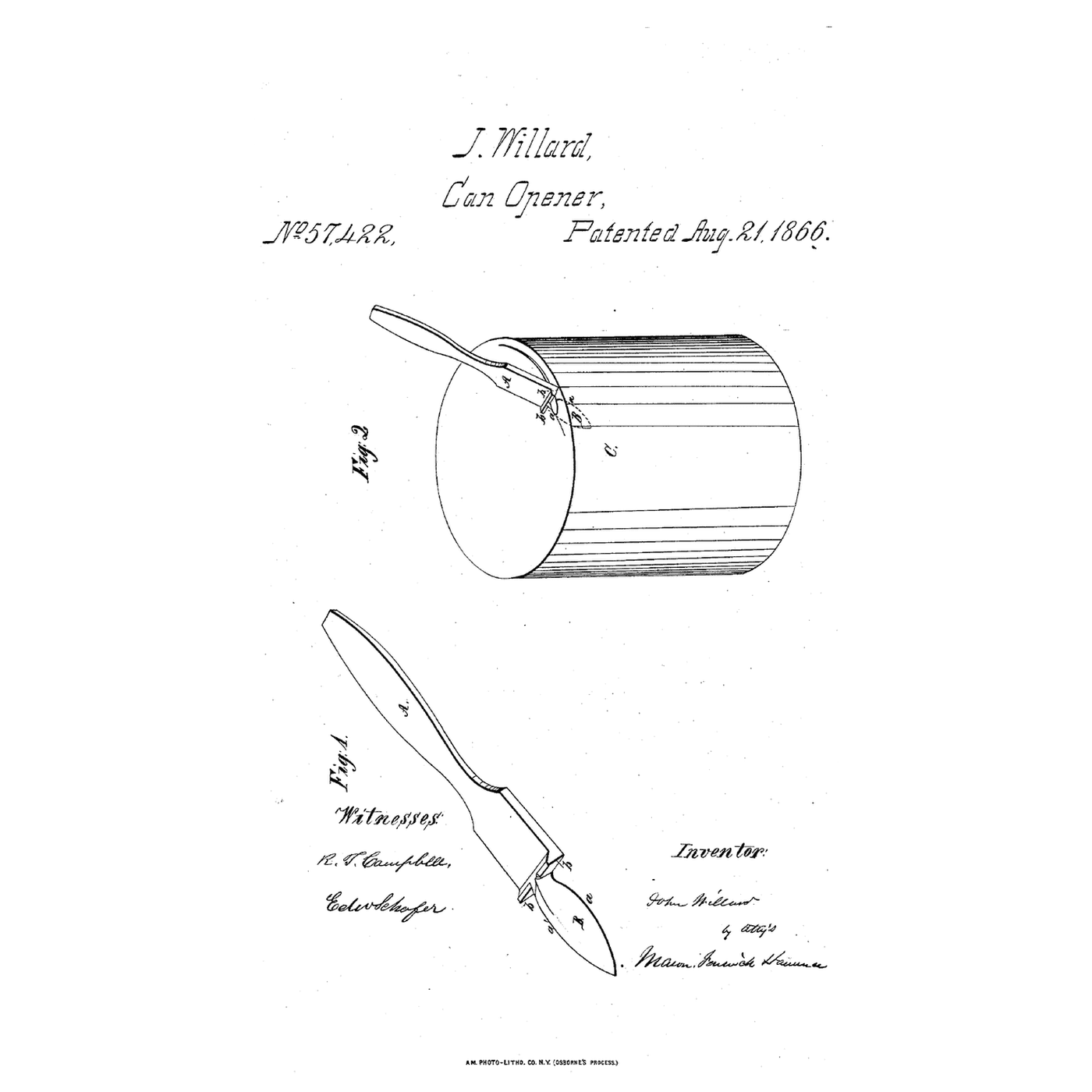
The Shouldered-Blade Can Opener: The Shoulders Are the Fulcrum
láti ọwọ́ Forge
Iṣẹ́ Irin
28
0
0
0
0
0
CC0 Àgbègbè Gbogbogbò
Blueprint yìí ti jáde lábẹ́ CC0. O lè ṣe àdàkọ, yí padà, pín, àti lò láìsí ìyọ̀ǹda.
Ṣàtìlẹ́yìn Olùṣẹ́dá nípa rírà àwọn ọjà nipasẹ̀ Blueprint wọn Ẹ̀san Olùṣẹ́dá tí àwọn Olùtajà gbé kalẹ̀, tàbí ṣẹ̀dá àtúnṣe tuntun ti Blueprint yìí kí o sì fi sínú Blueprint rẹ gẹ́gẹ́ bí ìsopọ̀ láti pín owó-wíwọlé.