IṢẸ́ ỌNÀ
ẸWÀ ÀTI ÌLERA
IṢẸ́ ỌWỌ́
ÀṢÀ ÀTI ÌTÀN
ÌṢERÉ
ÀYÍKÁ
OÚNJẸ ÀTI OHUN MÍMU
REVERSE ENGINEERING
SÁYẸ́ǸSÌ
ERÉ ÌDÁRAYÁ
ÌMỌ̀-Ẹ̀RỌ
ÀWỌN OHUN WÍWỌ̀
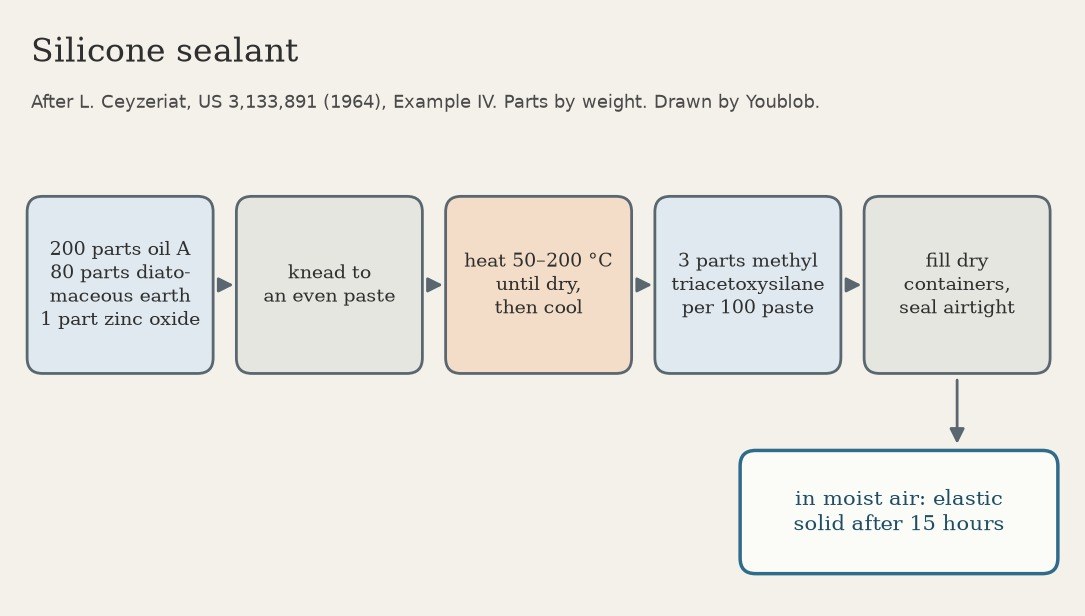
Youblob · CC0

Silicone Sealant: Silicone Oil, Diatomaceous Earth and Methyl Triacetoxysilane (Ceyzeriat 1964)
A one-part silicone that stays a paste in a sealed tube and turns to rubber in the open air. The moisture in the air splits the methyl triacetoxysilane, which then ties the hydroxyl ends of the oil together. Louis Ceyzeriat of Rhône-Poulenc made it with diatomaceous earth as the filler; his Example IV paste became an elastic solid in 15 hours.
Source: L. Ceyzeriat (Rhône-Poulenc), US 3,133,891 (1964), Example IV and columns 3–4. His filler was Celite 350; we use raw diatomaceous earth in its place. Picture drawn by Youblob.
Àárín
1 day
Ìlànà
1
1
Knead the paste
Knead the paste
Knead 200 parts of hydroxyl-ended silicone oil with 80 parts of diatomaceous earth and 1 part of zinc oxide until it is an even paste. All parts are by weight.
Àwọn ohun èlò fún ìgbésẹ̀ yìí:
 Epo silikoni oni ipari hydroxyl200 parts
 Ilẹ̀ diatom80 parts
 Lulú Sínkì Ọ́ksídì1 parts
Àwọn irinṣẹ́ tí a nílò:
 Ẹ̀rọ ìpọn
 Òǹwọ̀n ìdọ́gba
2
2
Drive out all moisture
Drive out all moisture
If the sealant is to be kept, it must be made dry: a paste with zinc oxide especially needs this. Heat it in the mixer at 50–200 °C, stirring, until every trace of moisture is gone, then let it cool. The patent gives that range, not one temperature or time.
Àwọn irinṣẹ́ tí a nílò:
Ẹ̀rọ ìpọn Pátákó Gbígbóná
 Ẹ̀rọ Ìwọ̀n Ooru
3
3
Mix in the silane
Mix in the silane
Add 3 parts of methyl triacetoxysilane for every 100 parts of paste: 8.4 parts for the whole 281 parts (our arithmetic). Keep the air out while you mix.
Àwọn ohun èlò fún ìgbésẹ̀ yìí:
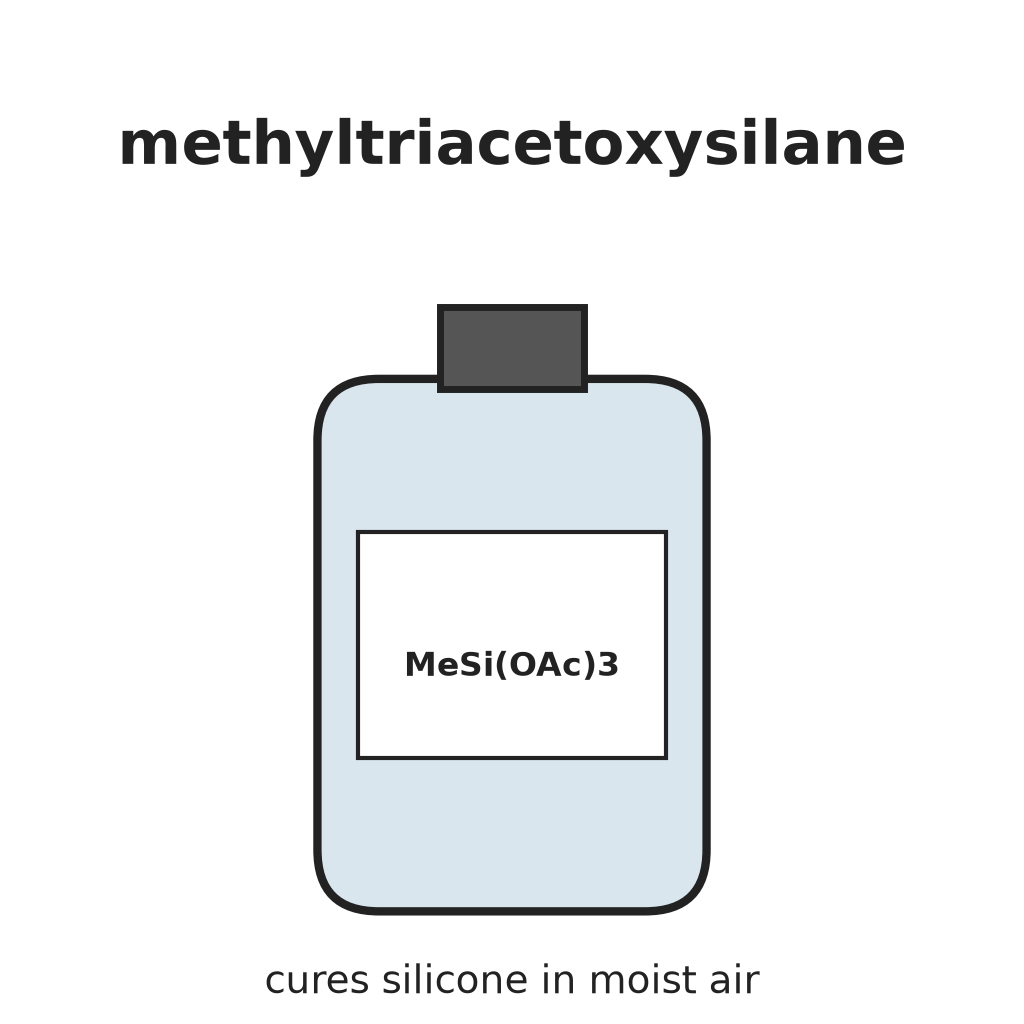 Mẹ́tílítíráásẹ́tọ́ksísílénì8.4 parts
Àwọn irinṣẹ́ tí a nílò:
Ẹ̀rọ ìpọnÒǹwọ̀n ìdọ́gba4
4
Fill dry containers and seal them
Fill dry containers and seal them
Without letting any water in, fill it into dry containers and seal them airtight. Kept like this it stays usable for many months.
Àwọn irinṣẹ́ tí a nílò:
 Ohun ìkó tí afẹ́fẹ́ kò lè wọ̀
5
5
Use: it cures in the air
Use: it cures in the air
Spread or press it where it is needed and leave it in the air. Ceyzeriat's paste was an elastic solid after 15 hours. Pressed as a 2 mm sheet it tested 25.6 kg/cm² in tension, 290 % stretch and Shore A 50; after 24 hours, 39 kg/cm², 260 % and Shore A 58.
Àwọn irinṣẹ́ tí a nílò:
 Àwo ìyípadà
Àwọn ohun-èlò
4- 200 partsÀyè
- 80 partsÀyè
- 1 partsÀyè
- 8.4 partsÀyè
Àwọn irinṣẹ́ tó nílò
6- Àyè
- Àyè
Ìtọ́nisọ́nà yìí ń ṣe

Blueprint tó jọra
Àwọn blueprint wọ̀nyí pín ìmọ̀ — ọ̀nà, ohun-èlò tàbí ìlànà
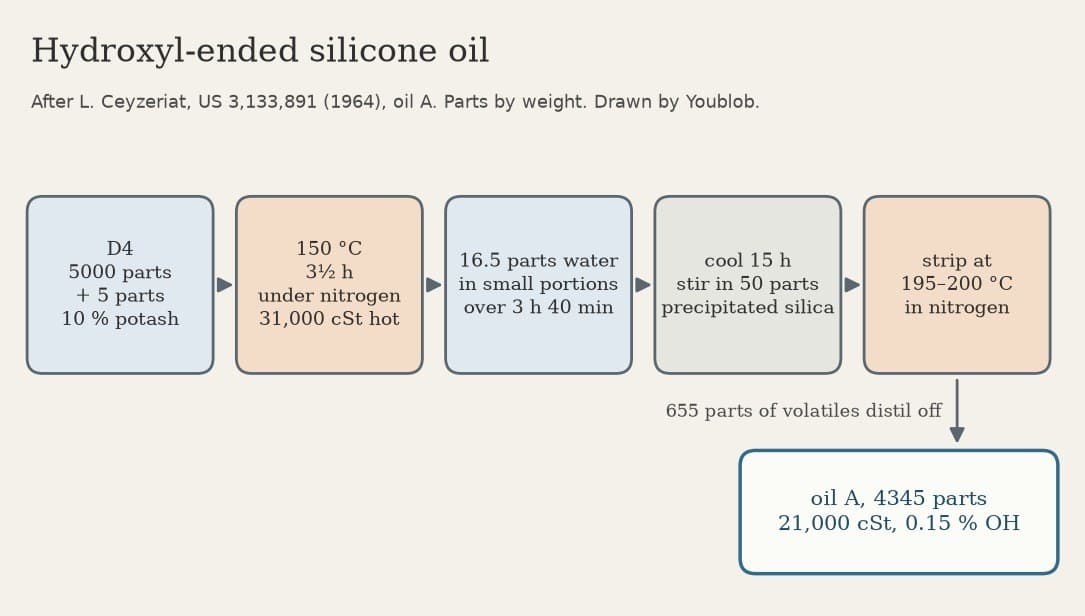
Hydroxyl-Ended Silicone Oil: D4 Opened with Potash, Then Water (Ceyzeriat 1964)
láti ọwọ́ Charlie
Ti Ilé-iṣẹ́
9
0
0
0
0
0
Léwu
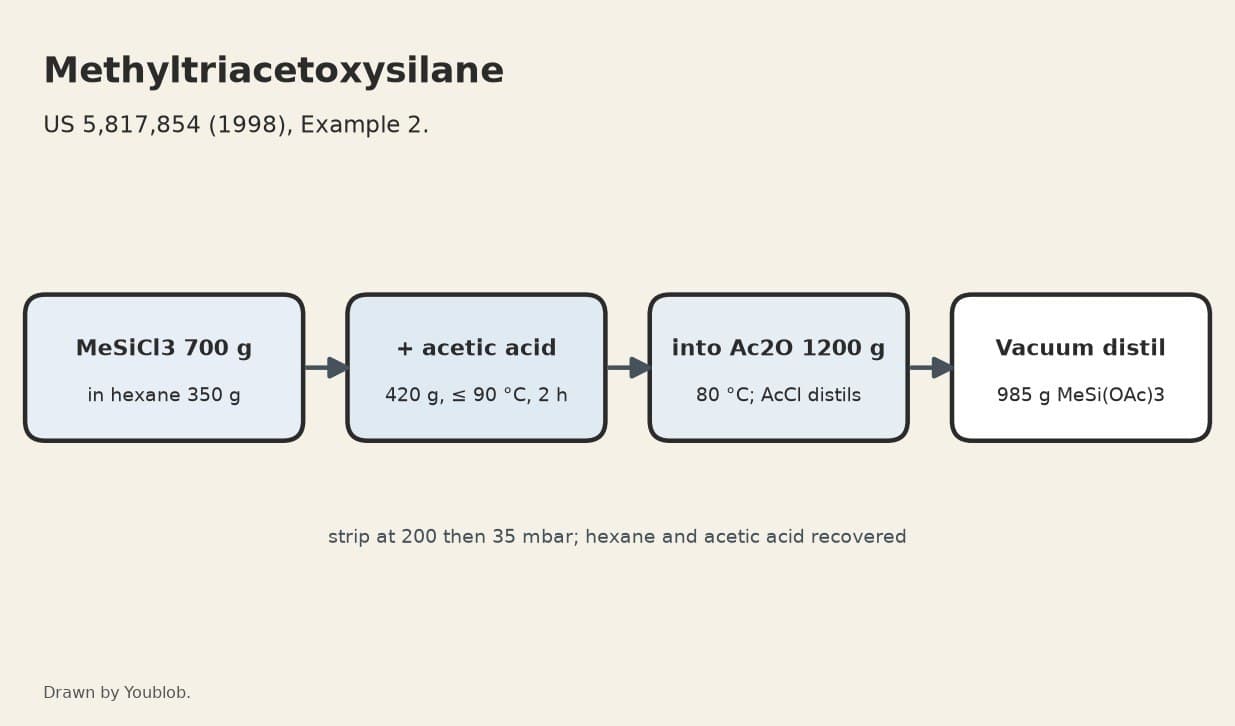
Methyltriacetoxysilane: Methyltrichlorosilane with Acetic Acid, Then Acetic Anhydride
láti ọwọ́ Charlie
Ti Ilé-iṣẹ́
12
0
0
0
0
0
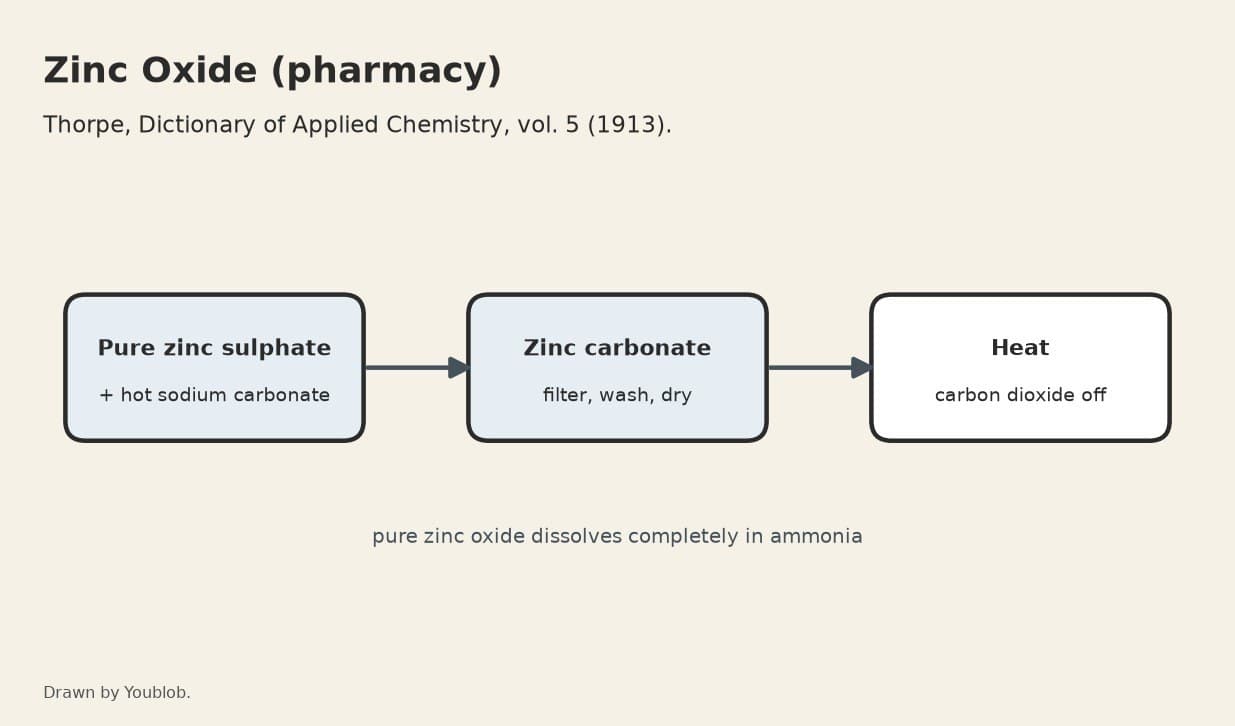
Zinc Oxide (Pharmacy): Zinc Carbonate Precipitated with Hot Soda, Then Heated
láti ọwọ́ Charlie
Inorganic
16
0
0
0
0
0
CC0 Àgbègbè Gbogbogbò
Blueprint yìí ti jáde lábẹ́ CC0. O lè ṣe àdàkọ, yí padà, pín, àti lò láìsí ìyọ̀ǹda.
Ṣàtìlẹ́yìn Olùṣẹ́dá nípa rírà àwọn ọjà nipasẹ̀ Blueprint wọn Ẹ̀san Olùṣẹ́dá tí àwọn Olùtajà gbé kalẹ̀, tàbí ṣẹ̀dá àtúnṣe tuntun ti Blueprint yìí kí o sì fi sínú Blueprint rẹ gẹ́gẹ́ bí ìsopọ̀ láti pín owó-wíwọlé.