IṢẸ́ ỌNÀ
ẸWÀ ÀTI ÌLERA
IṢẸ́ ỌWỌ́
ÀṢÀ ÀTI ÌTÀN
ÌṢERÉ
ÀYÍKÁ
OÚNJẸ ÀTI OHUN MÍMU
REVERSE ENGINEERING
SÁYẸ́ǸSÌ
ERÉ ÌDÁRAYÁ
ÌMỌ̀-Ẹ̀RỌ
ÀWỌN OHUN WÍWỌ̀
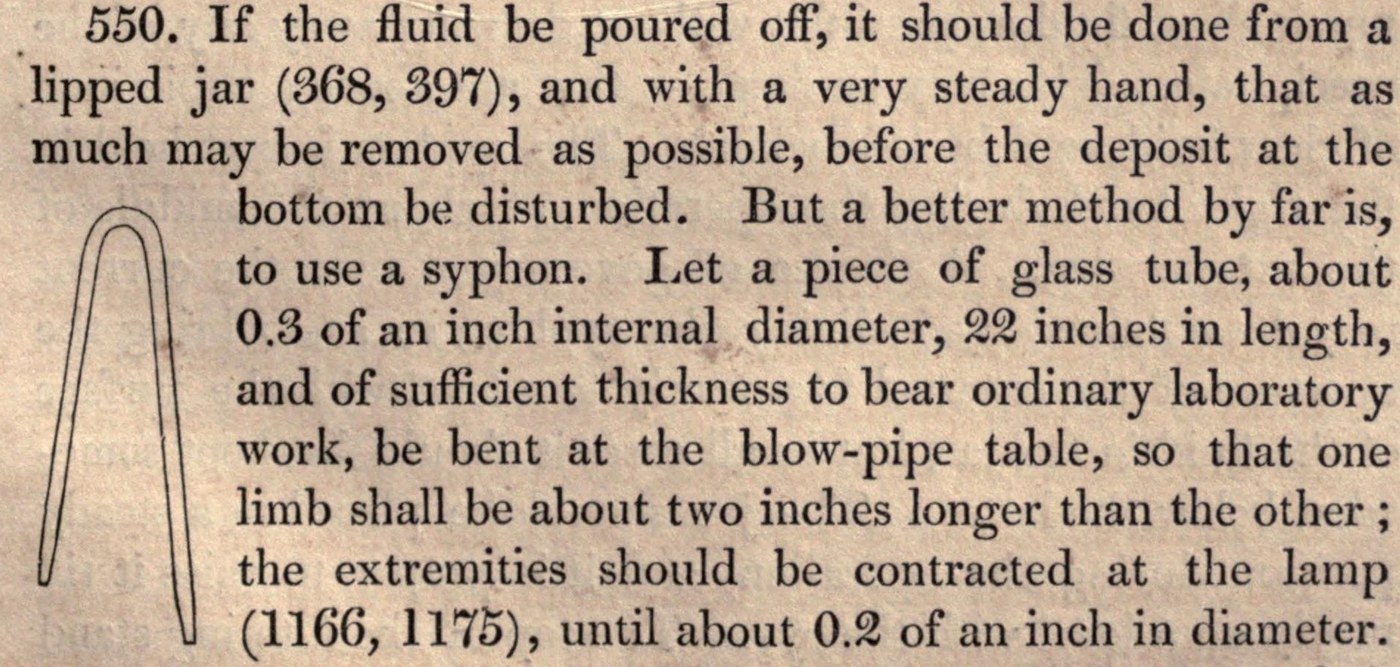


Siphon Tube: Glass Tube Bent with Drawn-Down Ends (Faraday, 1830)
A glass siphon for drawing clear liquid off a settled deposit, which Michael Faraday (1830) rated far better than pouring. He bends a glass tube about 0.3 inch inside and 22 inches long so that one leg is about 2 inches longer than the other, and draws both ends down to about 0.2 inch.
The narrow ends hold the liquid in while one end is closed with a finger; the wide body lets it run fast.
Source: M. Faraday, Chemical Manipulation (1830), §550, pp. 241-242. Picture: his text and figure.
Àárín
Unknown
Ìlànà
1
1
Read Faraday
Read Faraday
"Let a piece of glass tube, about 0.3 of an inch internal diameter, 22 inches in length, and of sufficient thickness to bear ordinary laboratory work, be bent at the blow-pipe table, so that one limb shall be about two inches longer than the other; the extremities should be contracted at the lamp, until about 0.2 of an inch in diameter."
2
2
Cut the tube
Cut the tube
Take glass tube about 0.3 in. inside diameter, thick enough for ordinary laboratory work, and cut 22 in. off it: make a deep mark round it with the edge of a sharp three-square file, then break it like a stick, pulling the hands slightly apart (§1152). Wall thickness in figures is not given (unknown).
Àwọn ohun èlò fún ìgbésẹ̀ yìí:
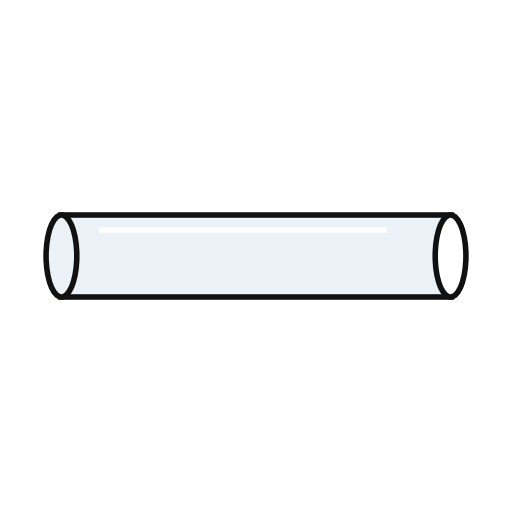 Ọpọ́n gíláàsì1 22 in.
Àwọn irinṣẹ́ tí a nílò:
 Àwọn Ìfá (Ìfá Ọwọ́)
3
3
Bend it
Bend it
Bend the tube in the flame of the blow-pipe table so that one leg is about 2 in. longer than the other. For so sharp a bend, do not bend it all at one spot: heat and bend one part as far as it will go without narrowing the bore, then heat the next part and carry the curve on until the legs are close (§1160).
Àwọn irinṣẹ́ tí a nílò:
 Ọ̀gọ̀ ìfẹ́ dígí orí tábìlì
4
4
Draw down the ends
Draw down the ends
Heat each end and pull it along its length so that it lengthens and narrows (§1166), until the opening is about 0.2 in. across.
Àwọn irinṣẹ́ tí a nílò:
Ọ̀gọ̀ ìfẹ́ dígí orí tábìlì5
5
Use it
Use it
Hold the siphon upside down with the short leg higher, fill it with water from Faraday's dropping-bottle (a wash bottle does the same job), holding its beak against the side of the opening so no air bubbles are caught; close the long leg with a finger and fill the short leg too. Turn it over, put the short leg into the liquid and lift the finger: the clear liquid runs out. A finger on the outer end slows or stops it; keep the inner end clear of the deposit (§§550-551).
Àwọn irinṣẹ́ tí a nílò:
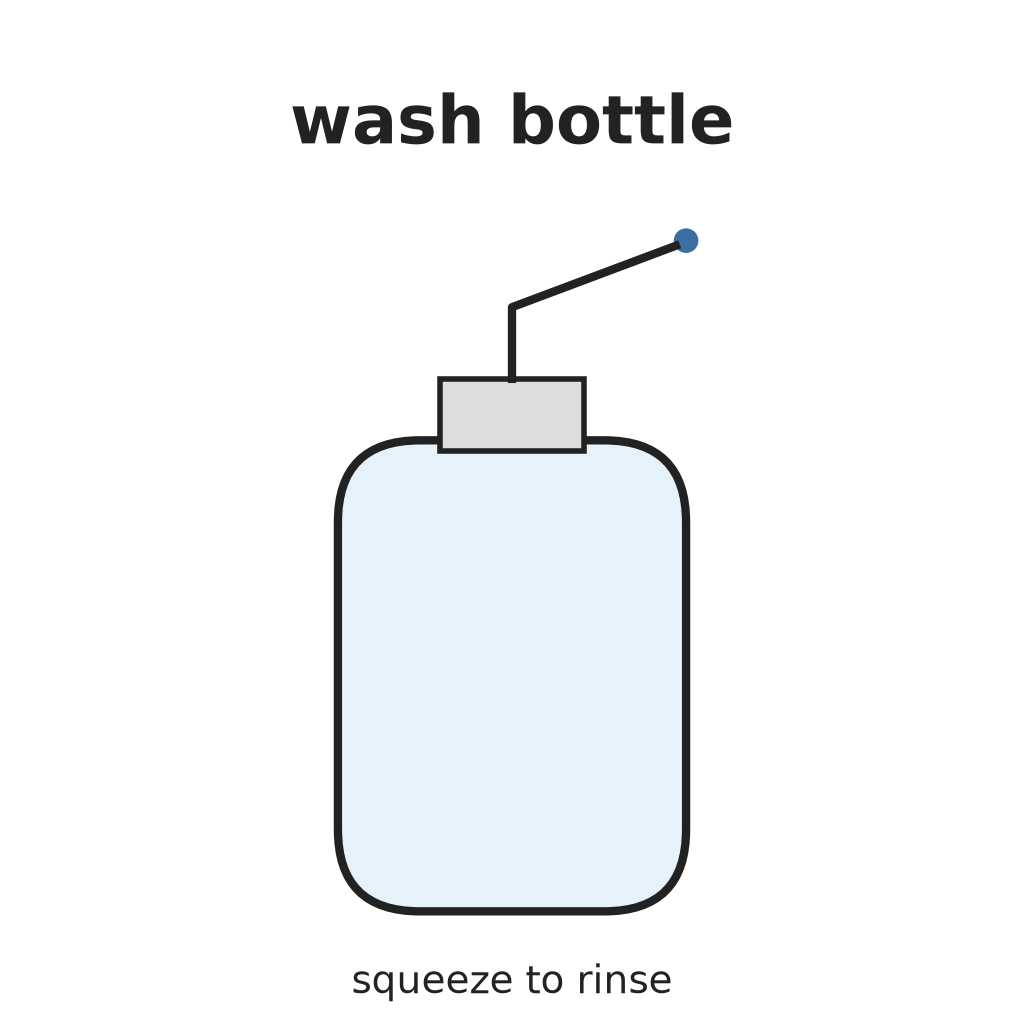 Ìgò Fífọ̀
Àwọn ohun-èlò
1- 1 22 in.Àyè
Ìtọ́nisọ́nà yìí ń ṣe

CC0 Àgbègbè Gbogbogbò
Blueprint yìí ti jáde lábẹ́ CC0. O lè ṣe àdàkọ, yí padà, pín, àti lò láìsí ìyọ̀ǹda.
Ṣàtìlẹ́yìn Olùṣẹ́dá nípa rírà àwọn ọjà nipasẹ̀ Blueprint wọn Ẹ̀san Olùṣẹ́dá tí àwọn Olùtajà gbé kalẹ̀, tàbí ṣẹ̀dá àtúnṣe tuntun ti Blueprint yìí kí o sì fi sínú Blueprint rẹ gẹ́gẹ́ bí ìsopọ̀ láti pín owó-wíwọlé.