IṢẸ́ ỌNÀ
ẸWÀ ÀTI ÌLERA
IṢẸ́ ỌWỌ́
ÀṢÀ ÀTI ÌTÀN
ÌṢERÉ
ÀYÍKÁ
OÚNJẸ ÀTI OHUN MÍMU
REVERSE ENGINEERING
SÁYẸ́ǸSÌ
ERÉ ÌDÁRAYÁ
ÌMỌ̀-Ẹ̀RỌ
ÀWỌN OHUN WÍWỌ̀

Inclined-Wheel Cam Dog Power: A Dog Turns a Tilted Platform; a Zig-Zag Cam Rocks the Churn Lever
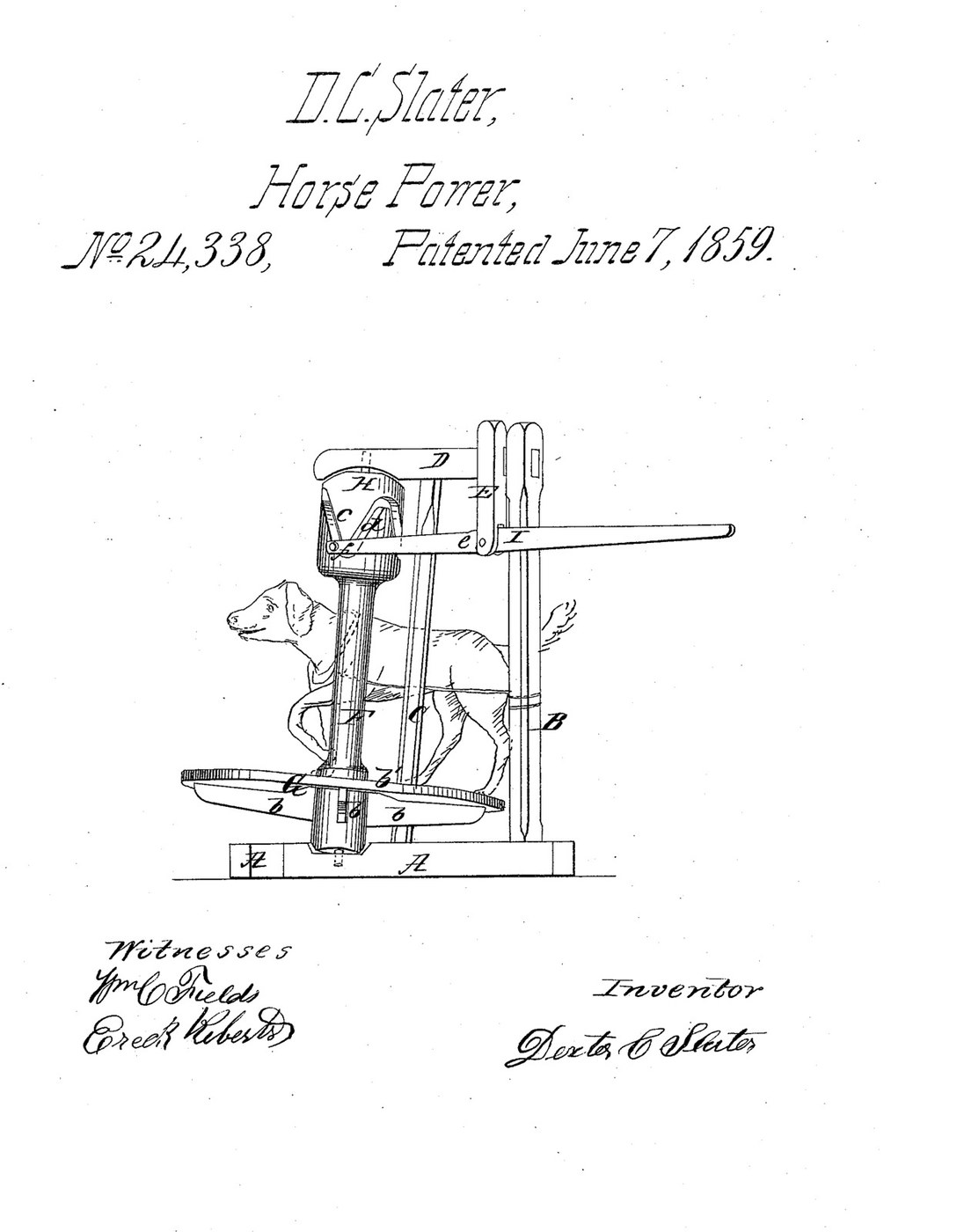
Dexter C. Slater of Laurens, New York, received US 24,338, dated 7 June 1859, for a simple, portable dog power for light machinery such as churns. A tilted platform is fixed square to an inclined shaft; a dog walking on it turns it. On the shaft's upper part a cam has a zig-zag groove right round it; a roller on the end of a lever runs in the groove, so the lever rocks on its pin as the shaft turns, and the work is taken from the lever.
This rung builds it full size for a dog, working a bucket churn's dasher.
Ilọsíwájú
About 3 days, plus printing
Ìlànà
1
1
Slope, strokes and stroke length
Slope, strokes and stroke length
Ń ṣí ìwé Jupyter…
2
2
A dog's tread-wheel working a churn, before it
A dog's tread-wheel working a churn, before it
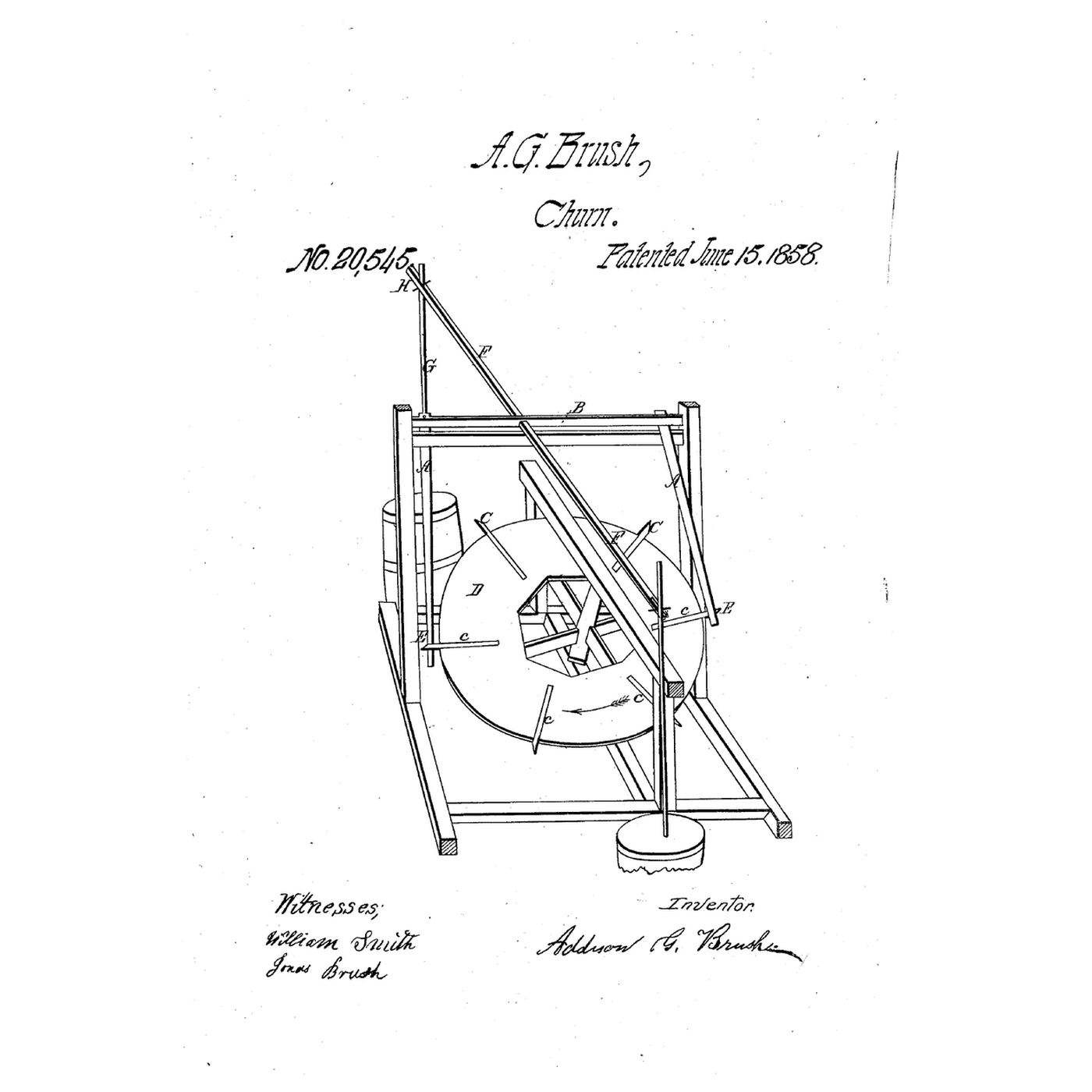
Brush rocked a shaft with tappets on the wheel's rim. Slater rocks a lever with a grooved cam on the wheel's own shaft.
3
3
Read US 24,338
Read US 24,338
"The dog is placed on the wheel G, and rotates it by the movement of his legs, and the cam H, as it rotates gives a vibrating motion to the lever I, from which the power is taken."
4
4
Print the cam segment
Print the cam segment
A quarter of cam H with its share of the zig-zag groove. Print four. PETG, 0.2 mm layers, 50 % infill, 5 walls.
5
5
Print the step block
Print the step block
The 15-degree block on the sill for the shaft's lower bearing. PETG, 0.2 mm layers, 50 % infill, 5 walls.
6
6
Sills, posts and bar D
Sills, posts and bar D
From 70 mm square timber lay sill A 1665 mm long and a front sill 1000 mm long across its end. Stand post B upright and post C beside it, 260 mm apart, on the front sill, and join their tops with bar D running back 660 mm over the shaft's top. Screw the printed step block on sill A 870 mm behind the front sill and bolt a flange bearing on it; bolt a second flange bearing under bar D so a line between the two leans 15 degrees toward the posts.
Àwọn ohun èlò fún ìgbésẹ̀ yìí:
 Igi rírọ̀ 70x70 mm6 ẹyọ
 Ìṣó igi #10 x 3"30 ẹyọ
 Okùn PETG1 ẹyọ
 Bẹ́ríìngì onífíláǹjì2 ẹyọ
 Ìkójọpọ̀ bọ́ọ̀tì onígun mẹ́fà M104 ẹyọ
Àwọn irinṣẹ́ tí a nílò:
 Ẹ̀rọ ìtẹ̀ 3D oníwàyà (FDM)
 Ayùn Ọwọ́
 Ẹ̀rọ Ìlùkòkò Aláìlókùn
 Àkójọ Orí Ìlùkòkò
 Kọ́kọ́rọ́ tí a lè ṣàtúnṣe
 Ìwọ̀n Ìtẹ́jú
 Ẹ̀rọ Ìwọ̀n Igun
 Okùn Ìdíwọ̀n
7
7
Shaft F and wheel G
Shaft F and wheel G
Halve two 70 mm timbers 1300 mm long into a cross for arms b, bore the crossing 30 mm and glue and screw two layers of 18 mm plywood cut to a 1400 mm disc on them as platform b'. Screw pine cleats on top for the dog's grip. Pass a 30 mm steel shaft 1335 mm long through the lower bearing, the wheel and the top bearing, and cross-bolt the wheel to it 250 mm above the step. The platform is square to the shaft, so it tilts 15 degrees.
Àwọn ohun èlò fún ìgbésẹ̀ yìí:
Igi rírọ̀ 70x70 mm2 ẹyọ Àwo igi tí a lẹ̀ pọ̀5 ẹyọ
 Ìdìpọ̀ Igi1 ẹyọ
 Ìsúrù igi #8 x 1"120 ẹyọ
 Pákó igi pine1 ẹyọ
 Ọ̀pá irin 30 mm1 ẹyọÌkójọpọ̀ bọ́ọ̀tì onígun mẹ́fà M101 ẹyọ
Àwọn irinṣẹ́ tí a nílò:
 Ayùn JígísòAyùn Ọwọ́Ẹ̀rọ Ìlùkòkò Aláìlókùn
 Àkójọ orí kànnàkànnà
 Àwọn clampKọ́kọ́rọ́ tí a lè ṣàtúnṣe
 Bébà Ìfá
8
8
Cam H, pendant E and lever I
Cam H, pendant E and lever I
Bolt the four cam segments round a hardwood hub on the shaft, 990 to 1150 mm above the step, so the groove runs unbroken round them. Screw two hardwood cheeks down from bar D as pendant E, about 190 mm in front of the cam's face, and drill them 12.5 mm for the fulcrum pin e. Cut a hardwood lever I 30 x 20 mm, 815 mm long, drilled for the pin 174 mm from its inner end. Fit a 28 mm printed or hardwood roller f on a 10 mm stainless stub through the inner end, set it in the groove and bolt the lever between the cheeks.
Àwọn ohun èlò fún ìgbésẹ̀ yìí:
Okùn PETG1 ẹyọ Pátákó Igi Líle2 ẹyọ
 Bọ́ọ̀tù orí róbótó8 ẹyọ
 Wáṣà Pẹrẹsẹ12 ẹyọ
 Ẹ̀kù Ìdìmú Onínáílọ́ọ̀nù10 ẹyọ
 Ọ̀pá irin tí kò ń yá1 ẹyọÌṣó igi #10 x 3"6 ẹyọ
Àwọn irinṣẹ́ tí a nílò:
Ẹ̀rọ ìtẹ̀ 3D oníwàyà (FDM)Ayùn Ọwọ́Ẹ̀rọ Ìlùkòkò AláìlókùnÀkójọ Orí Ìlùkòkò Ayùn IrinKọ́kọ́rọ́ tí a lè ṣàtúnṣe
9
9
The churn
The churn
Stand a food-grade 20-litre bucket under the lever's outer end, 600 mm beyond the pin. Hang a 12 mm stainless rod 900 mm long from the lever's end on a bolt, through a slot in the bucket's lid, with a 220 mm dasher of plywood screwed to its foot so it works between about 95 and 340 mm above the floor. Put an eye bolt in post B for the dog's lead.
Àwọn ohun èlò fún ìgbésẹ̀ yìí:
 Bàkẹ́ẹ̀tì Lítà 201 ẹyọỌ̀pá irin tí kò ń yá1 ẹyọÀwo igi tí a lẹ̀ pọ̀1 ẹyọÌsúrù igi #8 x 1"4 ẹyọÌkójọpọ̀ bọ́ọ̀tì onígun mẹ́fà M101 ẹyọ
 Bọ́ọ̀lù oníyíká1 ẹyọ
Àwọn irinṣẹ́ tí a nílò:
Ayùn JígísòẸ̀rọ Ìlùkòkò AláìlókùnÀkójọ Orí ÌlùkòkòKọ́kọ́rọ́ tí a lè ṣàtúnṣe10
10
The build in 3D
The build in 3D
FreeCAD model of this build: the sills, posts B and C and bar D, the tilted shaft in its bearings, the platform on its arms with cleats, the zig-zag cam, the pendant with lever I and its roller in the groove, and the rod and dasher into the bucket. It was checked at eight cam angles.
11
11
Train the dog and churn
Train the dog and churn
Use a harness, never a collar, on a lead to the eye bolt in post B, the dog standing on the platform facing up the slope. Start with short sessions and treats until it walks calmly. Pour about 9 litres of heavy cream at about 15 °C into the bucket, checked with the thermometer, put the lid on and let the dog walk; time it. When the butter comes, pour off the buttermilk, wash the butter in cold water until it runs clear, work in a pinch of salt and weigh it.
Àwọn ohun èlò fún ìgbésẹ̀ yìí:
 Ìgbànú àyà ajá1 ẹyọ
 Àwo omi1 ẹyọ
 Ọ̀rá wàrà tó nípọn9 l
 Iyọ̀ Òkun Rúkèrúdò1 ẹyọ
 Omi1 ẹyọ
Àwọn irinṣẹ́ tí a nílò:
 Ẹ̀rọ ìwọ̀n ooru oníhun tí ó dúró sí inú
 Aago Ìdúró
 Òṣùwọ̀n Díjítà Ilé Ìdáná
 Àwo ìdàpọ̀ ńlá ti irin tí kò ń yá
12
12
Troubleshooting
Troubleshooting
Dog-power troubleshooting.
Flow
Loading...
13
13
History and honest limits
History and honest limits
**Dexter C. Slater** of Laurens, Otsego County, New York, US 24,338, 7 June 1859. He meant it to be simple, cheap and portable, almost wholly of wood, with metal strips only to face the groove, and claimed the wheel, shaft, cam and lever together. He gave no sizes: the tilt, the platform, the cam's two zig-zags and throw, the lever and the bucket churn are ours.
Àwọn ohun-èlò
22- 6 ẹyọÀyè
- 36 ẹyọÀyè
- 2 ẹyọÀyè
- 2 ẹyọÀyè
- 5 ẹyọÀyè
- 1 ẹyọÀyè
- 124 ẹyọÀyè
- 1 ẹyọÀyè
- 1 ẹyọÀyè
- 2 ẹyọÀyè
- 8 ẹyọÀyè
- 12 ẹyọÀyè
- 10 ẹyọÀyè
- 1 ẹyọÀyè
- 1 ẹyọÀyè
- 1 ẹyọÀyè
- 1 ẹyọÀyè
- 1 ẹyọÀyè
- Àyè
- 1 ẹyọÀyè
- 1 ẹyọÀyè
Àwọn irinṣẹ́ tó nílò
17- Àyè
- 1 vendor sell this, none ship to you yetÀyè
- Àyè
- 1 vendor sell this, none ship to you yetÀyè
- 1 vendor sell this, none ship to you yetÀyè
- Àyè
- Àyè
- Àyè
- Àyè
Àwọn fáìlì àpẹrẹ
3Ìtọ́nisọ́nà yìí ń ṣe

Blueprint tó jọra
Àwọn blueprint wọ̀nyí pín ìmọ̀ — ọ̀nà, ohun-èlò tàbí ìlànà

CC0 Àgbègbè Gbogbogbò
Blueprint yìí ti jáde lábẹ́ CC0. O lè ṣe àdàkọ, yí padà, pín, àti lò láìsí ìyọ̀ǹda.
Ṣàtìlẹ́yìn Olùṣẹ́dá nípa rírà àwọn ọjà nipasẹ̀ Blueprint wọn Ẹ̀san Olùṣẹ́dá tí àwọn Olùtajà gbé kalẹ̀, tàbí ṣẹ̀dá àtúnṣe tuntun ti Blueprint yìí kí o sì fi sínú Blueprint rẹ gẹ́gẹ́ bí ìsopọ̀ láti pín owó-wíwọlé.