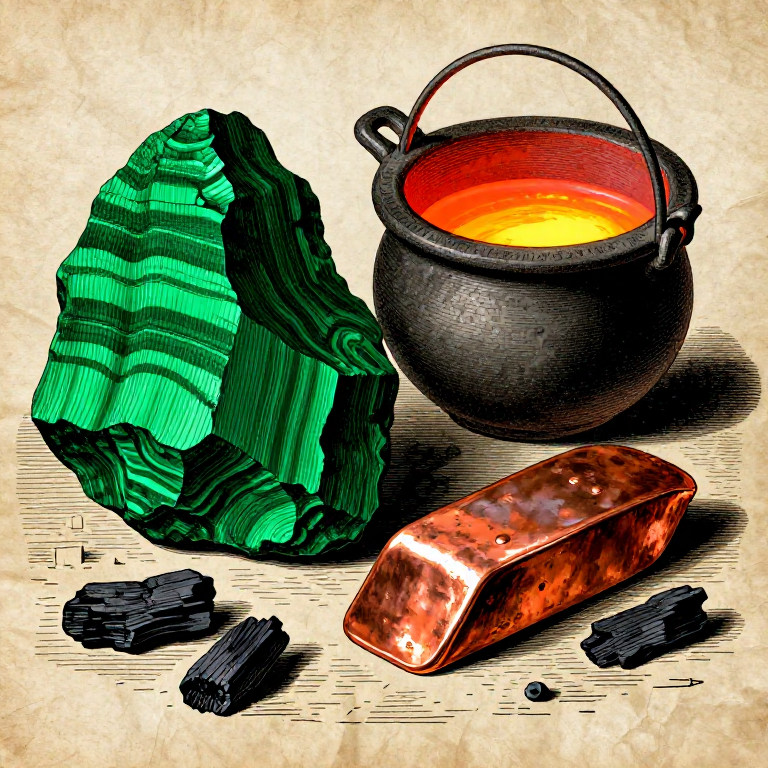
Smelting Copper from Malachite — From Green Ore to Red Metal
Ìlànà
Loye kemistri ilana naa
Loye kemistri ilana naa
Malachite yoo tu nigba ti a ba gbe ooru re: Cu₂CO₃(OH)₂ → 2CuO + CO₂ + H₂O (ni ~300°C). Oxide bàbà ti o jade (CuO) yoo si dinku nipase carbon monoxide lati inu eedu ti n jo: CuO + CO → Cu + CO₂. Bàbà yoo yo ni 1085°C. Lapapọ eso bàbà lati inu malachite mimọ jẹ to 57.5%.
Fọ malachite naa
Fọ malachite naa
Fọ malachite si awọn ege ti o kere ju 1 cm nipa lilo oòlù ati aake. Bi fifọ naa ba ṣe dara to, bẹẹ ni idinku yoo ṣe yara ati pe. Lo odó ati ọmọ odó fun fifọ ikẹhin ti o ba wa. Fojusi awọn ege ti o to iwọn ẹwa tabi ti o kere ju.
Àwọn ohun èlò fún ìgbésẹ̀ yìí:
 Òkúta malachite2 kilogram
Àwọn irinṣẹ́ tí a nílò:
 Òòlù Ẹ̀kọ́ Ilẹ̀
 Odó àti Ọmọ Odó
Mura ago idana silẹ
Mura ago idana silẹ
Lo ago amọ ti o le fi aaye gba 1200°C tabi ju bẹẹ lọ. Ago graphite-amọ dara julọ. Ago naa gbọdọ mu o kere ju 500 ml. Ti o ba n ṣe tirẹ, dapọ amọ-ina pẹlu iyanrin (ipin 2:1) ki o si sun rẹ laiyara ninu ileru si 1000°C ṣaaju lilo. Awọn ago ti a ti sun tẹlẹ ko ni lati la.
Àwọn ohun èlò fún ìgbésẹ̀ yìí:
 Ìkòkò Amọ̀ Tí Ń Kojú Iná1 ẹyọ
Layer ore and charcoal in the crucible
Layer ore and charcoal in the crucible
Place a 2 cm layer of charcoal pieces at the bottom of the crucible. Add a layer of crushed malachite (2-3 cm). Top with another layer of charcoal. The charcoal both provides carbon for reduction and protects the copper from re-oxidation. Fill to about 2/3 full.
Àwọn ohun èlò fún ìgbésẹ̀ yìí:
 Èédú Ìṣùu5 kilogram
Build or prepare the forge
Build or prepare the forge
You need a forge or furnace capable of reaching 1100-1200°C. A simple charcoal forge with forced air (bellows or blower) works well. The crucible sits in a bed of burning charcoal with additional charcoal piled around and above it. The air supply must be controllable.
Àwọn ohun èlò fún ìgbésẹ̀ yìí:
 Àwo èédú20 kilogram
Àwọn irinṣẹ́ tí a nílò:
 Ẹ̀rọ Ìfẹ́ Afẹ́fẹ́
Put on safety equipment
Put on safety equipment
Copper smelting involves extreme heat, toxic fumes, and molten metal. Wear: leather apron, leather gauntlet gloves, face shield, safety boots (no synthetic materials). Work outdoors or in a well-ventilated space. Copper oxide fumes cause metal fume fever if inhaled. Keep a bucket of dry sand nearby for spill containment.
Àwọn irinṣẹ́ tí a nílò:
 Aṣọ Ìdílé Awọ
 Ìbọ̀wọ́ Awọ Apá Gígùn
 Ààbò Ojú Gbogbo
 Garawa yanrìn gbígbẹ
Light the forge and preheat
Light the forge and preheat
Light the forge charcoal and bring it to full heat over 30-45 minutes with gentle bellows action. Place the loaded crucible into the forge once the coals are glowing white-hot. Pack charcoal tightly around the crucible. Increase bellows speed gradually.
Maintain temperature for 2-3 hours
Maintain temperature for 2-3 hours
Keep the forge at 1100-1200°C for 2-3 hours. The malachite first decomposes (green changes to black CuO at ~300°C), then the CuO reduces to copper as temperature climbs. Add charcoal to the forge as needed to maintain heat. The crucible contents will shrink as CO₂ gas escapes.
Check for completion
Check for completion
After 2-3 hours, carefully lift the crucible lid with tongs and peek inside. You should see a bright orange-red pool of molten copper beneath a layer of slag (glassy dark material). If you see unmelted green or black chunks, continue heating for another 30 minutes.
Àwọn irinṣẹ́ tí a nílò:
 Ẹmú Onígùn Gígùn
Prepare the ingot mold
Prepare the ingot mold
While the copper melts, prepare a sand mold or a flat stone depression for pouring. Preheat the mold with a torch to prevent thermal shock cracking. A simple bar-shaped mold carved into a sandstone block works well. Ensure the mold is completely dry — any moisture causes explosive splattering of molten metal.
Àwọn irinṣẹ́ tí a nílò:
 Àwòṣe ìdìwọ̀n òkúta iyanrìn
Pour the copper
Pour the copper
Using crucible tongs, lift the crucible from the forge. Tilt slowly to pour molten copper into the mold. The dark glassy slag floats on top and can be held back with a stick while the copper flows under it. Pour steadily — interrupted pours create cold shuts (weak seams).
Àwọn irinṣẹ́ tí a nílò:
 Ẹmú Ìkòkò Ìyọ́
Let the ingot cool
Let the ingot cool
Allow the copper ingot to cool in the mold for at least 30 minutes. Do not quench in water — rapid cooling makes copper brittle with internal stresses. Air cooling produces a softer, more workable metal. The copper surface oxidizes to a dark red-brown as it cools.
Remove and clean the ingot
Remove and clean the ingot
Once cool enough to handle (below 100°C), remove the ingot from the mold. Brush off adhering sand and slag with a wire brush. The ingot should have the characteristic salmon-pink color of fresh copper on freshly exposed surfaces. Any dark patches are trapped slag or oxide inclusions.
Àwọn irinṣẹ́ tí a nílò:
 Ìṣètò búrọ́ọ̀ṣì okùn
Weigh and assess yield
Weigh and assess yield
Weigh the clean copper ingot. From 2 kg of good malachite ore, expect 800-1000 g of copper (40-50% yield, accounting for slag losses and impurities). Pure malachite would yield 1150 g, but field-collected ore is rarely pure. Record the yield for future optimization.
Àwọn irinṣẹ́ tí a nílò:
 Òṣùwọ̀n Díjítà Ilé Ìdáná
Test the copper quality
Test the copper quality
Hammer the edge of the ingot on an anvil. Good copper deforms plastically without cracking — it is one of the most malleable metals. If it cracks, it contains too much slag or oxide. File a small area to expose fresh metal — pure copper is salmon-pink. A green tinge indicates incomplete reduction.
Àwọn irinṣẹ́ tí a nílò:
 Ìfá Irin
Store the copper ingot
Store the copper ingot
Copper oxidizes slowly in air (forming green patina over months). For short-term storage, keep dry. For long-term, coat with a thin layer of oil. Label with date, source ore, and weight. This copper is ready for casting, hammering into sheet, or alloying with tin to make bronze.
Àwọn ohun-èlò
4- 2 kilogramÀyè
- Àyè
- 5 kilogramÀyè
- 20 kilogramÀyè
Àwọn irinṣẹ́ tó nílò
15- Àyè
- Àyè
Àwọn Ohun Èlò Ìtọ́nisọ́nà Tí A So Pọ̀
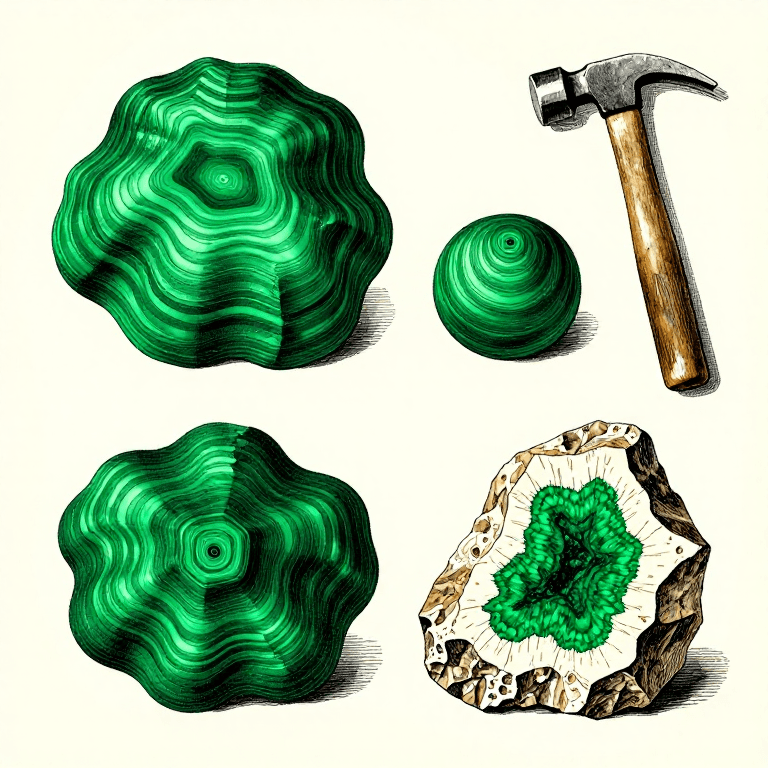
Identifying and Collecting Malachite — Copper Carbonate Ore from the Earth
láti ọwọ́ Peter
Iṣẹ́ Irin
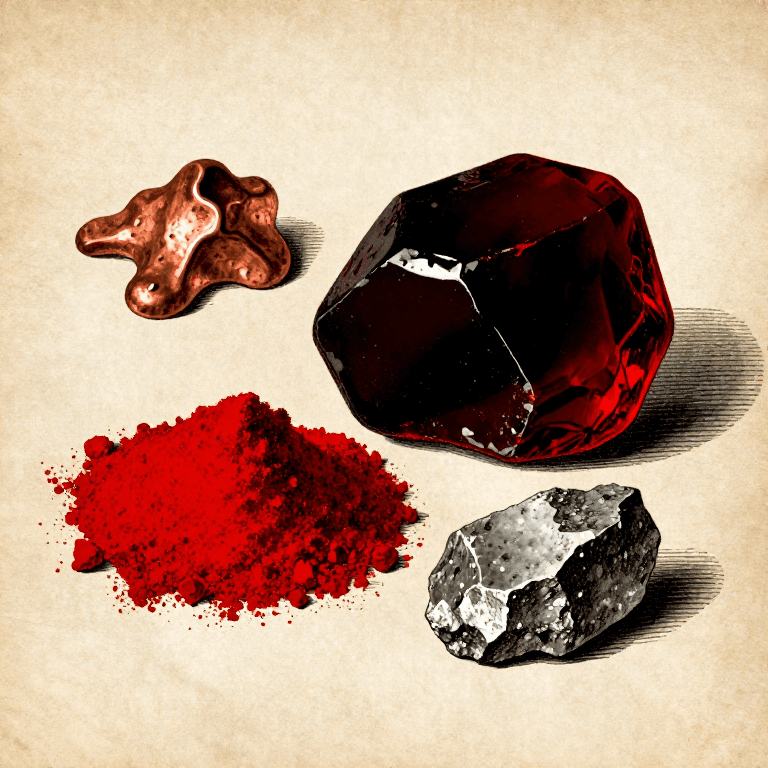
Recovering Selenium from Copper Refinery Anode Slime — The Photoconductor That Sees Light
láti ọwọ́ Peter
Ìwakùsà
Making Malachite Green Pigment — Grinding the Copper Mineral into Painter's Green
láti ọwọ́ Charlie
IṢẸ́ ỌNÀ
Blueprint tó jọra
Àwọn blueprint wọ̀nyí pín ìmọ̀ — ọ̀nà, ohun-èlò tàbí ìlànà
CC0 Àgbègbè Gbogbogbò
Blueprint yìí ti jáde lábẹ́ CC0. O lè ṣe àdàkọ, yí padà, pín, àti lò láìsí ìyọ̀ǹda.
Ṣàtìlẹ́yìn Olùṣẹ́dá nípa rírà àwọn ọjà nipasẹ̀ Blueprint wọn Ẹ̀san Olùṣẹ́dá tí àwọn Olùtajà gbé kalẹ̀, tàbí ṣẹ̀dá àtúnṣe tuntun ti Blueprint yìí kí o sì fi sínú Blueprint rẹ gẹ́gẹ́ bí ìsopọ̀ láti pín owó-wíwọlé.