IṢẸ́ ỌNÀ
ẸWÀ ÀTI ÌLERA
IṢẸ́ ỌWỌ́
ÀṢÀ ÀTI ÌTÀN
ÌṢERÉ
ÀYÍKÁ
OÚNJẸ ÀTI OHUN MÍMU
REVERSE ENGINEERING
SÁYẸ́ǸSÌ
ERÉ ÌDÁRAYÁ
ÌMỌ̀-Ẹ̀RỌ
ÀWỌN OHUN WÍWỌ̀
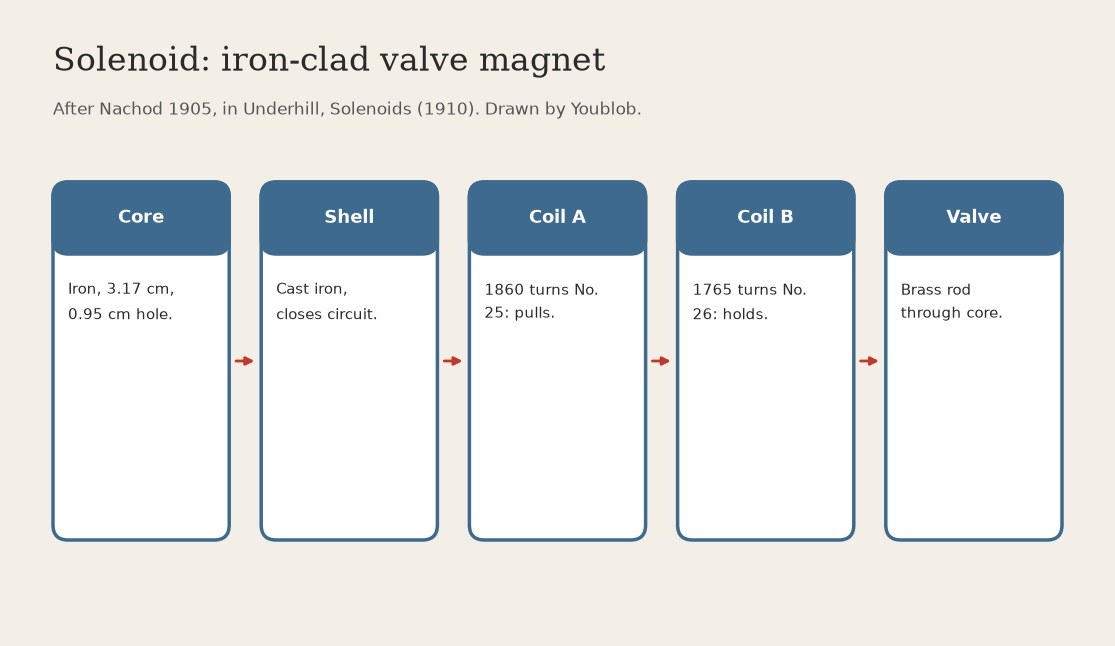


Solenoid: Iron-Clad Valve Magnet with Two Coils, 1860 and 1765 Turns (Nachod 1905, in Underhill 1910)
A short-stroke solenoid that opens an air valve. One coil pulls the iron armature down; a second, weaker coil holds it there against the air pressure once the first is switched off. A cast-iron shell closes the magnetic circuit around both.
Result: an iron-clad plunger solenoid driving a brass valve rod through its hollow core.
Source: C. P. Nachod's test (Electrical World, 1905) in Underhill, Solenoids, Electromagnets and Electromagnetic Windings (1910), pp. 125-129. Unknown: the wire insulation; the test does not give it. Not given: shell and armature sizes, voltage. Picture drawn by Youblob.
Ilọsíwájú
2 days
Ìlànà
1
1
Turn the core and armature
Turn the core and armature
Turn the core from Norway iron to 3.17 cm outside diameter and bore a 0.95 cm hole through it for the valve rod. Turn the armature from the same iron. Ours: wrought iron bar; the armature size is not given.
Àwọn ohun èlò fún ìgbésẹ̀ yìí:
 Ọ̀pá irin lílù1 as required
Àwọn irinṣẹ́ tí a nílò:
 Àpò ohun èlò lathe (HSS)
2
2
Cast the shell and top
Cast the shell and top
Cast the shell and top in cast iron so they close the magnetic circuit round the coils, leaving a round clearance gap for the armature in the top. Sizes: not given (Underhill's Fig. 92 shows the layout).
Àwọn ohun èlò fún ìgbésẹ̀ yìí:
 Àwọn ìdì irin aláìwẹ̀mọ́1 as required
Àwọn irinṣẹ́ tí a nílò:
 Ìléru cupola
 Àpótí àwòṣe iyanrìn
 Iyanrìn ìdàsílẹ̀
3
3
Wind coil A: 1860 turns of No. 25
Wind coil A: 1860 turns of No. 25
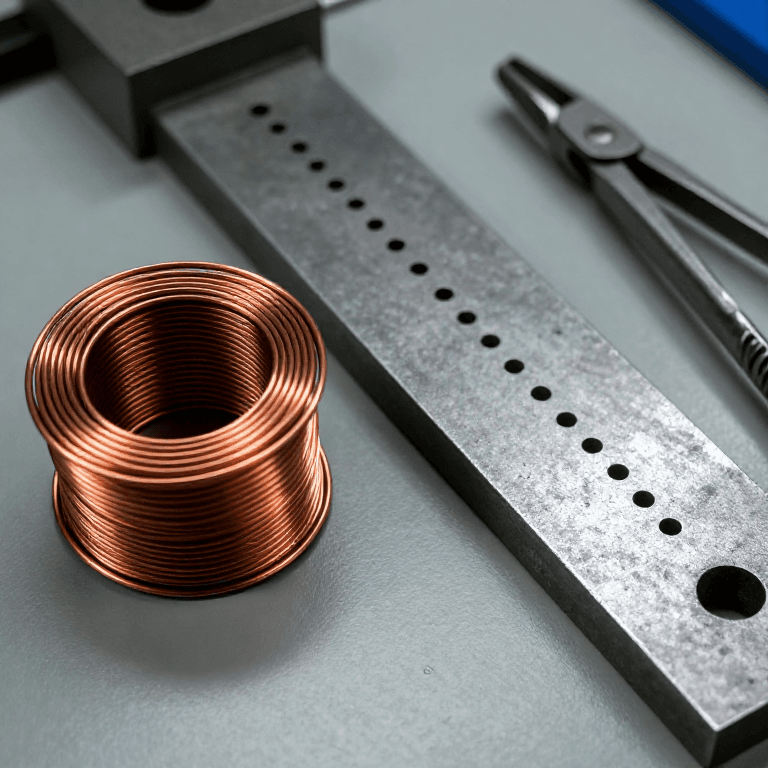
Wind the operating coil, 1860 turns of No. 25 wire, and place it where it encircles the working air gap between armature and core. Copper, as Underhill gives for magnet windings. Unknown: the insulation; the test does not give it.
Àwọn ohun èlò fún ìgbésẹ̀ yìí:
 Okùn Bàbà1 as required
 Ohun ìdènà iná tí a kò mọ̀1 as required
Àwọn irinṣẹ́ tí a nílò:
Àpò ohun èlò lathe (HSS)4
4
Wind coil B: 1765 turns of No. 26
Wind coil B: 1765 turns of No. 26
Wind the retaining coil, 1765 turns of No. 26 wire, and place it below coil A on the core. Being away from the gap, it pulls only 0.4-0.8 as hard as A, enough to hold the armature down.
Àwọn ohun èlò fún ìgbésẹ̀ yìí:
Okùn Bàbà1 as requiredÀwọn irinṣẹ́ tí a nílò:
Àpò ohun èlò lathe (HSS)5
5
Assemble with the brass valve rod
Assemble with the brass valve rod
Fit core, coils and armature in the shell and pass the brass rod through the core to the valve. Nachod set test gaps of 0.41 and 2.05 mm with brass washers.
Àwọn ohun èlò fún ìgbésẹ̀ yìí:
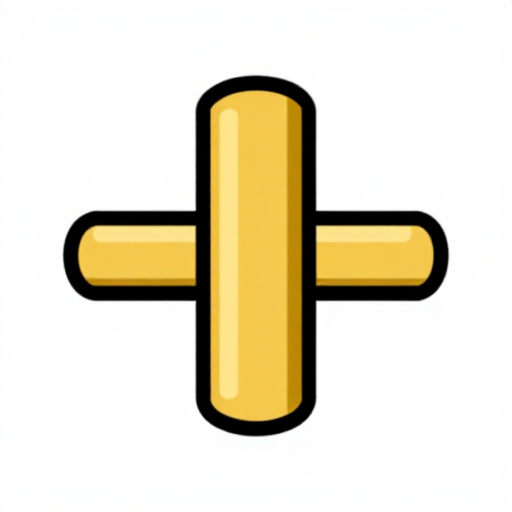 Ọ̀pá Bàbà Ofeefee1 as required
Àwọn irinṣẹ́ tí a nílò:
Àpò ohun èlò lathe (HSS)Àwọn ohun-èlò
5- 1 as requiredÀyè
- 1 as requiredÀyè
- 2 as requiredÀyè
- 1 as requiredÀyè
- 1 as requiredÀyè
Àwọn irinṣẹ́ tó nílò
4- Àyè
Ìtọ́nisọ́nà yìí ń ṣe
Blueprint tó jọra
Àwọn blueprint wọ̀nyí pín ìmọ̀ — ọ̀nà, ohun-èlò tàbí ìlànà

CC0 Àgbègbè Gbogbogbò
Blueprint yìí ti jáde lábẹ́ CC0. O lè ṣe àdàkọ, yí padà, pín, àti lò láìsí ìyọ̀ǹda.
Ṣàtìlẹ́yìn Olùṣẹ́dá nípa rírà àwọn ọjà nipasẹ̀ Blueprint wọn Ẹ̀san Olùṣẹ́dá tí àwọn Olùtajà gbé kalẹ̀, tàbí ṣẹ̀dá àtúnṣe tuntun ti Blueprint yìí kí o sì fi sínú Blueprint rẹ gẹ́gẹ́ bí ìsopọ̀ láti pín owó-wíwọlé.