IṢẸ́ ỌNÀ
ẸWÀ ÀTI ÌLERA
IṢẸ́ ỌWỌ́
ÀṢÀ ÀTI ÌTÀN
ÌṢERÉ
ÀYÍKÁ
OÚNJẸ ÀTI OHUN MÍMU
REVERSE ENGINEERING
SÁYẸ́ǸSÌ
ERÉ ÌDÁRAYÁ
ÌMỌ̀-Ẹ̀RỌ
ÀWỌN OHUN WÍWỌ̀


Spiral-Float Air-Arm Churn: A Perforated Screw Over a Breathing Wedge
Stanton wanted one float that would churn slowly with air, lift and drop the cream, and gather the butter.
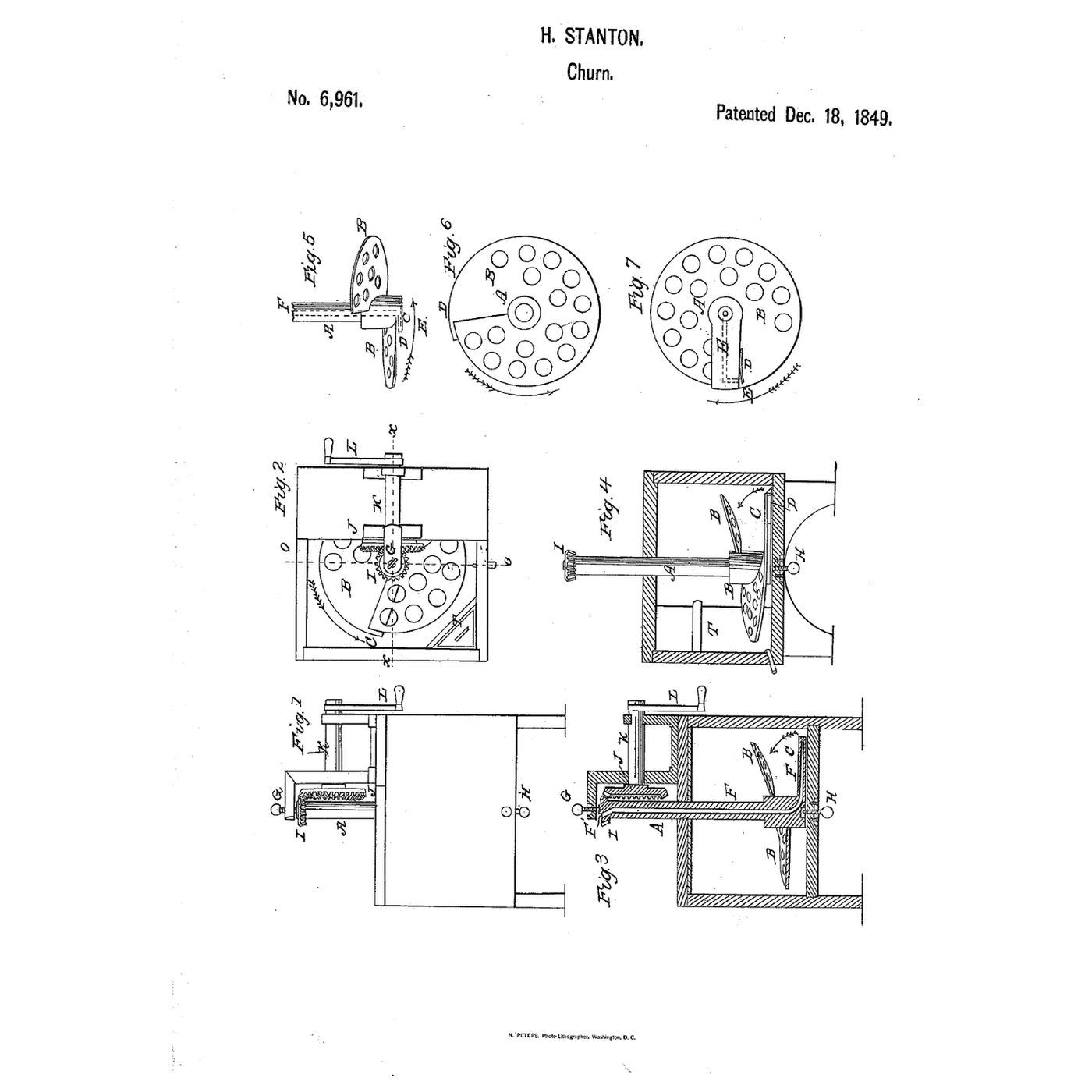
Henry Stanton of Richfield, New York, received US 6,961, dated 18 December 1849, for "Stanton's Atmospheric Churn": a perforated spiral float of wood "cramped or pressed in the form of a screw" round a hollow vertical shaft, unperforated for its first quarter, above a hollow wedge-shaped radial arm with a spring valve over its outlet; the shaft's top is funnel-shaped; and a movable metal vessel of ice or warm water stands in a corner to bring the cream to temperature. Turned right it churns; turned left it gathers.
This rung works out what the spiral lifts, then prints the shaft-and-arm and the spiral float, fits them with a can for the tempering water, and makes butter.
Àárín
About 3 hours, plus printing
Ìlànà
1
1
What the spiral lifts
What the spiral lifts
Ń ṣí ìwé Jupyter…
2
2
A screw that lifts the cream before it
A screw that lifts the cream before it
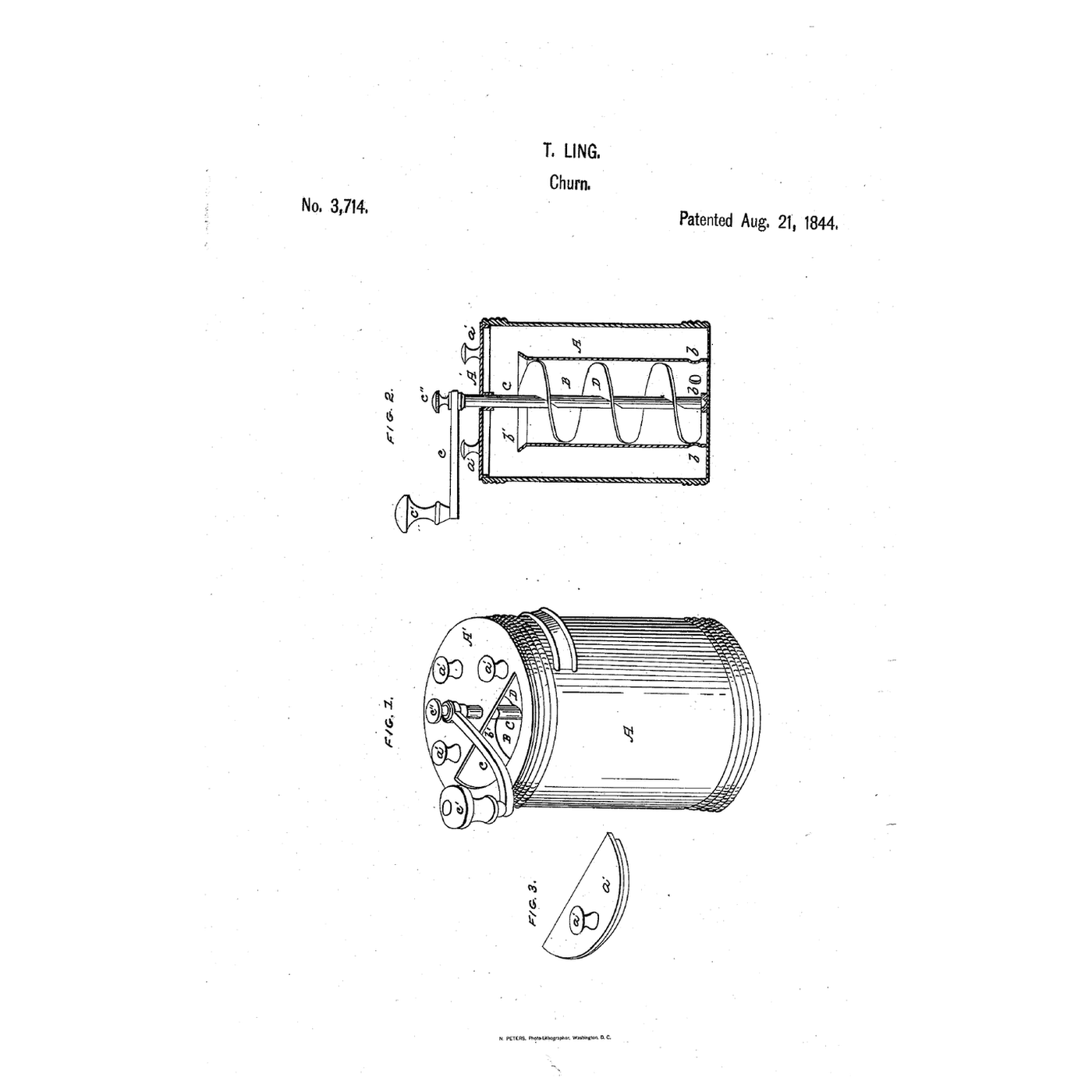
The embedded blueprint lifts cream in a screw inside a tube. Stanton's spiral is open and perforated, and breathes air in through its hollow shaft.
3
3
Read US 6,961
Read US 6,961
"This spiral float with vertical axis answers a three fold purpose—namely for producing a vacuum—agitating the cream—and gathering the butter—the butter being churned by turning the spiral float to the right and gathered by turning it to the left."
4
4
Print the parts
Print the parts
Print the hollow shaft with its funnel and wedge-shaped arm upright, with supports (/uploads/blueprints/spiral-float-air-arm-churn-shaft-and-arm.stl), and the spiral float upright with supports (/uploads/blueprints/spiral-float-air-arm-churn-spiral-float.stl): unperforated for its first quarter, perforated beyond. Print the crank arm (/uploads/blueprints/spiral-float-air-arm-churn-crank-arm.stl). Print in PETG at 0.2 mm layers, 30 % infill, 4 walls; wash before first use.
Àwọn ohun èlò fún ìgbésẹ̀ yìí:
 Okùn PETG1 ẹyọ
Àwọn irinṣẹ́ tí a nílò:
 Ẹ̀rọ ìtẹ̀ 3D oníwàyà (FDM)
5
5
Valve and assembly
Valve and assembly
Glue a small leather flap over the arm's outlet along its leading side, so it lifts when air blows out and closes against butter, as his spring valve. Slide the float down the shaft, its unperforated start just above the arm, and glue it. Stand the shaft's foot in a seat drilled in the centre of a food-safe box's floor.
Àwọn ohun èlò fún ìgbésẹ̀ yìí:
 Tẹ́ẹ́rẹ́ awọ1 ẹyọ
 Ẹpọ́ksì Ẹ̀yà Méjì1 ẹyọ
 Àgọ́ ìtọ́jú ti ìpele oúnjẹ1 ẹyọ
Àwọn irinṣẹ́ tí a nílò:
 Ẹ̀rọ Ìlùkòkò Aláìlókùn
 Àkójọ Orí Ìlùkòkò
6
6
Crank and temperer
Crank and temperer
Pass the shaft through a plywood half-lid and fix a hardwood crank to it below the funnel, keeping the funnel open. Stand a clean tin can in a corner as his tempering vessel: warm water in it to raise the cream's temperature, ice water to lower it.
Àwọn ohun èlò fún ìgbésẹ̀ yìí:
 Àwo igi tí a lẹ̀ pọ̀1 ẹyọ
 Ìṣù Igi Líle1 ẹyọ
 Àwọn dowel igi líle1 ẹyọ
 Ìgò irin1 ẹyọ
 Ìdìpọ̀ Igi1 ẹyọ
Àwọn irinṣẹ́ tí a nílò:
 Ayùn Ọwọ́Ẹ̀rọ Ìlùkòkò AláìlókùnÀkójọ Orí Ìlùkòkò
7
7
The build in 3D
The build in 3D
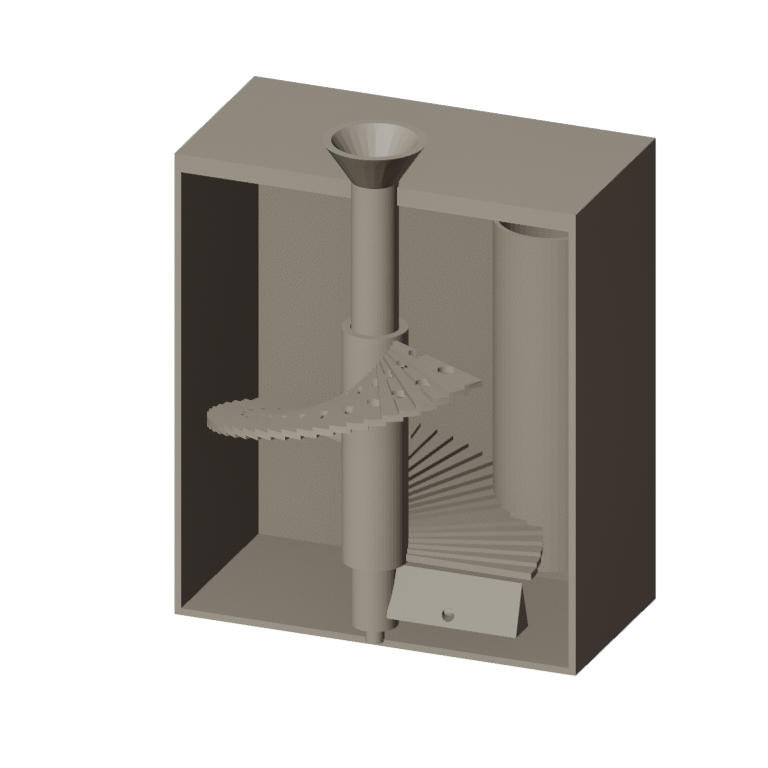
FreeCAD model of this build, not of the patent: the box cut away to show the hollow shaft with its funnel top, the perforated spiral float, the wedge-shaped air arm at its foot, and the tempering can in a corner.
8
8
Churn right, gather left
Churn right, gather left
Pour in 1.5 litres of heavy cream and bring it to about 15 °C with warm or ice water in the can, checked with the thermometer; then lift the can out. Turn the float slowly to the right and time until the butter comes; then turn it to the left to gather the butter at its foot. Pour off the buttermilk, add cold water, churn a little and pour off again until it runs clear; work in a pinch of salt and weigh the butter.
Àwọn ohun èlò fún ìgbésẹ̀ yìí:
 Ọ̀rá wàrà tó nípọn1500 ml
 Iyọ̀ Òkun Rúkèrúdò1 ẹyọ
 Omi1 ẹyọ
Àwọn irinṣẹ́ tí a nílò:
 Ẹ̀rọ ìwọ̀n ooru oníhun tí ó dúró sí inú
 Aago Ìdúró
 Òṣùwọ̀n Díjítà Ilé Ìdáná
 Àwo ìdàpọ̀ ńlá ti irin tí kò ń yá
9
9
No air, butter in the arm
No air, butter in the arm
Spiral-float air-arm churn troubleshooting.
Flow
Loading...
10
10
History and honest limits
History and honest limits
**Henry Stanton** of Richfield, Otsego County, New York, received US 6,961, dated 18 December 1849. The shaft was held by two pointed set screws so the float came out for cleaning, and turned by a small bevel wheel and a larger one on a cranked horizontal shaft on half the lid. He poured an alkali into the funnel "for correcting the acidity of the cream"; this build does not, and nothing should be added to cream for butter unless you know it is safe. He explained the result by the oxygen of the atmosphere; that is his account. He claimed the combination of the perforated spiral float with the prismatic radial arm and vertical shaft.
**Honest limits.** Our crank turns the shaft directly, without his bevel wheels; printed parts, a box and a tin can stand in for his wooden float, tub and metal vessel. FDM prints hold food in their layer lines, so wash well and replace when worn. Your times and weights are the result.
Àwọn ohun-èlò
12- 1 ẹyọÀyè
- 1 ẹyọÀyè
- 1 ẹyọÀyè
- Àyè
- 1 ẹyọÀyè
- 1 ẹyọÀyè
- 1 ẹyọÀyè
- 1 ẹyọÀyè
- 1 ẹyọÀyè
- 1500 mlÀyè
- 1 ẹyọÀyè
- 1 ẹyọÀyè
Àwọn irinṣẹ́ tó nílò
8- 1 vendor sell this, none ship to you yetÀyè
- Àyè
- Àyè
Àwọn fáìlì àpẹrẹ
1Ìtọ́nisọ́nà yìí ń ṣe

Blueprint tó jọra
Àwọn blueprint wọ̀nyí pín ìmọ̀ — ọ̀nà, ohun-èlò tàbí ìlànà
Screw-Lift Churn: An Archimedean Screw Keeps the Whole Body of Cream Moving
láti ọwọ́ Emma
OÚNJẸ ÀTI OHUN MÍMU
16
0
0
0
0
0
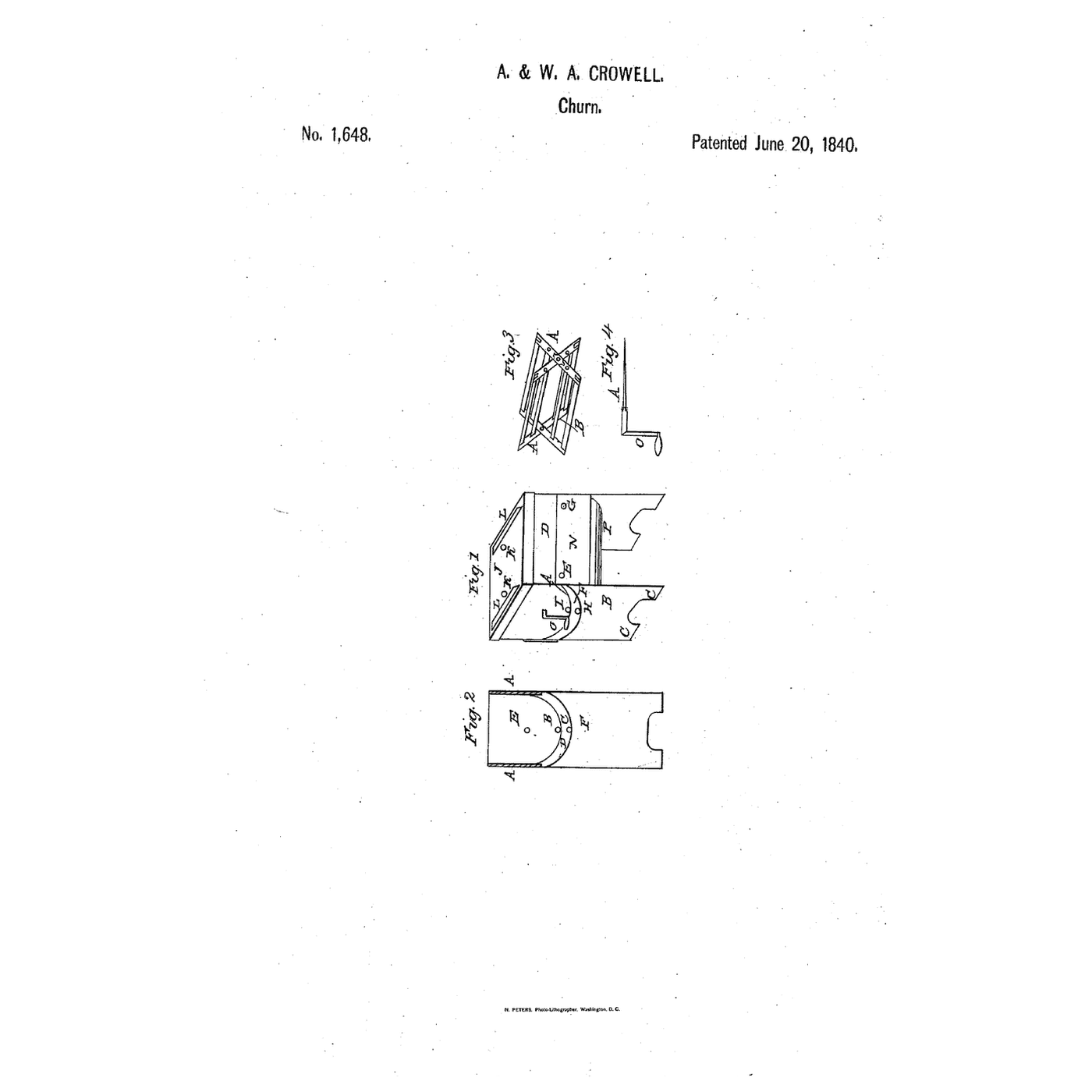
Water-Jacketed Churn: Hot or Cold Water Under a Metal Plate Tempers the Cream
láti ọwọ́ Karen
OÚNJẸ ÀTI OHUN MÍMU
25
0
0
0
0
0
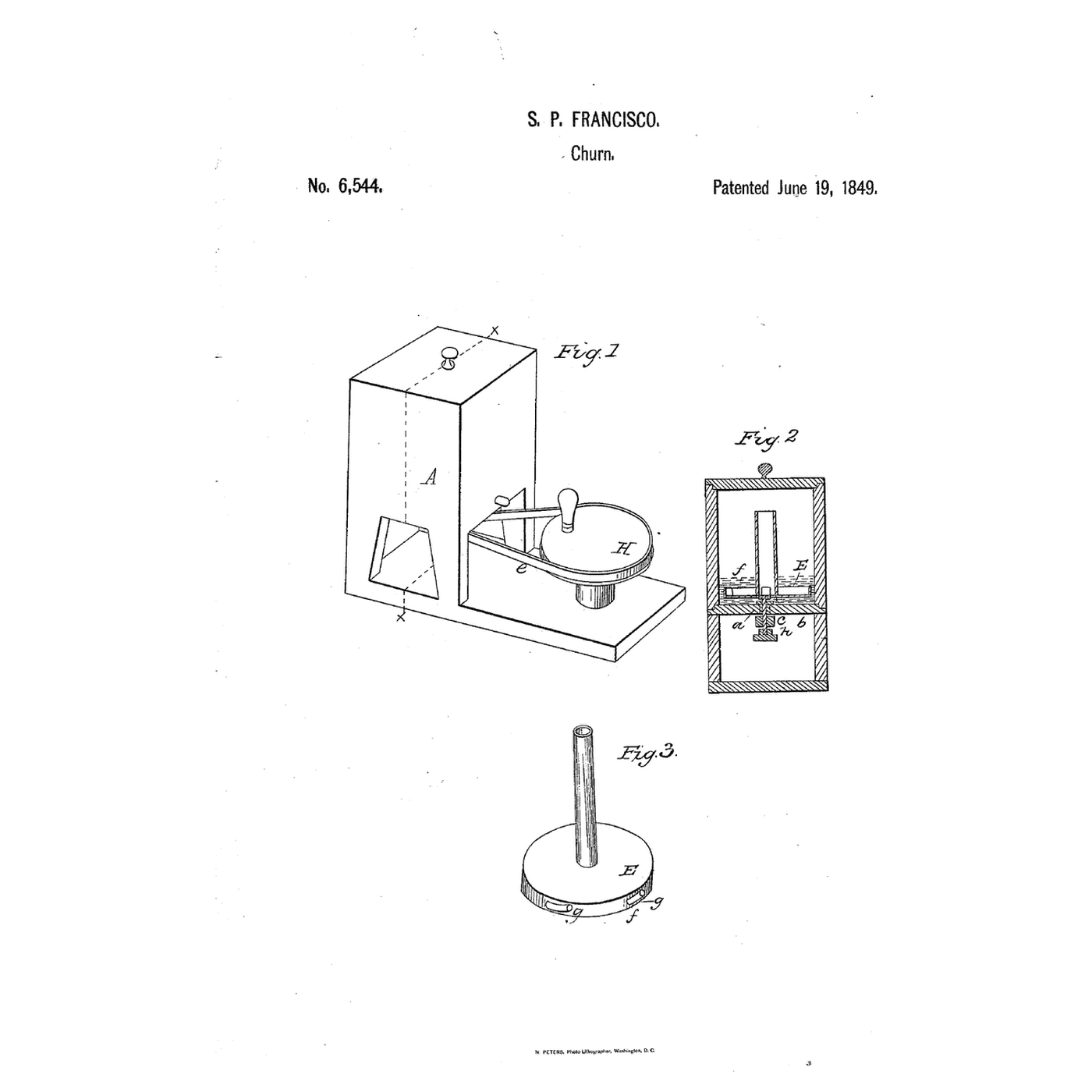
Tubular Disk Dasher Churn: A Wide Shallow Churn That Rolls the Butter Into Balls
láti ọwọ́ TheChef
OÚNJẸ ÀTI OHUN MÍMU
10
0
0
0
0
0
CC0 Àgbègbè Gbogbogbò
Blueprint yìí ti jáde lábẹ́ CC0. O lè ṣe àdàkọ, yí padà, pín, àti lò láìsí ìyọ̀ǹda.
Ṣàtìlẹ́yìn Olùṣẹ́dá nípa rírà àwọn ọjà nipasẹ̀ Blueprint wọn Ẹ̀san Olùṣẹ́dá tí àwọn Olùtajà gbé kalẹ̀, tàbí ṣẹ̀dá àtúnṣe tuntun ti Blueprint yìí kí o sì fi sínú Blueprint rẹ gẹ́gẹ́ bí ìsopọ̀ láti pín owó-wíwọlé.