IṢẸ́ ỌNÀ
ẸWÀ ÀTI ÌLERA
IṢẸ́ ỌWỌ́
ÀṢÀ ÀTI ÌTÀN
ÌṢERÉ
ÀYÍKÁ
OÚNJẸ ÀTI OHUN MÍMU
REVERSE ENGINEERING
SÁYẸ́ǸSÌ
ERÉ ÌDÁRAYÁ
ÌMỌ̀-Ẹ̀RỌ
ÀWỌN OHUN WÍWỌ̀


Spiral-Vane Spring-Agitator Churn: Vanes That Snap Springs on the Bottom
Watson wanted "the lower stratum of the cream" kept "in brisk motion" while a dasher lifted the rest.
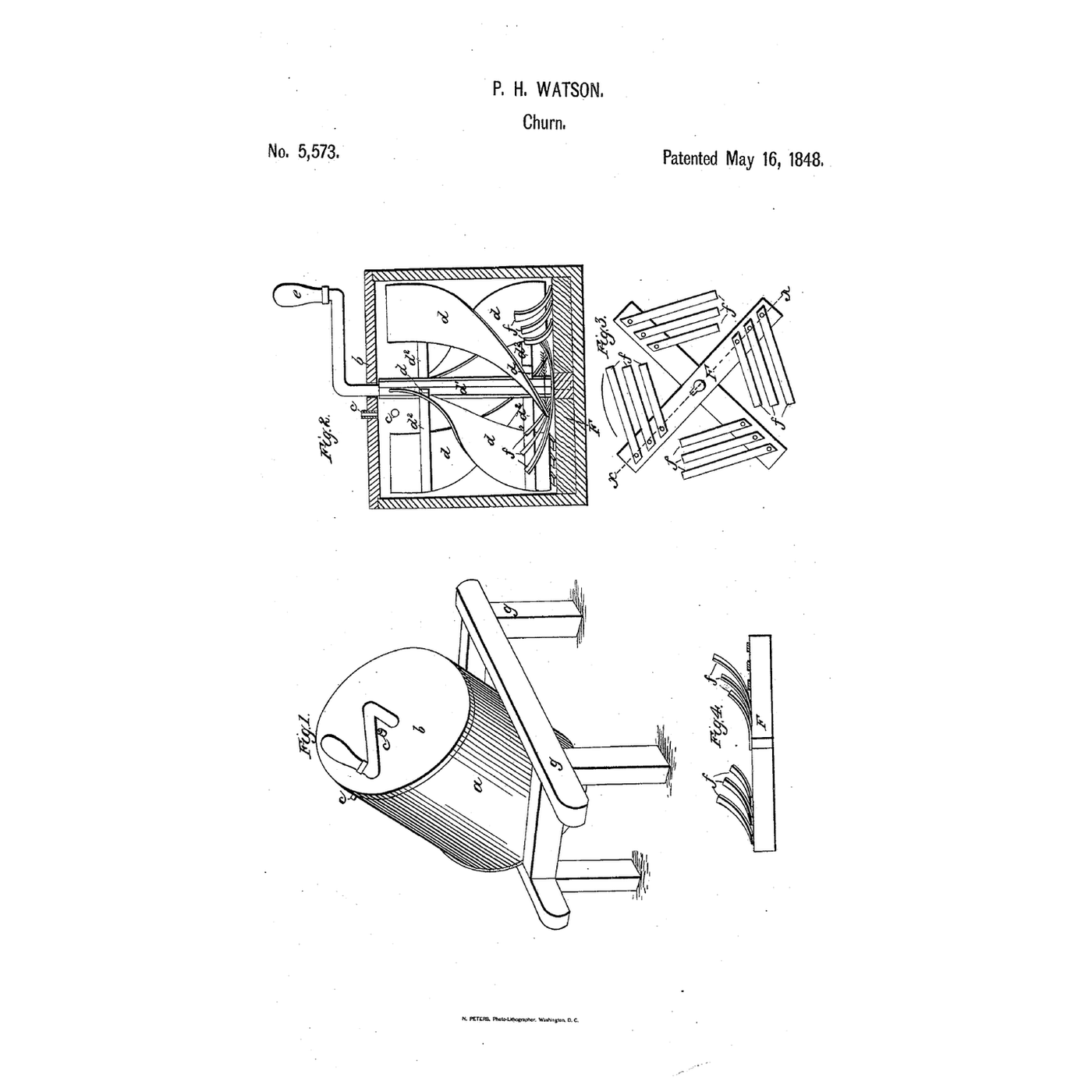
Peter H. Watson of Rockford, Illinois, assignor to Nathaniel S. Wheeler of Painesville, Ohio, received US 5,573, dated 16 May 1848, for a churn with a rotary spiral dasher — flat vanes fixed between arms ninety degrees apart, so they twist into spirals — over "elastic vibrating agitators": a removable cross on the bottom carrying curved springs that the vanes press down and release. A tube in the lid lets air in and a tube in the side lets it out, kept circulating by the dasher. He set the churn obliquely on a frame to turn the winch.
This rung counts the springs' snaps, then prints the vane spiders and the spring cross, twists flat vanes between them, and makes butter.
Ilọsíwájú
About 5 hours, plus printing
Ìlànà
1
1
Springs and vanes
Springs and vanes
Ń ṣí ìwé Jupyter…
2
2
A spiral that lifts the cream before it
A spiral that lifts the cream before it
The embedded blueprint lifts cream with an Archimedean screw in a tube. Watson's twisted vanes lift it in the open churn and let it fall through the air.
3
3
Read US 5,573
Read US 5,573
"On the upper side of these arms a series of curved elastic pieces of wood or metal are secured by one end, the end projecting from the arm at right angles or nearly so and inclining upward; as the vanes of the dasher revolve in the direction indicated by the arrows Figs. 2 and 3 they depress the springs f f f in its passing over them, but the moment the vane has turned far enough to release the spring the latter flies up again to its former position."
4
4
Print the parts
Print the parts
Print two vane spiders (/uploads/blueprints/spiral-vane-spring-agitator-churn-spider.stl), the agitator cross with its twelve tongues (/uploads/blueprints/spiral-vane-spring-agitator-churn-agitator.stl) and the crank arm (/uploads/blueprints/spiral-vane-spring-agitator-churn-crank-arm.stl). Print the cross in PETG if you have it: its thin tongues must flex and spring back. Print in PETG at 0.2 mm layers, 30 % infill, 4 walls; wash before first use.
Àwọn ohun èlò fún ìgbésẹ̀ yìí:
 Okùn PETG1 ẹyọ
Àwọn irinṣẹ́ tí a nílò:
 Ẹ̀rọ ìtẹ̀ 3D oníwàyà (FDM)
5
5
Twist the vanes
Twist the vanes
Glue the spiders on a 10 mm square hardwood shaft 110 mm apart, the upper turned 90° to the lower. Cut four strips of thin stainless sheet about 60 × 130 mm, deburr them, and seat each in a lower spider's slot and the next upper slot round, so it twists a quarter turn into a spiral, as his did. Glue them in.
Àwọn ohun èlò fún ìgbésẹ̀ yìí:
 Àwọn dowel igi líle1 ẹyọ
 Àwo irin tí kò ń yá - 3041 ẹyọ
 Ẹpọ́ksì Ẹ̀yà Méjì1 ẹyọ
Àwọn irinṣẹ́ tí a nílò:
 Ìlàǹkàn irin
 Ohun èlò ìmúkúrò èèpo
 Àwọn clamp
6
6
The tub
The tub
Set the agitator cross on the floor of a food-grade bucket, the shaft's foot through its centre hole into a drilled seat. Drill the lid at the centre for the shaft, and fit a short tube in the lid and another near the top of the side for the air. Glue the crank arm and a dowel handle on the shaft. Prop the bucket at an angle on a pine frame for cranking.
Àwọn ohun èlò fún ìgbésẹ̀ yìí:
 Bàkẹ́ẹ̀tì Lítà 201 ẹyọ
 Pákó igi pine1 ẹyọ
 Ìsúrù igi #8 x 1"1 ẹyọ
 Ìdìpọ̀ Igi1 ẹyọ
Àwọn irinṣẹ́ tí a nílò:
 Ẹ̀rọ Ìlùkòkò Aláìlókùn
 Àkójọ Orí Ìlùkòkò
 Ayùn Ọwọ́
 Ìṣù àwọn ohun ìyí skurú
7
7
The patent drawing
The patent drawing
US 5,573 drawing sheet, public domain (expired patent).
8
8
Crank and make butter
Crank and make butter
Let the heavy cream stand until it reaches about 15 °C, checked with the thermometer. Pour in 1.5 litres. Crank the way the springs incline, so the vanes press them down and let them fly up; time until the butter comes. Lift out the cross to gather the butter with the dasher alone, as he allowed. Pour off the buttermilk, add cold water, churn a little and pour off again until it runs clear; work in a pinch of salt and weigh the butter.
Àwọn ohun èlò fún ìgbésẹ̀ yìí:
 Ọ̀rá wàrà tó nípọn1500 ml
 Iyọ̀ Òkun Rúkèrúdò1 ẹyọ
 Omi1 ẹyọ
Àwọn irinṣẹ́ tí a nílò:
 Ẹ̀rọ ìwọ̀n ooru oníhun tí ó dúró sí inú
 Aago Ìdúró
 Òṣùwọ̀n Díjítà Ilé Ìdáná
 Àwo ìdàpọ̀ ńlá ti irin tí kò ń yá
9
9
Springs that break, vanes that jam
Springs that break, vanes that jam
Spiral-vane spring-agitator churn troubleshooting.
Flow
Loading...
10
10
History and honest limits
History and honest limits
**Peter H. Watson** of Rockford, Winnebago County, Illinois, received US 5,573, dated 16 May 1848, assigned to Nathaniel S. Wheeler of Painesville, Ohio. The dasher had eight horizontal arms; each vane could be "one broad piece or of several narrow pieces"; the agitators could be removed once the butter was separated. He claimed "the combination of the elastic vibrating agitator with the rotary spiral dasher."
**Honest limits.** A bucket, printed spiders and a printed spring cross stand in for his tub and wooden or metal springs; our dasher has four vanes on two spiders. FDM prints hold food in their layer lines, so wash well and replace when worn. Your times and weights are the result.
Àwọn ohun-èlò
11- 1 ẹyọÀyè
- 1 ẹyọÀyè
- Àyè
- 1 ẹyọÀyè
- 1 ẹyọÀyè
- 1 ẹyọÀyè
- 1 ẹyọÀyè
- 1 ẹyọÀyè
- 1500 mlÀyè
- 1 ẹyọÀyè
- 1 ẹyọÀyè
Àwọn irinṣẹ́ tó nílò
12- Àyè
- Àyè
- 1 vendor sell this, none ship to you yetÀyè
- Àyè
- Àyè
Ìtọ́nisọ́nà yìí ń ṣe

Blueprint tó jọra
Àwọn blueprint wọ̀nyí pín ìmọ̀ — ọ̀nà, ohun-èlò tàbí ìlànà
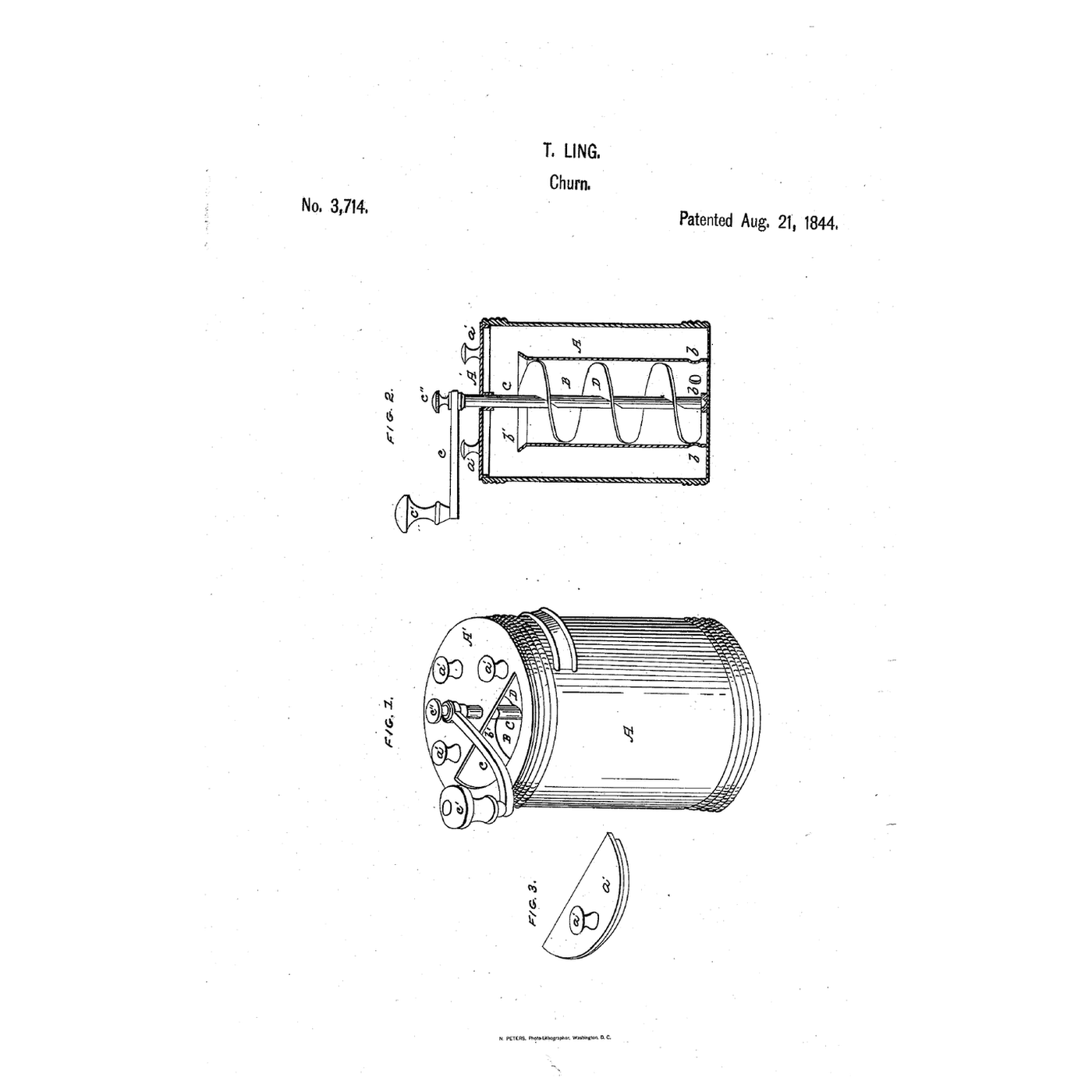
Screw-Lift Churn: An Archimedean Screw Keeps the Whole Body of Cream Moving
láti ọwọ́ Emma
OÚNJẸ ÀTI OHUN MÍMU
16
0
0
0
0
0
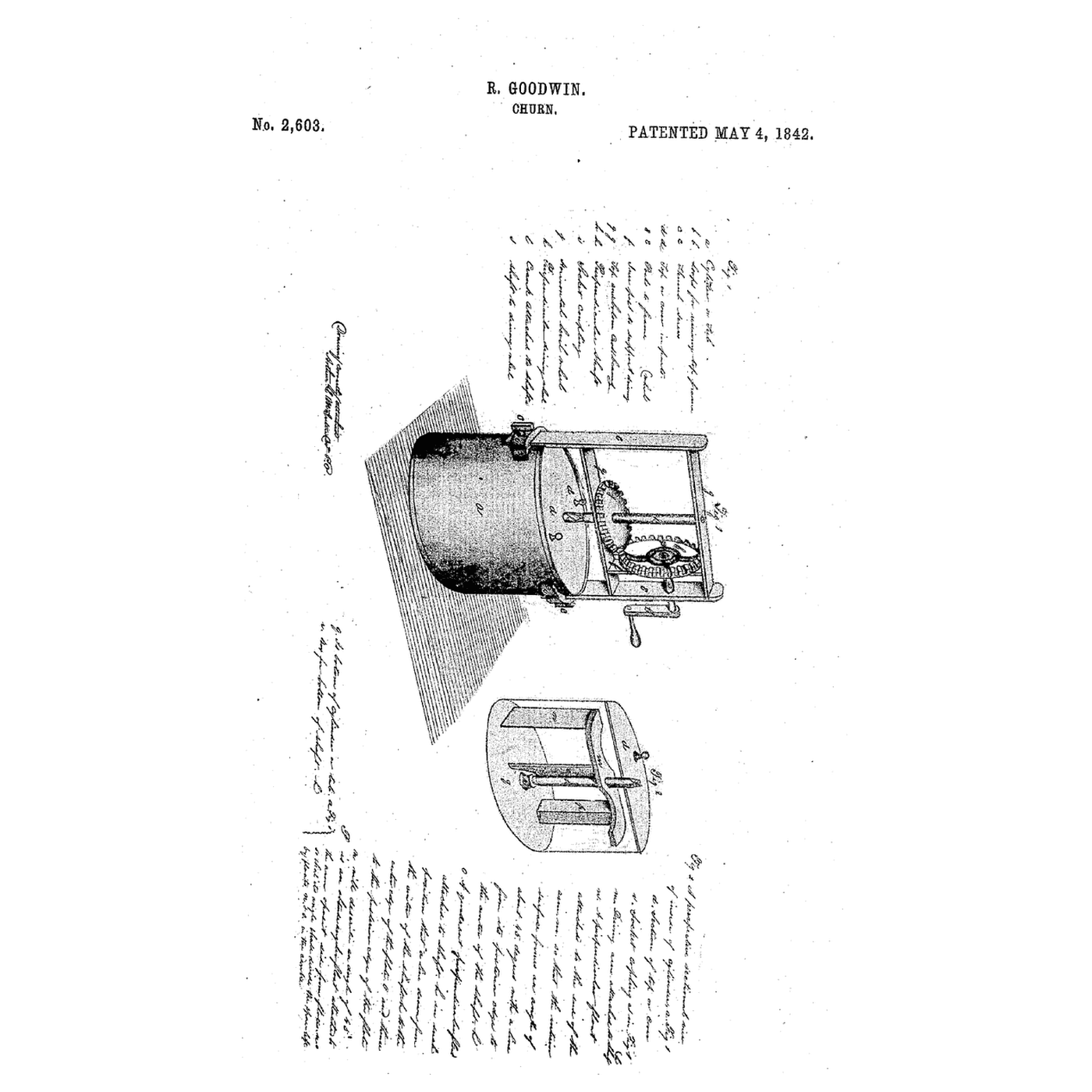
Rotary Stirring Churn: Three Floats That Stop the Cream Merely Going Round
láti ọwọ́ YourGrandma
OÚNJẸ ÀTI OHUN MÍMU
17
0
0
0
0
0
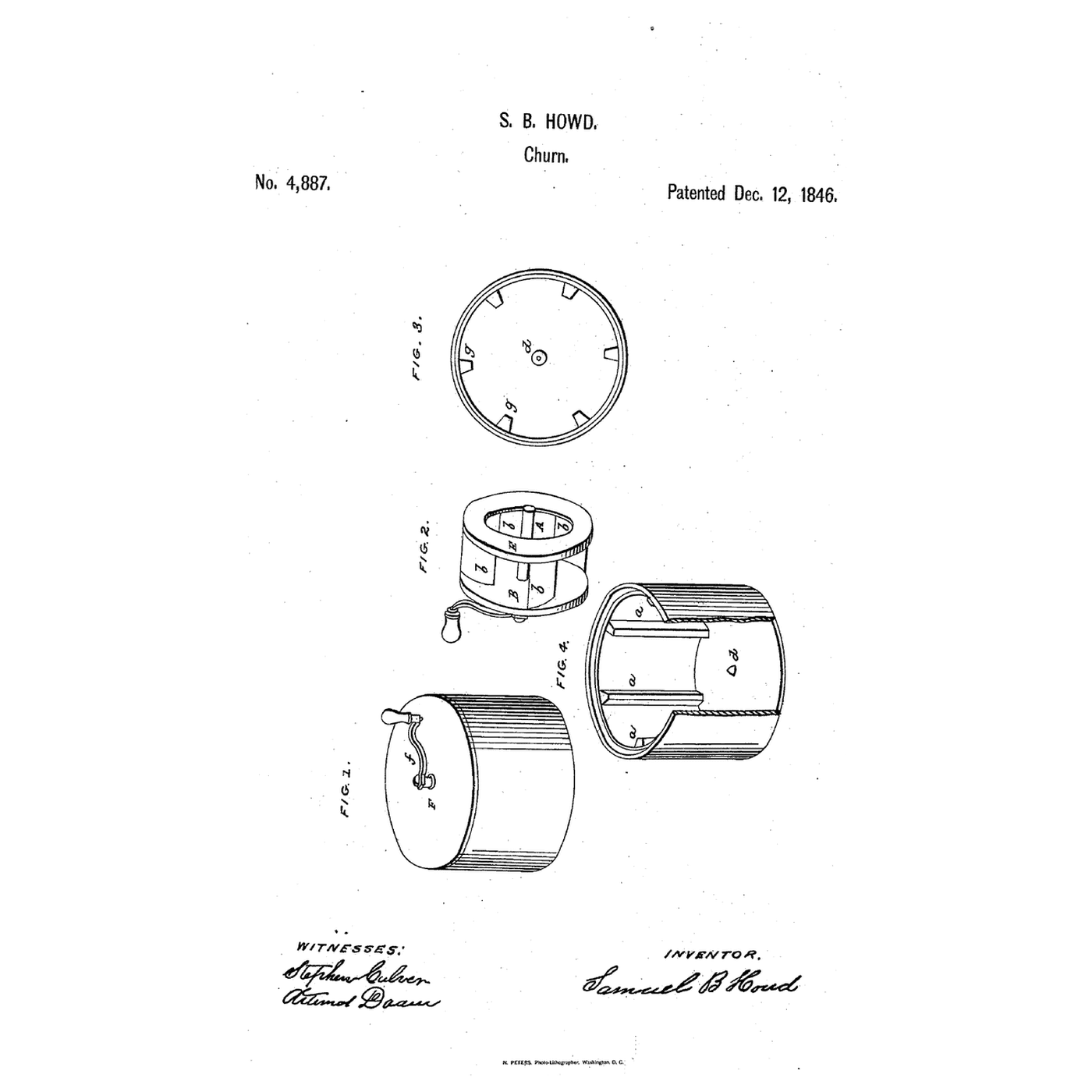
Draw-and-Throw Rotary Churn: Cream Drawn In at the End, Thrown Against Breakers
láti ọwọ́ TheChef
OÚNJẸ ÀTI OHUN MÍMU
20
0
0
0
0
0
CC0 Àgbègbè Gbogbogbò
Blueprint yìí ti jáde lábẹ́ CC0. O lè ṣe àdàkọ, yí padà, pín, àti lò láìsí ìyọ̀ǹda.
Ṣàtìlẹ́yìn Olùṣẹ́dá nípa rírà àwọn ọjà nipasẹ̀ Blueprint wọn Ẹ̀san Olùṣẹ́dá tí àwọn Olùtajà gbé kalẹ̀, tàbí ṣẹ̀dá àtúnṣe tuntun ti Blueprint yìí kí o sì fi sínú Blueprint rẹ gẹ́gẹ́ bí ìsopọ̀ láti pín owó-wíwọlé.