IṢẸ́ ỌNÀ
ẸWÀ ÀTI ÌLERA
IṢẸ́ ỌWỌ́
ÀṢÀ ÀTI ÌTÀN
ÌṢERÉ
ÀYÍKÁ
OÚNJẸ ÀTI OHUN MÍMU
REVERSE ENGINEERING
SÁYẸ́ǸSÌ
ERÉ ÌDÁRAYÁ
ÌMỌ̀-Ẹ̀RỌ
ÀWỌN OHUN WÍWỌ̀
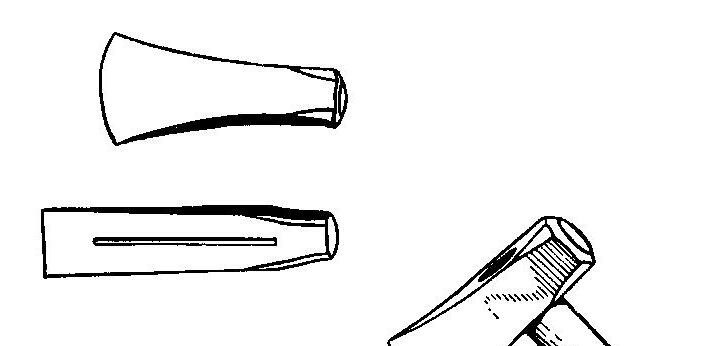


Splitting Axe and Steel Wedges for Riving Logs
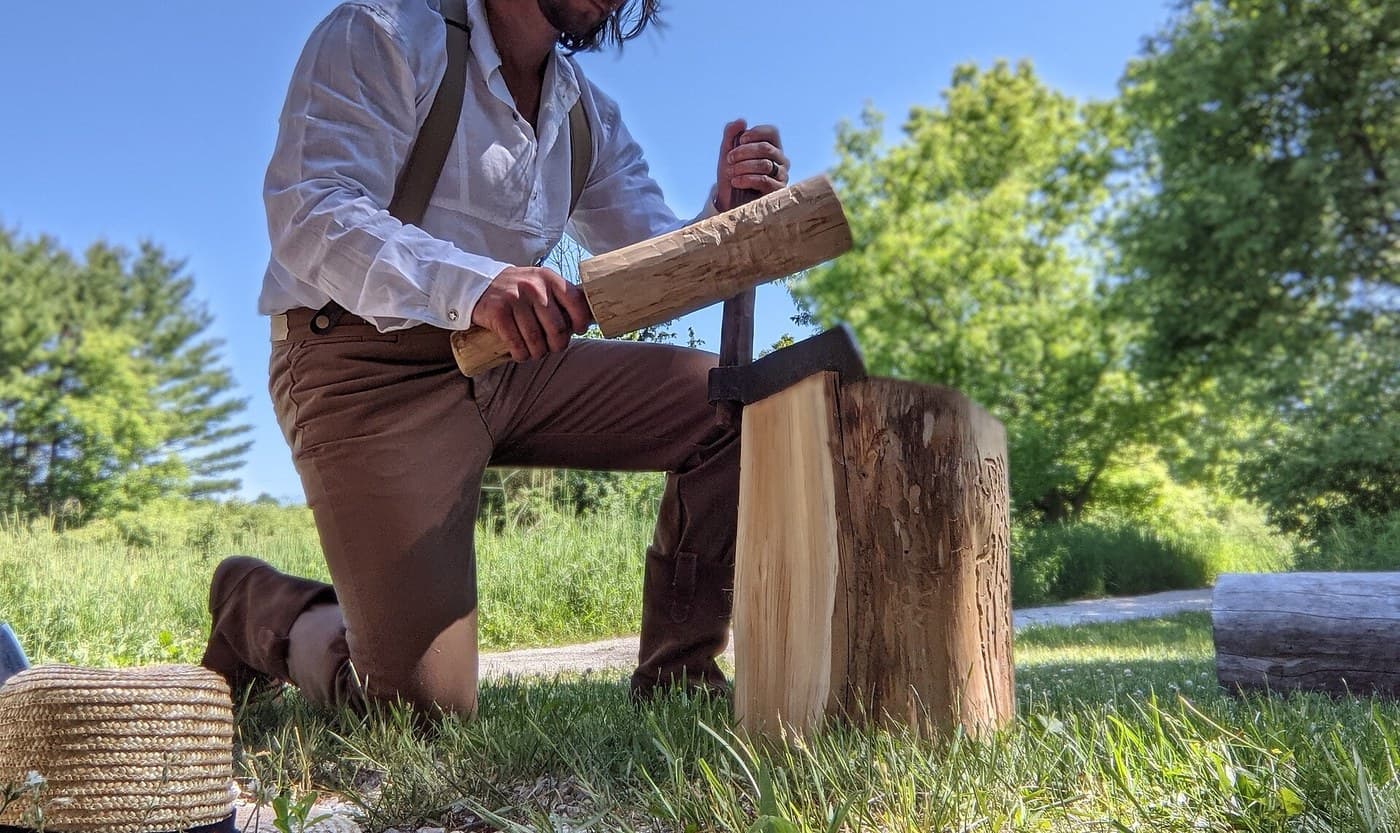
A splitting axe, or maul, has a heavy wedge-shaped head that is driven along the grain and forces the wood apart rather than chopping across it; being wide, it seldom sticks, and its straight handle is also used to lever. Steel splitting wedges, longer and thicker than felling wedges, open bigger logs. Forge the head with a punched eye and a steel bit, forge a pair of wedges, and fit a straight ash handle.
The picture: splitting wedges and a woodchopper's maul (US, 1962).
Ilọsíwájú
Two days
Ìlànà
1
1
Forge the head
Forge the head
Forge wrought iron into a head of about 3 kg (our size; Wikipedia gives 2.7–3.6 kg for a maul), thick at the poll and widening to a blunt wedge. Punch and drift the eye.
Àwọn ohun èlò fún ìgbésẹ̀ yìí:
 Ọ̀pá irin lílù3 ẹyọ
 Èédú6 as required
Àwọn irinṣẹ́ tí a nílò:
 Ìléru alágbẹ̀dẹ
 Ìdí Alágbẹ̀dẹ
 Òòlù ńlá
 Ohun ìlu ihò gbígbóná
 Ohun ìfẹ̀ ihò alágbẹ̀dẹ
 Ẹmú alágbẹ̀dẹ
 Ìbọ̀wọ́ wẹ́lídìn
 Gíláàsì ààbò
2
2
Steel the bit
Steel the bit
Forge-weld a strip of tool steel along the bit, as for the axe, grind a stout convex edge (never hollow), harden and temper it to blue.
Àwọn ohun èlò fún ìgbésẹ̀ yìí:
 Ọ̀pá pẹlẹbẹ irin irinṣẹ́1 ẹyọ
 Omi10 lítà
Àwọn irinṣẹ́ tí a nílò:
Ìléru alágbẹ̀dẹÌdí Alágbẹ̀dẹ Òòlù olórí ìtẹ̀ ìpakà
 Òkúta ìpọ́n oníkẹ̀kẹ́
 Àpótí ìtutùÌbọ̀wọ́ wẹ́lídìnGíláàsì ààbò
3
3
Wedges
Wedges
Forge two wedges of wrought iron about 20 cm long and 4–6 cm thick at the head (ours), with a blunt edge. Chamfer the striking heads so they do not mushroom badly.
Àwọn ohun èlò fún ìgbésẹ̀ yìí:
Ọ̀pá irin lílù2 ẹyọÈédú4 as requiredÀwọn irinṣẹ́ tí a nílò:
Ìléru alágbẹ̀dẹÌdí Alágbẹ̀dẹÒòlù ńláẸmú alágbẹ̀dẹÒkúta ìpọ́n oníkẹ̀kẹ́Ìbọ̀wọ́ wẹ́lídìnGíláàsì ààbò4
4
Straight handle
Straight handle
Shave a straight ash handle about 90 cm long, round in section, taper the end to the eye and drive it in from below so the head tightens.
Àwọn ohun èlò fún ìgbésẹ̀ yìí:
 Igi ash1 ẹyọ
Àwọn irinṣẹ́ tí a nílò:
 Ìjókòó ìgbẹ́
 Ọ̀bẹ Ìfàsẹ́yìn
 Ayùn onídìmú méjìÒòlù ńlá
5
5
Why a wedge splits
Why a wedge splits
Ń ṣí ìwé Jupyter…
Àwọn ohun-èlò
5- 3 ẹyọÀyè
- 6 as requiredÀyè
- Àyè
- 10 lítàÀyè
- 1 ẹyọÀyè
Àwọn irinṣẹ́ tó nílò
14- Àyè
- Àyè
- Àyè
- Àyè
Ìtọ́nisọ́nà yìí ń ṣe


Blueprint tó jọra
Àwọn blueprint wọ̀nyí pín ìmọ̀ — ọ̀nà, ohun-èlò tàbí ìlànà

CC0 Àgbègbè Gbogbogbò
Blueprint yìí ti jáde lábẹ́ CC0. O lè ṣe àdàkọ, yí padà, pín, àti lò láìsí ìyọ̀ǹda.
Ṣàtìlẹ́yìn Olùṣẹ́dá nípa rírà àwọn ọjà nipasẹ̀ Blueprint wọn Ẹ̀san Olùṣẹ́dá tí àwọn Olùtajà gbé kalẹ̀, tàbí ṣẹ̀dá àtúnṣe tuntun ti Blueprint yìí kí o sì fi sínú Blueprint rẹ gẹ́gẹ́ bí ìsopọ̀ láti pín owó-wíwọlé.