IṢẸ́ ỌNÀ
ẸWÀ ÀTI ÌLERA
IṢẸ́ ỌWỌ́
ÀṢÀ ÀTI ÌTÀN
ÌṢERÉ
ÀYÍKÁ
OÚNJẸ ÀTI OHUN MÍMU
REVERSE ENGINEERING
SÁYẸ́ǸSÌ
ERÉ ÌDÁRAYÁ
ÌMỌ̀-Ẹ̀RỌ
ÀWỌN OHUN WÍWỌ̀
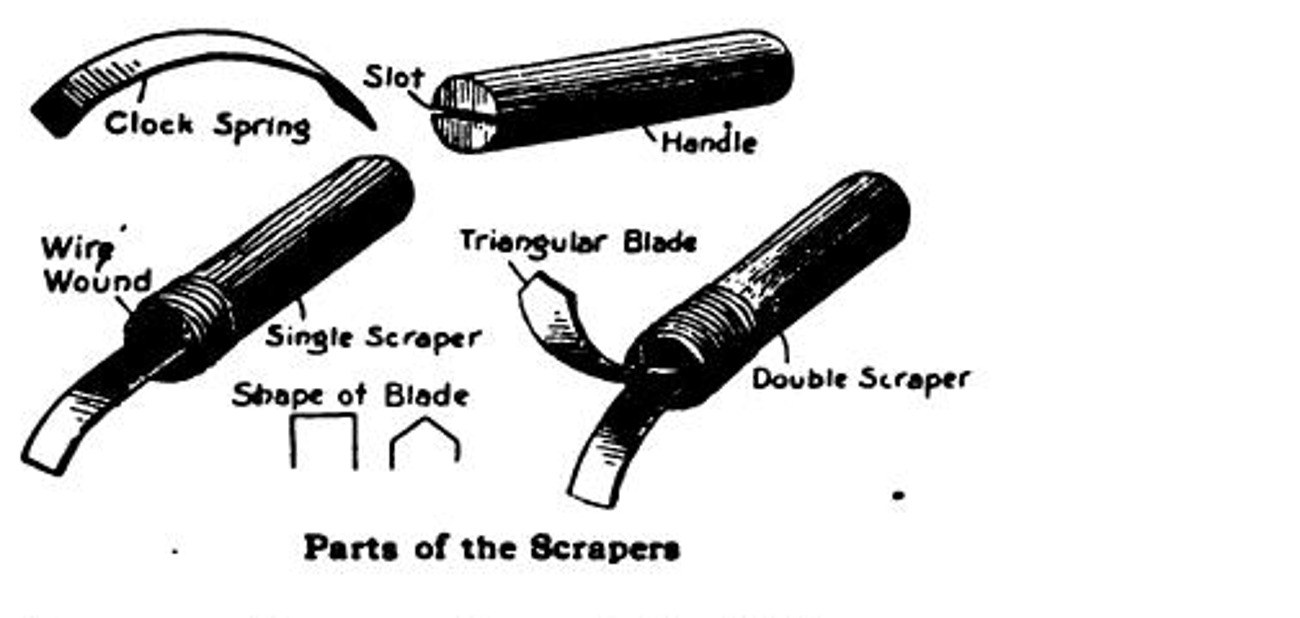


Steel Scraper: a Clockspring Blade in a Slotted Handle (Shop Notes, 1912)
A handy scraper for dirt and grease on machinery or old paint on uneven surfaces: a stout piece of clockspring set in a slot sawn in a short wooden handle, bound with wire or a ferrule.
Variable: spring size sets strength and flexibility; a double scraper adds a triangular blade for carved or indented work.
Source: Popular Mechanics Shop Notes for 1912, p. 1543. Picture: the article's drawing.
Olùbẹ̀rẹ̀
Unknown
Ìlànà
1
1
Cut the blade
Cut the blade
Cut a stout piece of clockspring and file its end square or pointed (drawing). For a double scraper cut a second, triangular-edged blade for the other end.
Àwọn ohun èlò fún ìgbésẹ̀ yìí:
 Ọ̀pá irin orísun1 clockspring
Àwọn irinṣẹ́ tí a nílò:
 Ìlàǹkàn irin
 Ìfá Irin
2
2
Fit the handle
Fit the handle
Saw a slot in the end of a short wooden handle, push the blade in, and secure it by winding wire round the handle (or with a ferrule).
Àwọn ohun èlò fún ìgbésẹ̀ yìí:
 Èkù Ohun-èlò1 short
 Wáyà irin1 ẹyọ
Àwọn irinṣẹ́ tí a nílò:
 Ayùn ẹlẹ́yìn irin
Àwọn ohun-èlò
3- 1 clockspringÀyè
- 1 shortÀyè
- 1 ẹyọÀyè
Àwọn irinṣẹ́ tó nílò
3- Àyè
- Àyè
Ìtọ́nisọ́nà yìí ń ṣe

CC0 Àgbègbè Gbogbogbò
Blueprint yìí ti jáde lábẹ́ CC0. O lè ṣe àdàkọ, yí padà, pín, àti lò láìsí ìyọ̀ǹda.
Ṣàtìlẹ́yìn Olùṣẹ́dá nípa rírà àwọn ọjà nipasẹ̀ Blueprint wọn Ẹ̀san Olùṣẹ́dá tí àwọn Olùtajà gbé kalẹ̀, tàbí ṣẹ̀dá àtúnṣe tuntun ti Blueprint yìí kí o sì fi sínú Blueprint rẹ gẹ́gẹ́ bí ìsopọ̀ láti pín owó-wíwọlé.