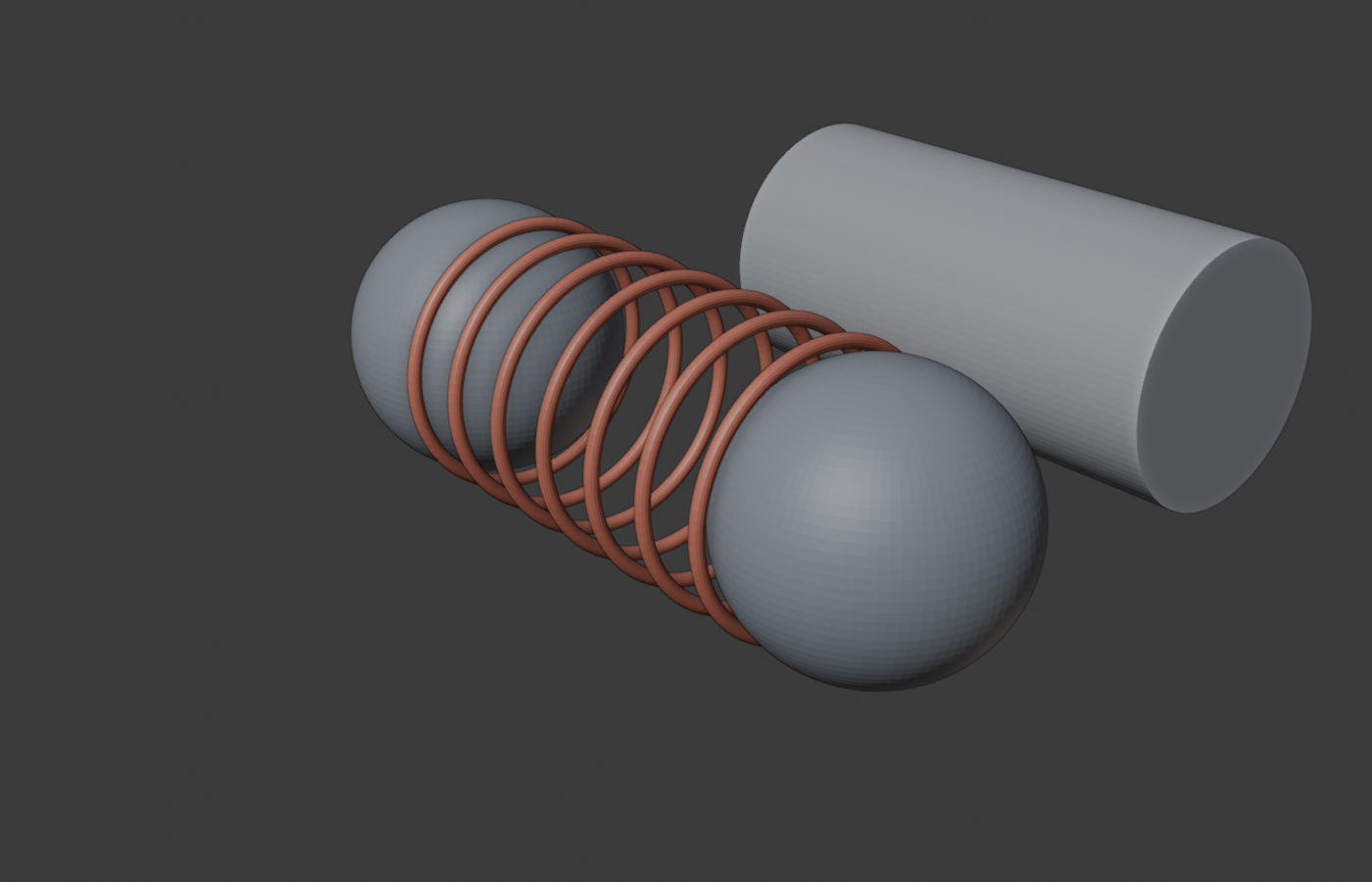


The Submarine Pressure Hull
Ìlànà
Crush a can and feel why compression is different
Crush a can and feel why compression is different
Two minutes with a drinks can teaches what a page of theory does not.
- Stand an empty aluminium can upright and press straight down evenly. Note how much load it carries.
- Now press down again while a helper dents the side very slightly with a fingernail.
- Separately, put a little water in a can, heat it, then invert it into cold water and watch it implode.
Undamaged, the can carries a surprising load; with the tiniest dent it collapses immediately at a fraction of it. That sensitivity to imperfection is the signature of buckling, and it is why the strength of a compression structure depends on how ACCURATELY it was built, not merely on how thick it is.
This is the opposite of tension. A tension member with a small dent is essentially as strong as one without. A compression shell with a small dent may have lost half its capacity — which is why submarine hull plating is checked for out-of-roundness to millimetres over metres, and why a hull that has been dented is a hull that must be assessed rather than simply inspected.Àwọn ohun èlò fún ìgbésẹ̀ yìí:
 Àgọ̀ ohun mímu aluminium (òfìfo)4 ẹyọ
Àwọn irinṣẹ́ tí a nílò:
 Ẹ̀rọ Ìbánisọ̀rọ̀ Tí Ó Ní Fídíò Ọ̀lọ́ra
 Ìwọ̀n Sipirinngi
 Gílásì Ààbò Tí Ó Mọ́
 Ààbò Ojú Gbogbo
Compute collapse depth for sphere, cylinder and ring-framed cylinder
Compute collapse depth for sphere, cylinder and ring-framed cylinder
Àwọn irinṣẹ́ tí a nílò:
 Kọ̀ǹpútà Tábìlì
Weld a test cylinder and pressure-test it to destruction
Weld a test cylinder and pressure-test it to destruction
Build small, test to failure, and see whether the arithmetic was honest.
- Roll and weld a thin steel cylinder, closed with domed ends, and make a second identical one with internal ring frames.
- Measure out-of-roundness at several stations — the deviation from a true circle — and record it.
- Pressure-test each externally, submerged in a shielded vessel, raising pressure until collapse.
- Compare collapse pressures with each other and with the notebook.
The framed cylinder will survive far higher pressure, and BOTH will collapse below the ideal theoretical value — by an amount that tracks their out-of-roundness. That gap between theory and reality is not experimental error; it is the imperfection sensitivity from step 1 showing up as a number.
An external pressure test is genuinely dangerous — implosion releases the stored energy of the surrounding water inward and then outward. Test remotely, behind a barrier, with the vessel fully submerged so the water absorbs the event. Never stand over a test in progress, and never test a vessel you have not calculated.Àwọn ohun èlò fún ìgbésẹ̀ yìí:
 Àwo irin2 ewé
 Ọ̀pá irin 12 mm1 ẹyọ
Àwọn irinṣẹ́ tí a nílò:
 Ẹ̀rọ ìdàpọ̀ TIG
 Ẹ̀rọ ìfún afẹ́fẹ́ gálọ́ọ̀nù 30
 Ẹ̀rọ Ìwọ̀n Ìtẹ̀
 Ìwọ̀n Abẹ́rẹ̀ (Dial Indicator)
 Òṣùwọ̀n Kálípà Díjítà Ìnṣì 6Ààbò Ojú GbogboGílásì Ààbò Tí Ó Mọ́
Every hole is a stress concentration
Every hole is a stress concentration
A perfect hull is useless. It needs hatches, shafts, torpedo tubes, periscopes and cable glands, and each one is a hole in the thing you just optimised.
- Cut a small circular hole in a test cylinder and re-run the collapse test.
- Repeat with the hole reinforced by a welded doubler ring around its edge.
- Compare both against the unpierced result.
An unreinforced penetration cuts collapse pressure sharply, because the load that was flowing smoothly through the shell must now divert around the hole and crowds at its edges. A doubler restores most of it by giving that crowded load somewhere to go.
This is why the number of hull penetrations is minimised so aggressively in submarine design, why they are round rather than square — a corner is a far worse concentrator than a curve — and why every one is a compensated opening with material added back around it.
The same reasoning appears in the aircraft batch: the de Havilland Comet failures traced to fatigue cracks originating at window corners. Round the corner and the concentration falls dramatically. Pressure vessels and pressurised cabins are the same problem with the sign flipped, and both learned it the expensive way.Àwọn ohun èlò fún ìgbésẹ̀ yìí:
Àwo irin1 ewéÀwọn irinṣẹ́ tí a nílò:
Ẹ̀rọ ìdàpọ̀ TIG Ẹ̀rọ Ìlùkòkò Onídúró
 Àkójọ ÌfáẸ̀rọ Ìwọ̀n Ìtẹ̀Ààbò Ojú GbogboGílásì Ààbò Tí Ó Mọ́
Àwọn ohun-èlò
3- Àyè
- Àyè
- 1 ẹyọÀyè
Àwọn irinṣẹ́ tó nílò
12- Àyè
Blueprint tó jọra
Àwọn blueprint wọ̀nyí pín ìmọ̀ — ọ̀nà, ohun-èlò tàbí ìlànà



CC0 Àgbègbè Gbogbogbò
Blueprint yìí ti jáde lábẹ́ CC0. O lè ṣe àdàkọ, yí padà, pín, àti lò láìsí ìyọ̀ǹda.
Ṣàtìlẹ́yìn Olùṣẹ́dá nípa rírà àwọn ọjà nipasẹ̀ Blueprint wọn Ẹ̀san Olùṣẹ́dá tí àwọn Olùtajà gbé kalẹ̀, tàbí ṣẹ̀dá àtúnṣe tuntun ti Blueprint yìí kí o sì fi sínú Blueprint rẹ gẹ́gẹ́ bí ìsopọ̀ láti pín owó-wíwọlé.