IṢẸ́ ỌNÀ
ẸWÀ ÀTI ÌLERA
IṢẸ́ ỌWỌ́
ÀṢÀ ÀTI ÌTÀN
ÌṢERÉ
ÀYÍKÁ
OÚNJẸ ÀTI OHUN MÍMU
REVERSE ENGINEERING
SÁYẸ́ǸSÌ
ERÉ ÌDÁRAYÁ
ÌMỌ̀-Ẹ̀RỌ
ÀWỌN OHUN WÍWỌ̀
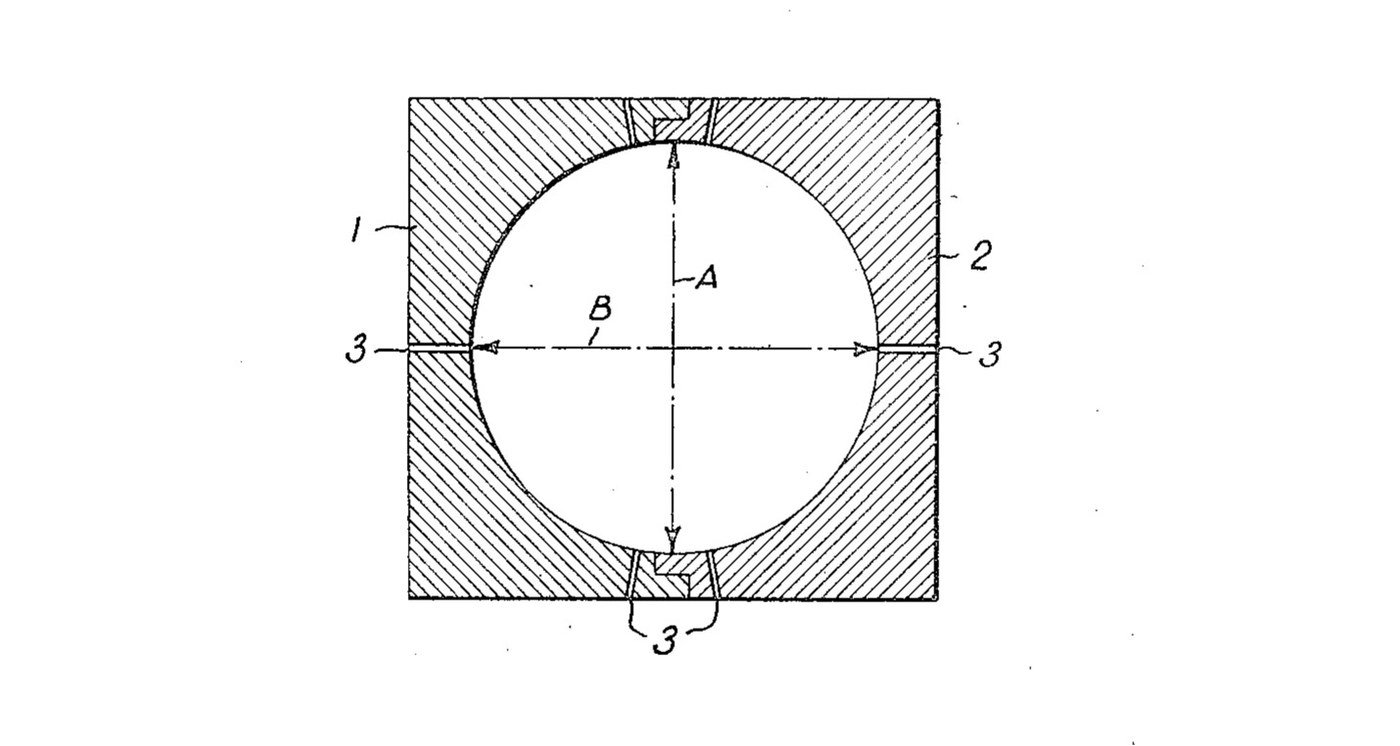
J. M. Jaques · Public domain (US patent)


Table Tennis Balls: Celluloid Halves Blown in an Out-of-Round Mould (Jaques 1935)
A celluloid table tennis ball is two stamped halves sealed with acetone, then blown out round by its own air in a hot mould. The overlapped seam shrinks a little as it cools, so the ball ends slightly narrower across the seam. John Jaques made the mould wider across the seam by just that amount, so the ball cools truly round.
Source: J. M. Jaques, US 2,025,455 (1935). The patent gives no sheet thickness, ball size or temperatures. The press, pot and micrometer are ours. Picture: the patent drawing.
Àárín
1 day
Ìlànà
1
1
Stamp two halves from hot sheet
Stamp two halves from hot sheet
Stamp two half-balls out of celluloid sheet while it is hot. The patent gives no temperature.
Àwọn ohun èlò fún ìgbésẹ̀ yìí:
 Celluloid1 ewé
Àwọn irinṣẹ́ tí a nílò:
 Àpẹrẹ ìtẹ̀ ìdajì bọ́ọ̀lù
 Ẹ̀rọ ìtẹ̀ àwo irin
2
2
Seal the halves with acetone
Seal the halves with acetone
Wet the edges of both halves with acetone, fit them together with the edges overlapping and let them seal. You now have a closed rough ball with a seam round its middle.
Àwọn irinṣẹ́ tí a nílò:
 Acetone
3
3
Measure the seam shrinkage
Measure the seam shrinkage
Blown balls come out narrower across the seam than across the poles: about one to two ten-thousandths of an inch on the celluloid balls Jaques measured. For your own celluloid, measure it on a test ball.
Àwọn irinṣẹ́ tí a nílò:
 Máíkírómítà
4
4
Use a mould wider at the seam
Use a mould wider at the seam
The split mould is not a true sphere. Measured in the plane where its two halves meet (diameter A), it is wider than at right angles to that plane (diameter B) by the amount the seam shrinks, and it has small vents to let air out.
Àwọn irinṣẹ́ tí a nílò:
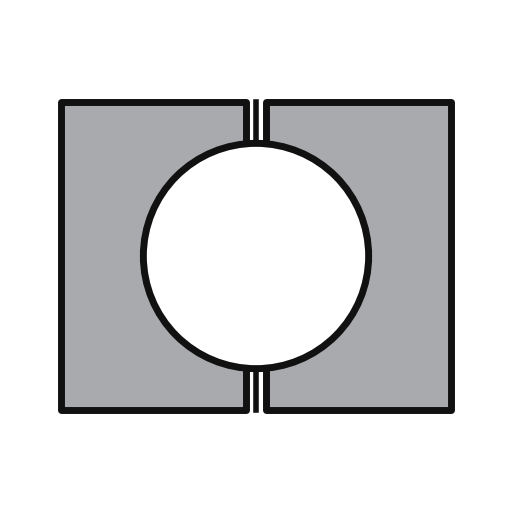 Àpẹrẹ bọ́ọ̀lù ẹlẹ́ya méjìMáíkírómítà
5
5
Set the ball seam to joint
Set the ball seam to joint
Lay the rough ball in the mould with its seam exactly on the mould joint, and hold it there with a little petroleum jelly so it cannot move.
Àwọn irinṣẹ́ tí a nílò:
Àpẹrẹ bọ́ọ̀lù ẹlẹ́ya méjì Vaseline
6
6
Blow it out in hot water
Blow it out in hot water
Close the mould and put it in hot water. The air inside the ball expands and blows the ball out to fill the mould.
Àwọn irinṣẹ́ tí a nílò:
Àpẹrẹ bọ́ọ̀lù ẹlẹ́ya méjì Ìkòkò Ńlá
 Omi
7
7
Cool and take out
Cool and take out
Let the mould cool, then open it and take the ball out. As the seam shrinks it comes back to the same diameter as the rest, so the ball is as near round as it can be.
Àwọn irinṣẹ́ tí a nílò:
Àpẹrẹ bọ́ọ̀lù ẹlẹ́ya méjìÌtọ́nisọ́nà yìí ń ṣe
CC0 Àgbègbè Gbogbogbò
Blueprint yìí ti jáde lábẹ́ CC0. O lè ṣe àdàkọ, yí padà, pín, àti lò láìsí ìyọ̀ǹda.
Ṣàtìlẹ́yìn Olùṣẹ́dá nípa rírà àwọn ọjà nipasẹ̀ Blueprint wọn Ẹ̀san Olùṣẹ́dá tí àwọn Olùtajà gbé kalẹ̀, tàbí ṣẹ̀dá àtúnṣe tuntun ti Blueprint yìí kí o sì fi sínú Blueprint rẹ gẹ́gẹ́ bí ìsopọ̀ láti pín owó-wíwọlé.