IṢẸ́ ỌNÀ
ẸWÀ ÀTI ÌLERA
IṢẸ́ ỌWỌ́
ÀṢÀ ÀTI ÌTÀN
ÌṢERÉ
ÀYÍKÁ
OÚNJẸ ÀTI OHUN MÍMU
REVERSE ENGINEERING
SÁYẸ́ǸSÌ
ERÉ ÌDÁRAYÁ
ÌMỌ̀-Ẹ̀RỌ
ÀWỌN OHUN WÍWỌ̀

Tempered-Air Bellows Churn: Bellows Blow Air Past a Can of Water and Up Through the Cream
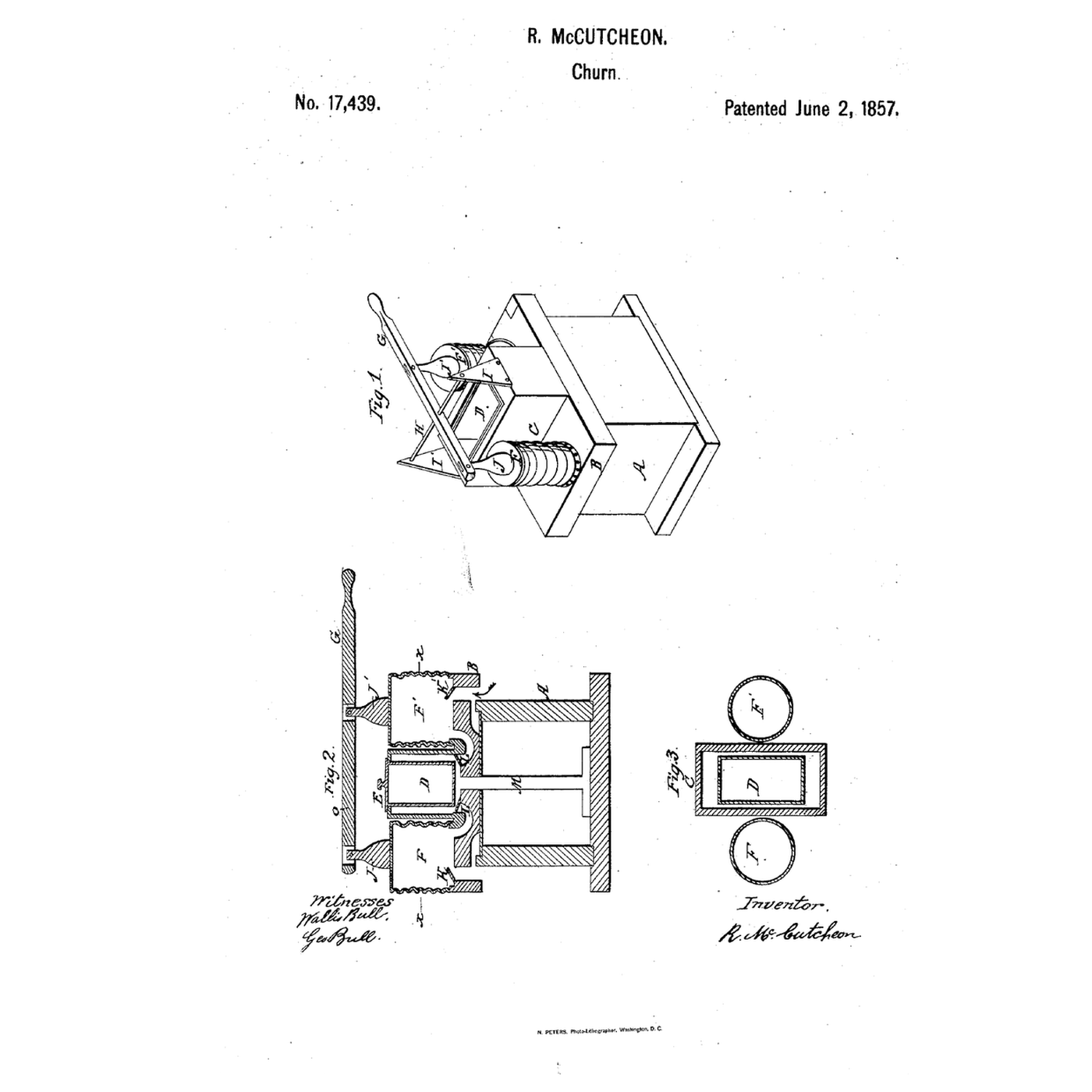
Robert McCutcheon of Towanda, Pennsylvania, received US 17,439, dated 2 June 1857, for an "Atmospheric Churn": bellows worked by a lever blow air through a chamber round a reservoir of cold or warm water, "where it is cooled or heated as needed," and down a pipe whose branches spread it through the cream.
This rung prints the air chamber, valves and branch foot, builds the churn and makes butter.
Àárín
About 4 hours, plus printing
Ìlànà
1
1
Air through the cream
Air through the cream
Ń ṣí ìwé Jupyter…
2
2
Tempering with water before it
Tempering with water before it
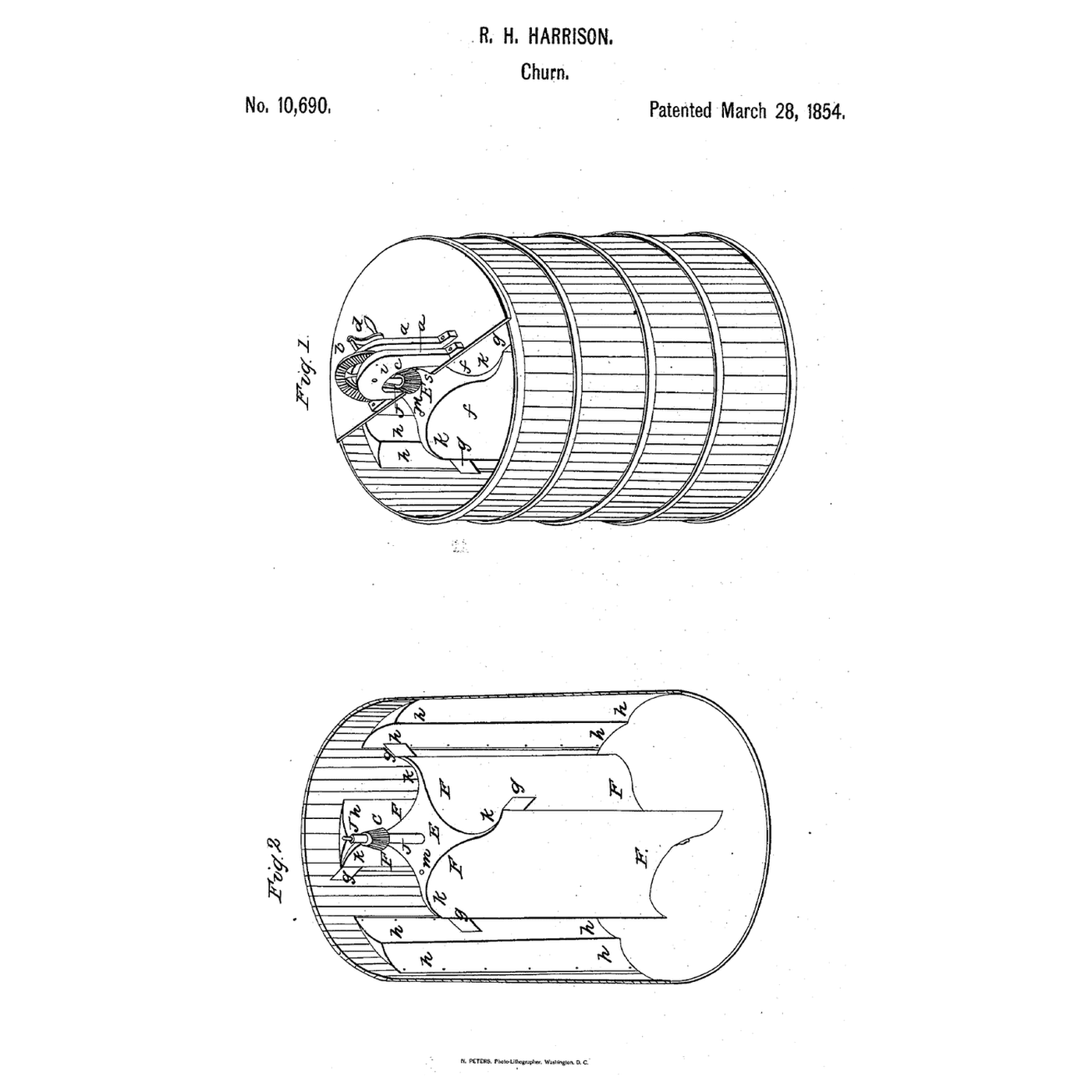
Harrison tempers the cream with water in the dasher; McCutcheon tempers the air he blows through it.
3
3
Read US 17,439
Read US 17,439
"The bellows are then operated by working the lever G up and down, forcing the current of air created by them first through the reservoir C, where it is cooled or heated as needed, by coming in contact with the cooled or heated surface of the interior reservoir, and from thence through the air-pipe M, which distributes it through the milk or cream in the body of the churn."
4
4
Print the parts
Print the parts
Print the air chamber (/uploads/blueprints/tempered-air-bellows-churn-air-chamber.stl), two flap valves (/uploads/blueprints/tempered-air-bellows-churn-flap-valve.stl) and the branch foot (/uploads/blueprints/tempered-air-bellows-churn-branch-foot.stl). Print in PETG at 0.2 mm layers, 30 % infill, 4 walls; wash before first use.
Àwọn ohun èlò fún ìgbésẹ̀ yìí:
 Okùn PETG1 ẹyọ
Àwọn irinṣẹ́ tí a nílò:
 Ẹ̀rọ ìtẹ̀ 3D oníwàyà (FDM)
5
5
Chamber, can and pipe
Chamber, can and pipe
Glue a flap valve inside each inlet port of the chamber so it opens inward. Stand a clean tin can inside the chamber as the water reservoir and seal the chamber's lid round its rim with food-safe silicone. Glue a 20 mm food-grade pipe from the chamber's outlet, through the churn's lid, down to the branch foot near the bottom of a food-grade container.
Àwọn ohun èlò fún ìgbésẹ̀ yìí:
 Àgbá oúnjẹ tí a fi irin aláṣọ tín ṣe1 ẹyọ
 Ìdílẹ̀ Silikoni1 ẹyọ
 Páìpù PVC1 ẹyọ
 Ẹpọ́ksì Ẹ̀yà Méjì1 ẹyọ
 Àgọ́ ìtọ́jú ti ìpele oúnjẹ1 ẹyọ
Àwọn irinṣẹ́ tí a nílò:
 Ayùn Irin
 Ẹ̀rọ Ìlùkòkò Aláìlókùn
 Ìṣètò ayùn ihò
6
6
Bellows and lever
Bellows and lever
Fix two hand bellows on the lid, one each side, their nozzles in the chamber's ports. Pivot a pine lever on a post between them and join it to each bellows' top board with a pine rod, so one bellows closes as the other opens.
Àwọn ohun èlò fún ìgbésẹ̀ yìí:
 Ẹ̀rọ Ìfẹ́ Afẹ́fẹ́2 ẹyọ
 Pákó igi pine1 ẹyọ
 Ọ̀pá Róbótó Irin Rírọ̀1 ẹyọ
 Ìsúrù igi #8 x 1"1 ẹyọ
Àwọn irinṣẹ́ tí a nílò:
 Ayùn Ọwọ́Ẹ̀rọ Ìlùkòkò Aláìlókùn
 Ìṣù àwọn ohun ìyí skurú
7
7
The patent drawing
The patent drawing
US 17,439 drawing sheet, public domain (expired patent).
8
8
Temper the air and churn
Temper the air and churn
Let the heavy cream stand until it reaches about 15 °C, checked with the thermometer. Pour in 2 litres. Fill the can with cold water if the room is warm, or lukewarm if it is cold. Work the lever steadily so the air bubbles up through the cream; time until the butter comes. Pour off the buttermilk, add cold water, churn a little and pour off again until it runs clear; work in a pinch of salt and weigh the butter.
Àwọn ohun èlò fún ìgbésẹ̀ yìí:
 Ọ̀rá wàrà tó nípọn2000 ml
 Iyọ̀ Òkun Rúkèrúdò1 ẹyọ
 Omi1 ẹyọ
Àwọn irinṣẹ́ tí a nílò:
 Ẹ̀rọ ìwọ̀n ooru oníhun tí ó dúró sí inú
 Aago Ìdúró
 Òṣùwọ̀n Díjítà Ilé Ìdáná
 Àwo ìdàpọ̀ ńlá ti irin tí kò ń yá
9
9
Troubleshooting
Troubleshooting
Tempered-air churn troubleshooting.
Flow
Loading...
10
10
History and honest limits
History and honest limits
**Robert McCutcheon** of Towanda, Bradford County, Pennsylvania, US 17,439, 2 June 1857. He made the outer chamber of wood "for its non-conduction of heat" and the inner one of tin plate. He did not claim using air in a churn; he claimed the bellows, the two chambers and the air pipe arranged together. Bought bellows, a tin can, a container and printed parts stand in for his. FDM prints hold food in their layer lines, so wash well and replace when worn.
Àwọn ohun-èlò
13- 1 ẹyọÀyè
- 1 ẹyọÀyè
- 1 ẹyọÀyè
- 1 ẹyọÀyè
- Àyè
- 2 ẹyọÀyè
- 1 ẹyọÀyè
- Àyè
- 1 ẹyọÀyè
- 2000 mlÀyè
- 1 ẹyọÀyè
- 1 ẹyọÀyè
Àwọn irinṣẹ́ tó nílò
10- Àyè
- 1 vendor sell this, none ship to you yetÀyè
- Àyè
- Àyè
Ìtọ́nisọ́nà yìí ń ṣe

Blueprint tó jọra
Àwọn blueprint wọ̀nyí pín ìmọ̀ — ọ̀nà, ohun-èlò tàbí ìlànà
Hydrothermal Reservoir Dasher Churn: Warm Water in the Dasher to Churn, Cold to Firm the Butter
láti ọwọ́ Karen
OÚNJẸ ÀTI OHUN MÍMU
23
0
0
0
0
0
Valved Air-Tube Dasher Churn: A Double-Acting Valve Lets Air Out of a Tube That Swings With the Dashers
láti ọwọ́ Buttercup
OÚNJẸ ÀTI OHUN MÍMU
32
0
0
0
0
0

Churning Butter from Cream — The 5,000-Year-Old Fat Separation
láti ọwọ́ TheChef
IṢẸ́ ỌWỌ́
49
0
0
0
0
0
CC0 Àgbègbè Gbogbogbò
Blueprint yìí ti jáde lábẹ́ CC0. O lè ṣe àdàkọ, yí padà, pín, àti lò láìsí ìyọ̀ǹda.
Ṣàtìlẹ́yìn Olùṣẹ́dá nípa rírà àwọn ọjà nipasẹ̀ Blueprint wọn Ẹ̀san Olùṣẹ́dá tí àwọn Olùtajà gbé kalẹ̀, tàbí ṣẹ̀dá àtúnṣe tuntun ti Blueprint yìí kí o sì fi sínú Blueprint rẹ gẹ́gẹ́ bí ìsopọ̀ láti pín owó-wíwọlé.